Actual Size of 1/2 Plywood: Is 15/32 the Same as Half-Inch Plywood?
Plywood is commonly used in structural applications as it can withstand weather exposure and stress. It is also used in bins, crates, outdoor furniture, internal structures and boxes. Plywood is diverse in thickness, but the most popular is ½ inch plywood. In this article, we will learn about 1/2…
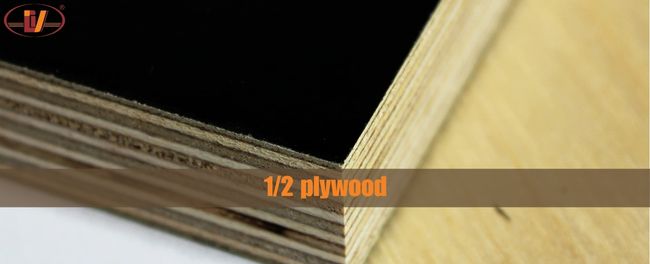
Half-inch plywood is the sheet most carpenters reach for without thinking — cabinet backs, light subfloors, wall sheathing, crates, shop jigs. The stamp says 1/2. The caliper usually says 15/32. That small gap is sanding loss, and it is the detail that ruins a tight dado if you trust the aisle tag alone.
Thickness neighbors: 3/4, 5/8, 1/4, 4×8 sheets.
What “1/2 plywood” actually means
Mills have cut to metric targets for decades while still selling under inch names. A sheet sold as 1/2 in often lands near 12.5 mm before the last sanding pass, then ships closer to 15/32 in face-to-face. Other familiar pairs: 6 mm with 1/4, 9.5 mm with 3/8, 15.5 mm with 5/8, 19 mm with 3/4. Invoices mix both languages. Measure when the fit is tight.
Is 15/32 the same panel?
For sheathing, underlayment, and most cabinet work — yes. Nominal 1/2 is the sales name; 15/32 is the sanded reading. The same pattern shows up across the softwood ladder. When a groove or code callout is fussy, put a caliper on two sheets from the unit before you cut the stack.
Where half-inch earns its keep
It balances stiffness and weight. Light residential subfloors use it where span tables allow. Walls take it as sheathing on moderate stud spacing. Cabinet shops use it for sides, drawer boxes, and backs. Shop fixtures and small tabletops like the same thickness because a 4×8 still moves with one careful person.
Glue line and face grade matter more than the inch stamp. Exterior-rated CDX-style glue for sheds and construction wetting. Cleaner hardwood faces for furniture that stays indoors. Match the weather and the finish, then pick thickness.
Load — the honest range
Span and support decide capacity. A common shop rule for 1/2 in on decent framing is around 35 pounds per square foot for light use. That number falls when joists open up, when the core has voids, or when the load sits on a small pad. Shelves fail at the cleat spacing long before the published per-square-foot figure looks wrong on paper.
Counting sheets
One 4×8 covers 32 square feet. Area ÷ 32, then round up. Example: four walls, 8 ft high — two at 12 ft and two at 10 ft — is 352 sq ft. That is eleven sheets on paper and twelve on the truck once openings and miscuts show up.
Floors and roofs need a stagger factor. Cabinets should be counted by part, not by room area — backs and sides waste differently than full-height sheathing.
Ordering from Vinawood
We mill plywood in Vietnam for export. If your RFQ sits near the half-inch / 12 mm band — film-faced, overlay, or sheathing grade — send thickness, bond class, face type, and port. Request a quotation and we will map a real grade instead of a nickname.
More size and grade reading: plywood sizes, CDX, types of plywood.