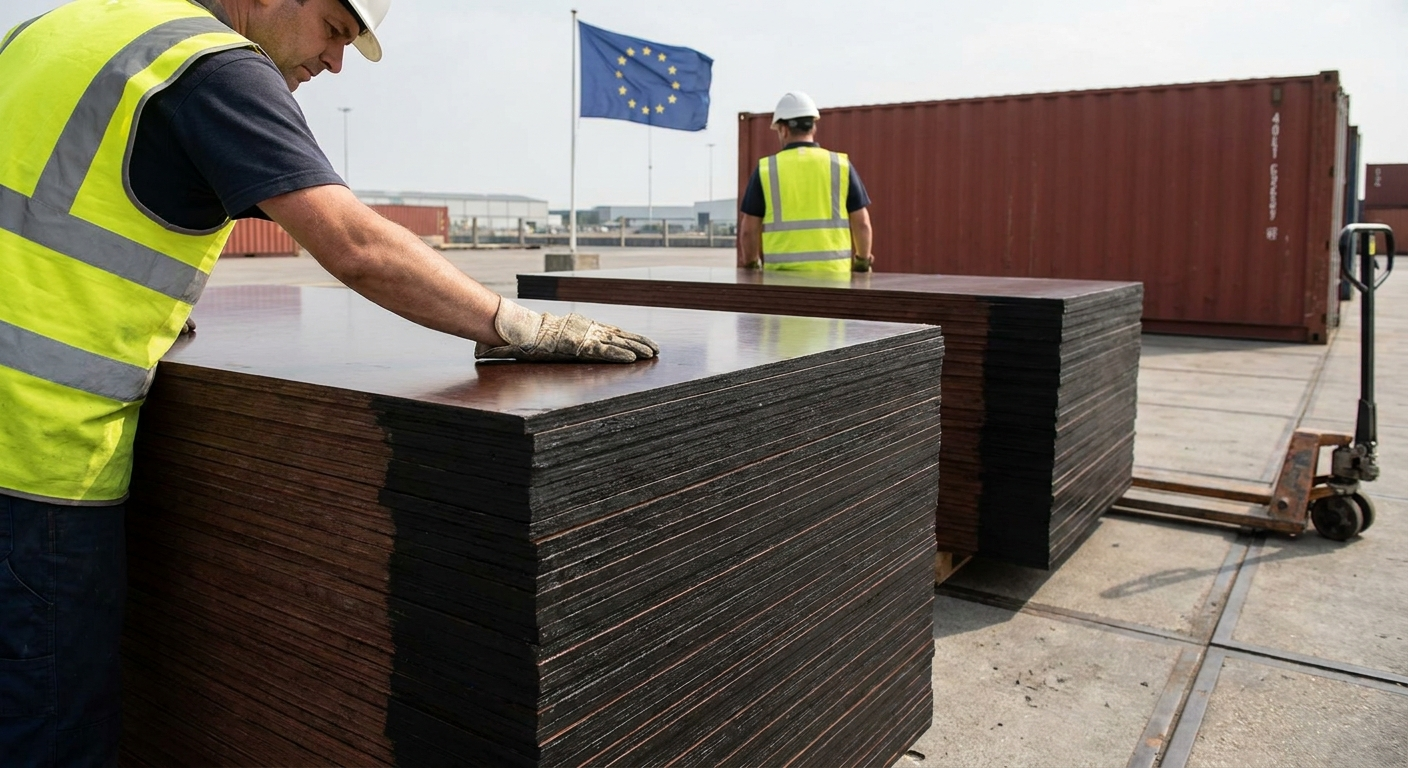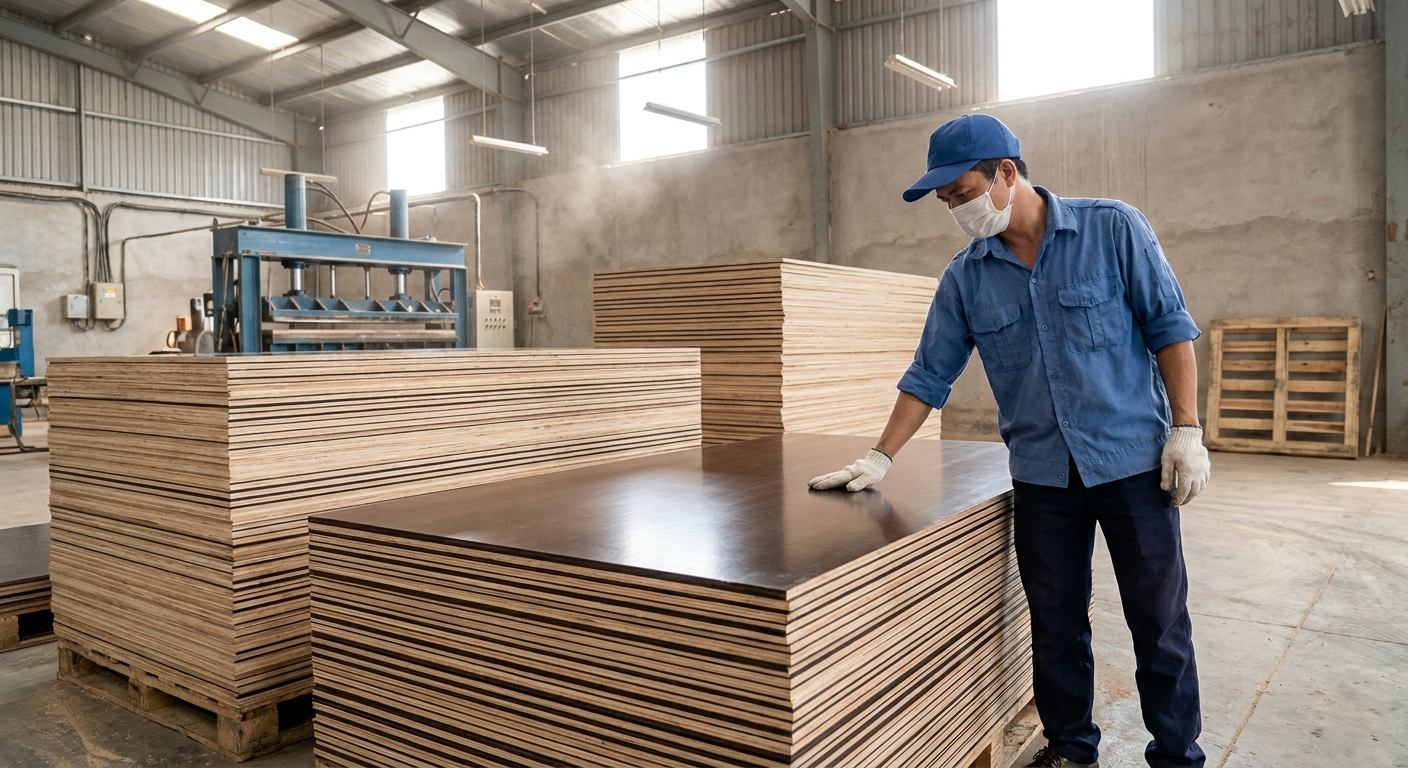
How to Stop Plywood from Warping: A Prevention Guide
Most plywood warping is a storage and handling problem, not a manufacturing one. This prevention guide covers dunnage spacing, off-slab storage, vented tarping, transport handling, moisture-content targets, thickness selection, and edge sealing — from a Vietnam manufacturer's perspective.

Most warped plywood arrives at the jobsite flat. It curls, cups, or bows later — under a tarp, against a wall, on a damp slab, or in the back of a truck for one too many days. The factory shipped a balanced panel; the storage stack or the handling step pulled it out of plane. That distinction matters because the fix for prevention is different from the fix for remediation, and the two get tangled together in most online advice.
This guide covers the prevention side. If a panel is already cupped or bowed, the companion piece on how to flatten warped plywood walks through the moisture-and-pressure remediation. Everything below assumes you have flat stock on hand and want to keep it that way through storage, partial use, transport, and short field exposure.
Why plywood warps in the first place
Plywood is built to resist warping by design. Cross-banded veneers, each layer rotated 90 degrees from the one above and below, cancel out the seasonal expansion and contraction that solid wood goes through. As long as both faces sit in the same environment, the panel stays flat.
The whole system depends on symmetry. The moment one face sees more moisture, more heat, or more pressure than the other, the cancelling stops. The wetter face swells. The drier face holds. The panel cups toward the drier side. Thin sheets cup first because there is less material between the two faces to absorb the imbalance.
Three points worth holding in mind before going further:
- Warping is almost always a post-factory event. A panel that left a controlled press line within EN 635 face-orientation tolerances arrived at port flat. What happens between port and end use is on the storage chain.
- Thin sheets warp first. A 6 mm panel stored badly can cup within 24 hours. An 18 mm panel in the same stack might take a fortnight to show movement.
- Film-faced and overlaid panels are far more forgiving. The phenolic film locks moisture out of one face, so an asymmetric exposure event has less effect.
The three forces that move plywood
One-sided moisture is the biggest culprit. The wet face swells, the dry face does not, and the panel cups toward the dry side. The damp face does not have to be soaking — a steady humidity gradient across a stack is enough to put visible cup into a thin sheet over a week.
One-sided heat works the same way in reverse. Sun on the top sheet of an outdoor stack drives moisture out of the upper face while the bottom face stays at ambient. By Tuesday the top sheet is cupped down at the edges. By Friday the sheet underneath it has caught the same treatment.
Uneven stack pressure is the quieter third force. A stack on three points of support instead of four. Dunnage spaced too far apart so the middle sags under its own weight. A heavy banding strap pulled too tight at one edge. The pressure imbalance pushes glue lines into a held curve, and after a few weeks the panel keeps that curve even when you remove the load.
Storage rules that actually prevent warping
The single most useful storage rule is dunnage spacing. Plywood sheets need flat, full-width support every 16 to 24 inches across their length. Three pieces of dunnage on a standard 4×8 panel, set at each end and the middle, is the working minimum. Four is better for sheets stored longer than two weeks.
The dunnage itself has to sit at a uniform thickness across the stack, and it has to be dry. Level matters too. A pallet with one warped runner will mirror itself into every sheet in the stack within a month. Stickers cut from offcuts are fine as long as you check them on a level surface first.
A few other rules earn their keep:
- Off the floor by at least 4 inches. Concrete slabs wick ground moisture even when they look bone dry. A pallet under the bottom dunnage row keeps the underside of the lowest sheet out of that humidity zone.
- Top sheet weighted or covered with a sacrificial board. The top of the stack is exposed to the warehouse ceiling environment. A weighted top sheet — or a cheap board you accept as a moisture buffer — keeps the rest of the stack flat.
- Edges sealed if storage runs more than two weeks in humid conditions. Cut edges absorb moisture five to ten times faster than faces. A single coat of edge sealer (oil-based primer or dedicated edge paint) closes that pathway.
- Stack on its face, not on edge. Plywood leaned against a wall for more than 24 hours starts to take a curve. For overnight or longer, lay it flat.
Outdoor and partial-cover storage
The instinct on a wet jobsite is to throw a tarp directly on the stack. That makes the problem worse. A direct-contact tarp traps moisture against the top face, the top face swells, and the panel cups within days. The phrase "wrapped in plastic equals dry" does not hold for plywood.
What works is a vented tent. The tarp sits on a frame of 2×4s or pallets a few inches above the top sheet, with the long axis oriented away from the prevailing wind so rain runs off without driving sideways into the stack. The air gap lets the top face stay at ambient humidity instead of incubating moisture under the wrap. On a multi-day site, that single change keeps the top three to four sheets usable.
Orientation matters too. A stack with its long axis running east-west takes morning sun on one short edge and afternoon sun on the other — broadly balanced. A stack running north-south takes a full day of sun on one long face, drives the moisture gradient hard, and starts cupping. We've seen this pattern in our own export customers' jobsite reports: stacks that get re-oriented along the sun line stay flat longer than stacks that stay in the same spot all week.
Transport and jobsite handling
Strap pressure on the edges is where transport damage starts. A banding strap pulled past about 80 PSI cuts into the top sheet's edge, creates a localised compression line, and the panel takes a slight bow from that one strap. Soft wood blocking between the strap and the panel face spreads the load.
Inside the truck or container, blocking between vertically stacked pallets keeps the stack from leaning. A leaning stack pushes the bottom panel out of plane; ten panels later, the curve has migrated up through the stack. Loaders who care about flatness use a 4-inch block at each corner of the upper pallet to bridge over the lower pallet's strapping points.
On the jobsite, the rule that gets broken most often is the lean-against-the-wall rule. A few sheets propped against a stud wall while drywall goes up is fine for a few hours. Past 24 hours, the sheet takes a curve that may not fully recover. If you have to set sheets aside mid-day, set them on dunnage and walk away.
Moisture-content targets and how to verify
A pin meter is the cheapest insurance on this list. Two pins, two readings, sixty seconds. The targets that matter for plywood:
- 8 to 12 percent moisture content — interior service in a heated, conditioned space. Cabinets, furniture interiors, paint-grade panels.
- 14 to 18 percent — exterior service or unconditioned spaces. Garages, sheds, formwork that will spend its life outdoors before and after concrete pours.
- Over 20 percent — the panel is wetter than its likely service environment. Acclimatise before installing. Forcing a 22 percent panel into an 8 percent interior is a guaranteed warp.
Test in two places: the centre of a face (representative of bulk panel moisture) and within 50 mm of a cut edge (representative of recent moisture exposure). If the edge reads more than 3 percentage points higher than the centre, the panel has been re-exposed since shipping and needs acclimatisation time.
Thickness matters: when to specify thicker for stability
Thin plywood warps disproportionately faster than thick. The ratio is not linear — a 6 mm sheet does not just warp twice as fast as a 12 mm sheet. Field experience says the 6 mm sheet warps roughly five to seven times faster under the same conditions. For applications where stack life or partial use is expected, specifying one thickness step up is often cheaper than the warp losses.
| Thickness | Storage forgiveness | Typical use case |
|---|---|---|
| 6 mm | Low — cups within days under poor storage | Drawer bottoms, backing panels, internal cabinet work |
| 9 mm | Moderate | Mid-weight casework, lighter furniture |
| 12 mm | Good | General-purpose, sheathing, mid-weight formwork |
| 15–18 mm | Strong | Heavy formwork, structural sheathing, doors |
| 21 mm and up | Very strong | Heavy-duty formwork, industrial flooring |
When to investigate the panel itself
If the storage history is clean (flat dunnage, weighted top, off the slab, sealed edges, no direct-tarp wrap) and the panel still came out of plane, then the conversation can turn to the panel itself. Not before.
EN 635 sets face-orientation tolerances for plywood appearance grades. Within those tolerances, a small amount of cup or bow is normal and not a defect. Outside them, and with a verified clean storage history, the next step is to flag the batch with the supplier and request a re-inspection. Use "may indicate" language with the supplier: "the panel may indicate an out-of-tolerance condition" rather than "the panel is defective." That keeps the conversation factual and lets the supplier check the production records for that batch.
From a Vietnamese mill perspective, we see this conversation often, and most of the time the panel records show within-tolerance shipment plus a storage event between port and end user. Less often the batch shows a production note worth investigating. The order of operations matters: storage history first, then panel investigation.
Sealing and on-site moisture management
Sealing edges is the single most effective on-site step. A 12 mm panel with sealed edges in a humid warehouse will hold flat three to four times longer than the same panel with bare edges. The seal does not have to be elaborate — a single coat of oil-based primer brushed onto the cut edges immediately after cutting closes the end-grain pathway that absorbs moisture fastest.
Face sealing is overkill for most interior service applications. The factory sanding plus a primer coat at finish stage is usually enough. Where face sealing pays off is for panels that will sit on a jobsite for weeks before installation, or for applications in humid climates where the panel's service environment will swing between dry and humid (kitchens, bathrooms, outdoor cabinetry).
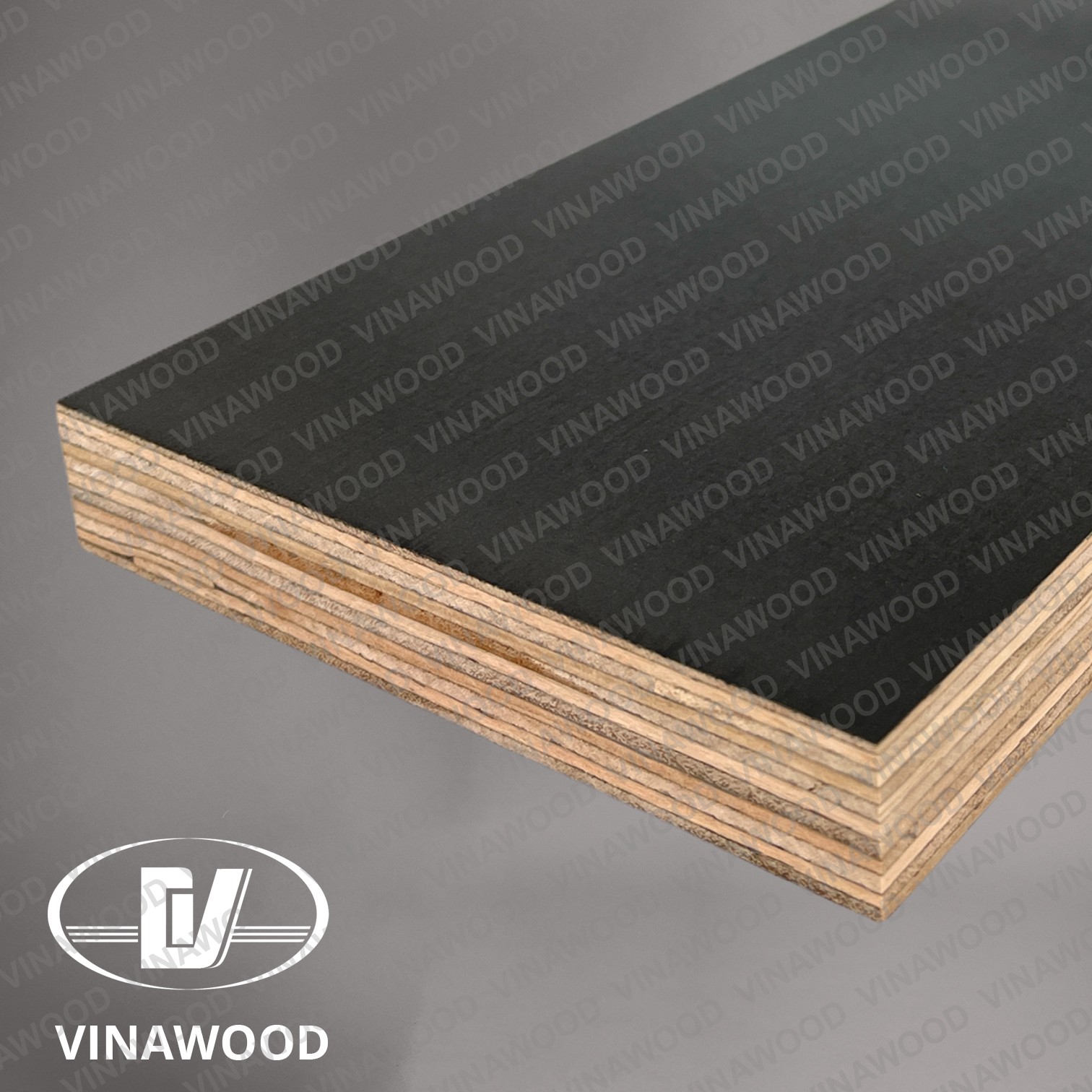
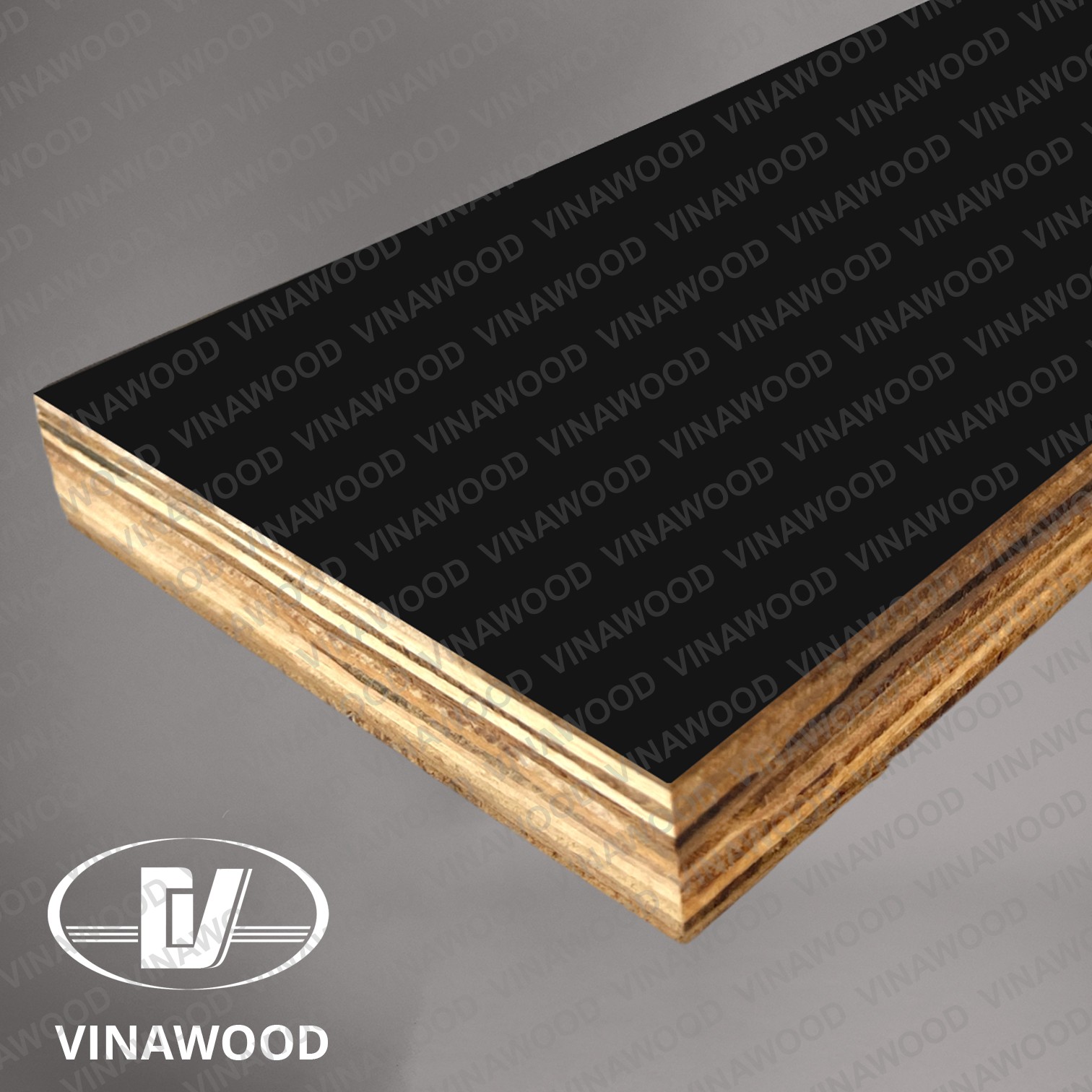
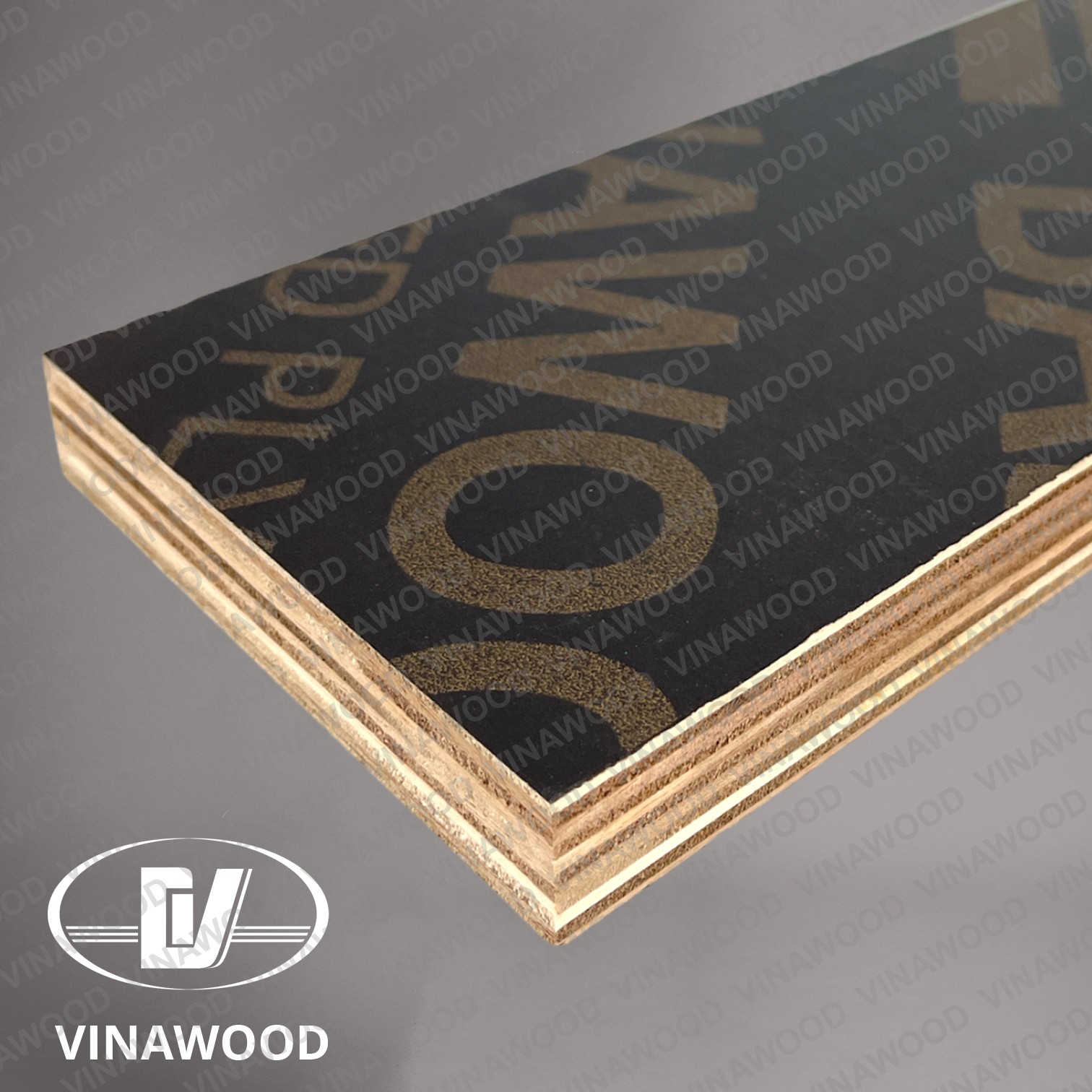
For high-humidity service or repeated wet/dry cycles, the right answer is often a different panel rather than more sealer. Film-faced grades (Vinawood's film-faced plywood range, or the EN 636-3 phenolic Pro Form formwork panel) resist one-sided moisture pull because the phenolic film is impermeable. For formwork specifically, that is the difference between a panel that warps after one pour and one that delivers up to 20 reuse cycles.
At-a-glance reference
| Storage method | Climate zone | Max storage days (sealed edges) | Max storage days (unsealed) |
|---|---|---|---|
| Indoor, conditioned, flat on dunnage | Temperate | 120+ | 60 |
| Indoor, unconditioned warehouse | Temperate | 60 | 21 |
| Indoor, unconditioned warehouse | Humid tropical | 21 | 10 |
| Outdoor, vented tarp tent | Temperate, dry season | 30 | 14 |
| Outdoor, vented tarp tent | Humid tropical | 10 | 5 |
| Outdoor, direct-contact tarp | Any | Not recommended | Not recommended |
Grade choice plays into how strict these limits need to be. Higher-grade panels (for the appearance side of the question, see our plywood grades explained guide) generally have tighter face-veneer selection and respond more predictably to good storage. Lower-grade structural panels are also more forgiving of poor storage in the sense that minor surface movement matters less when the panel is going under sheathing. Match the storage care to the visible-finish requirement of the application.
Category
how-to
Related Markets
Related Countries
Related Products
▶Sources & References (3)
- EN 635-1:1995 — Plywood. Classification by surface appearance — General — European Committee for Standardization (CEN) (1995)
- ANSI/HPVA HP-1-2020 — American National Standard for Hardwood and Decorative Plywood — Hardwood Plywood and Veneer Association (2020)
- APA Form L870 — Engineered Wood Construction Guide (handling and storage) — APA — The Engineered Wood Association (2024)