Importing Vietnam Plywood to the EU: Complete Guide
How EU importers buy plywood from Vietnam in 2026: what makes a shipment EUDR-compliant and who files, the film-faced EN 636-2 and EN 636-3 range, EVFTA origin proof, CE and formaldehyde rules, EN 315 thickness tolerance, HS codes, and timing from Hai Phong.
Short answer first, since it's what most EU buyers ask us. EUDR-compliant plywood from Vietnam is a shipment whose fibre is deforestation-free and legally harvested, with plot geolocation for every plantation in the lot, the species and quantity recorded, and a due diligence statement filed by the first operator before the panels are placed on the EU market. The mill doesn't file that statement. What the mill owes you is the evidence behind it: plot coordinates, species, quantity, harvest dates and legality documents, packed before the vessel sails rather than chased afterwards. The rules apply from 30 December 2026, and because plywood already sits under the EU Timber Regulation, the later June 2027 date for micro and small operators doesn't cover it, so smaller importers should plan for December as well.
The other two questions are usually duty and time. EVFTA can bring the duty down when the origin paperwork is genuine. Ocean time from Hai Phong to North Europe tends to run around 30 to 35 days on a clean booking. None of it is automatic, so use the sections below to plan the route and confirm duty, CE and EUDR with your broker and counsel before a number lands on a purchase order.
What EU buyers order from a Vietnamese mill
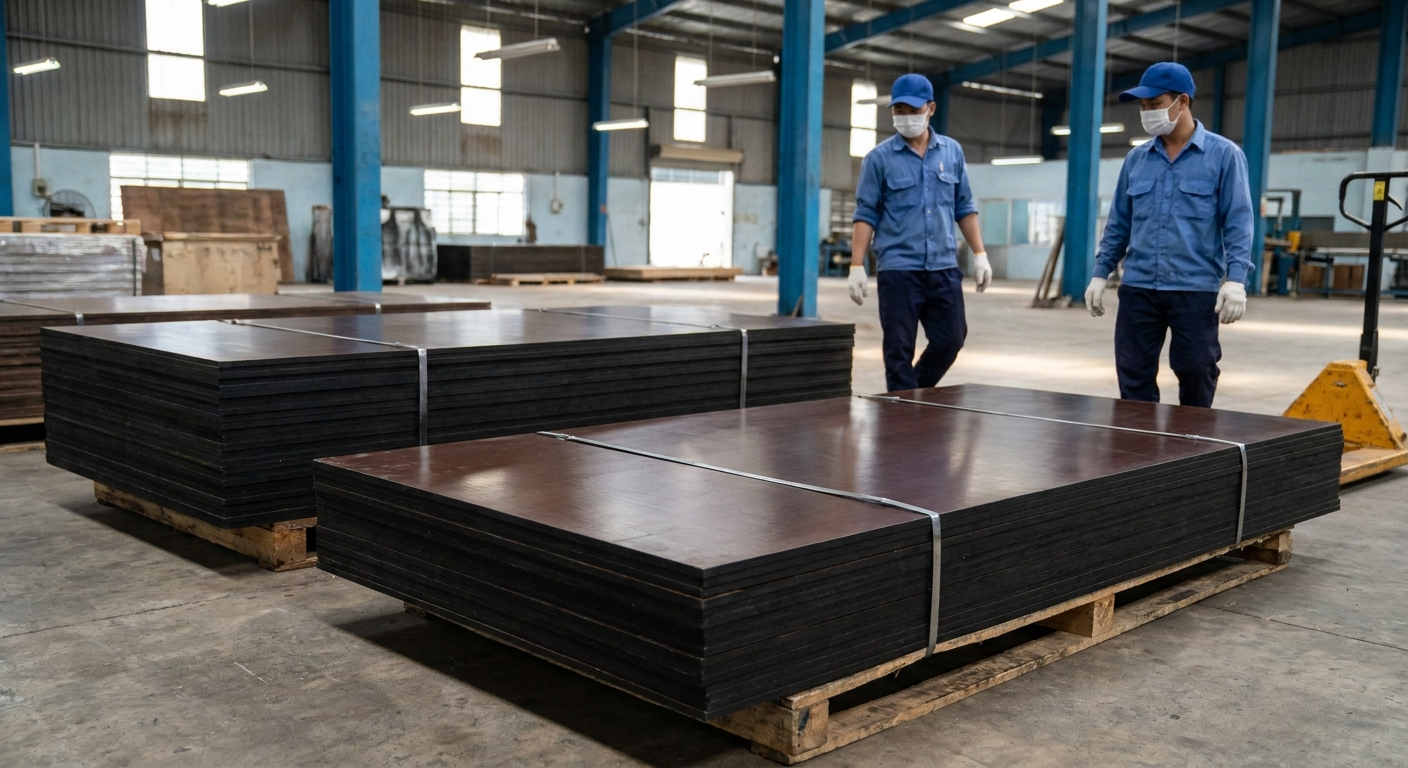
Most European demand we see is film-faced formwork, and it splits by glue class. Form Basic and Form Extra are MUF-bonded and sit under EN 636-2, the humid-service class. Form Extra keeps the same film face as Form Basic but uses our more durable Superior Glue MUF formulation, so it's the one people pick for more pours. Eco Form Plus is also EN 636-2, the budget end of the range. When the site calls for exterior service, buyers step up to the phenolic (PF) panels under EN 636-3: Pro Form Lite and Pro Form.
Size is simpler. Continental crews mostly work in 1250 × 2500 mm, while 1220 × 2440 mm still turns up on projects that grew out of imperial tooling, and we press both. Form Basic, Form Extra, Eco Form Plus and Pro Form Lite carry 165 g/m² phenolic film. Reuse runs up to 8 pours for Eco Form Plus, up to 10 for Form Basic, up to 15 for Form Extra and Pro Form Lite, and up to 20 for Pro Form, with handling and release agent doing a lot of the work on any given site. The full lineup sits in our film-faced plywood range.
What EVFTA actually buys you
The EU-Vietnam Free Trade Agreement has been in force since August 2020, and plywood under HS 4412 is one of the lines where it matters. The preference doesn't come from the flag on the vessel. It needs a valid EUR.1 or a qualifying origin declaration travelling with the goods, plus real processing in Vietnam under the rules of origin. Panels that were only relabelled or transshipped through a Vietnamese port don't qualify, whatever the bill of lading says.
So how do you claim it? Ask the seller, at quotation, which proof of origin they'll issue and who signs it. If that answer is vague, customs will assess the full MFN rate even though the container left Vietnam. We'd rather sort it out on the first call than on the pier.
The four regulatory gates
1. EUDR
For an EU operator, a Vietnamese plywood lot is EUDR-compliant when three things line up: the wood was legally harvested, the plots it came from were not deforested after the 31 December 2020 cut-off, and a due diligence statement covering that geolocation, species and quantity has been filed before the goods go on the market. The December 2025 amendment, Regulation (EU) 2025/2650, narrowed who files. The first operator placing plywood on the EU market submits the statement in the EUDR information system, while downstream operators and traders no longer submit their own statements or pass reference numbers further down the chain. Vietnam sits in the Commission's low-risk tier under Implementing Regulation (EU) 2025/1093, so simplified due diligence can apply, but the geolocation and legality evidence still has to exist. Plantation-grown cores make the file easier to build. Missing plot coordinates still stop a container.
That's why we raise geolocation at the quote stage. Our EUDR page lists what we hold, and how Vinawood prepares EUDR evidence shows the pack we hand over with each order. For the operator's side of the filing, the EUDR compliance guide for plywood importers goes deeper.
2. CE marking
Plywood used in EU construction carries CE marking under EN 13986. Behind the mark there's a Declaration of Performance for the exact product on the PO, a factory production control system at the mill, and test data showing bond quality to EN 314 and the service class under EN 636. ISO 9001 is our quality management system and sits alongside CE; it shows how the mill runs its processes, but it doesn't replace the Declaration of Performance or the production control that CE requires. Non-structural furniture or packaging panels usually don't need CE. Formwork on a live pour isn't one of those, whatever someone says on WhatsApp.
Do you need CE on every shipment? On construction grades, yes. Each lot ships with the declaration for that grade, and writing the intended use on the PO saves an argument at clearance.
3. Formaldehyde
This one changed in 2026. Since 6 August, REACH entry 77, added by Regulation (EU) 2023/1464, caps emissions from wood-based articles at 0.062 mg/m³ in the test chamber, which is tighter than the old E1 ceiling of 0.124 mg/m³ under EN 13986. Some uses are carved out, like articles exclusively for outdoor use. Mills already pressing to EPA TSCA Title VI (CARB P2) for US buyers often clear the EU limit as well. Still, ask for the chamber report on the grade you're buying, not a generic flyer.
4. REACH beyond formaldehyde
Standard PF- or MUF-bonded film-faced plywood rarely trips anything else in REACH. Add-ons can. Biocides, flame retardants and special treatments each bring their own substance questions, so if the mill treats the panel, get the substance list before you pay the deposit.
Customs duties and classification
| HS code | Description | MFN duty | EVFTA |
|---|---|---|---|
| 4412.33 | Other plywood, outer ply of listed hardwoods | 7 to 10% | Preferential with valid origin proof |
| 4412.34 | Other plywood, outer ply of other hardwoods | 7 to 10% | Preferential with valid origin proof |
| 4412.39 | Other plywood, softwood outer plies | 7% | Preferential with valid origin proof |
The broker sets the exact subheading from the face species and ply build on the mill's data sheet, so send them that sheet with the RFQ. A wrong face description and a missing EUR.1 are the two quickest ways to lose the preference.
Routes and order timing
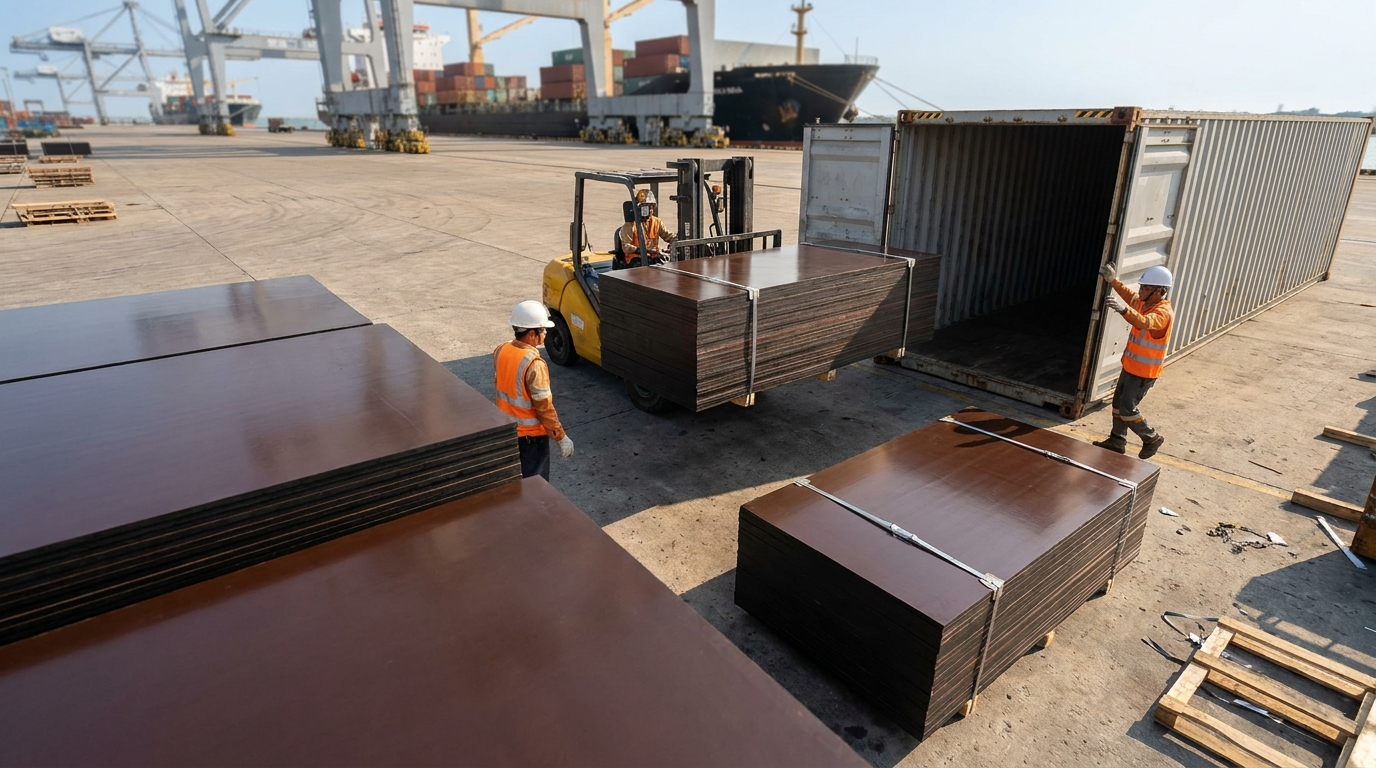
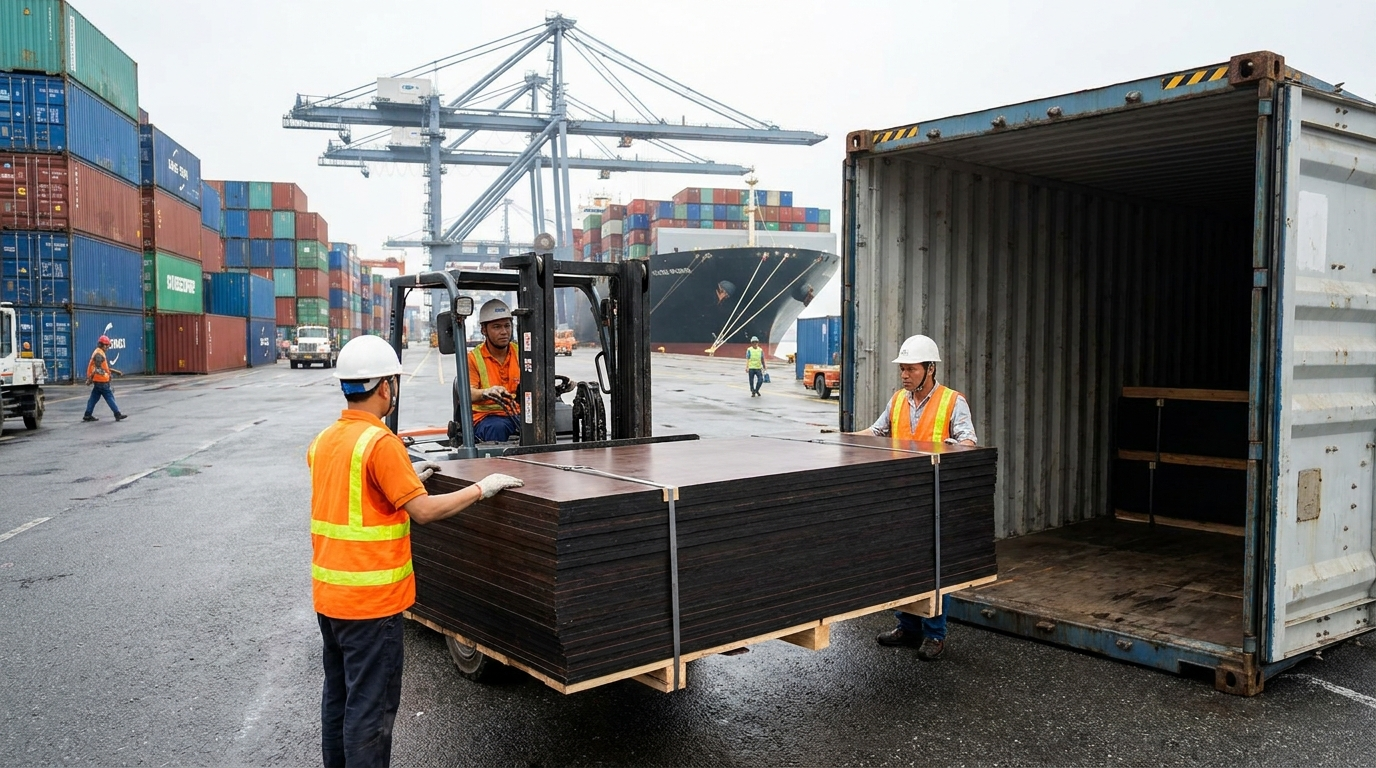
Our containers load at Hai Phong. North European ports like Rotterdam, Hamburg and Antwerp usually land around 30 to 35 days later, and Mediterranean ports a little sooner. Blank sailings and transshipment move both windows, so confirm the booking before you promise a site a date.
- Quote and samples: 1 to 2 weeks
- Confirmation and deposit: about a week
- Production: 15 to 30 days
- Pre-shipment inspection, if you book one: 2 to 3 days
- Ocean to North Europe: around 30 to 35 days
- EU clearance: 2 to 5 days
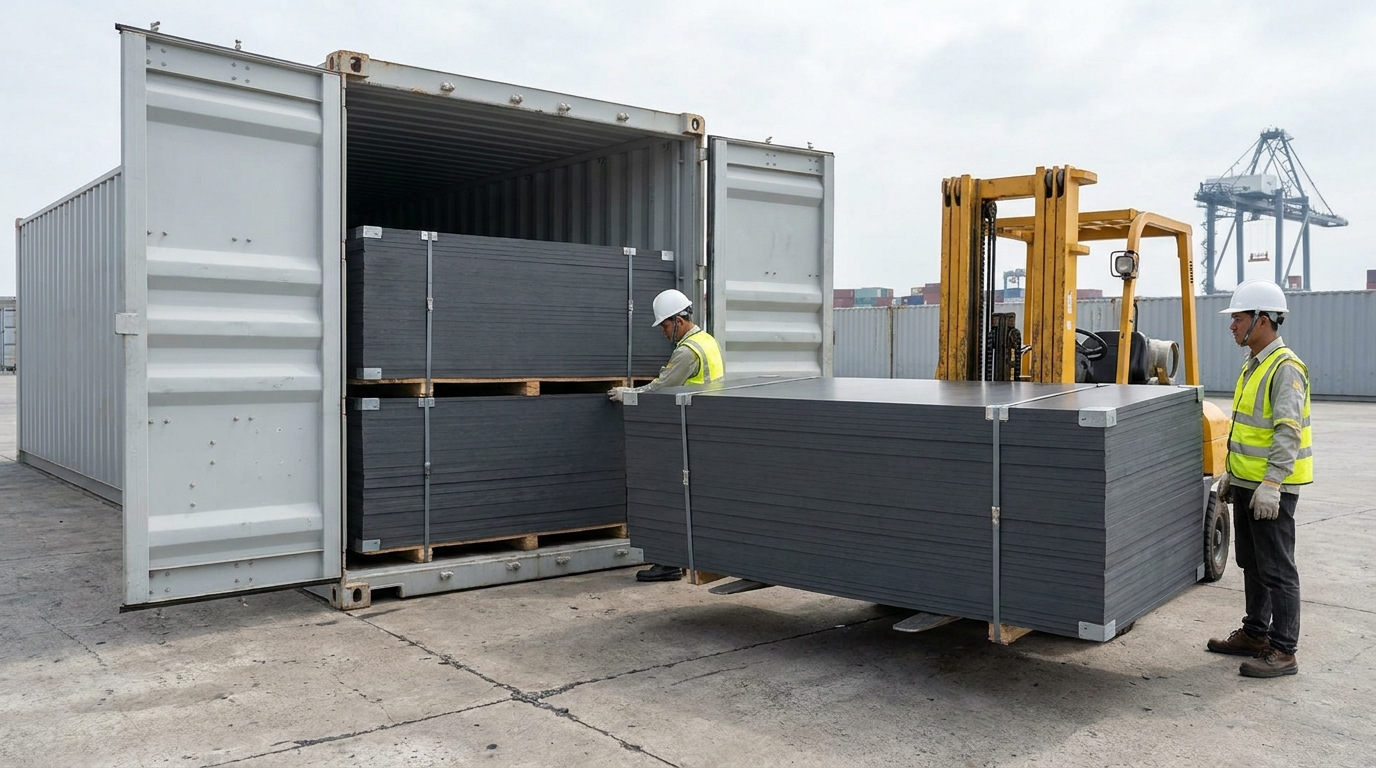
Budget roughly 8 to 12 weeks door to door, and that assumes the EUDR pack and origin proof are ready before sailing. We've seen containers sit at the port because geolocation turned up after the vessel had left. It's an avoidable wait.
EN specs EU buyers actually write
European RFQs are written in EN language, not APA grades. EN 314-1 and 314-2 cover bond quality, EN 636 sets the service class (636-1 dry, 636-2 humid, 636-3 exterior), EN 315 handles dimensional tolerances and EN 12369 gives characteristic strength values. Ask for reports on the grade in your PO. "Export quality" with no EN number isn't an EU conversation.
Thickness tolerance under EN 315
On formwork, thickness tolerance is what decides whether two neighbouring panels meet flush. A step at the joint shows up as a lip in the finished concrete, gaps let grout bleed out, and a sheet that runs thin across its span deflects more than the designer allowed for. EN 315 sets the thickness and dimensional tolerances for EN plywood, so write EN 315 next to the nominal thickness on the purchase order rather than leaving it to "standard tolerance". Then ask the mill for the test report showing measured thickness on your lot, which gives you something concrete to check against when the bundles are opened on site.
Practical tips before the first container
Trial one container before you scale. Put SGS, Bureau Veritas or a similar house on pre-shipment inspection, and book it before the doors close rather than after. Raise EUDR geolocation at quotation, not at the dock, and ship the origin proof whenever the preference is available. For the European pour season, order early, because Q2 and Q3 production slots fill up faster than most buyers expect. If you're still comparing mills, our notes on vetting plywood manufacturers in Vietnam cover the factory checks and the RFQ itself.
Run your numbers through the landed cost calculator, then check sheet counts on the container loading calculator before a customer hears a figure you can't stow. When the spec is ready, send it through the RFQ form with grade, thickness, size, destination port and target month.
Category
market-insights
▶Sources & References (3)
- Regulation (EU) 2025/2650 amending Regulation (EU) 2023/1115 as regards certain obligations of operators and traders — EUR-Lex (2025-12-23)
- EU Deforestation Regulation (EUDR): application dates — European Commission
- Commission Implementing Regulation (EU) 2025/1093 (EUDR country benchmarking) — EUR-Lex (2025-05-22)