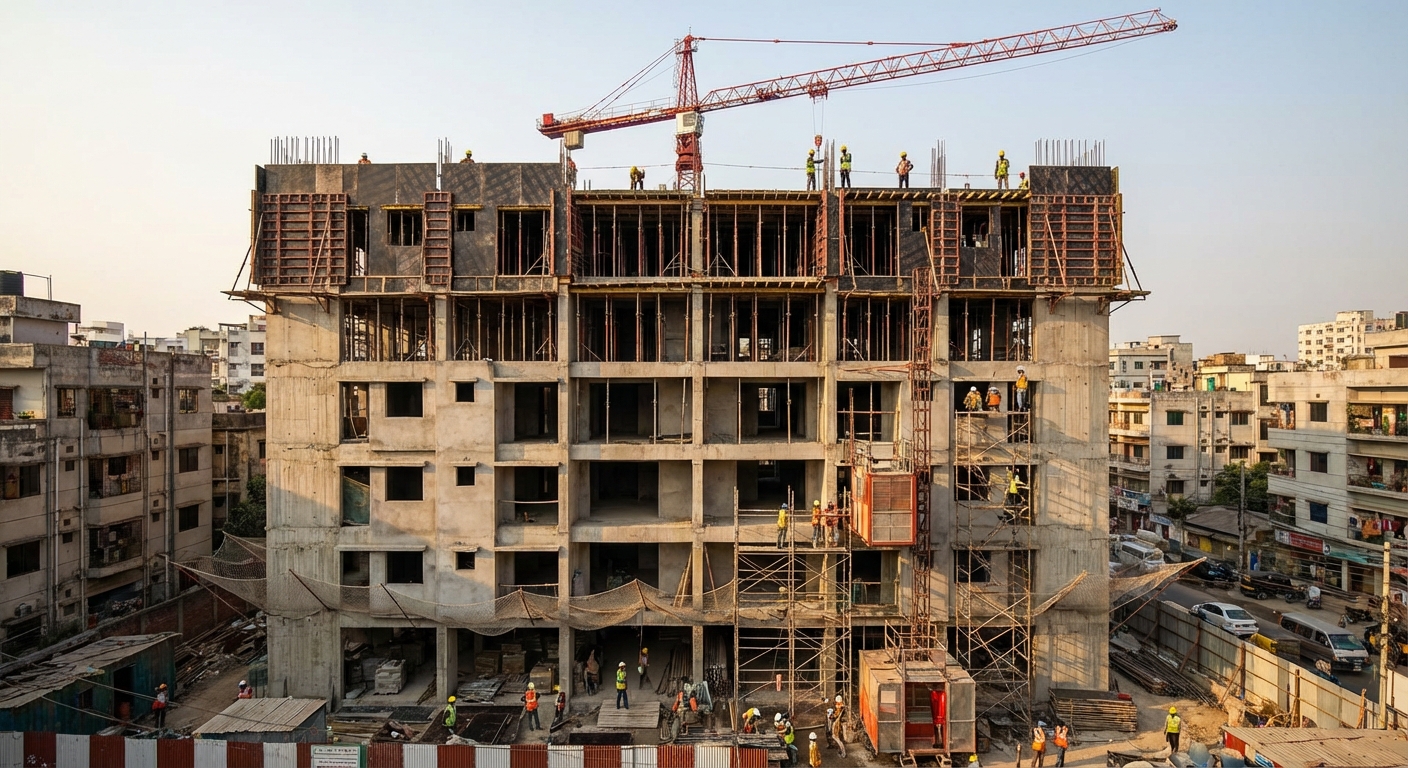
Plywood vs Steel Formwork: Cost, Reuse, Finish, and When Each Wins
Plywood vs steel formwork compared on cost-per-pour, reuse life, finish, weight, and adaptability — with a decision matrix for when film-faced plywood beats steel and when it does not.
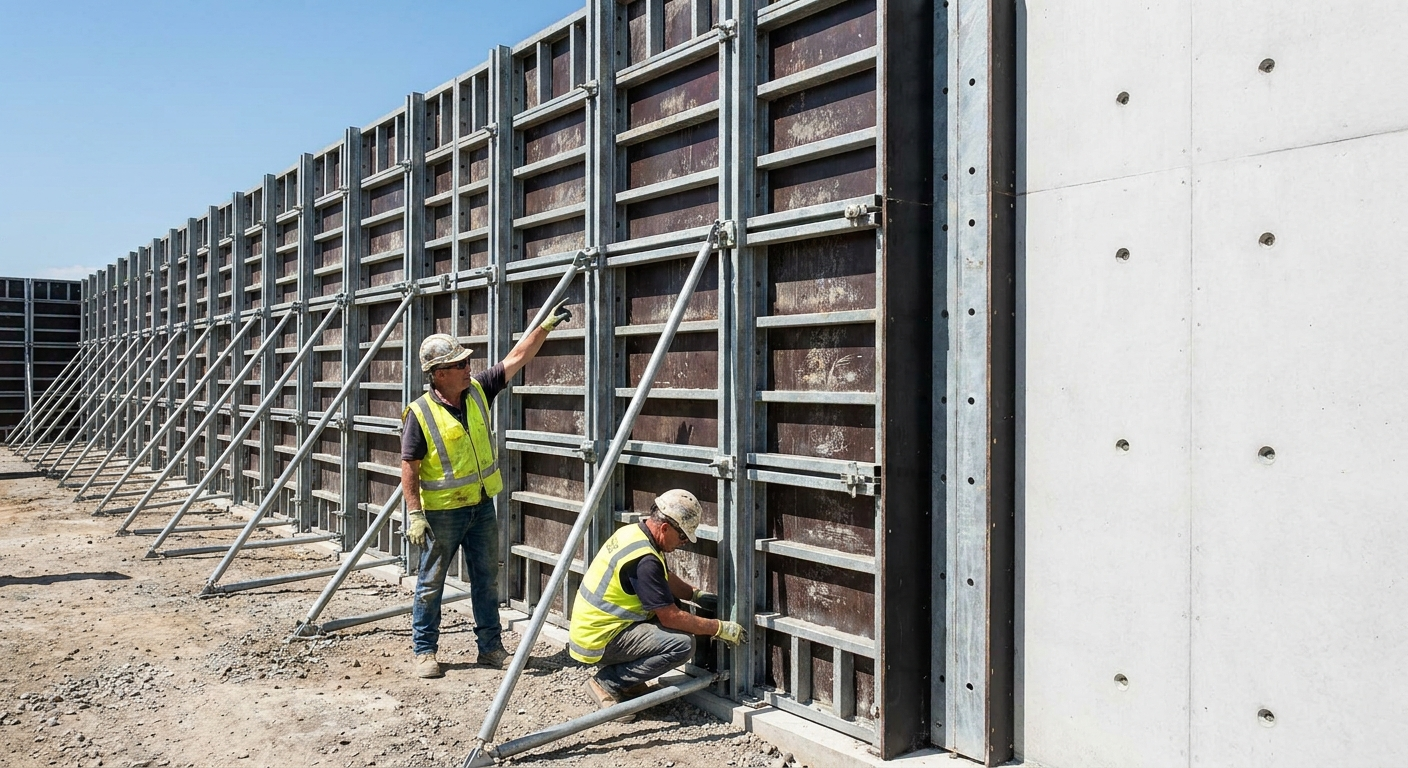
Plywood vs steel formwork is a cost-per-pour decision, not a brand fight. Film-faced plywood panels win when pour count stays mid-range, shapes change, crews need light sheets, and the cast finish matters. Steel wins when the same section repeats at very high volume and the capital can amortise. Below that threshold, plywood-faced forms usually land cheaper per cast.
Most ranking pages sell one side. A steel vendor frames plywood as disposable. A plywood seller frames steel as overkill. Procurement needs both numbers: how many times the form will run, and how clean the concrete face has to look. Vinawood has made formwork plywood in Vietnam since 1992 and ships about 5,000 containers a year to 55+ countries. Plantation-grown cores. Factory-direct. No unit prices on this page.
What each system actually is
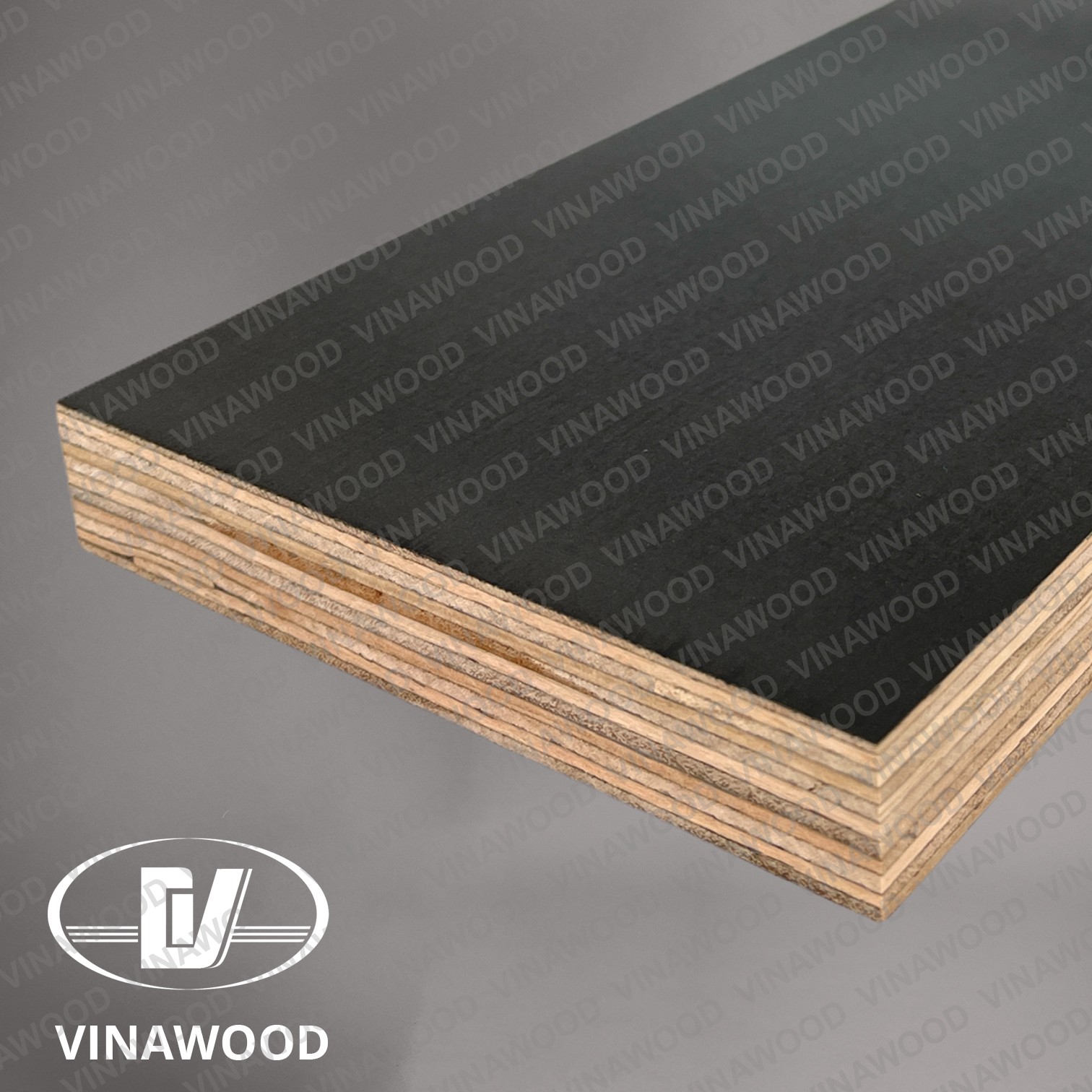
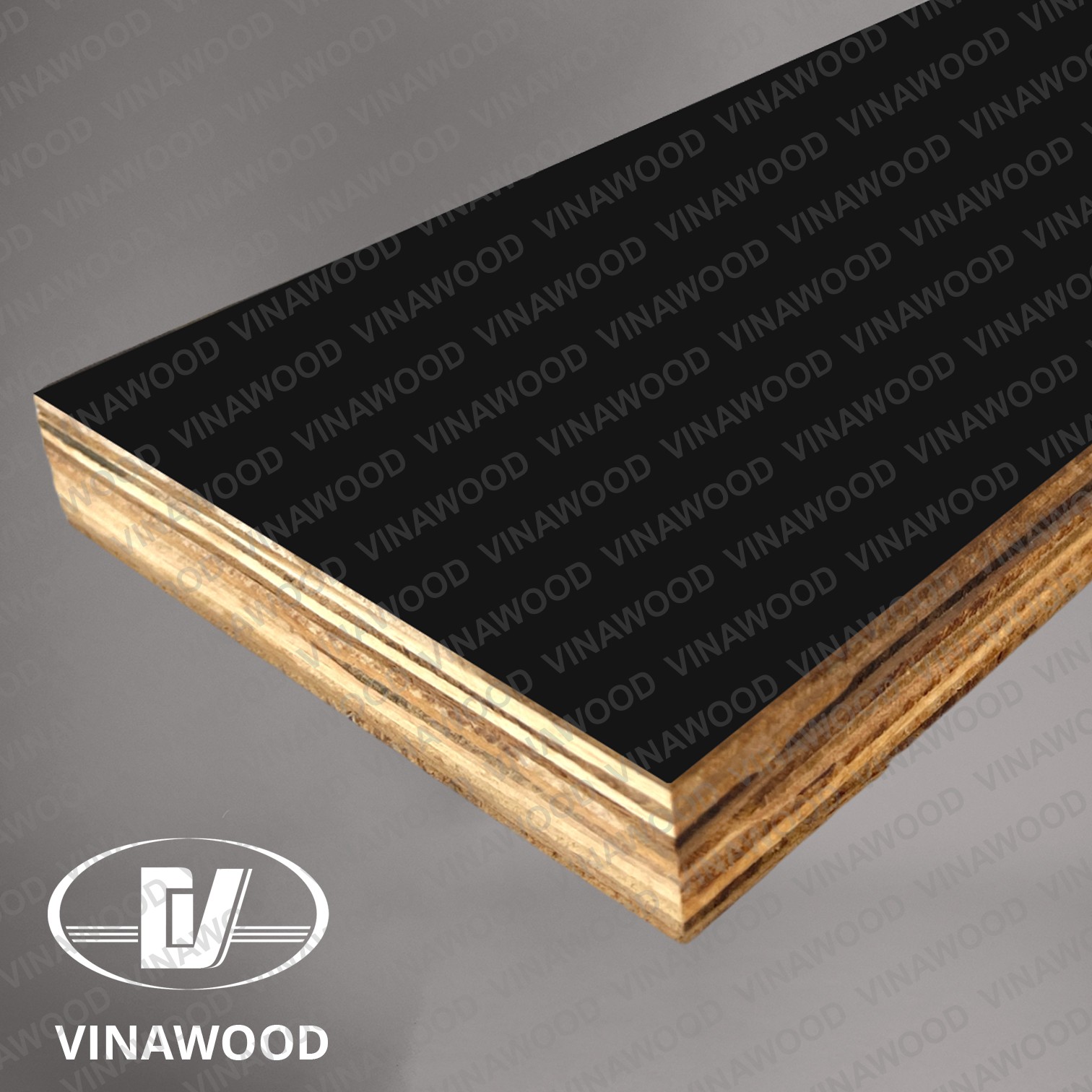
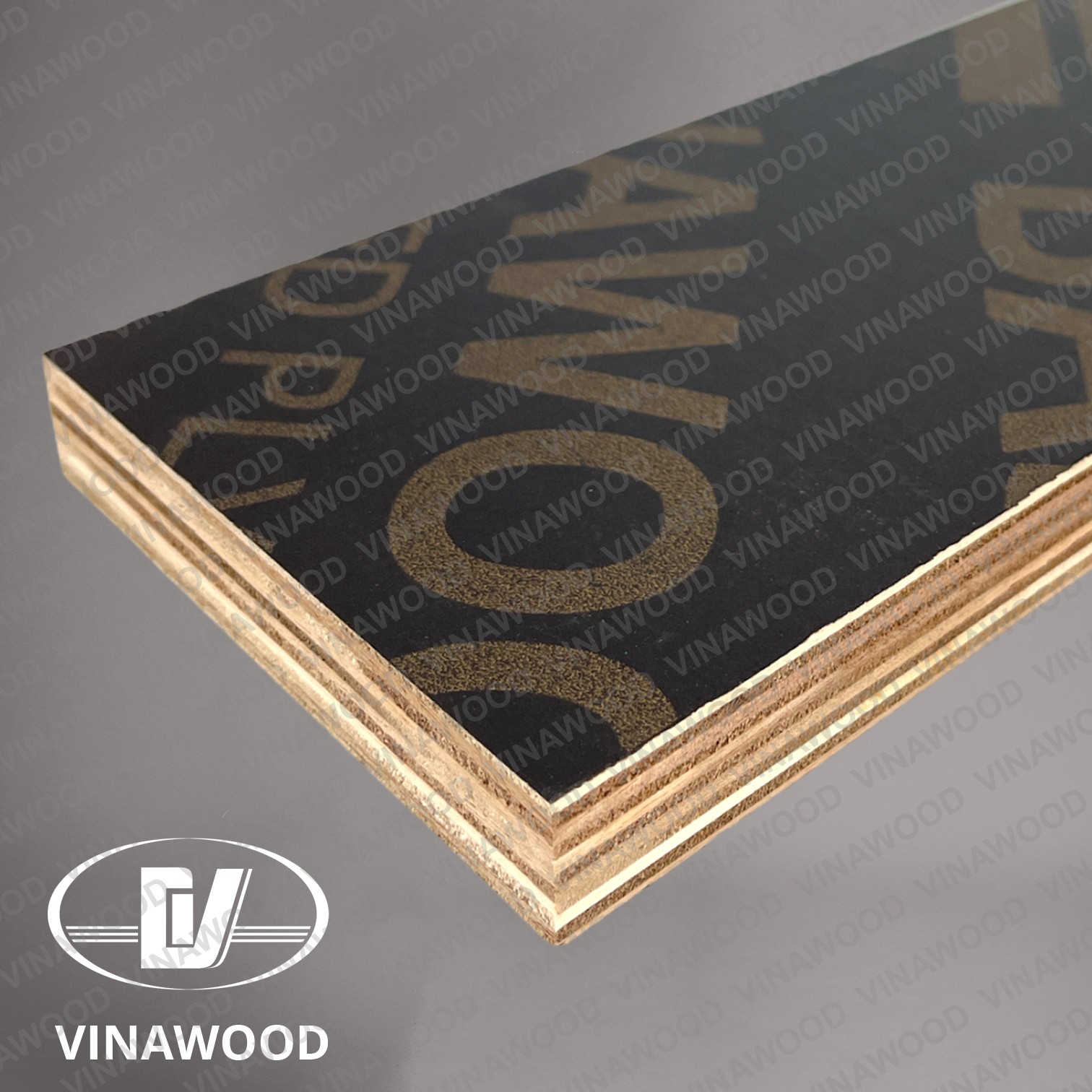
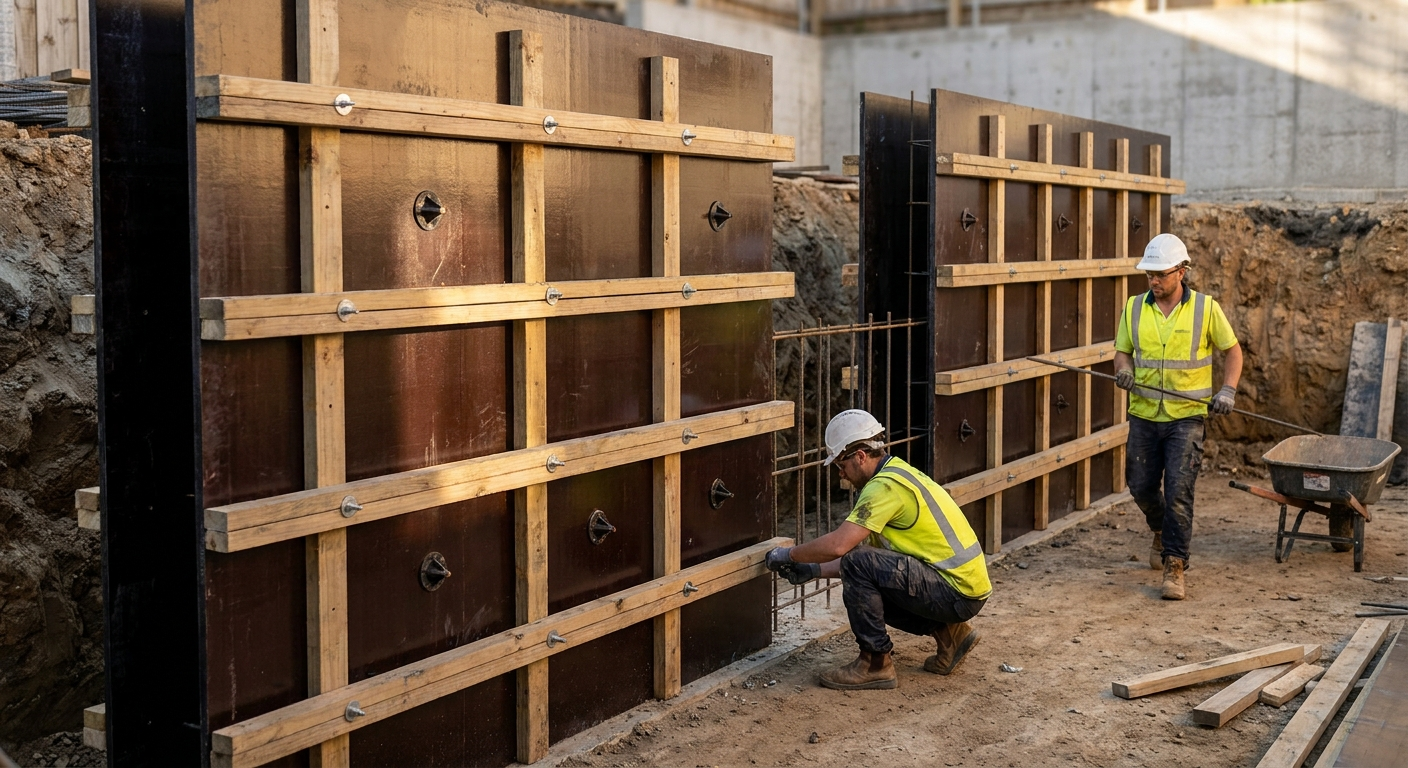
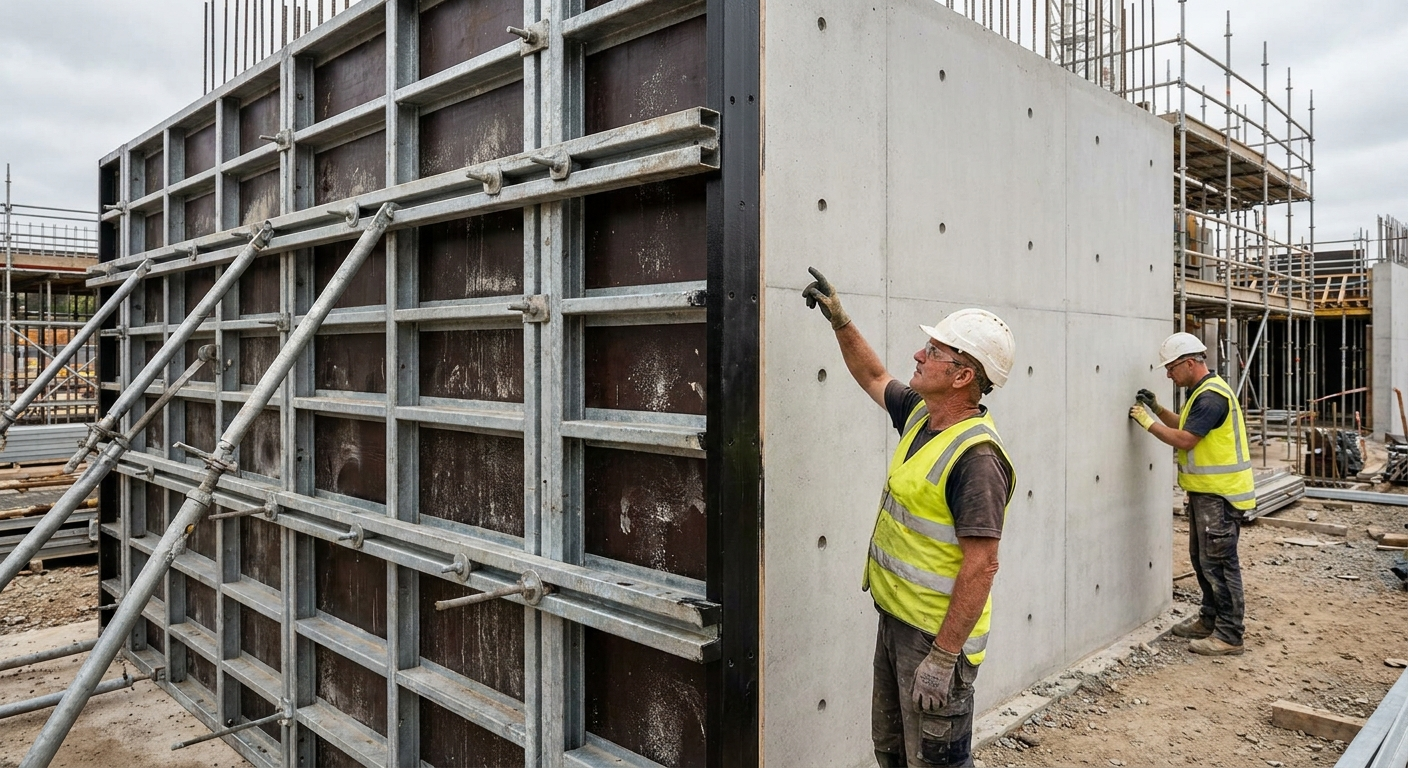
Plywood-faced formwork is a phenolic film-faced panel on a timber or aluminium frame, or carried on H20 beams. The panel is the casting face. The frame and beams carry the load. Crews cut it on site, take custom shapes, and replace the face when it wears out.
Steel formwork covers two things in practice. Fully steel panels with a steel casting face, and steel-framed modular panels that hold a replaceable plywood or composite skin. That second category matters. A lot of "steel formwork" on real jobs is a steel frame with a plywood face bolted on. The two systems are not always rivals. Often they are the same form with a different skin.
Upfront cost without a price table
Plywood-faced systems carry a lower entry cost. A crew can buy panels by the container and form a job without a capital outlay on a modular fleet. Steel is a capital purchase or a rental commitment. The per-unit price reflects steel content and the engineering behind a modular system.
We do not quote numbers here. Vinawood prices factory-direct, and landed cost depends on volume, format, and freight. The structural point holds regardless: plywood lets a contractor start forming with a small order. Steel asks for the budget up front and pays it back later through reuse — if the programme actually runs enough pours.
Reuse life and cost-per-pour
Upfront price per sheet is the wrong thing to optimise. Cost spread across the number of pours each form survives is the right one.
Film-faced plywood reuse, written as maximums:
| Panel | Core glue / class | Max reuse |
|---|---|---|
| Eco Form Plus | WBP MUF, EN 636-2 / Class 2 | up to 8 reuses |
| Form Basic | WBP MUF, EN 636-2 / Class 2 | up to 10 reuses |
| Form Extra | Superior Glue MUF, EN 636-2 / Class 2 (not Class 3) | up to 15 reuses |
| Pro Form Lite | WBP PF, EN 636-3 / Class 3 | up to 15 reuses |
| Pro Form | WBP PF, EN 636-3 / Class 3 | up to 20 reuses |
| HDO Basic | WBP PF, EN 636-3 / Class 3 | up to 10 reuses |
| HDO Premium / Premium HD | WBP PF, EN 636-3 / Class 3 | up to 20 reuses |
| Steel-ply panel | Steel casting face | 100+ pours with maintenance |
Only Pro Form, Pro Form Lite, and HDO are phenolic Class 3. Form Extra stays Superior Glue MUF on EN 636-2 — same phenolic face film family as Form Basic; the extra cycles come from glue chemistry, not a heavier overlay. P-Form is polypropylene, not Pro Form. Commercial Bintangor is not on this film-faced ladder.
Read the table and the steel case looks obvious. It is not, until you do the division. A steel panel that survives a hundred pours only beats plywood on cost-per-pour if the job actually runs a hundred near-identical pours. Most jobs do not. A residential basement, a run of footings, a one-off retaining wall — these burn through a handful of casts, and the steel capital never amortises. Below that high repeat-pour threshold, plywood lands cheaper per cast.
From a Vietnamese mill perspective, the panels that come back in our claims data almost never failed because the panel was off-spec. They failed because a site stripped them with a crowbar, skipped the edge sealing, or stored them flat on wet ground. Reuse counts are ceilings earned by handling discipline, not floors guaranteed by the label.
One vocabulary note. In formwork copy, name the glue: core MUF (melamine-urea-formaldehyde) resin between veneers, weatherable at EN 636-2. Do not drop bare "melamine." That word also means a melamine face film (not used on Vinawood formwork faces — those are phenolic) and decorative laminate from the cabinetry trade, which is not a forming product.
Concrete finish
A phenolic film face casts a smooth, fair-face concrete surface and holds that finish across its reuse life when the panel is cared for. Steel can match a smooth finish when the face is clean and coated. The trouble starts when the coating fails: a steel face that rusts will stain the concrete, and a dented steel panel telegraphs every blemish into the cast.
For exposed architectural work, the panel choice follows the finish class. Glossy off-form concrete points to phenolic film-faced or HDO. A matte exposed face points to MatteFace Plywood (MTF), a matte phenolic surface film for formwork; buyers often search for it as MDO formwork plywood. Overlay trade-offs sit on our HDO vs MDO overlay comparison. Steel sits alongside these, not above them.
Weight and labour
Plywood panels are markedly lighter than steel. That shows up in three places on a site. Crews strike and reset faster. The form is less crane-dependent. Handling injury risk drops because a worker can carry a panel two-handed instead of slinging a steel unit.
Steel's weight is the price of its durability. A steel-ply panel that takes a hundred pours has to be built heavy enough to survive them, and that mass slows every strike-and-reset cycle. On a labour-constrained site, the lighter form often wins the schedule even when steel wins the spreadsheet on a long enough run.
Custom shapes and hybrids
Plywood is cut and shaped on the bench. Columns at an odd section, curved blockouts, service penetrations, faceted profiles — these get formed with plywood because the panel bends to the job. Steel is fixed-module. It excels where the geometry repeats and the modules fit, and it fights you where they don't.
This is why hybrid forms are so common. A contractor rents a steel or aluminium frame for its rigidity and bolts a fresh plywood face onto it because the original face is worn out. The same pattern shows up in the choice between plywood-faced wall forms and system walls: the frame is steel, the casting skin is plywood, and the buyer is really shopping for a face panel.
When steel actually wins
Steel earns its cost in clear cases. High-repetition precast yards casting the same unit hundreds of times. Tunnel and infrastructure forms where the same section repeats across a long programme. Sites where the handling is abusive enough that a plywood face would not survive to its rated count anyway. Very tight tolerance work repeated often enough that the steel face's dimensional stability pays for itself.
If your job is hundreds of identical pours, buy the steel and do not look back. The cost-per-pour math flips cleanly at that volume, and the consistent finish across a long run is worth the capital.
How to spec the plywood option
Match the adhesive class to the application envelope. For repeat-pour commercial work and any hybrid use on a rented frame, lead with phenolic-bonded plywood at EN 636-3 — Pro Form Lite (up to 15) or Pro Form (up to 20). For short-run residential and retaining work of a few pours, an MUF panel at EN 636-2 carries the job: Eco Form Plus up to 8, Form Basic up to 10, Form Extra up to 15. Call WBP water-resistant, never waterproof.
Thickness follows the pour. An 18 mm panel is the working baseline for standard lifts on typical bearer spacing; 21 mm earns its place on deep pours, wide spans, or fast placement rates where the thinner panel would deflect. Seal every cut edge the day the panel is cut, run a thin even coat of release agent before each pour, and the panel reaches the top of its reuse band. The full film-faced range sits in the film-faced plywood collection. For the mill film-faced guide, see film faced plywood for concrete formwork. Alternatives beyond steel sit on formwork plywood alternatives.
Decision matrix
| Job profile | Recommended system |
|---|---|
| Short residential foundations, light retaining | 18 mm Eco Form Plus or Form Basic (EN 636-2, up to 8–10) |
| Residential foundations, retaining walls, short commercial runs | 18 mm Form Extra (EN 636-2, up to 15) |
| Repeat-pour commercial walls and columns (Class 3 named) | 18 mm Pro Form Lite or Pro Form (EN 636-3, up to 15–20) |
| Hybrid: plywood face on a rented steel/aluminium frame | Pro Form Lite or Pro Form face panel sized to the frame |
| Custom shapes, blockouts, faceted profiles | Plywood, cut to shape on the bench |
| High-repetition precast, tunnel, infrastructure | Steel-ply modular |
| Hundreds of identical pours, abusive handling | Steel-ply modular |
About Vinawood
Vinawood has manufactured plywood in Vietnam since 1992, shipping about 5,000 containers a year to 55+ countries. The film-faced forming range covers EN 636-2 (Eco Form Plus, Form Basic, Form Extra) and EN 636-3 (Pro Form Lite, Pro Form, HDO range), with ISO 9001 quality management, CE marking under EN 13986 for European and UK projects, and CARB P2 / TSCA Title VI compliance for the United States. For most repeat-pour work, lead with Pro Form Lite or Pro Form; for short-run residential and retaining jobs, Form Extra or Form Basic. Send us the pour programme and the finish class and we will quote the right panel factory-direct via /contact?type=quotation.
Category
how-to