When Was Plywood Invented? Discover Its Origins and Impact
Among the various types of industrial wood available today, such as MDF and MFC, plywood stands out as a familiar and widely utilized material across multiple industries. Recognized for its versatility, plywood has been a staple in various projects throughout history, dating back to ancient times.…
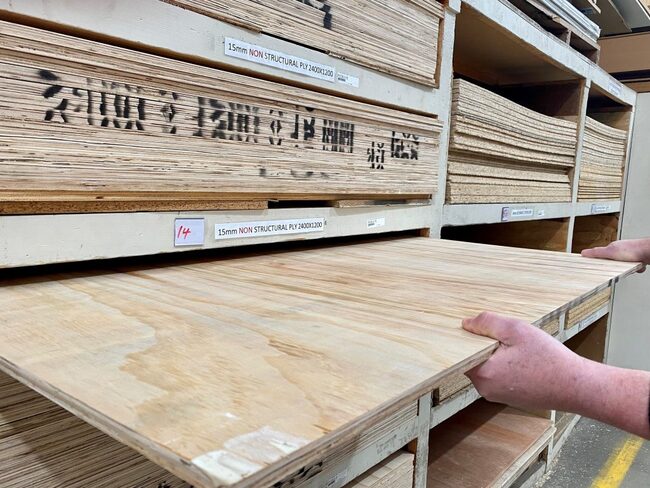
Plywood is not a new idea. Egyptians glued thin wood layers around 2600 BC. What changed in the last 170 years is scale: rotary peeling, synthetic adhesives, and factory grades turned a craft trick into a standard building panel.
Ask “when was plywood invented” and you get two answers. Laminated wood is ancient. Modern cross-banded sheets with industrial glue start with Bentham’s 1797 patent and pick up speed after the 1905 Portland demo. Below is the timeline we use at Vinawood, next to related notes on wood types and MDF vs plywood.
What Is Plywood and How Is It Made?
Plywood is veneers glued face to face, each sheet’s grain turned 90° from the one below. That cross-band is why a panel holds shape better than a single board of the same thickness. Strength goes up. Cupping drops. You still need the right glue and grade for the job.
Ancient Roots: The First Use of Laminated Wood (2600 BC)
Skip forward from the patent year and you still land in Egypt first. Around 2600 BC, layered wood showed up in furniture and coffins. China and Greece had their own versions. Same idea: stack thin stock so it does not split like a thick plank.
The Rise of Modern Plywood (1797–1900)
1797 – Samuel Bentham Patents Laminated Wood
Bentham’s patent covered thin veneers laminated with glue. One sentence on paper. Factories spent the next century making that sentence cheap enough to sell by the sheet.
1858–1860 – Molded Plywood Furniture by John Henry Belter
John Henry Belter, New York, mid-1800s. He pressed chair backs in molds. One form, many seats. That is early commercial molded plywood, not a craft one-off.
1867 – Elevated Railway Prototype in New York
Alfred E. Beach showed a 107-foot molded plywood tube railway at the American Institute Fair. About 75,000 people rode the demo. Proof that a wood shell could carry passengers, not just sit under a tabletop.
Industrial Expansion: Global Manufacturing and Exploration (1900–1930s)
1908 – Antarctic Expedition and Aurora Australis
Shackleton hauled more than 2,500 plywood crates south. They survived the cold, then got cut into furniture. The crew even bound Aurora Australis — the first book printed in Antarctica — with packing-case stock.
1917 – Haskell Canoe and Waterproof Adhesives
Haskell’s molded plywood canoes used early water-resistant glue. Light hulls that still took serious load (reports cite over 3,400 lb capacity). Boat yards noticed. So did early aircraft shops.
Design Meets Function: Modernism and Furniture (1930s–1940s)
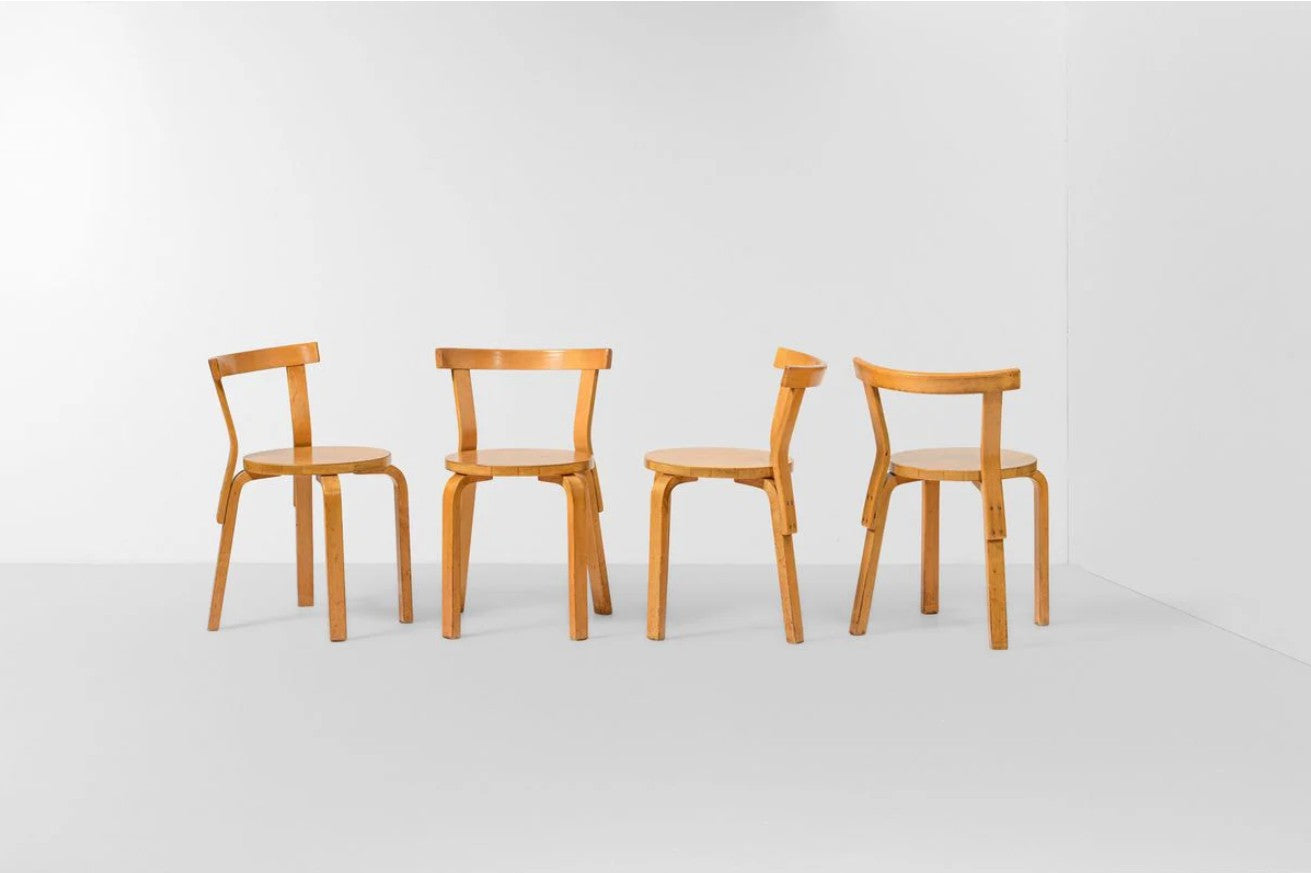
1932 – Alvar Aalto and the Paimio Chair
Alvar Aalto’s Paimio armchair bent plywood into a seat that looks like it floats. Factory furniture, not a carved one-off. Cheap enough to make in volume, still a design object.
1937 – Plywood Prefab Homes by Forest Products Laboratory
During the Depression the Forest Products Lab pushed plywood prefab homes. One demo went up in 21 hours with seven workers. Speed was the pitch. The panel format made that possible.
Wartime Innovation: Aircraft, Cars, and Leg Splints (1940s)
1941 – De Havilland Mosquito: The Plywood Plane
The DH-98 Mosquito flew on molded plywood. Monocoque wood shell, very little metal. Fastest thing in the sky for a stretch of the war. Crews called it the Wooden Wonder for a reason.
1941–1942 – Charles & Ray Eames' Plywood Leg Splint
Charles and Ray Eames built molded plywood leg splints for the Navy. Same bending know-how later showed up in the DCM Chair. Medical kit first. Living-room classic second.
Plywood for the People: DIY and Leisure (1950s–1970s)
1960s – Mirror Dinghy and the DIY Boom
Weekend builders got plywood kits. The Mirror Dinghy — marine plywood, stitch-and-glue — turned amateurs into boat owners. One of the most common small sailboats of the century.
Digital Age Plywood: Open-Source Design (2010s–Today)
2013 – Opendesk and CNC-Cut Furniture
Download a cut file. Feed a CNC. Walk out with a desk. Opendesk and similar projects still pick plywood because a flat sheet ships and machines cleanly.
When did we start using plywood?
Start with use, not the patent date. Egyptian furniture makers were already stacking thin wood layers by about 3500–2600 BC. The point was simple: a light piece that did not split as easily as a solid plank.
Factory plywood shows up later. In 1905, at the Lewis and Clark Centennial Exposition in Portland, Oregon, a rotary lathe peeled continuous veneer from a log. Sheets were glued with grains crossed. That setup fixed a lot of solid-wood warping and splitting along the grain.
> Explore further: Particle Board vs Plywood, OSB and Plywood, plywood ceiling
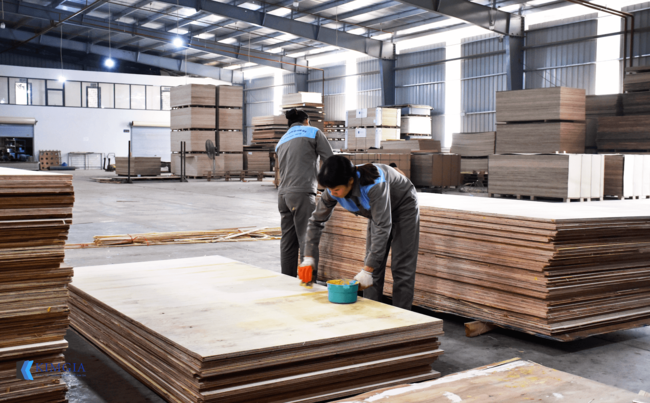
Adhesives got better in the 1920s and 1930s, so mills could sell water-resistant panels at volume. By WWII, plywood was in barracks, boats, and airframes because it was light and available when metals were scarce.
After the war, housing boomed and plywood rode that wave. Fast to cut. Cheap relative to solid stock. Still common in framing, furniture cores, and millwork. Plantation species help keep supply steady, which buyers actually care about when specs call for FSC or EUDR paperwork.
When was plywood invented?
Modern plywood’s paper trail starts in 1797. Samuel Bentham, English naval engineer, patented laminated veneers with grains set in different directions. Stronger than a single board of the same size. More stable, too.
By 1865 Immanuel Nobel (Alfred Nobel’s father) had a rotary lathe that peeled thin, even veneers from a log. Uniform sheets. That is the step factories needed.
In the U.S., John K. Mayo’s 1896 patent covered pressure-gluing stacked plies. That patent helped mills standardize how panels were pressed, not just how veneer was cut.
Portland’s 1905 fair put rotary-cut plywood in front of builders. Orders followed. West Coast mills scaled up around Douglas fir.
Synthetic resins in the 1910s–1920s raised bond strength and wet performance. In 1928 the Douglas Fir Plywood Association (today’s APA) locked grades and sizes so a stamped panel meant the same thing on every job site.
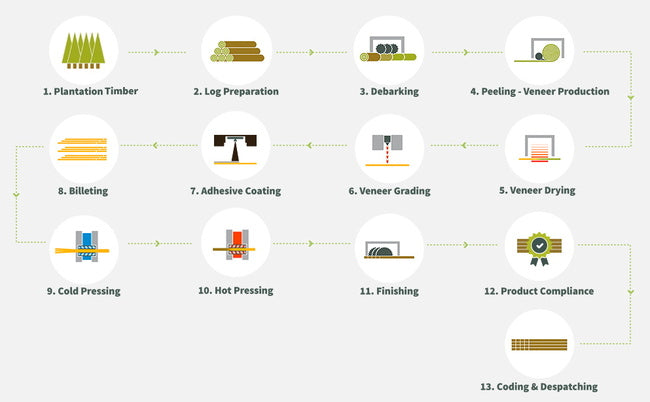
From Bentham’s patent to APA grades, the arc is clear: peel, cross-band, glue, stamp. That is still the mill process we run in Vietnam for export panels.
> Discover more: furniture grade plywood, plywood underlayment, shuttering plywood, concrete forming plywood
What are the Three Types of Plywood?
There are three primary types of plywood, each tailored for specific applications: softwood plywood, hardwood plywood, and marine plywood.
Softwood plywood
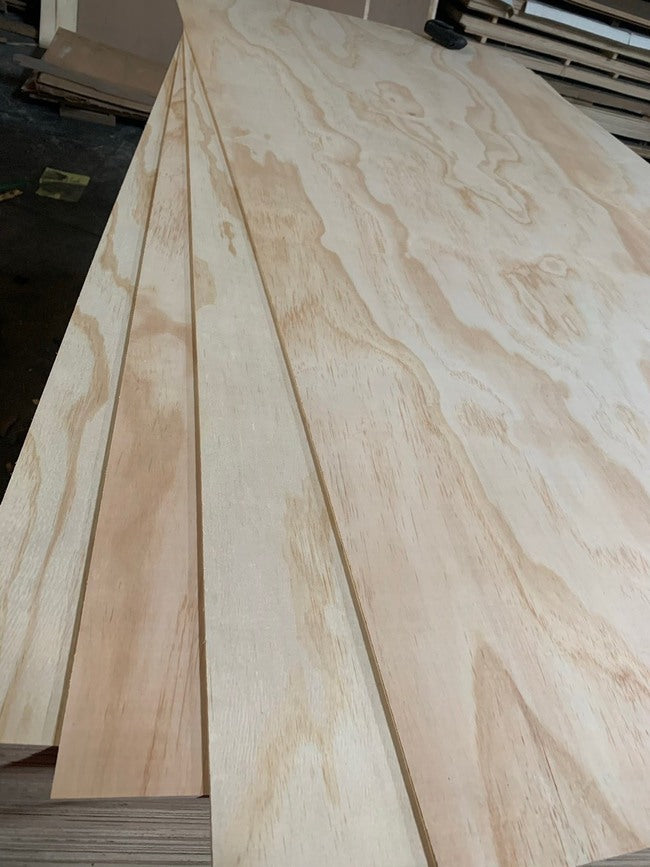
Softwood plywood comes from pine, fir, or spruce. Builders buy it for sheathing, subfloors, and framing because sheets are large and priced for volume. Grades run from A (clean face) down to D (more patches, still structural).
Hardwood plywood
Hardwood plywood uses oak, birch, maple, or walnut faces. Cabinets and furniture first. Costs more than softwood because the face veneer is the product people see. Grade A for clear stain work; lower grades where paint or laminate covers the face.
Marine plywood
Marine plywood is built for wet service: solid veneers, few voids, and water-resistant (WBP) glue lines. Boats, docks, exterior wet zones. It costs more than interior grades; you pay for the glue and the void rules, not a magic “waterproof forever” claim.
> Read more: hardwood flooring, baltic birch plywood, maple plywood, ACX plywood, BBOES plywood
Is plywood stronger than solid wood?
Against solid lumber of the same thickness, plywood usually wins on warp and split resistance. Crossed grain spreads stress. You also get more grade choices, so you can buy a cheap utility sheet or a furniture face without changing the core idea.
Humidity still moves wood. Cross-banding just moves it less. That is why subfloors and wall sheathing stay flatter than a wide solid board would in the same room.
Sheets come in fixed sizes. Solid stock does not. On a job with hundreds of panels, that boring consistency matters more than any marketing line.
Pick plywood when you need sheet size and stability. Pick solid wood when you want a thick, continuous grain look. Match the material to the load and the finish, not to a slogan.
FAQs About the History of Plywood
What made plywood a popular material in the 20th century?
It was light, strong enough for the job, and cheap to stamp out. Builders, boat yards, and furniture plants all needed that mix.
How did molded plywood impact modern furniture?
Molded plywood bent into curves solid boards fight. That is how Eames chairs and a lot of mid-century seating got their shape without carving a solid blank.
Why was plywood chosen for use in extreme environments like Antarctica or wartime aviation?
High strength for the weight. Shackleton’s crates and the Mosquito airframe both leaned on that. Cold and vibration punish solid stock harder.
How did plywood contribute to DIY culture in the mid-20th century?
A sheet, a saw, and a plan. Mirror Dinghy kits and garage furniture projects worked because plywood was flat and available at the lumber yard.
What role does plywood play in today’s digital manufacturing landscape?
CNC shops and open-source furniture files (Opendesk and the like) still default to plywood. Flat sheet in, cut parts out. Local fab, less shipping of finished goods.
Is plywood still evolving as a material?
Yes. Better resins, better films, tighter chain-of-custody docs. The panel format stays; the glue and paperwork keep changing.
Timeline short version: laminated wood in antiquity, Bentham in 1797, rotary mills and APA grades in the early 1900s. For current panel grades and export specs, start on Vinawood’s site.
> Get more details: