10 Best Commercial Plywood Suppliers in Middle East
How Gulf contractors and importers tell a commercial plywood manufacturer from a trader or stockist: press ownership, bond class by grade, Consply versus film-faced formwork, and the document pack to see before a deposit. Vinawood, Vietnam, since 1992.
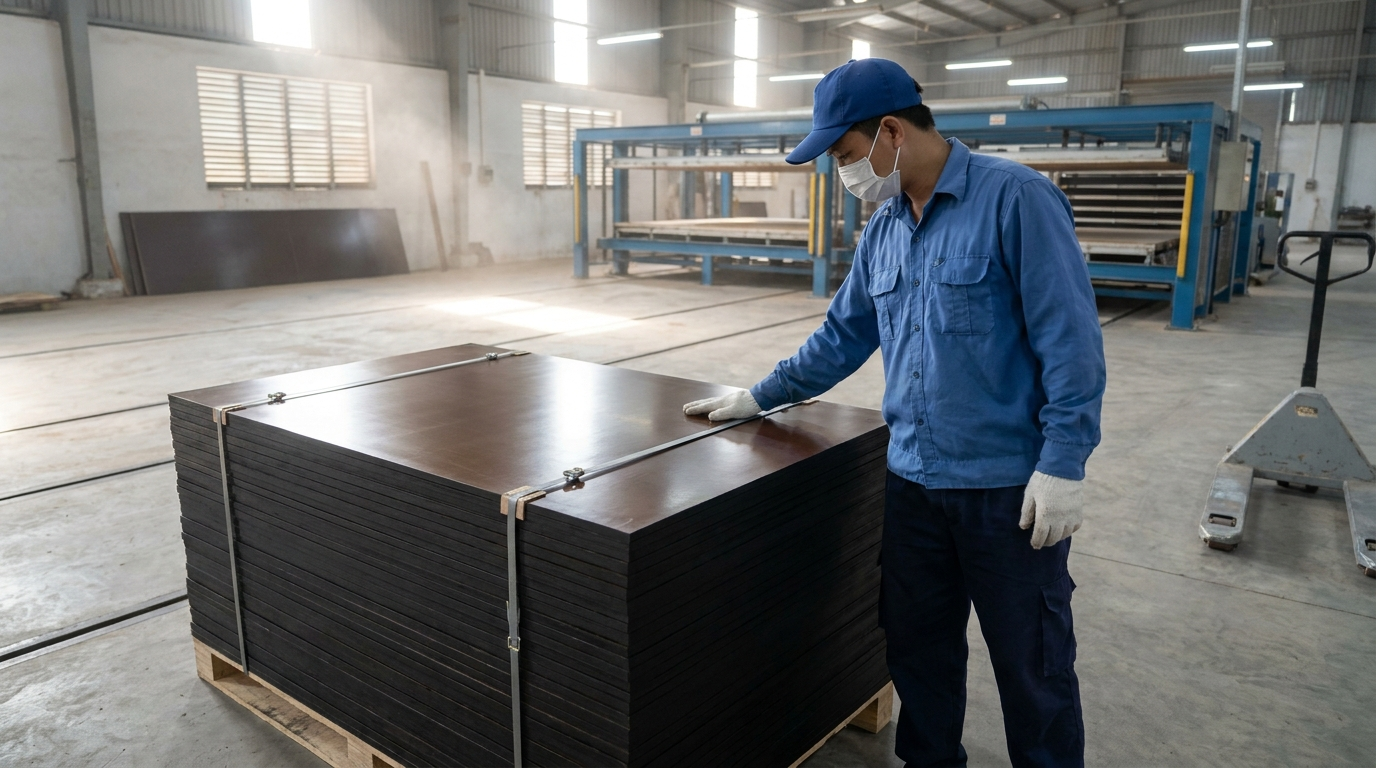
A commercial plywood manufacturer is the company that owns the press. It peels and dries the veneer, lays up and glues the core, presses and sands the panel, and then issues the mill test report for the exact thickness you ordered. A trader buys those panels and resells them, and a local stockist holds sheets in a Gulf warehouse for quick pickup. Buyers who type "10 best" into a search bar are usually after that same thing, a short list of factories they can trust, so this page swaps the ranking for the questions that actually separate a mill from a middleman.
That distinction matters more in the Gulf than almost anywhere else, because a single container from Asia often passes through two or three hands before it reaches a site in Dubai or Riyadh. Each hand adds a margin, and each one can also swap a certificate or blur which factory pressed the sheets. When a problem shows up after the first pour or the first humid month in storage, only the party that ran the press can trace the batch and fix the grade on the next order.
Vinawood has manufactured plywood in Vietnam since 1992. We ship about 5,000 containers a year to more than 55 countries, and every panel is built from plantation-grown wood through a 12-step process that ends with an inspection of each individual sheet. The sections below explain how a contractor or importer in the region can check any supplier, us included, before money moves.
What makes a supplier a commercial plywood manufacturer
Anyone can write "manufacturer" on a website, so test the claim against work only a factory does. A real commercial plywood factory controls veneer grading and the glue mix, and those choices decide how the panel behaves on a wet site months later. If the person quoting you cannot say which resin bonds the core or how thick the face veneer is, you are probably talking to a reseller who has never seen the press line.
The second test is the paperwork chain. A manufacturer can tie the mill test report to a production window and a pack mark, so the bond class written on the certificate matches the sheets in the bundle. Traders tend to send a generic PDF that covers a product family rather than your batch. That gap is small on paper and expensive on site, because a delaminated sheet with an unlinked certificate leaves nobody to claim against.
The third test is whether the supplier can change the product. Ask for a different face grade or a tighter thickness tolerance and listen to the answer. A factory plywood producer will talk about press time, glue spread and lead time. A reseller will talk about what happens to be in stock.
Mill, trader or stockist: how Gulf buyers tell them apart
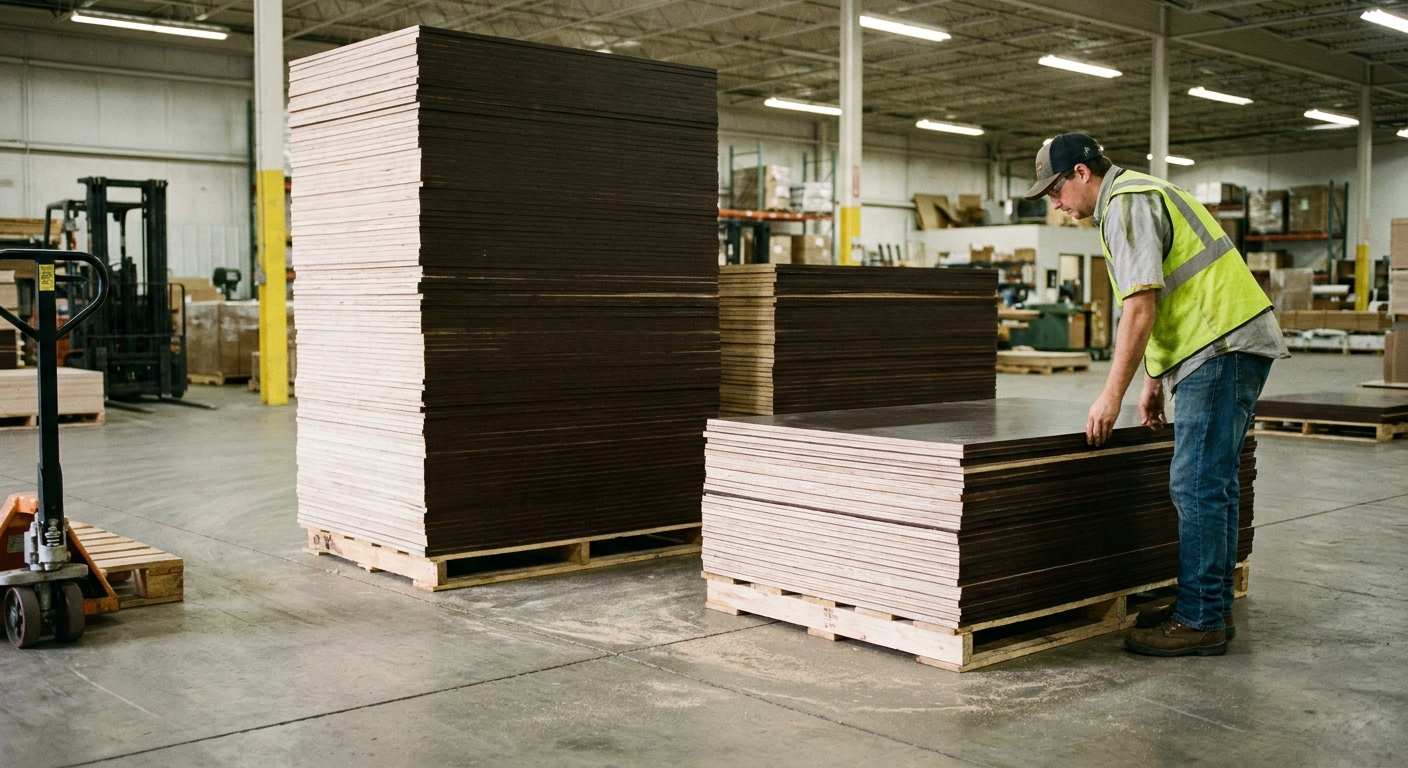
Most commercial plywood suppliers in the UAE, Saudi Arabia and Qatar fall into one of three roles, and each one has a fair place in a supply plan. The mill owns the press and the quality record. A trader buys FOB or CIF from one or more factories and resells, which helps when you need mixed sizes or short call-offs. A local stockist keeps 1220 x 2440 mm sheets in a warehouse near the job and sells speed rather than press control.
Trouble starts when the roles get blurred on the quotation. A trader may present a factory brochure as its own, or a stockist may describe a reseller's container as "direct from the mill" without naming which mill. The fix is simple and costs nothing: ask who owns the press, ask for the factory name on the certificate, and check that the same name appears on the packing list. If those three things disagree, the price is not the real number you are comparing.
None of this means a Gulf buyer should only deal with a mill. Plenty of contractors buy a first container direct and top up from a local yard while the next shipment is at sea. What matters is knowing which role you are paying for, so a claim or a grade change goes to the party that can act on it.
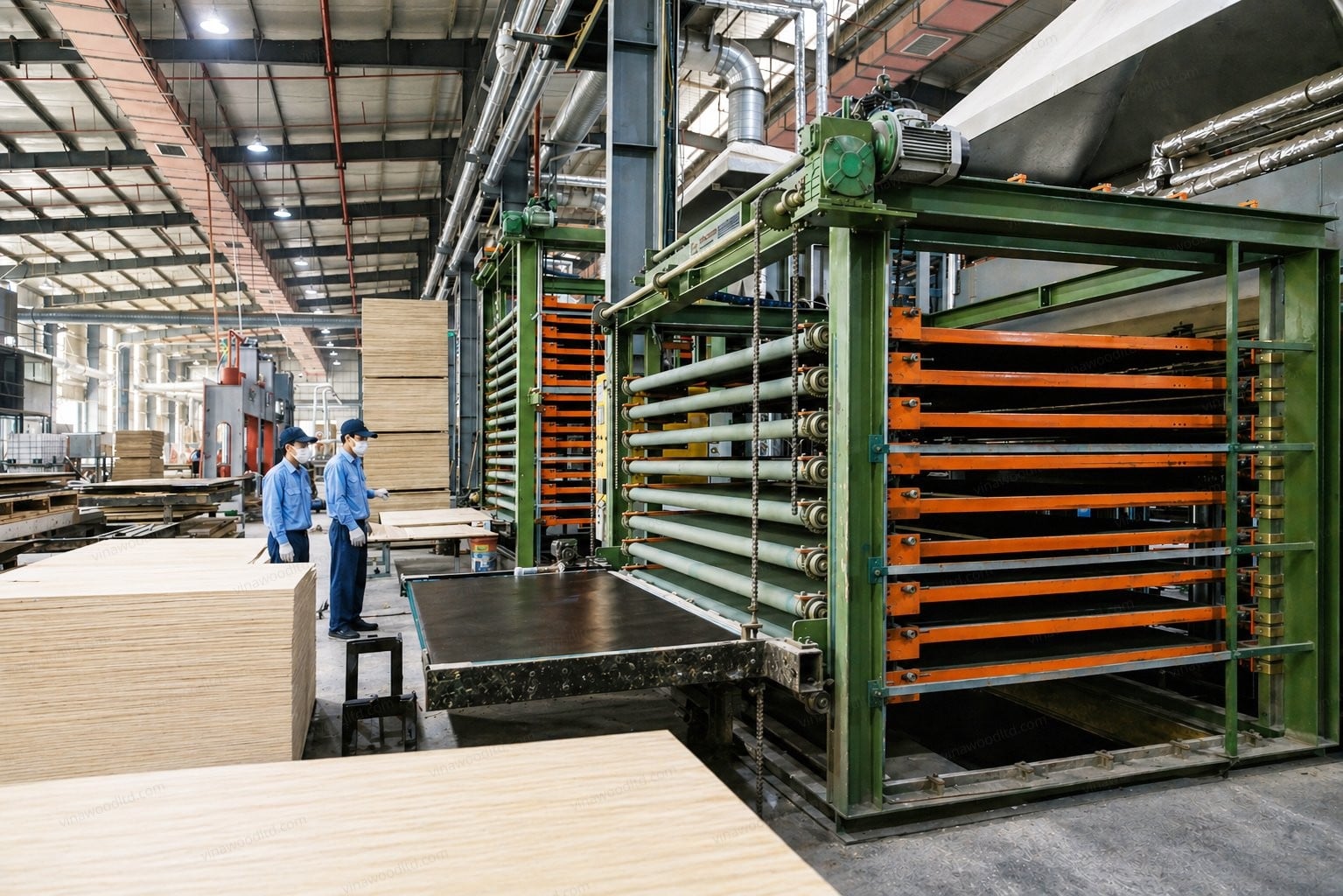
Commercial panels and formwork panels are separate orders
Commercial plywood in Gulf tenders usually means a sanded panel with a natural wood face, often sold under the Bintangor name. Our commercial panel is Consply, which carries a Bintangor face and back with no film overlay and a Class 2 MUF resin core glue. It suits contractors and distributors who need an economical construction sheet and where the concrete face, if there is one, will be hidden or rendered later. It is not a film-faced panel, and it should never be priced as one.
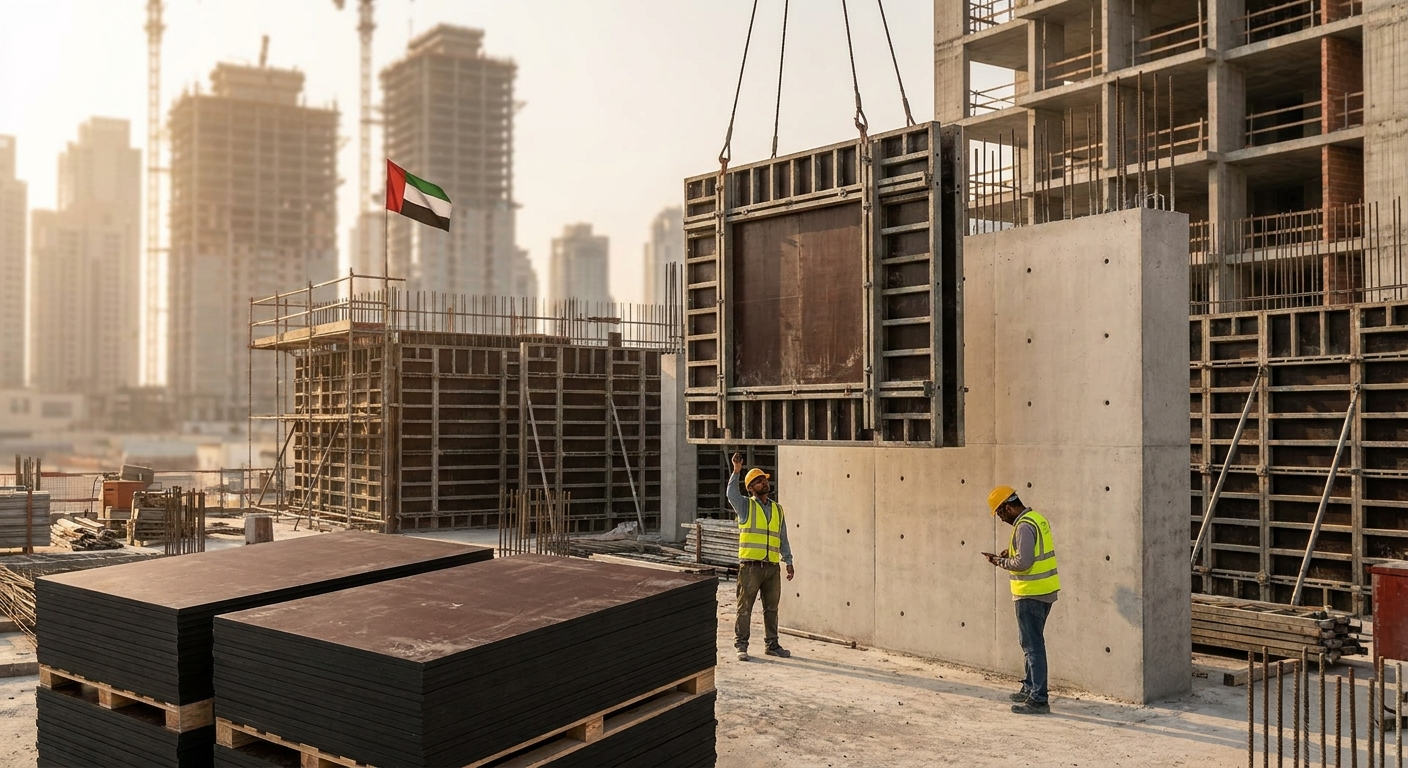
Search terms like "formed plywood manufacturer" or "film faced plywood supplier" point somewhere else. Crews who use those words mean formwork panels, where a resin film or overlay is pressed onto the face so the sheet releases cleanly from concrete and can be reused across several pours. That buying decision turns on film type, glue class and reuse count, and we cover it in detail in our guide to formwork plywood suppliers in the Middle East, with the full range on the film-faced plywood collection page.
We still receive Gulf enquiries that ask for a sanded commercial face and a twenty-pour reuse target in the same sentence. No single panel answers both, and a quotation that pretends otherwise usually means the wrong pack arrives. Splitting the request into a commercial line and a formwork line takes five minutes and saves a container.
Where each grade sits on bond class
Bond class is the number that tells you how the glue line handles moisture. Under EN 636, Class 2 covers humid conditions and short wetting, while Class 3 (EN 636-3) is the exterior class for panels that see repeated wetting on site. WBP on a quotation describes a water-resistant glue line, not a panel that ignores water, because the wood itself still takes on moisture if edges are left open.
Across the Vinawood range, the phenolic Class 3 group is Pro Form, Pro Form Lite, HDO Standard and HDO Premium, together with four MatteFace Plywood (MTF) panels: Panel 1S, Panel 2S, 1SF and HD 1SF. The Class 2 group uses MUF or M-Bond core glues and includes Form Basic, Form Extra, Eco Form, Eco Form Plus, HDO Basic and MatteFace Eco 1SF. Form Extra carries the same phenolic face film as Form Basic, and its longer reuse comes from a stronger Superior Glue MUF core rather than a heavier film.
| Grade | Bond class | Reuse |
|---|---|---|
| Eco Form | Class 2 | up to 6 |
| Eco Form Plus | Class 2 | up to 8 |
| Form Basic | Class 2 | up to 10 |
| Form Extra | Class 2 | up to 15 |
| Pro Form Lite | Class 3 | up to 15 |
| Pro Form | Class 3 | up to 20 |
| HDO Basic | Class 2 | up to 10 |
| HDO Standard | Class 3 | up to 20 |
| HDO Premium | Class 3 | up to 20 |
| MatteFace Eco 1SF | Class 2 | up to 6 |
| MatteFace Panel 1S / 1SF | Class 3 | up to 15 |
| MatteFace HD 1SF | Class 3 | up to 17 |
| MatteFace Panel 2S | Class 3 | up to 25 |
Reuse figures are maximums under careful handling, with sealed edges, release agent and clean stacking between pours. MatteFace Plywood is a matte overlay formwork panel, and buyers often search for MatteFace as MDO formwork plywood. For most Gulf pour programmes the Form and Pro Form ladder is where the conversation starts, with HDO as a named option when a project specification calls for a high density overlay.
Paperwork that should arrive before the deposit
A certificate only helps if it belongs to your batch. Before any deposit leaves the account, ask the supplier for a document pack that matches the thickness, face and bond class written on your purchase order:
- Mill test report for bond class and thickness, on the factory's own letterhead
- Packing list with pack marks and the plantation-grown species used
- ISPM 15 treatment record for the pallets
- FSC or PEFC chain of custody when the project file asks for it
- Declaration of Performance and CE papers when the specification cites EN 13986
Duty and tariff treatment changes with HS code, origin and the year, so leave rates out of the supplier conversation and confirm them with your customs broker in the UAE, Saudi Arabia or Qatar. What the supplier should own is the link between the paper and the panel. If nobody can show how a certificate maps to a pack mark, pause the payment until they can, because a photocopied certificate is the most common sign that you are not dealing with the factory.
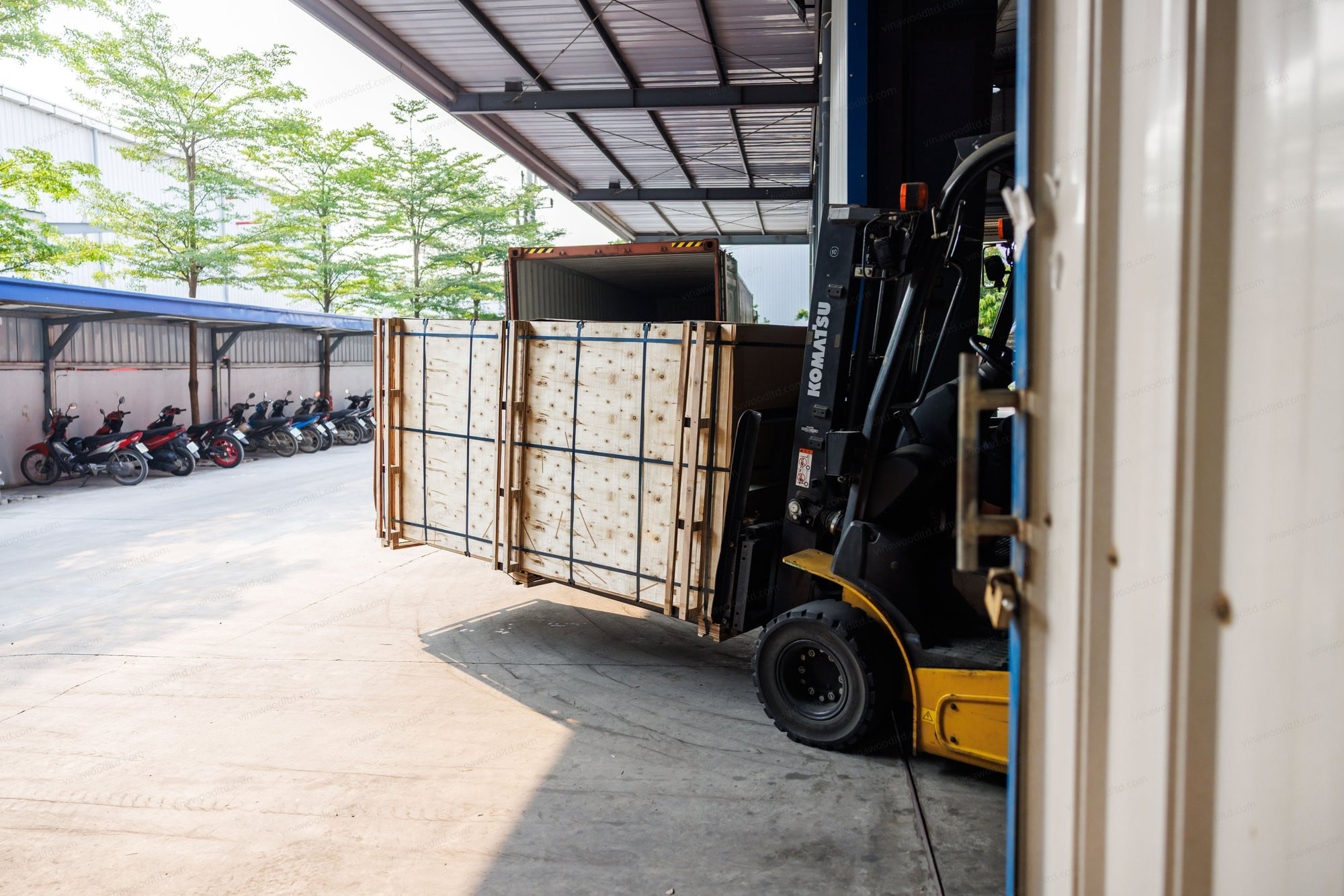
Writing an RFQ a mill can answer
A good request for quotation reads as if it were addressed to the press line. Start with the application in one sentence, such as general construction sheeting for a distributor's yard or a slab and wall pour programme for a contractor, because that single line tells the mill whether it is quoting a commercial panel or a formwork panel. Then give thickness, sheet size, face type and bond class, followed by quantity, destination port and your preferred Incoterm.
Small details decide whether two quotations are really comparable, so name the edge sealing and pack size your yard expects. If you are replacing a grade that failed early, attach a photo of the damaged sheet, because a mill can usually read the cause from the face or the glue line in a way a trader cannot.
When the same RFQ goes to a mill and to a trader, the answers usually show within a day which one owns the press. For wider supplier checks outside the Gulf, our pages on top plywood suppliers and manufacturers in the world and film-faced plywood suppliers in Canada use the same questions.
How Vinawood supplies Gulf importers and contractors
We press both lanes in Vietnam, commercial Consply for construction sheeting and film-faced, HDO and MatteFace panels for formwork, and we keep them on separate quotation lines so the right pack reaches the right yard. Containers leave from Hai Phong with the mill test report, packing list and pallet treatment record prepared for that order. Vinawood panels are used with major formwork systems, including Doka, Peri and Alsina, which matters to Gulf contractors who already run those frames.
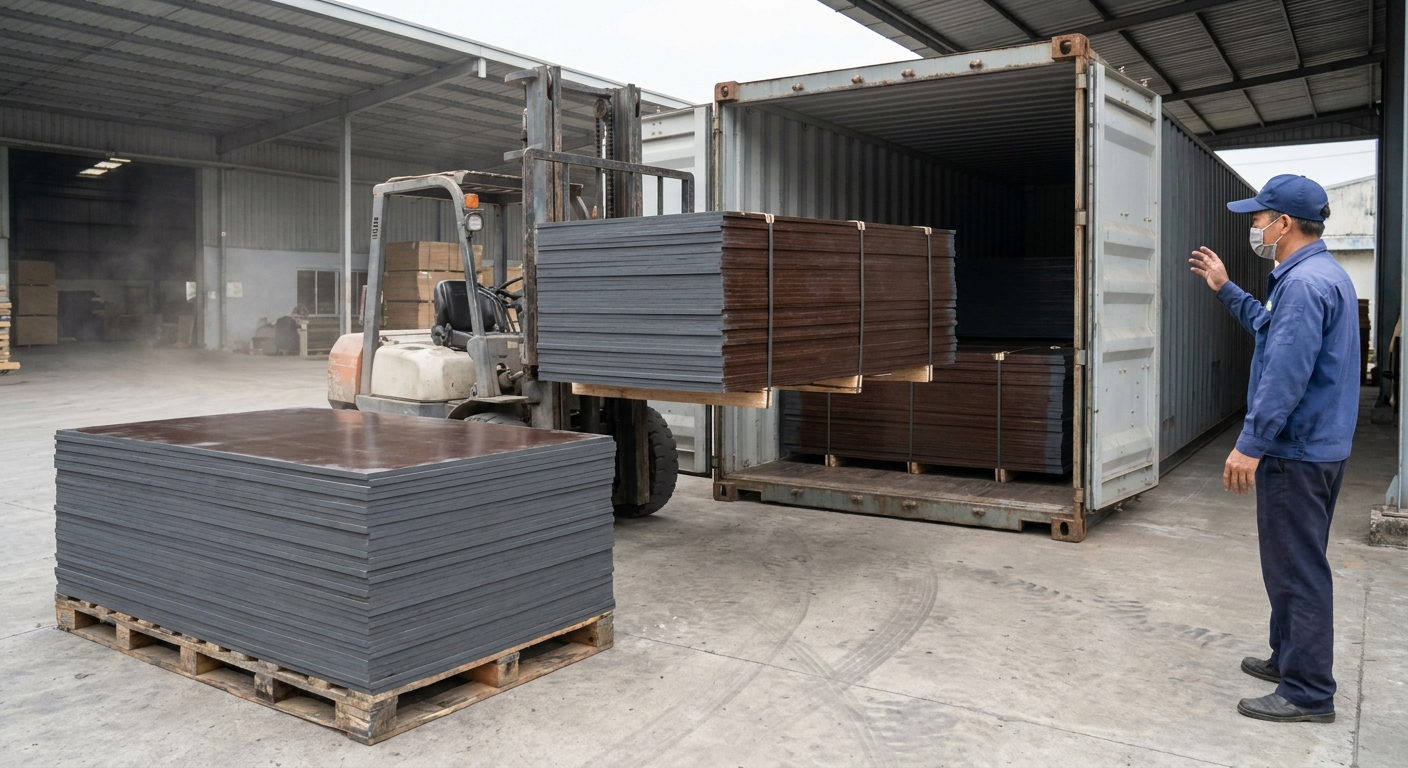
Outside the region, Vinawood keeps distribution warehouses in Toronto, Vancouver, Calgary, Montreal, Miami, Houston and Baltimore to supply ready stock to local distributors. Gulf orders run as direct container programmes from the mill, which keeps the factory name on every certificate. To start, send your application, panel specification, quantity and destination port through our RFQ form, or request a quotation and our sales team will come back with the grade that fits the job.
▶Sources & References (2)
- EN 636 Plywood — Specifications — CEN (2015)
- EN 314-2 Plywood Bonding Quality Requirements — CEN (2001)