Film Faced Plywood Suppliers in Canada: Mill Sourcing for Formwork
How Canadian contractors RFQ film-faced formwork plywood from a Vietnam mill: product definition vs SPF/OSB, mill vs warehouse vs retail lanes, docs/bond/overlay checklist, Vinawood grade ladder, and distribution warehouses for local distributors. Water-resistant WBP, reuse up to N, 55+ countries.
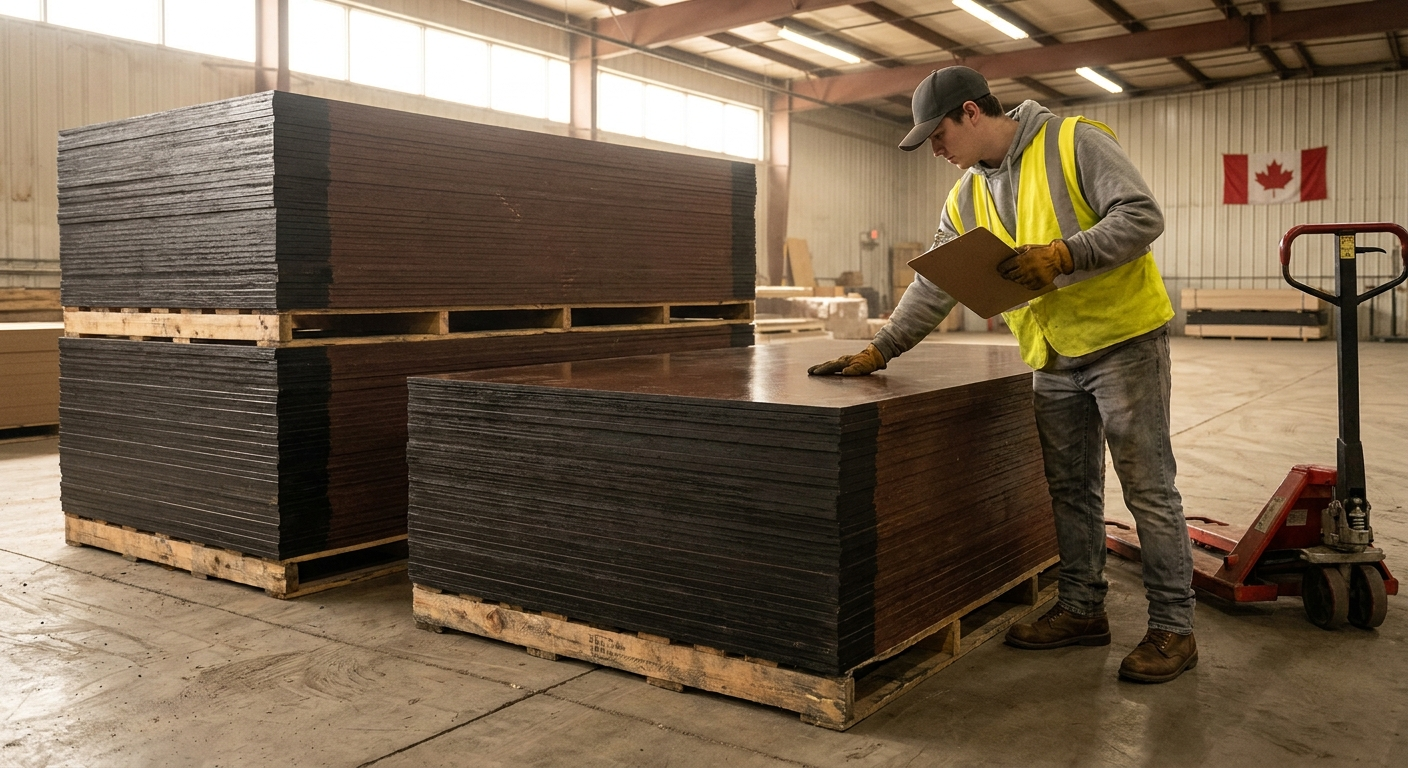
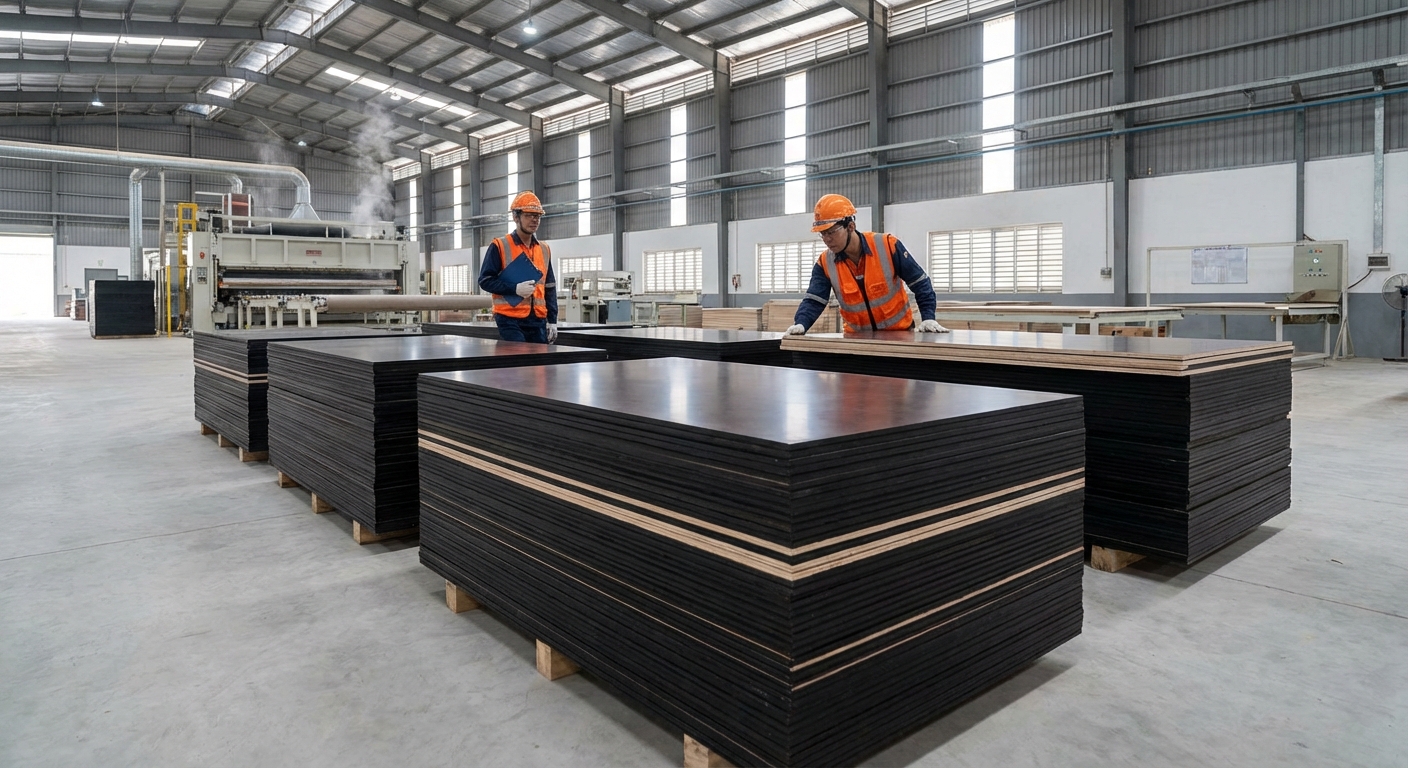
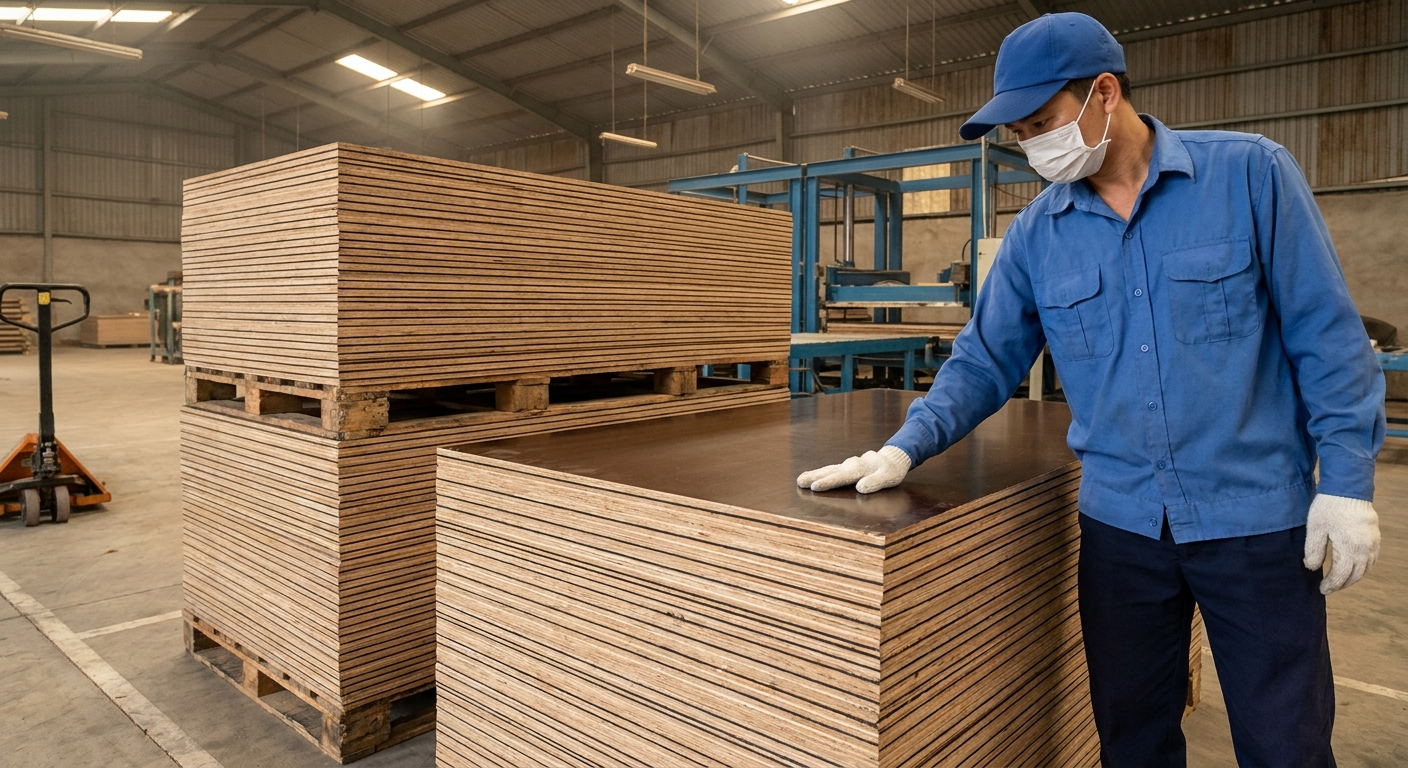
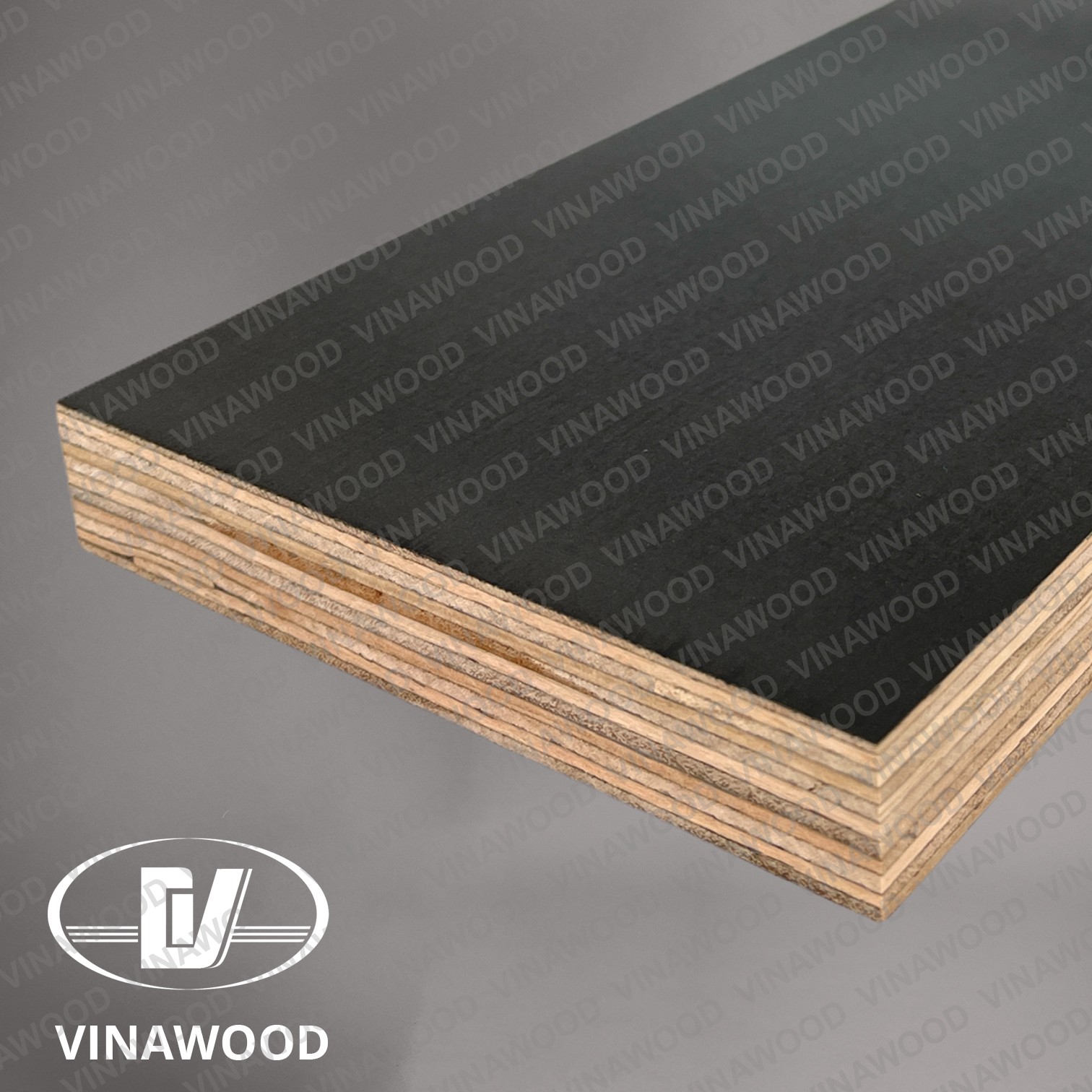
Canadian contractors who search for film faced plywood suppliers in Canada are usually chasing a pour face, not a domestic sheathing mill. Film-faced formwork plywood is a phenolic face film pressed onto a plantation-grown hardwood core and imported for concrete forms. It is not SPF framing lumber, not OSB sheathing from a box-store aisle, and not a ranked directory of Canadian softwood plants. The sheet has to take wet-concrete pressure, leave a clean face after strip, and survive a reuse programme written as up to N — so the RFQ belongs with a mill that can name glue class, overlay, and packing before anyone talks price.
Vinawood is a Vietnam manufacturer established in 1992. We ship about 5,000 containers a year to 55+ countries. We do not run a Canadian manufacturing plant, and we do not publish a “top ten Canada plywood mills” list. If your takeoff needs 18 mm film-faced, a named EN 636 bond, and a reuse envelope the site can actually hit, start with the product definition below, then the mill-versus-stock checklist, then the grade ladder.
Domestic Canadian mills do construction sheathing and OSB extremely well. Film-faced formwork, HDO, and MatteFace Plywood (MTF) for concrete come from mills that press a phenolic face film onto plantation-grown hardwood. That is the product this page is about. Keep that distinction in the subject line of every RFQ so quotes stay comparable.
What Canadian formwork crews actually buy
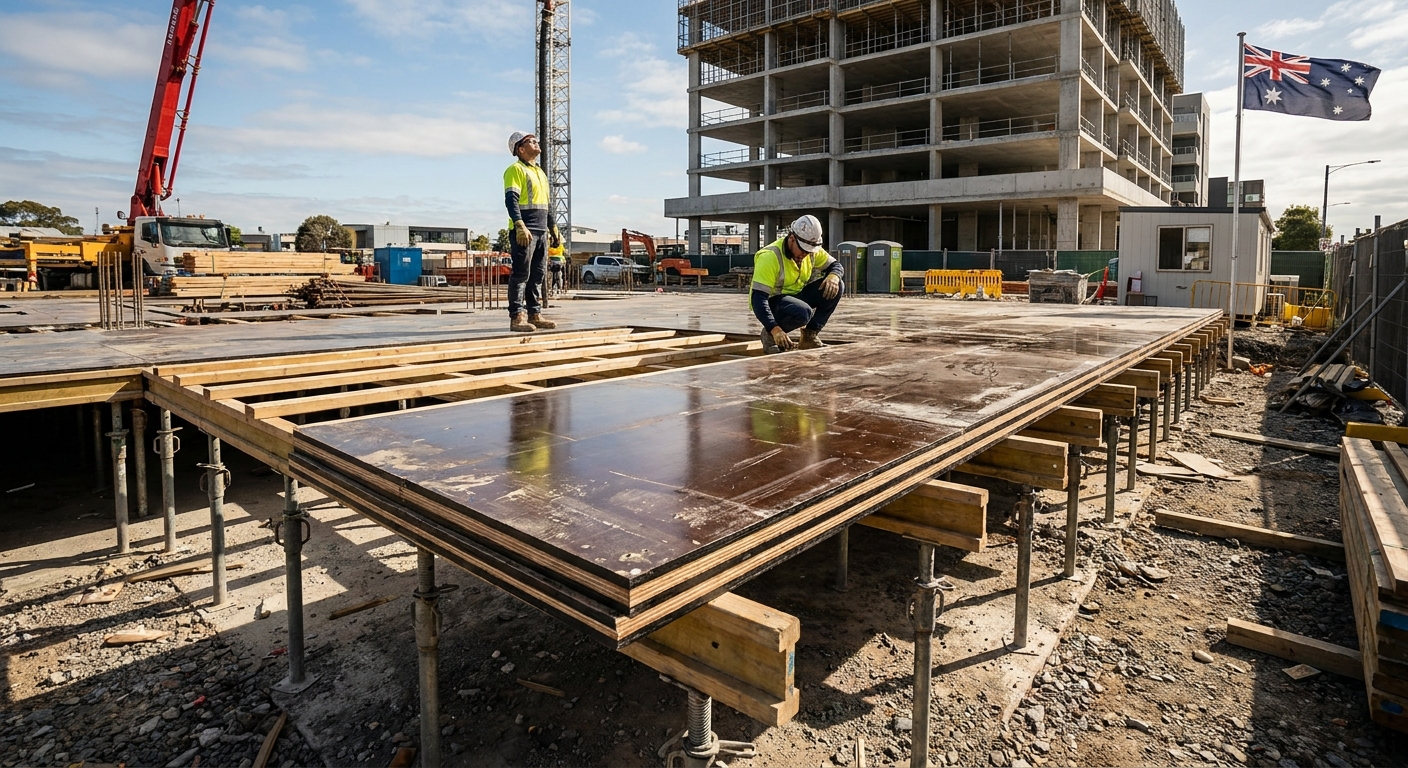
On most Toronto, Calgary, or Montreal gang forms the default sheet is still 18 mm at 1220 × 2440 (4 × 8). Wall and slab work both live there. Architectural faces usually ask for a heavier film and a Class 3 phenolic bond. Everyday commercial pours often run a Class 2 MUF core with the same phenolic face-film family, because the face that meets the concrete is still phenolic even when the core glue is melamine-urea-formaldehyde.
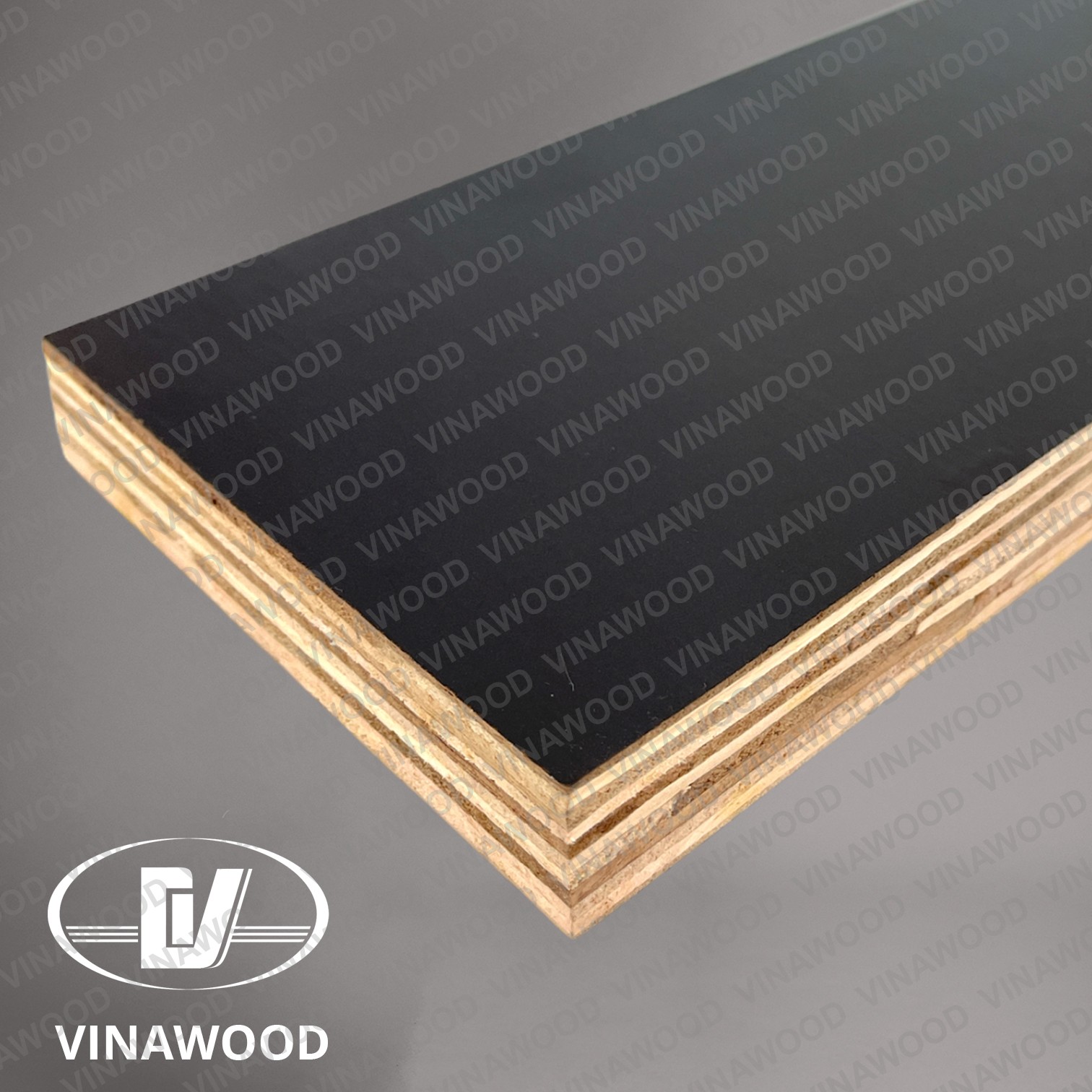
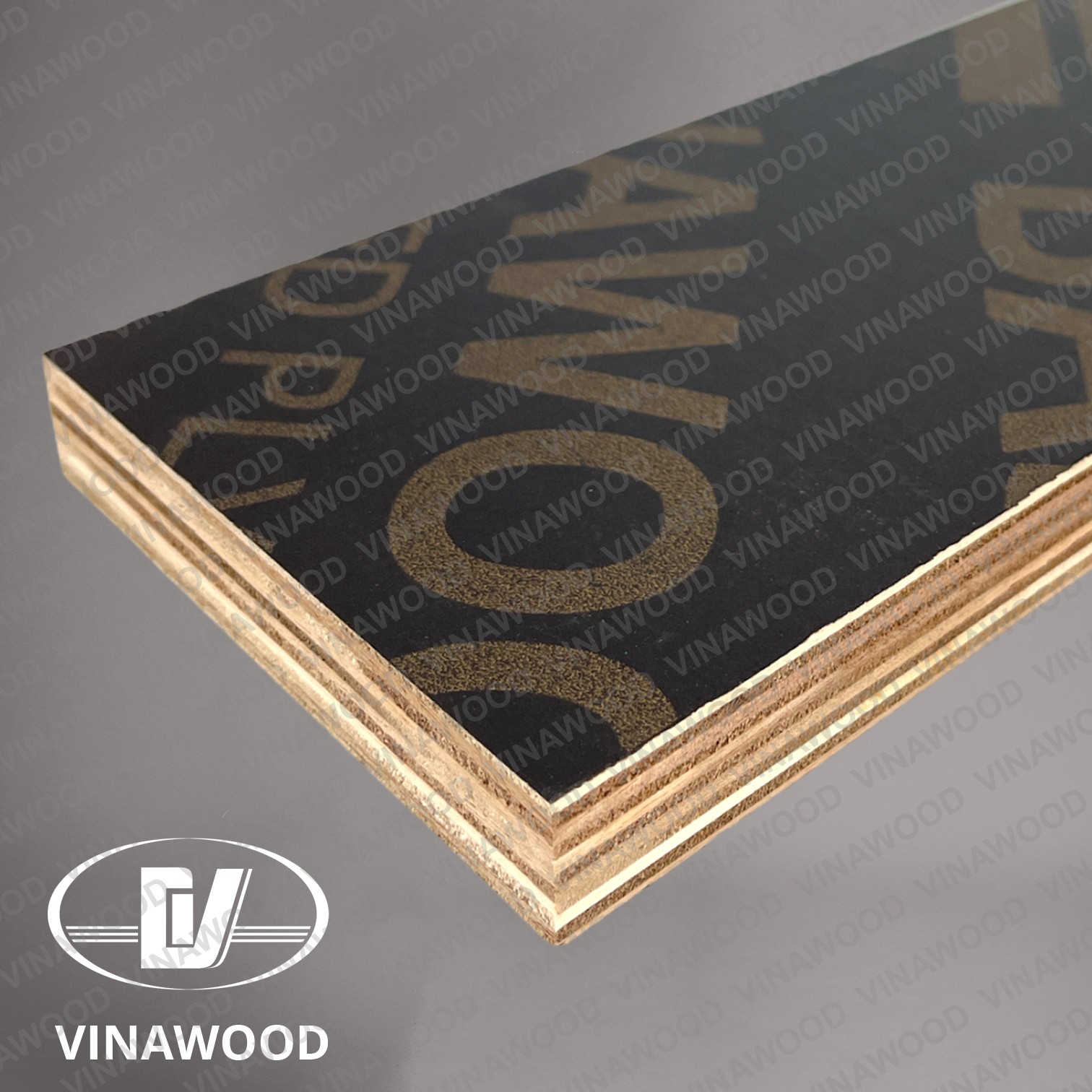
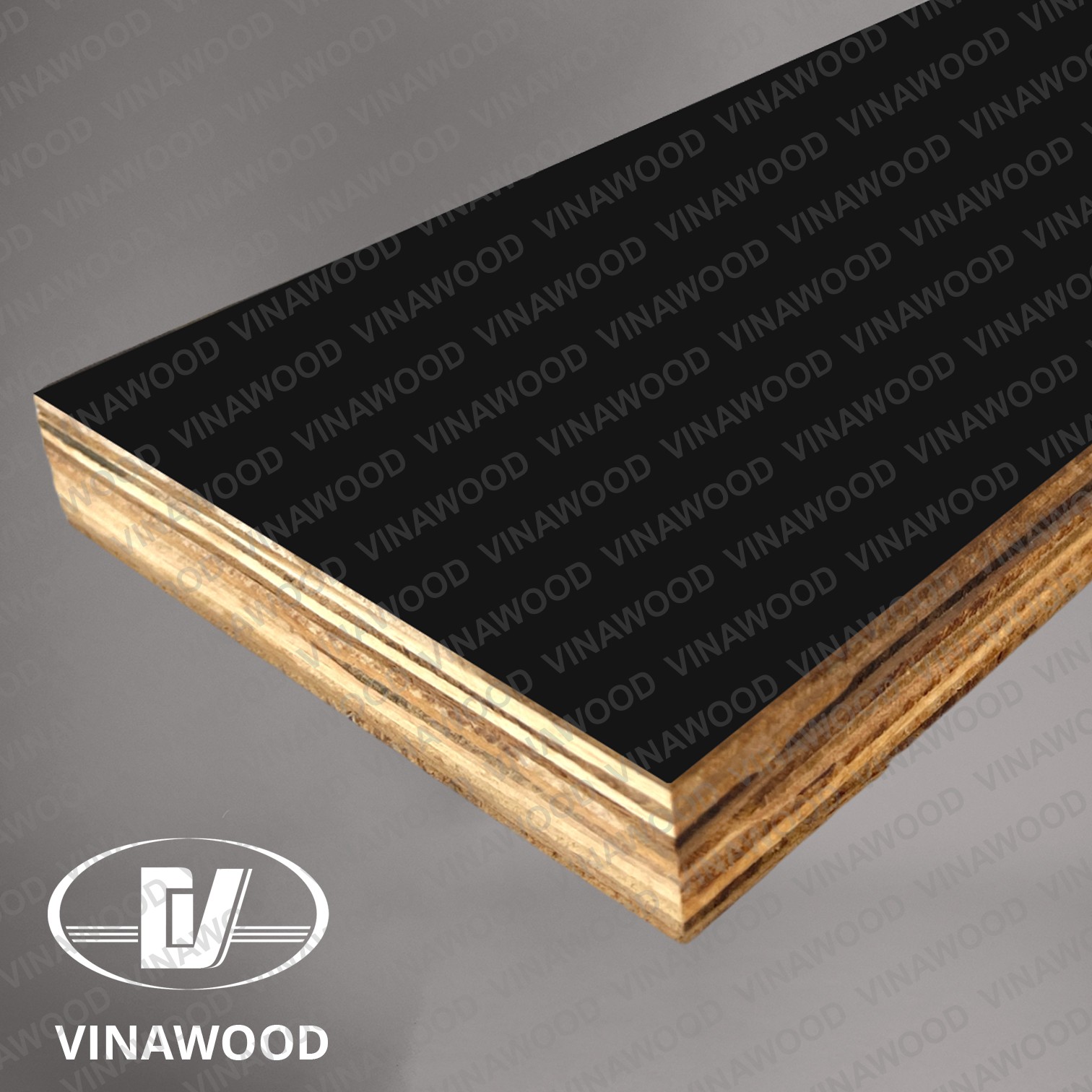
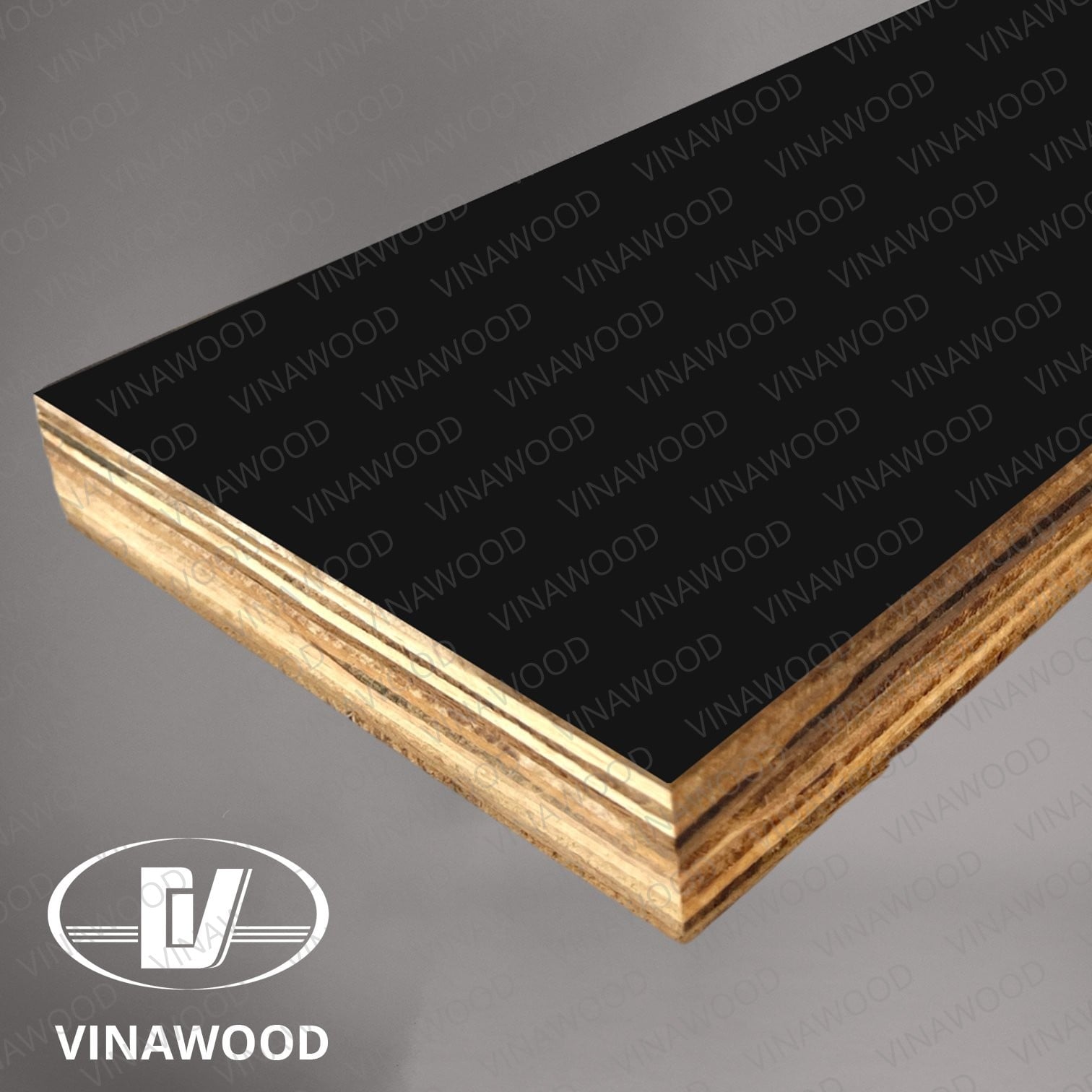
Three overlays show up again and again on Canadian RFQs. Glossy film-faced plywood carries a phenolic face film with MUF or PF core glue by grade — the workhorse for slab and wall forms. HDO is high-density overlay on a phenolic Class 3 bond: HDO Basic up to 10 reuses, HDO Premium up to 20, used when the engineer names HDO rather than a brown film. MatteFace Plywood (MTF) is a matte phenolic surface film for formwork only; buyers often search it as MDO formwork plywood, which is fine as a search bridge on ranking pages such as MDO plywood, but do not write “our MDO” as if that were the product name.
Call the panel water-resistant / WBP, never waterproof. The face film and WBP glue line handle wet concrete and site rain. Edges still need seal paint, and permanent submersion is not the job. If a quote only says “melamine,” ask which meaning they intend: MUF core resin, a cheap market face film, or furniture laminate. Vinawood formwork faces are phenolic film. Core glue is MUF on Eco Form Plus, Form Basic, and Form Extra, or PF on Pro Form Lite, Pro Form, and HDO.
For overlay choice and bond class in one place, use the film-faced buying guide and concrete forming plywood. Those hubs keep MDO in ranking titles; this URL stays on Canada mill sourcing. For a shorter educational read on Vietnam film-faced overlay language, the atlas guide at vietnam film faced plywood teaches the product. This page stays on Canada RFQ lanes.
Mill, trader, and distributor stock — three different paper trails
Canadian buyers reach film-faced stock three ways, and the paperwork is different in each lane. Mixing the lanes on one spreadsheet is how two “similar” quotes stop matching after the first pour.
Factory-direct container. You RFQ the mill. You name thickness, size, film weight, glue class, edge seal, and reuse as up to N. A 40-foot load is the usual unit. Lead time covers production plus ocean transit. This lane fits repeating programmes and formwork houses that can take a full container.
Vinawood distribution warehouses. Vinawood keeps distribution warehouses in Toronto, Vancouver, Calgary, Montreal, Miami, Houston, and Baltimore to supply ready stock to local distributors. A contractor who needs a few packs this week works through a local distributor that draws from that network. The mill still made the sheet. This is not an exclusive-stockist claim and not a shop-here list for one brand of yard.
Retail lumberyard sheet. Fine for a one-off footing. Wrong for a multi-storey reuse programme. You rarely get mill test reports, film gsm, or a named EN 636 class at the counter.
We have watched Canadian RFQs arrive with “plywood manufacturers in Canada” in the subject line and a film-faced spec in the body. Those two requests do not match. Answer the spec, not the subject. For mill due diligence without naming rival plants, use plywood manufacturers in Vietnam as the sister page. Do not merge this URL into that one. Australian formply language is a different market; if a buyer is comparing film-faced to formply, send them film faced plywood vs formply and keep this page on Canada sourcing.
Traders who cannot name the mill, the glue class, and the film type are not a substitute for a factory-direct RFQ. A distributor that can show a Vinawood pack label and a current mill test report is. Ask which lane you are in before you compare two quotes that look alike on a landed-cost sheet.
Canada RFQ checklist: docs, bond, overlay, lead time, container
Write the sheet, not the brand story. A usable Canada RFQ names these fields before anyone prices a load.
Documents. Ask for a mill test report (thickness, density, glue class, film type), the glue class on the data sheet, chain of custody when the job requires it, packing list, and an origin statement that the panels were made in Vietnam. Do not invent certificate numbers. A logo on a website is not proof.
Bond class. EN 636-2 / Class 2 for MUF (Eco Form Plus, Form Basic, Form Extra). EN 636-3 / Class 3 for PF (Pro Form Lite, Pro Form, HDO). Match the pour programme. If the spec says Class 3, do not substitute Form Extra. Form Extra is Superior Glue MUF, EN 636-2, not Class 3. It uses the same phenolic face film as Form Basic; the extra reuse comes from glue chemistry, not a thicker overlay.
Overlay. Phenolic face film gsm, HDO, or MatteFace (MTF). Give a gsm when the catalog lists it — Pro Form Lite carries 165 gsm. Film colour is not bond class. A dark brown face on a Class 2 MUF core is still Class 2.
Thickness and size. 18 mm / 3/4 in is the default for slab and wall. Step to 21 mm only when the form system or span asks for it. Size 1220 × 2440 (4 × 8) is the North American gang — state it. Do not assume a mill will pack 2500 × 1250 unless you asked. See the thickness guide if the engineer left the number open.
Lead time and container. Factory-direct equals production plus ocean. Ready stock through local distributors covers short needs when packs sit in a Vinawood distribution warehouse. Say which lane you want so quotes are comparable. A 40-foot unit is the usual factory-direct load. State pieces per bundle and whether you want logo film or a plain brown face. OEM marks help a yard sort packs; they do not change glue class.
Edge seal and reuse. Painted or sealed edges before the first pour. Cut edges and tie holes are the usual moisture paths. Write reuse as “up to N”: Eco Form Plus up to 8; Form Basic up to 10; Form Extra up to 15; Pro Form Lite up to 15; Pro Form up to 20; HDO Basic up to 10; HDO Premium up to 20. Site handling decides whether those numbers hold. Crowbars and standing water erase them.
I still see Canadian takeoffs that say “best film faced plywood” and skip glue class. We send those back. Film colour is not a spec. The EN 636 line is.
Vinawood film-faced and North American overlay ladder
Vinawood’s film-faced range ships factory-direct from Vietnam:
- Eco Form Plus — WBP MUF core glue, EN 636-2, phenolic face film, up to 8 reuses
- Form Basic — WBP MUF, EN 636-2, phenolic face film, up to 10 reuses
- Form Extra — Superior Glue MUF, EN 636-2, not Class 3, same phenolic face film as Form Basic, up to 15 reuses
- Pro Form Lite — WBP phenolic (PF), EN 636-3 / Class 3, 165 gsm film, up to 15 reuses; sits between Form Extra and Pro Form
- Pro Form — WBP phenolic, EN 636-3 / Class 3, up to 20 reuses
North American overlay add-ons: HDO (Basic up to 10, Premium up to 20) and MatteFace Plywood for a matte cast face. Only Pro Form, Pro Form Lite, and HDO are phenolic Class 3. MatteFace is formwork only. Soft bridge: buyers often search MatteFace as MDO formwork plywood — read HDO plywood when the spec names HDO, and do not link MatteFace to trade cases.
We do not put Consply on this page. Consply is commercial Bintangor, not film-faced. P-Form is a polypropylene overlay, not Pro Form. If a buyer writes “P-Form,” ask which product they mean before anyone prices a container. Fibre is plantation-grown hardwood through a 12-step process with 100% sheet inspection. Public factory-location fields stay unnamed on this page, so we do not invent a province.
Documents and certs worth asking for
Ask for documents that travel with the load. Do not accept a logo on a website as proof.
- FSC chain of custody when the job or owner asks for certified fibre
- CARB P2 / TSCA Title VI for North American formaldehyde rules
- CE / EN 636 class on the data sheet when the spec uses European bond language
- Mill test report: thickness, density, glue class, film type
- Packing list and origin statement that the panels were made in Vietnam
We do not invent certificate numbers here. If a document is missing, the RFQ is not ready. For the broader mill checklist, stay on plywood manufacturers in Vietnam. A Brampton warehouse note covers MatteFace and film-faced ready stock for Canadian distributors as a Vinawood distribution fact, not a Canadian mill claim — see the Brampton warehouse note if you need stocking context, and keep MDO in that sibling title.
If the pour is winter work in Alberta or Ontario, say so on the RFQ. Frozen stacks and slush at the strip face punish unsealed edges faster than a summer slab. Do not put a dollar table on this page. Retail sheathing prices at a box store are not formwork landed cost. Reuse and bond class decide the bill.
Request a quote
Ready to RFQ? Send application first: Canadian wall or slab formwork, or an architectural face. Then overlay: glossy film-faced, HDO, or MatteFace. Then bond class: EN 636-2 versus EN 636-3. Add film gsm where the catalog lists it, thickness (18 mm / 3/4 in unless the system says otherwise), size (4 × 8 / 1220 × 2440), pieces per bundle, and whether you need a factory-direct 40' container or ready stock through a local distributor. Write reuse as up to N.
Vinawood has made plywood in Vietnam since 1992, ships about 5,000 containers a year to 55+ countries, runs a 12-step process with 100% inspection, and sources plantation-grown veneers. Distribution warehouses in Toronto, Vancouver, Calgary, Montreal, Miami, Houston, and Baltimore supply ready stock to local distributors. Start the mill RFQ at /contact?type=quotation or /rfq.
Category
guides
Related Markets
▶Sources & References (1)
- Vietnam film faced plywood — Vietnam Plywood Atlas