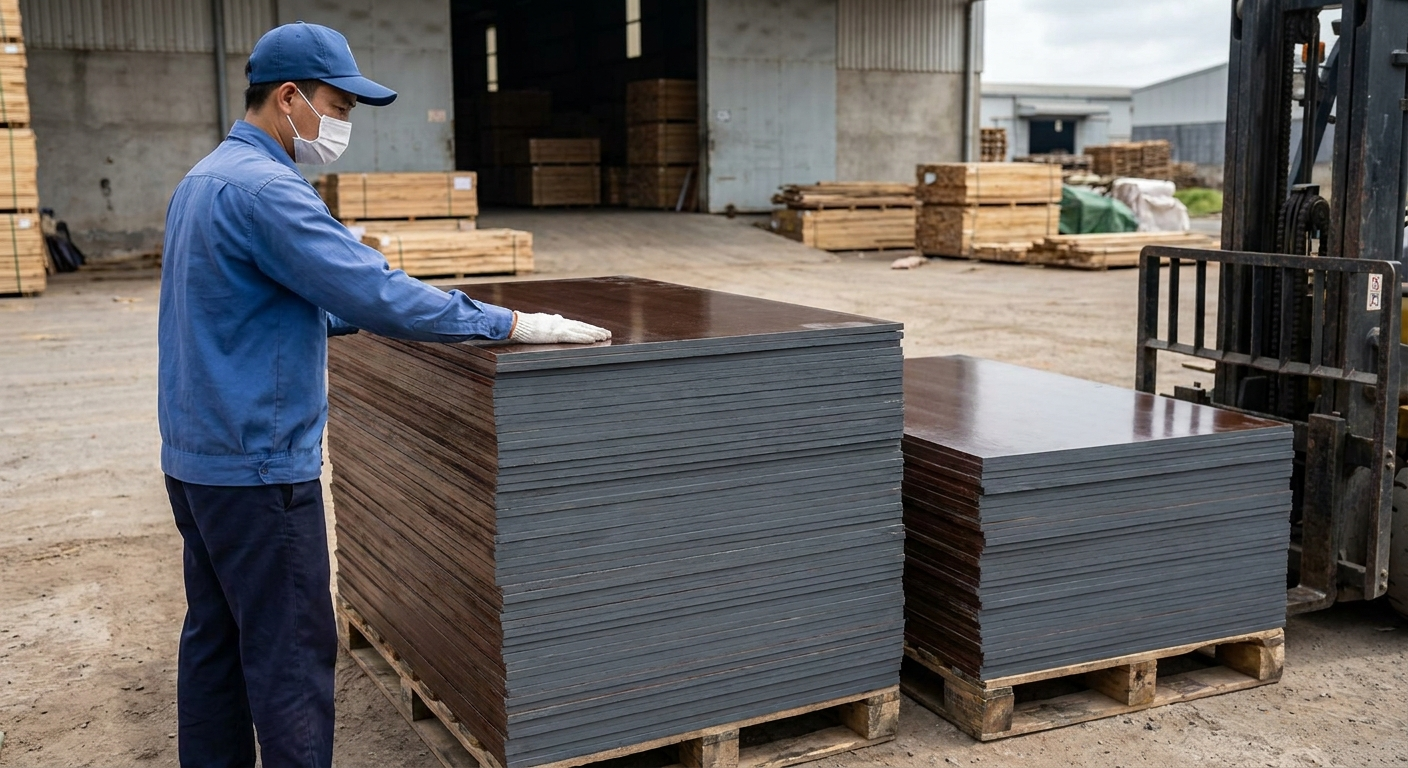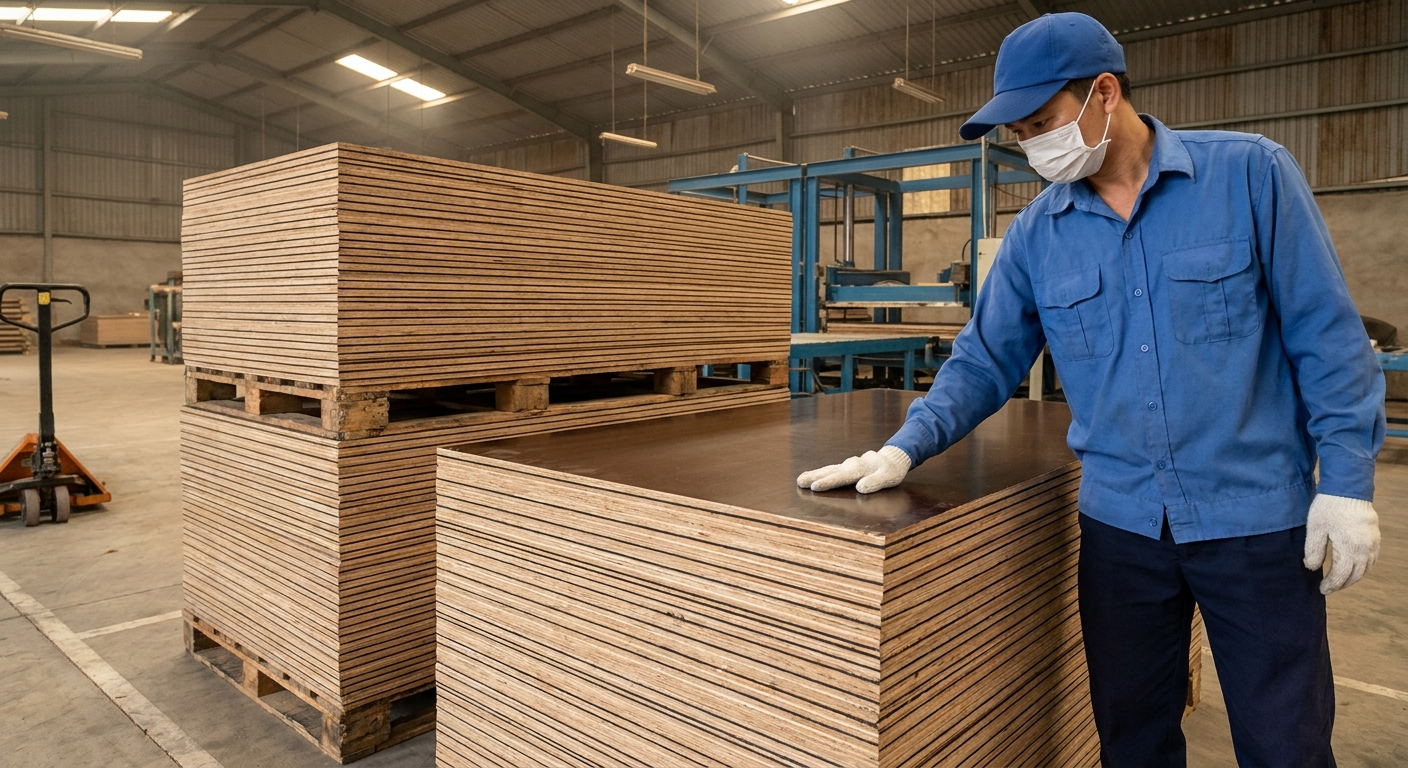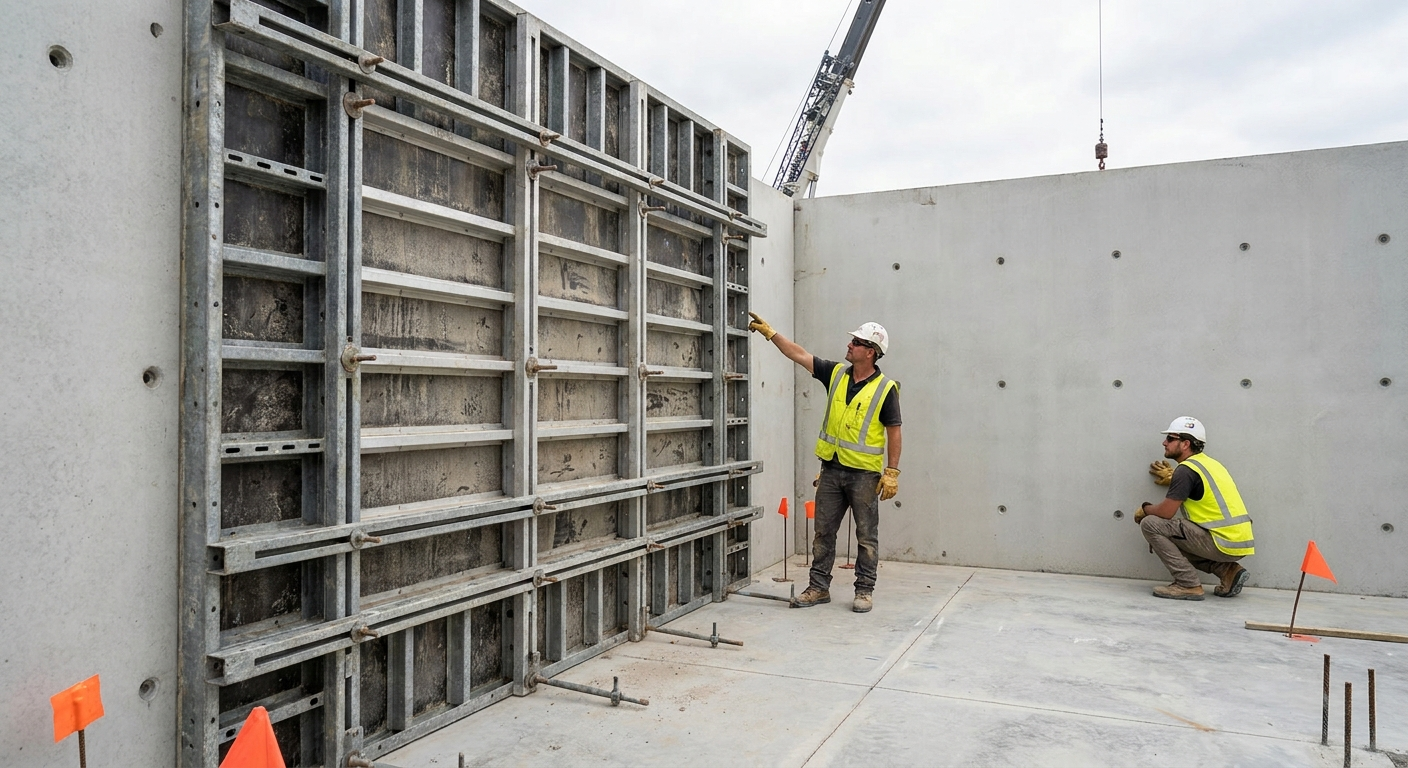
Formwork Plywood Thickness: 12 mm to 21 mm by Span and Pour
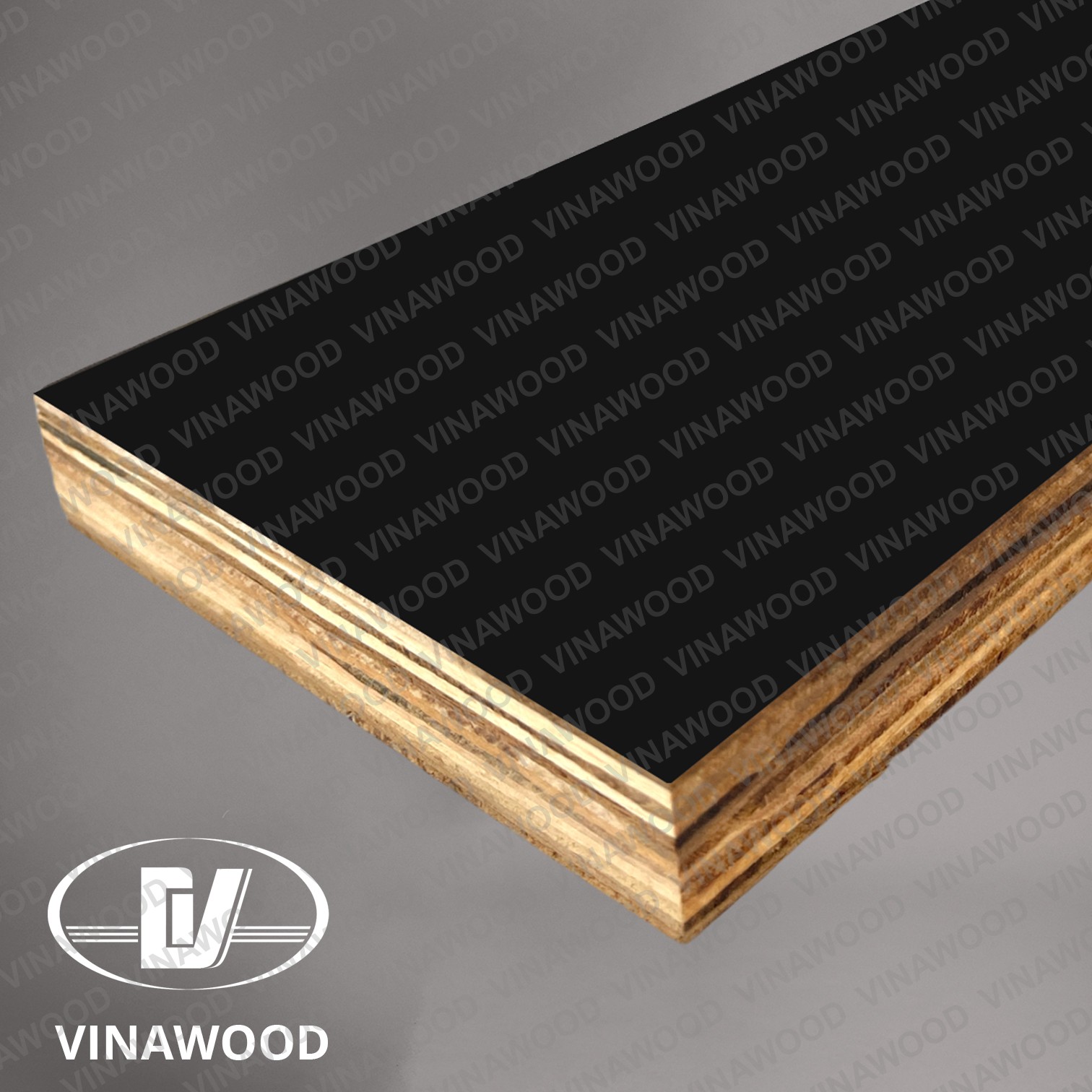
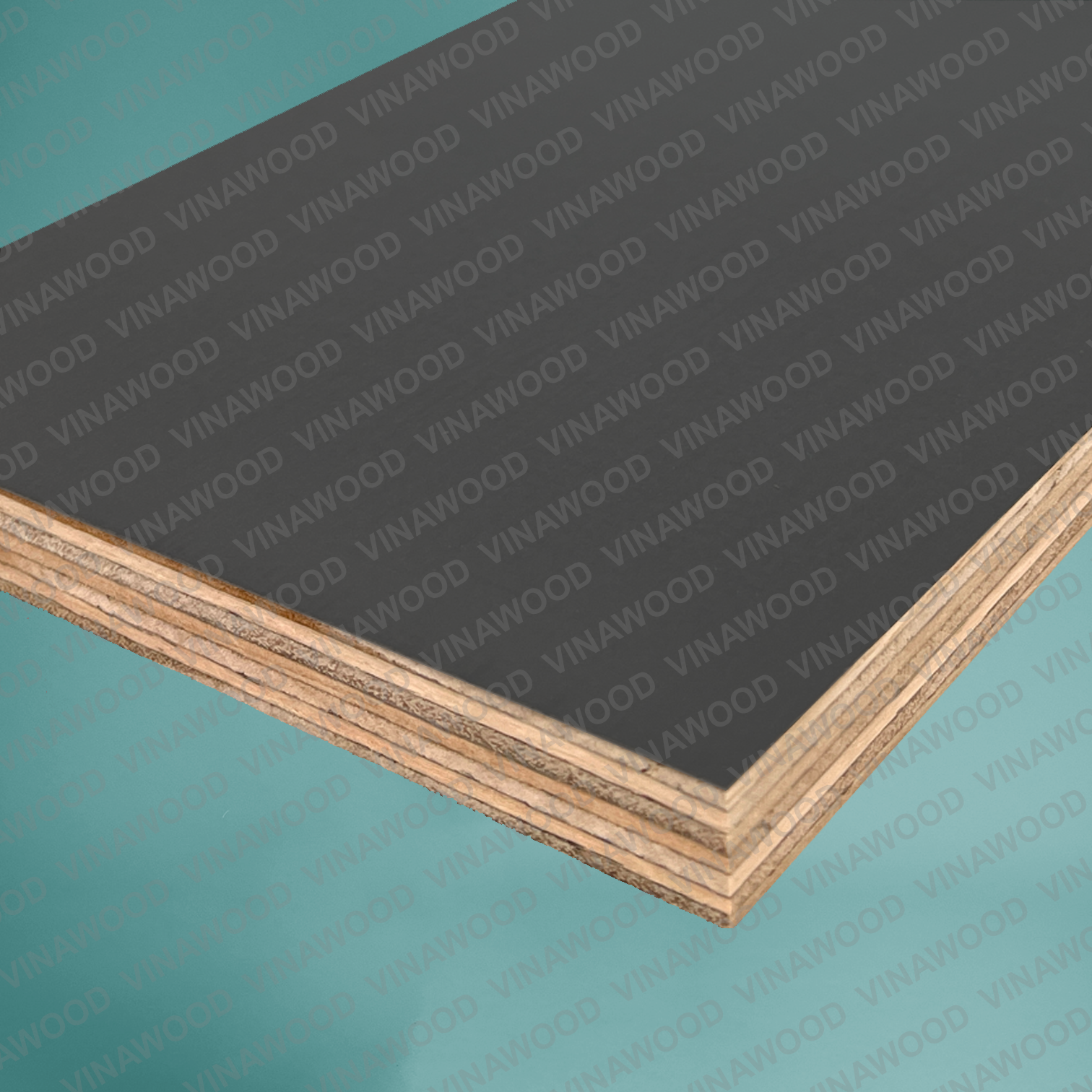
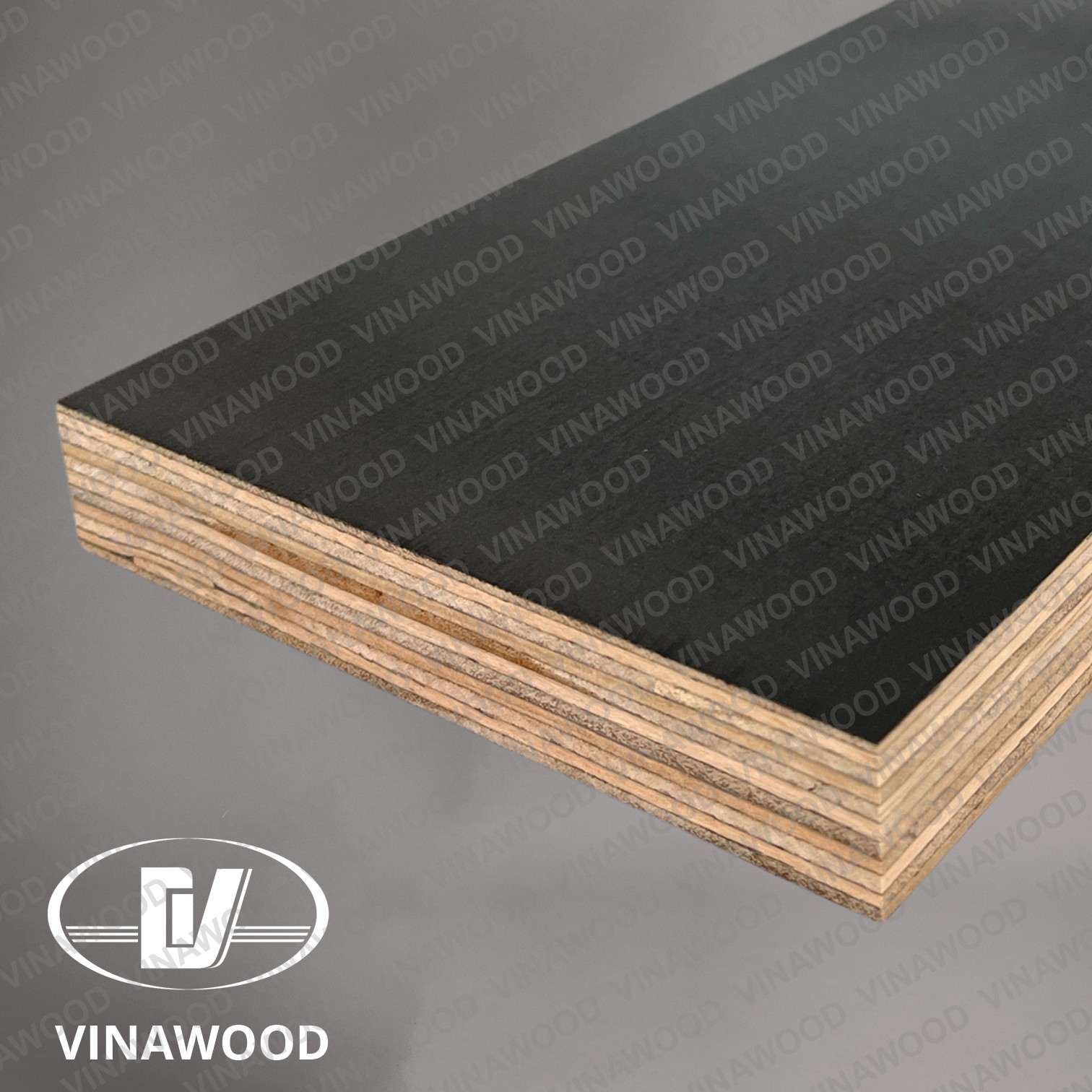
Formwork plywood thickness by span, pour height and overlay. 18 mm is the US workhorse; 21 mm for wide spans and tall pours. Reuse follows overlay and glue class, not millimetres alone.
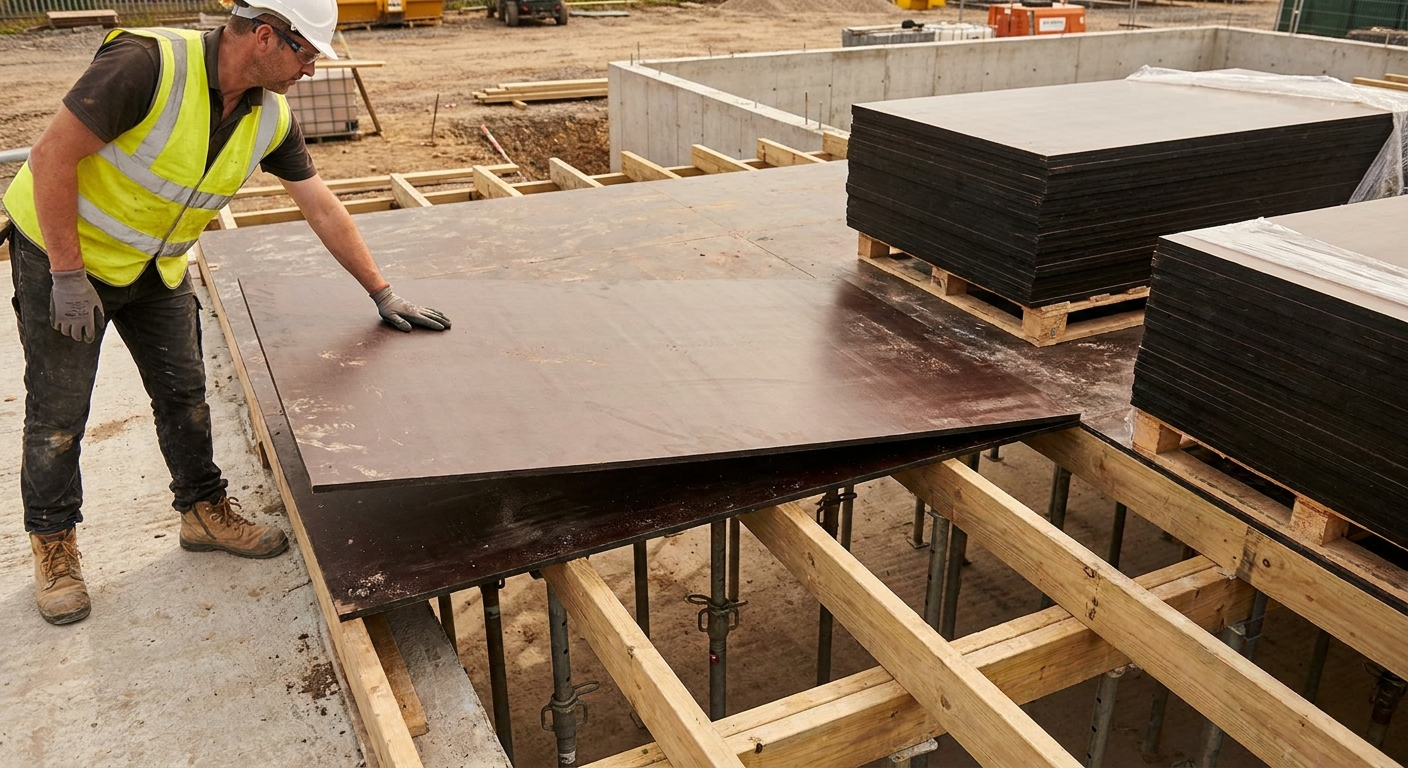
18 mm (3/4") is the US default for formwork plywood thickness. Step to 21 mm when joists open up, the pour gets tall, or the face has to stay dead flat between supports. Thickness is a span and stiffness call. Overlay and glue class set reuse. Those are separate decisions on the same RFQ, and mixing them up is how takeoffs buy the wrong sheet.
This page stays on thickness by span and pour. Soffit layout, joist spacing, and grade for horizontal decks live on the slab formwork plywood article — that URL already owns the soffit-layout cluster, so this guide does not steal its tables. Overlay families sit on the concrete forming plywood hub. Contractor sizes and handling notes sit on plywood for concrete forms. Keep those jobs apart so each page can answer one buying question cleanly.
Why plywood thickness matters in formwork
Wet concrete is heavy. A 200 mm slab already puts about 4.8 kN/m² on the deck before anyone walks on it, and a fast wall pour adds hydrostatic head that climbs with lift height and rate. The sheet has to carry that load between joists or studs without a belly that prints into the soffit or the strike face. ACI 347 still frames the pressure calc. APA span tables still set the plywood side of the design.
Thickness is stiffness across the span. Overlay is the casting face. Bond class is the glue line that holds the veneers through wet cycles. Pick all three on purpose. A thin HDO Premium sheet can still dish on a wide joist grid. A thick Form Extra sheet can still scuff early if the crew skips release agent, even though Superior Glue MUF (EN 636-2) is what buys Form Extra its longer reuse versus Form Basic — not a heavier face film, and not phenolic Class 3.
Crews feel thickness on the hoist as much as they see it on the pour. 12 mm flies up a stair tower. 21 mm needs two people and a cleaner landing. That handling gap is why 18 mm stays on so many US takeoffs even when a 21 mm sheet would span farther on the same props.
Vinawood has made formwork panels in Vietnam since 1992. Factory-direct export, about 5,000 containers a year, into 55+ countries. Every sheet is inspected before it ships. None of that changes the physics of span — it only means the mill can match a stock thickness and overlay to the numbers you send.
Standard thicknesses (12 / 15 / 18 / 21 mm)
US yards talk inches. Mills talk millimeters. Same boards, different labels on the ticket.
- 12 mm (~1/2"). Light work and tight curves. Needs close backing. Skip it on a 16" joist grid.
- 15 mm (~5/8"). Residential footings, low walls, and gang frames that already carry most of the load in steel.
- 18 mm (3/4"). The US workhorse. Slabs, walls, and most columns at standard spacing.
- 21 mm (~7/8"). Wide span, tall pour, or a fast rate where the face has to stay dead flat.
17 mm shows up on some metric lists. Vinawood does not treat 24 mm as a stock formwork SKU. If a drawing calls 24 mm, ask the mill before you assume it is on the floor.
Actual thickness can wander a hair between lots. Read the spec sheet when two suppliers share one pour. Mixing 17.5 mm and 18.5 mm on the same soffit is a good way to telegraph joints. Edge-seal after any field cut. A raw edge drinks mix water even when the face film looks new.
Thickness by application
The pour type sets the load path. Horizontal decks fight gravity between joists. Walls fight hydrostatic head. Columns see the worst of both at the base, where pressure peaks before the mix sets.
Slab formwork (horizontal)
The sheet is only the top skin. Props, H20 joists, then 18 mm on top — do not read the whole stack as a thick plywood block. For joist layout and soffit grade, use the slab formwork plywood guide. This page stays on millimeters by span.
- Standard: 18 mm (3/4") up to about 400 mm (16") joist spacing.
- Heavy: 21 mm for 500 mm (20") spacing or slabs thicker than 200 mm (8").
- Light residential: 15 mm only if joists sit at 300 mm (12") or tighter.
A 21 mm deck on 16" joists is not wrong. It is often surplus stiffness you paid for in extra kilos per lift. Match the sheet to the grid you actually set, not the grid on a catalogue page.
Wall formwork (vertical)
Lateral pressure climbs with pour height and pour rate. 18 mm covers most walls to 3 m (10 ft) at ordinary tie spacing. Drop to 15 mm on low walls under 1.5 m, or where a steel gang already takes the load. Step up to 21 mm above 3 m, or on architectural walls where a 2 mm belly is a reject.
Ties closer than the plywood span tables assume can let you keep 18 mm on a taller lift. Ties farther apart cannot. The millimeters do not invent missing hardware.
Column formwork
Base pressure is ugly. 18 mm is the floor for ordinary columns. 21 mm is the safer call on faces wider than 600 mm (24"). A square column with tight yokes still likes 18 mm. A rectangular shaft with long unsupported faces wants the extra ply.
Footing formwork
Head is short, so pressure is modest. 18 mm still covers almost every footing. 12 to 15 mm can hold a shallow strip under 300 mm if the walers are tight. I would not gamble 12 mm on a wide isolated pad just to save a few kilos per sheet — the patch cost after a blown face is never worth that save.
Thickness vs concrete pressure
Fresh concrete behaves like a fluid until it sets. Head plus vibrator energy push the face. If the span between studs is too wide for the millimeters you bought, the panel bows and the concrete copies that bow into the finished surface.
A workable field rule: pour faster than 1 m/hour, or taller than 3 m, and step up one thickness from the usual pick. 18 mm becomes 21 mm. The overlay does not cancel that step — HDO Premium and Pro Form still need the stiffness the span demands.
Cold mix, slow rate, and a short lift all cut pressure. Hot mix, a fast pump, and a 4 m wall do the opposite. ACI 347 is the design book for that calc (rate, temperature, unit weight). APA publishes the plywood span tables. Vinawood will match a thickness and an overlay to the numbers you send. We will not invent a cycle promise beyond the locked product maxima to close the RFQ.
Vibration against a thin face is a common site shortcut. It marks. Keep the poker off the plywood. Thickness helps, but it is not a shield against a 50 mm poker held on the film.
Thickness vs reuse
Reuse is overlay plus glue class plus how the crew strips and stores the sheet. Millimeters help with dent resistance and flex fatigue. They do not mint extra cycles on their own — a thicker Form Basic sheet is still capped by Form Basic chemistry, not by the caliper reading.
Vinawood map, all "up to" figures, site care assumed:
- HDO Basic: up to 10. HDO Premium and Premium HD: up to 20. Phenolic Class 3.
- MatteFace Plywood (MTF): up to 15. Matte phenolic surface film, formwork only. Buyers often search for MatteFace as MDO formwork plywood. Kraft-paper MDO is paint and signage, not this panel.
- Form Basic: up to 10. Phenolic face film over a MUF (melamine-urea-formaldehyde) core, EN 636-2.
- Form Extra: up to 15. Superior Glue MUF, EN 636-2. Same phenolic face as Form Basic. Not Class 3. Longer reuse than Form Basic is glue chemistry, not a heavier face film.
- Pro Form Lite: up to 15. WBP phenolic, 165 g/m², EN 636-3 / Class 3. Sits between Form Extra and Pro Form.
- Pro Form: up to 20. WBP phenolic, EN 636-3.
- Eco Form Plus: up to 8. Eco Form shares that entry-cycle band when the programme is short-cycle.
Only Pro Form, Pro Form Lite, and the HDO range are phenolic Class 3. Form Extra is not. Thickness does not move a panel from MUF to PF. P-Form is polypropylene, not Pro Form. Consply is commercial Bintangor, not a film-faced formwork sheet.
Release agent, prompt clean-down, and flat covered storage still decide whether you see the "up to" number or half of it. Edge damage retires more sheets than mid-face wear. A 21 mm panel with a crushed long edge is scrap, same as a 15 mm panel with the same crush. Care detail lives on the formwork panel care guide.
HDO vs film-faced: overlay, not a thickness substitute
North America specs HDO and, for a matte cast face, MatteFace. Film-faced is the export and EU equivalent, often 1250×2500. Overlay does not replace millimeters. A 12 mm HDO Premium sheet is still a 12 mm sheet on a 20" joist.
HDO is a dense phenolic overlay, Class 3. MatteFace is a matte phenolic surface film, up to 15, formwork only. Face label if you need it: MatteFace Surface 325 gsm. Do not treat kraft-paper MDO as the forming CTA, and do not link MatteFace to AD/CVD arguments — formwork and PS-structural sit outside Vietnam hardwood CVD scope in the framing used on this site.
On the film-faced side, split the core from the film. Form Extra is Superior Glue MUF, up to 15, not Class 3. Pro Form Lite is PF at 165 g/m², up to 15, Class 3. Pro Form is PF, up to 20. See film-faced plywood for the export range. The three-way overlay compare is film faced vs MDO vs HDO.
Quick-reference table
| Application | Standard thickness | Heavy option | Light minimum |
|---|---|---|---|
| Slab formwork | 18 mm (3/4") | 21 mm | 15 mm |
| Wall formwork | 18 mm (3/4") | 21 mm | 15 mm |
| Column formwork | 18 mm (3/4") | 21 mm | 18 mm |
| Footing formwork | 18 mm (3/4") | 18 mm | 12 mm |
Reuse is not a column in that table on purpose. Overlay and glue class set cycles. 18 mm HDO Basic is still up to 10. 18 mm HDO Premium is up to 20. Same millimeters, different face.
WBP here means water-resistant glue. Edges still take sealer. Cores are plantation-grown Acacia, Eucalyptus, and Hevea veneers.
What to put on the mill RFQ
Send thickness plus overlay plus bond class plus size plus emission class. 18 mm or 21 mm. HDO Basic or HDO Premium, MatteFace, or film gsm (Form Extra MUF vs Pro Form Lite 165 g/m² PF vs Pro Form). EN 636-2 or EN 636-3. 2440×1220 for most US packs, 1250×2500 if the EU gang wants metric. E1 or the emission class your market names.
If the job mixes slabs and tall walls, say so. One thickness can still cover both, but the overlay often should not. A matte architectural wall is a MatteFace call. A high-cycle column gang is HDO Premium or Pro Form. A short-cycle footing can live on Form Basic at 18 mm and nobody on site will miss the extra film.
Vinawood keeps ready stock for local distributors in Toronto, Vancouver, Calgary, Montreal, Miami, Houston, and Baltimore when the programme needs quick top-ups — mill RFQs for container programmes still go through /rfq or /contact. Est. 1992. About 5,000 containers a year. 55+ countries. 12-step process. 100% sheet inspection. Factory-direct mill, not a retail yard. Put the five fields above on the quote request and we will match a stock thickness and overlay. No invented sheet prices. Sales owns duty questions. This page stays on thickness, overlay, and bond class.
Category
guides
Related Markets
Related Countries
Related Products
▶Sources & References (2)
- ACI 347 — Guide to Formwork for Concrete — American Concrete Institute (2014-01-01)
- Plywood Design Specification — APA — The Engineered Wood Association (2024-01-01)