Bamboo Plywood vs Regular Plywood: Strength, Cost, Use
Bamboo plywood vs regular plywood — a fair, manufacturer-side head-to-head on strength, cost, sustainability, moisture performance, and which use cases each panel actually serves. Includes a decision matrix and a Vietnam mill perspective on the standards rating that decides most of the comparison.
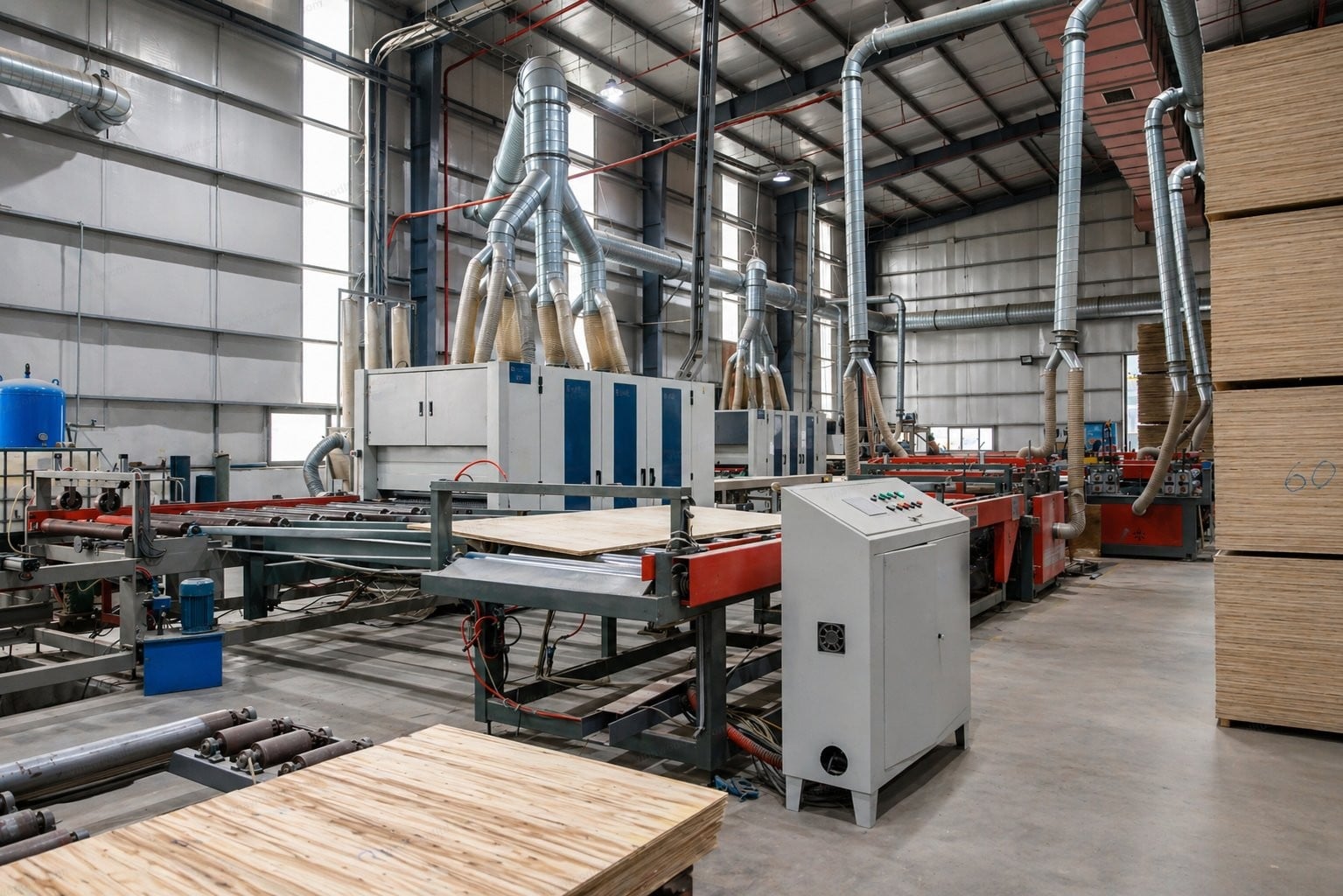
Bamboo plywood and regular plywood get compared online as if they were the same product class with different feedstock. They are not. They are two different panel systems aimed at two different jobs, and the marketing around bamboo has muddled the picture enough that a furniture designer who picked bamboo for an outdoor cabinet has the wrong panel before the saw touches the sheet. This piece is a fair head-to-head, written from the Vietnamese mill side of the table, where we make hardwood plywood and have watched the bamboo specification debate from the supplier seat for a decade.
Quick verdict
For visible furniture surfaces, decorative cladding, and projects where the rapid-regrowth carbon story matters to the spec, bamboo plywood is a legitimate choice. For structural sheathing, subflooring, concrete formwork, marine work, and any application that needs a standards-tested adhesive class for moisture, hardwood plywood is the right panel. The two products solve different problems. The comparison only becomes interesting when the application sits in the overlap zone (interior cabinetry, partition systems, feature walls) where either could work and price and aesthetics decide it.
What "bamboo plywood" actually is
Bamboo plywood is a panel built from strips or strands of bamboo, laminated with adhesive into a sheet. The bamboo strips come from species in the Moso family, harvested at 3 to 5 years of growth, split and planed into flat slats, then bonded under heat and pressure. The face pattern is the visual tell: bamboo plywood shows horizontal bands or a strand-board pattern, not the cathedral grain of a wood veneer.
Three points matter for buyers:
- The adhesive is most often urea-formaldehyde or melamine, which makes the panel interior-rated only. Phenolic-bonded bamboo exists but is rare and expensive.
- Bamboo plywood is not standards-rated under ANSI/HPVA HP-1 or EN 636 the way hardwood plywood is. There is no ANSI bamboo equivalent that maps onto the A-B-C-D appearance system or the EN 636 service classes.
- Quality varies more than hardwood plywood at the same price point. The mill, the species, the strip orientation, and the adhesive all swing the result. A budget bamboo panel and a premium bamboo panel can look identical on paper.
What "regular plywood" actually is
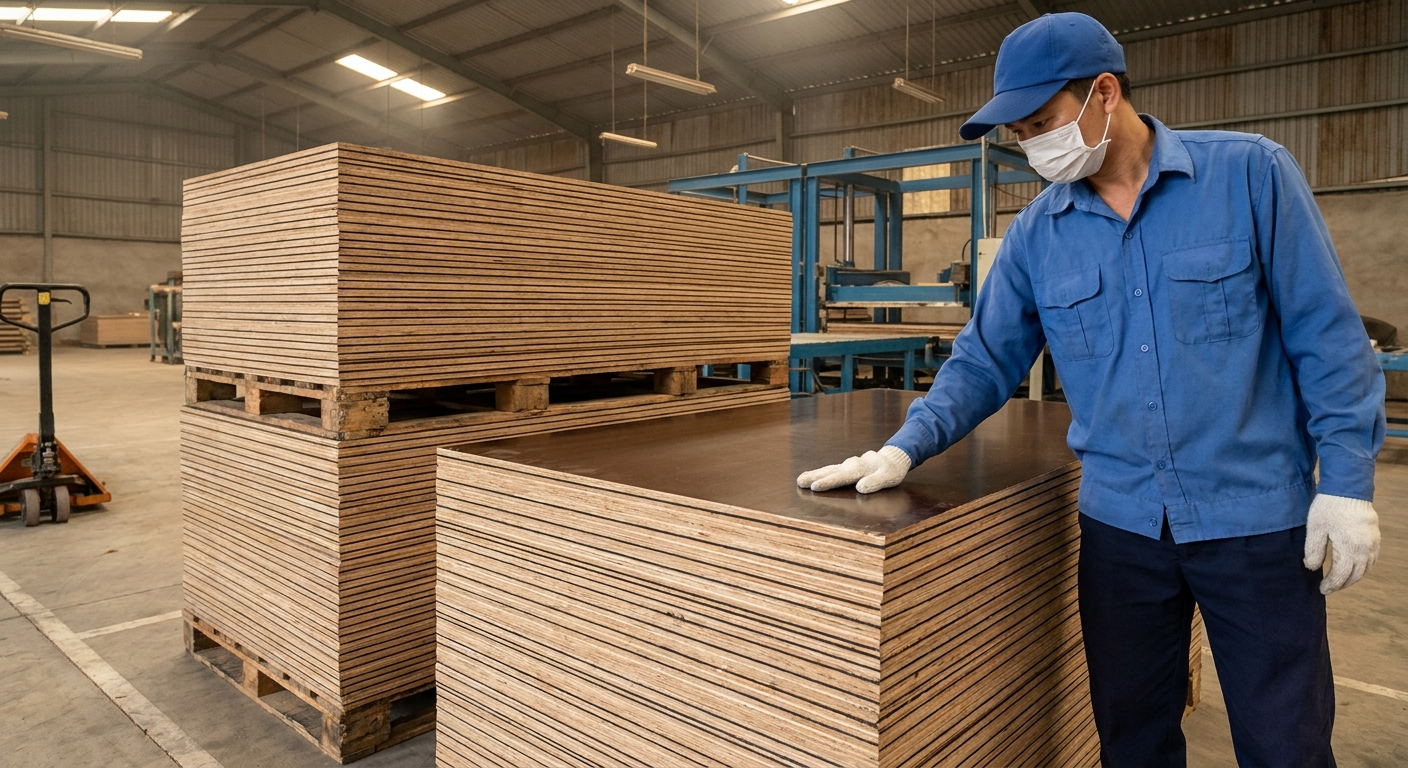
Regular plywood here means veneer-core hardwood plywood, built from rotary-peeled veneer layers cross-banded at 90 degrees and bonded with adhesive. The species varies (Acacia, Eucalyptus, Hevea, Birch, Maple, Bintangor depending on the mill and the application) but the construction principle is universal. Hardwood plywood has been standards-rated for a long time, which is the other half of the picture.
The standards-grade ladder that matters in this comparison:
- ANSI/HPVA HP-1 covers the North American hardwood and decorative plywood market, with A-B-C-D face grade conventions and bond classifications.
- EN 636 covers European service classes (-1 dry, -2 humid, -3 exterior) by bond performance.
- BS 1088 covers marine plywood with void-free construction and full waterproof bond.
- APA Plyform Class I/II covers North American concrete formwork.
Hardwood plywood has a product for every spot on that ladder. Bamboo plywood lives effectively on the interior end only.
Strength comparison, with caveats
The internet-popular claim that "bamboo is stronger than steel" is one of those statements that is true in a very narrow lab sense and misleading in every practical sense. Bamboo's tensile strength along the fibre runs around 28,000 psi for the species used in plywood, which is high. The catch is that the strength is highly anisotropic (much weaker across the fibre than along it), and once you bond strips of bamboo into a panel, the panel-level tensile values are determined by the adhesive and the layup, not by the species alone.
Hardwood plywood's strength is published in standards-rated form. APA Plyform tabulates values for bending and shear, plus rolling-shear performance; EN 636-3 sets minimum bond strength values that a panel must hit to carry the rating. A specifier writing for a structural application can pull the number off the standard and design to it. Doing the same with bamboo plywood usually means writing to a single mill's data sheet, with no parallel publicly available test.
The honest summary: bamboo plywood is reasonably strong for furniture and cladding work, but if the application calls for a structural panel rating, the standards landscape favours hardwood plywood by a wide margin.
Cost per square foot
Pricing varies by region and grade, but the order of magnitude holds across markets. Bamboo plywood, retail, runs roughly US $80 to $160 per 4x8 sheet in the US in 2026. Comparable hardwood commercial plywood sits at roughly $40 to $80 per 4x8 sheet. Marine-rated hardwood plywood runs $70 to $180 depending on species and certification.
At a project level, bamboo plywood is usually 1.5 to 2 times the cost of comparable hardwood plywood for the same thickness and face quality. The premium pays off when the bamboo aesthetic is the spec or when a green-building rating credit needs it. Outside those cases, the price gap is hard to justify on functional grounds.
Sustainability, handled honestly
Bamboo's renewable story is real. A Moso bamboo stand reaches harvestable size in 3 to 5 years, regenerates from rhizome without replanting, and sequesters carbon at a rate competitive with managed forest. Plantation hardwood (Acacia, Eucalyptus) takes 7 to 12 years to harvest, regenerates by replanting, and runs lower turnover.
The full picture is more textured than the marketing. A few qualifications:
- Bamboo plywood is overwhelmingly produced in China and shipped globally. The carbon advantage of fast regrowth gets partially offset by transport and by adhesive emissions.
- Both bamboo and hardwood can be FSC- or PEFC-certified. The certification matters more than the species for chain-of-custody claims.
- Plantation-grown hardwood plywood (Vietnamese Acacia, for instance) carries its own short-rotation argument: 7-year cycles, EUTR-compliant chains, no old-growth involvement.
From our own export volumes, the most defensible green claims come from FSC-COC certified panels and EPDs (Environmental Product Declarations) rather than from species choice alone. Both bamboo and hardwood get evaluated on the same compliance ladder under EUDR and CARB scrutiny, and we've watched specifiers grow more sophisticated about asking for documentation rather than relying on the species marketing.
Moisture and exterior performance
This is where the comparison stops being close. Bamboo plywood is interior-only by default. The urea-formaldehyde or melamine adhesives used in most bamboo panels are not rated for prolonged moisture exposure. Bamboo fibre itself swells in humid conditions more than hardwood veneer does, and once a bamboo panel takes on moisture, the dimensional change is significant and not reversible without controlled drying.
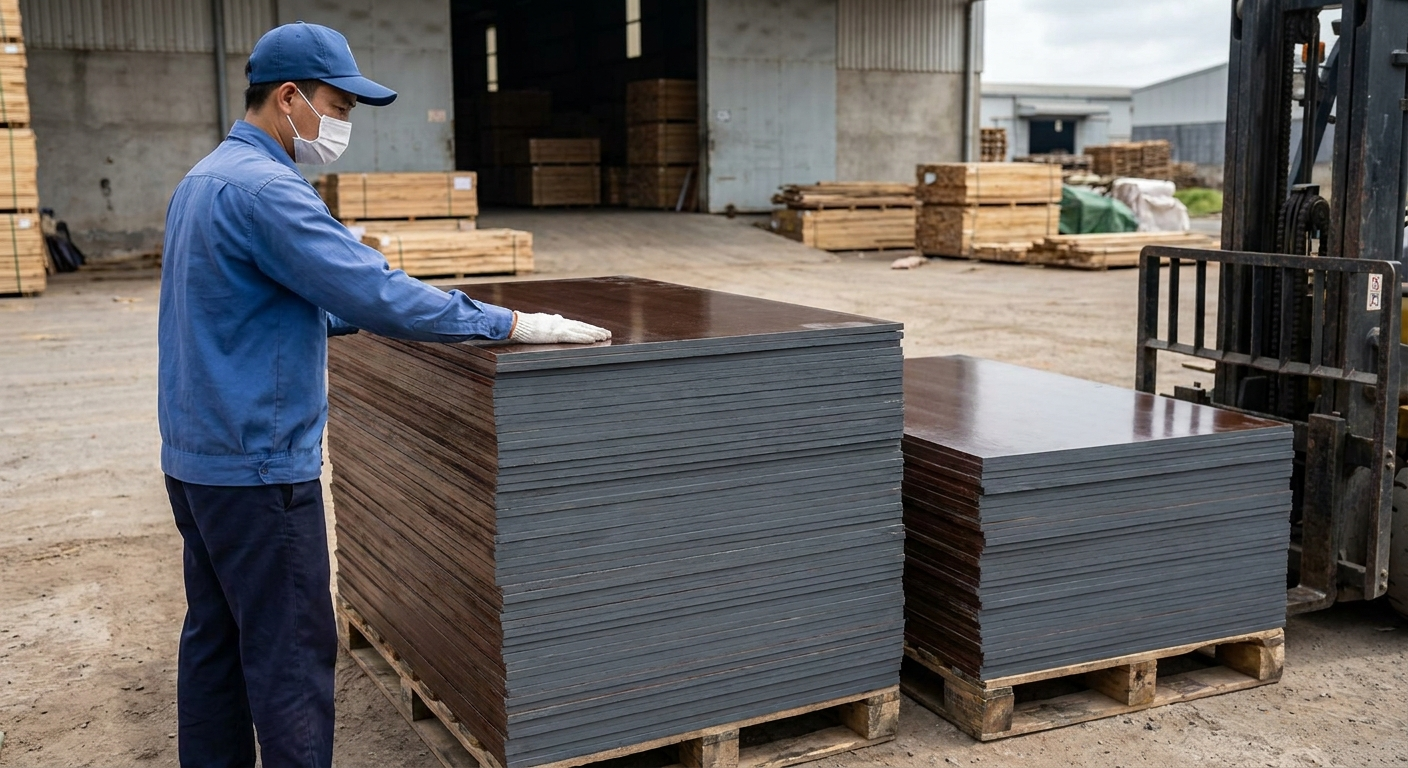
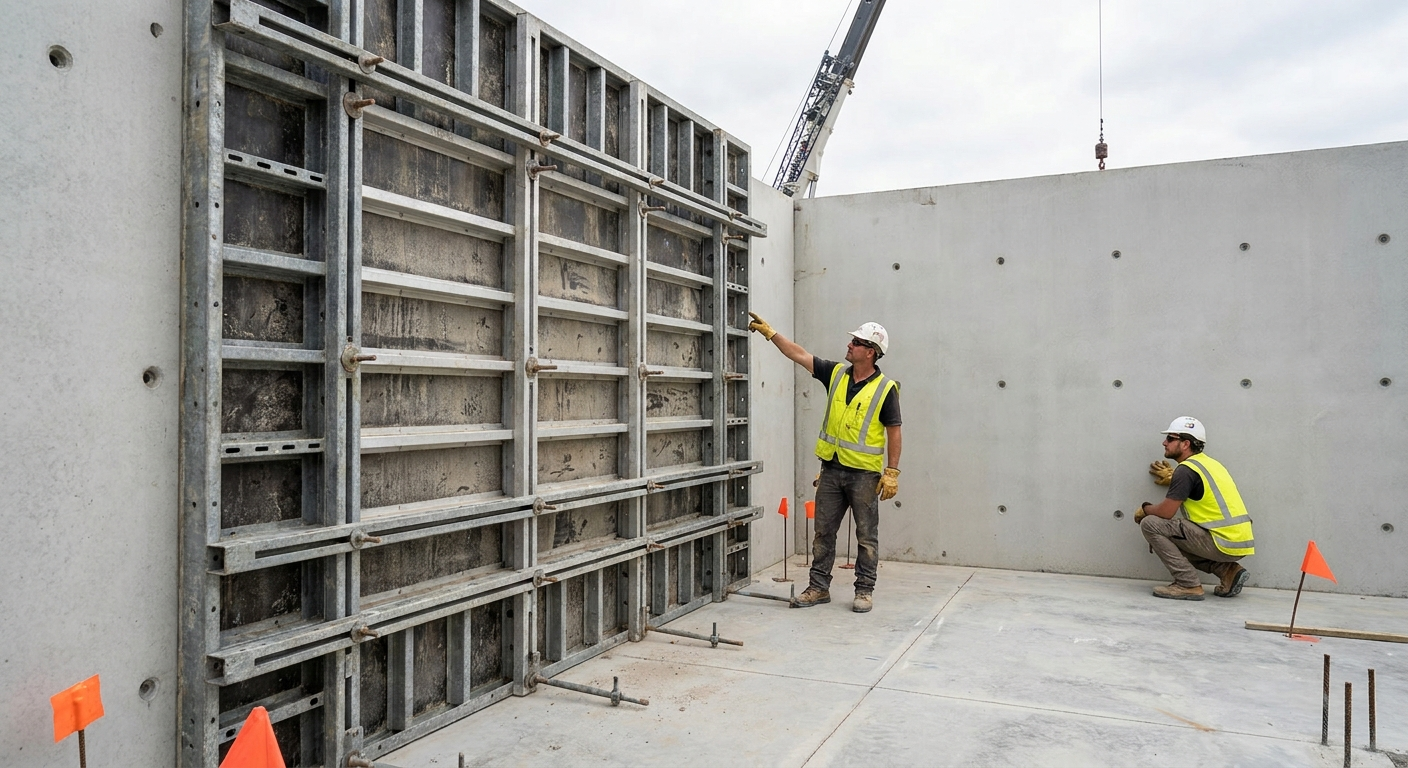
Hardwood plywood has the full moisture ladder. EN 636-1 for dry interior, EN 636-2 for humid interior or short-term exterior, EN 636-3 for full exterior service. BS 1088 marine for boats and saturated environments. APA Exposure 1 (typically CDX) and APA Exterior for North American sheathing and exterior cladding. For formwork specifically, hardwood plywood with a WBP phenolic adhesive (Class 3 under EN 636) delivers up to 20 reuse cycles in the right grade.
If the application involves any exterior exposure, formwork service, splash zones, or bathroom and kitchen wet areas, the answer is hardwood plywood matched to the exposure class. Bamboo plywood in those settings is the wrong panel.
Where bamboo plywood wins
Bamboo's strongest case is visible interior surfaces where the horizontal-band face pattern is wanted and where the rapid-regrowth story matters to the buyer or the certifying body. Specifically:
- Cabinet faces, drawer fronts, and visible casework in modern interiors
- Decorative wall panels and feature walls
- Architectural cladding inside conditioned spaces
- Furniture-grade surfaces where the aesthetic is intentional
- LEED and BREEAM projects scoring rapidly-renewable material credits
For any of these, bamboo plywood is a credible specification. The 1.5 to 2 times cost premium is part of the design choice, not a hidden trade-off.
Where regular plywood wins
Hardwood plywood owns the rest of the panel applications, with the standards rating being the deciding factor in most of them:
- Structural sheathing and subflooring — anywhere standards-rated bending and bond values drive the spec, including roof-deck applications
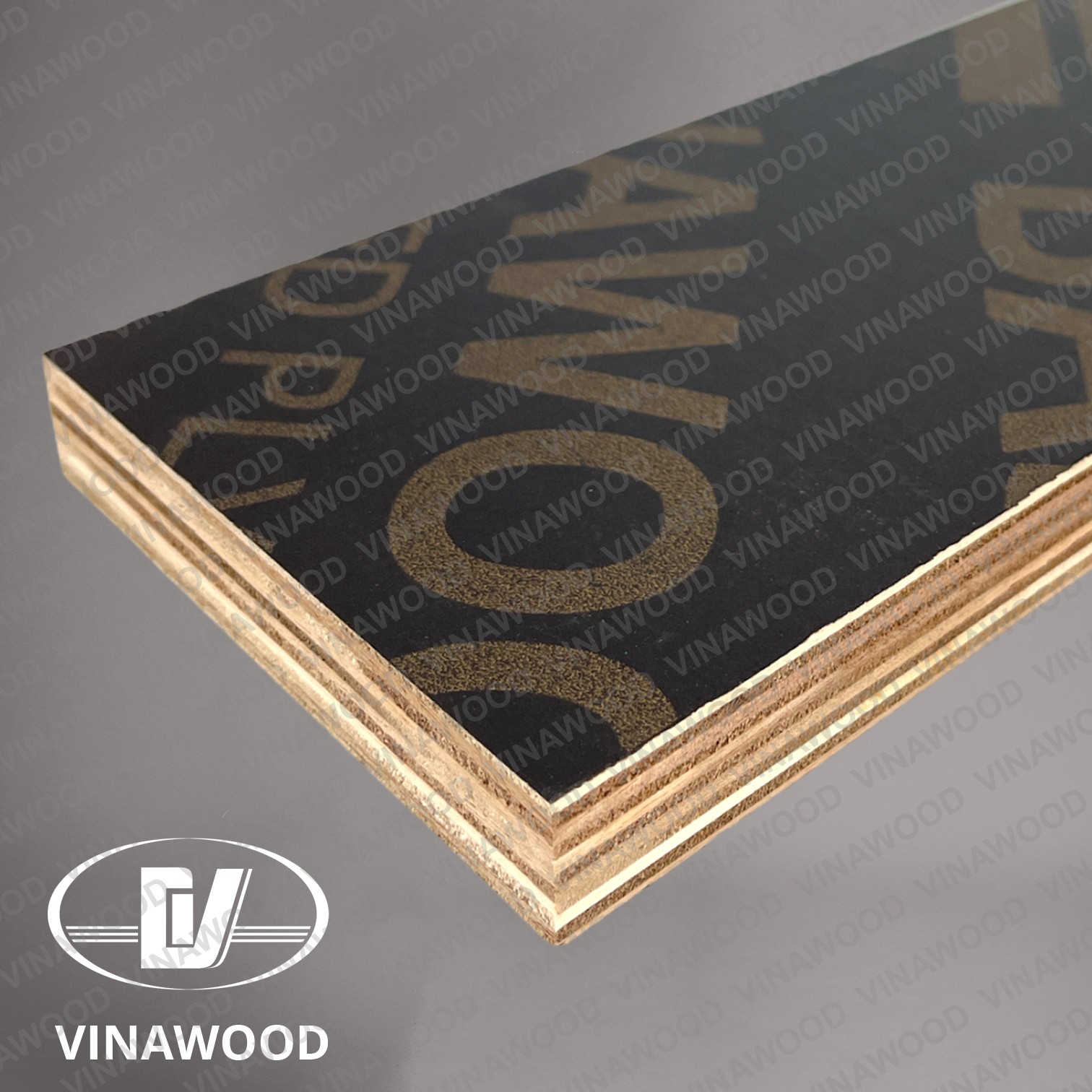
- Concrete formwork (single-pour through high-reuse film-faced) — see Vinawood's commercial plywood and formwork ranges
- Marine and boat-building applications — marine plywood with full BS 1088 bond
- Exterior cladding and soffits, plus any service class with sustained moisture exposure
- Furniture interiors where cost is the dominant factor and the face is not visible
- Cabinet boxes where a paint-grade or veneered face will cover the panel
For appearance-grade work, the plywood grades explained guide walks through how A-B-C-D and the X-bond classification interact, which determines what visible face quality you get without paying for grades you do not need.
Decision matrix
| Use case | Recommended panel | Why |
|---|---|---|
| Visible kitchen cabinet faces with modern aesthetic | Bamboo plywood | Distinctive face pattern, scratch-resistant for daily wear, premium feel justifies cost |
| Cabinet boxes and hidden carcase work | Hardwood plywood (B-grade or C-grade face) | Same structural performance, 40 to 60 percent lower cost, no premium needed for hidden surfaces |
| Decorative wall panels in a conditioned interior | Bamboo plywood | Aesthetic is the spec; interior service stays within bamboo's rated envelope |
| Subfloor or wall sheathing | Hardwood plywood (or softwood structural) | Standards-rated for structural service; bamboo has no equivalent rating ladder |
| Concrete formwork | Hardwood plywood, WBP phenolic, EN 636-3 | Up to 20 reuse cycles in the right grade; bamboo cannot serve this duty |
| Marine or boat-building plywood | Hardwood plywood, BS 1088 marine | Void-free construction plus full waterproof bond required by spec |
| Bathroom vanity faces | Hardwood plywood with film face, or sealed laminate | Bamboo plywood's interior-only rating excludes splash-zone service |
| LEED-targeted architectural panel for a feature wall | Bamboo plywood (FSC-certified) | Rapidly-renewable credit available; aesthetic spec aligns |
The species behind the panel matters less than the standards rating, the adhesive class, and the service class of the application. Match the panel to the job. The cheaper option is almost never cheaper once the wrong panel pulls the project into a rework.
For the general info side of bamboo plywood (sizes, manufacturing, where it shows up), see Vinawood's bamboo plywood guide, which covers the product type in more depth than the comparison frame here allows.
Category
guides
Related Markets
Related Countries
Related Products
▶Sources & References (4)
- BS 1088 — Plywood for Marine Use — British Standards Institution (2003)
- EN 636 — Plywood. Specifications — European Committee for Standardization (CEN) (2012)
- ANSI/HPVA HP-1-2020 — Hardwood and Decorative Plywood — Hardwood Plywood and Veneer Association (2020)
- FSC International — Forest Stewardship Council certification for bamboo and hardwood — Forest Stewardship Council (2024)