Best Plywood for Kitchen Cabinets in India [2026]: Grade, Thickness, Brands & Pricing
Best plywood for Indian kitchen cabinets in 2026 — BWP for the carcase, BWR for shutters, MR nowhere. Component-by-component thickness, top five brands, 8-point dealer inspection and 2026 ₹/sq ft pricing.
![Best Plywood for Kitchen Cabinets in India [2026]: Grade, Thickness, Brands & Pricing](https://kvwcunpmdrfnpzuibkdq.supabase.co/storage/v1/object/public/site-public/media/blog/2b3f0908-c9a1-4120-8c99-4a8bc5d807bf/india-kitchen-cabinets-2026-featured-20260513-711ea7.png)
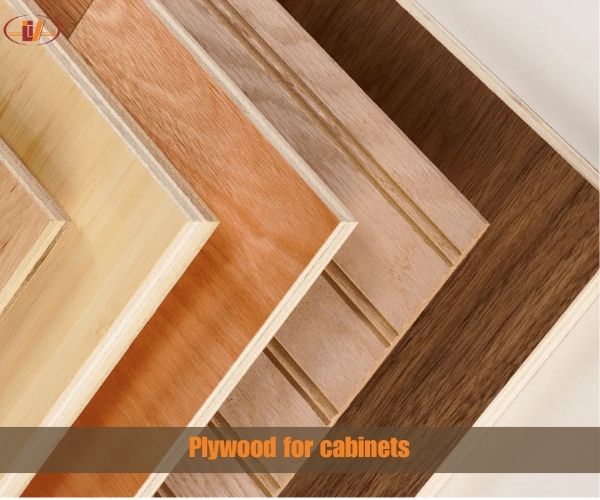
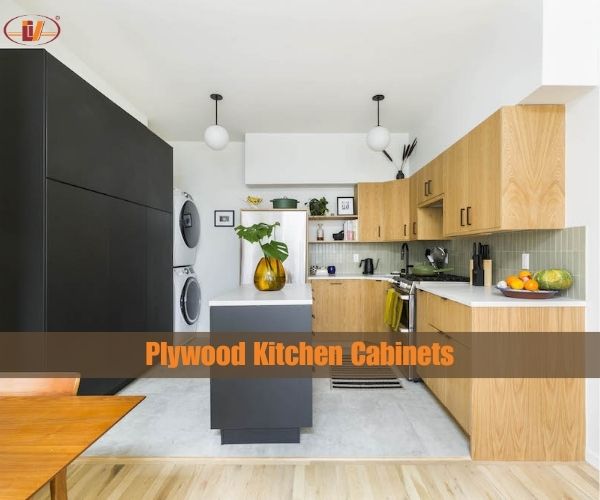
For an Indian kitchen in 2026 the right default is BWP or marine-grade plywood (IS:710) on the cabinet carcase and bottom, BWR (IS:303) on shutter shells and light-load shelves, and zero MR-grade anywhere near a working kitchen. Thickness sits at 18 mm on the carcase and shutters, 12 mm on partitions, 6 mm on backs and drawer bottoms, and 25 mm where a stone counter or solid surface sits over the top. Cost per square foot in 2026 spans roughly ₹65–145 depending on grade and brand tier. Five domestic brands carry consistent BWP lines worth specifying by name. The carcase grade decision drives about 80 % of cabinet longevity in the humid Indian environment, and brand selection drives most of the rest. This guide unpacks the grade decision, component-by-component thickness, calibrated grade for modular assembly, brand tiers, an 8-point dealer inspection, and 2026 pricing.
Why a kitchen cabinet needs its own plywood decision
An Indian kitchen is not a typical interior environment. Cooking steam saturates the air during peak meal preparation. Sinks splash continuously over the under-counter cabinet face. Dishwashers leak heat and humidity onto adjacent units. In coastal cities Mumbai, Chennai, Kolkata, Visakhapatnam, Goa relative humidity inside cabinets routinely sits at 60–90 % for months at a stretch through the monsoon.
MR-grade plywood, the moisture-resistant grade most carpenters reach for in furniture work, fails inside this envelope within 2–3 years. The melamine-urea-formaldehyde adhesive de-laminates first at edges, then in the core. The result: swollen panels, screws that no longer hold, and shutters that no longer close square. The grade decision drives roughly 80 % of cabinet longevity. Once the grade is right, brand selection drives consistency, not inherent quality.
BWR vs BWP for Indian kitchens
The two Indian Standards that matter for kitchen plywood are IS:303 (BWR / boiling water resistant) and IS:710 (BWP / boiling water proof, often marketed as marine grade).
BWR (IS:303) uses a phenol-modified or melamine-modified adhesive and passes the 8-hour boil cycle. The core can include a higher proportion of softer hardwood species. Suitable for shutter shells (covered by laminate or ABS edge banding) and light-load shelves in well-ventilated kitchens away from the coast.
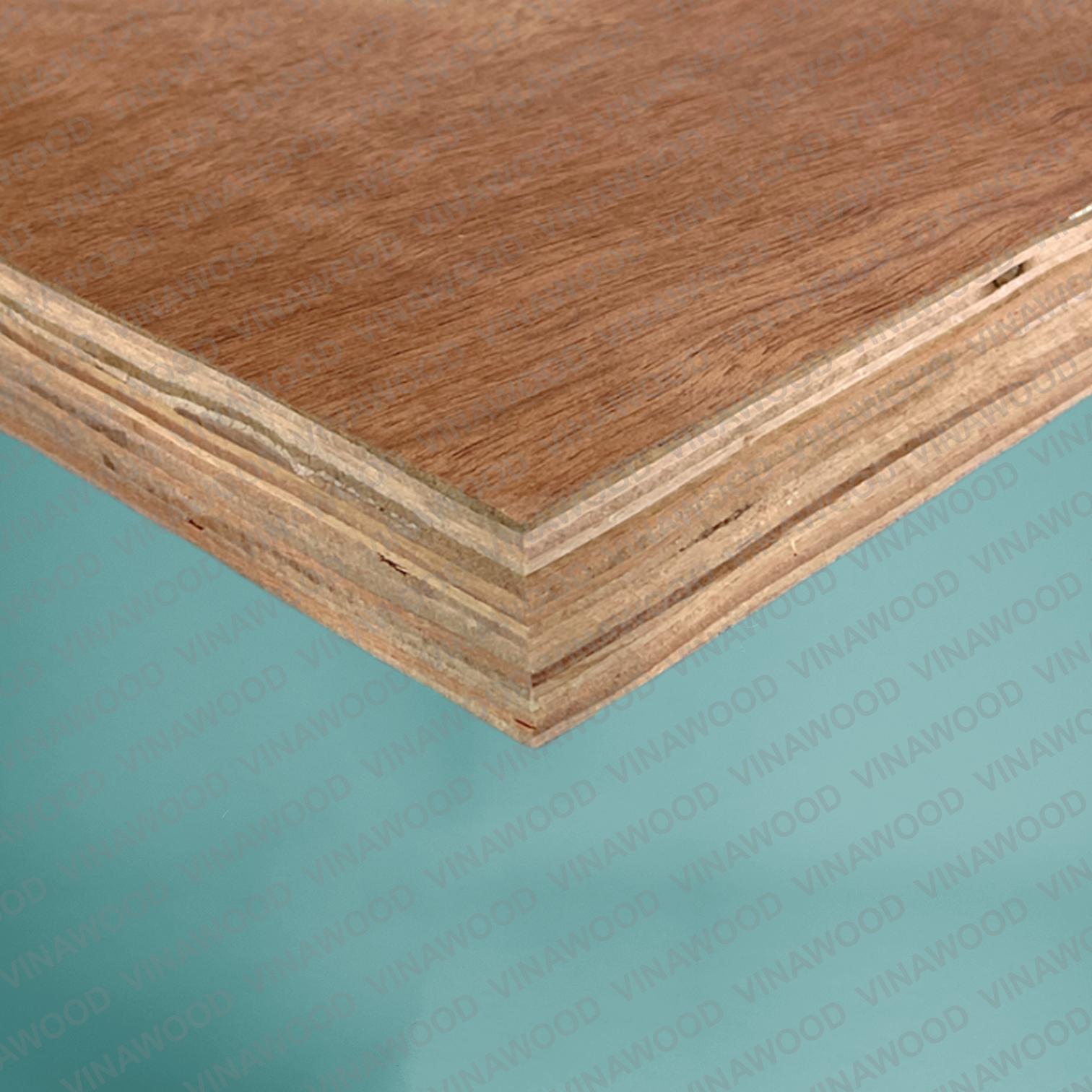
BWP (IS:710 / marine) uses a full phenol-formaldehyde WBP adhesive that passes the 72-hour boil cycle. The core is denser hardwood, void-free, and bonded with phenolic at every glue line. Required for the cabinet carcase, sides, bottom, and any fixed shelf in any Indian kitchen.
The practical decision logic: BWP everywhere on the carcase, BWR acceptable on shutter shells only when the shutter is fully laminated and edge-banded and the kitchen is not in a coastal high-humidity zone. Under-sink positions, dishwasher-adjacent cabinets, and kitchen island sink runs are always BWP — no exceptions.
Plywood thickness by kitchen cabinet component
The following thickness map covers a typical Indian modular kitchen build. Loads assume residential use with cookware and stored groceries, not commercial kitchen volumes.
| Component | Grade | Thickness |
|---|---|---|
| Base cabinet sides (gola, carcase) | BWP | 18 mm |
| Base cabinet bottom | BWP | 18 mm |
| Base cabinet back panel | BWP | 6 mm (sealed cut edges) |
| Drawer sides | BWR or BWP | 12 mm |
| Drawer bottom | BWP | 6 mm |
| Wall cabinet sides | BWP | 18 mm (15 mm for light units) |
| Wall cabinet shelves (load <20 kg) | BWR or BWP | 18 mm |
| Counter substrate (under stone / solid surface) | BWP | 25 mm |
| Shutter shell (laminated) | BWR + edge banding | 18 mm |
| Tall unit / pantry sides | BWP | 18 mm |
| Tall unit shelves (span over 900 mm) | BWR or BWP | 25 mm |
This is the assembly the dominant Indian modular kitchen factories follow. A homeowner ordering a custom kitchen from a carpenter can hand this table over as the specification.
Calibrated plywood for modular kitchen assembly
Standard plywood under IS:303 and EN 315 tolerances allows +0.7 / –0.9 mm on an 18 mm sanded panel. That tolerance is fine for site-built carpentry where panels are sized and dressed on site. It fails for modular kitchen assembly, where cam-lock and minifix joinery relies on consistent panel thickness to pull units square at first fitment.
Calibrated grade holds ±0.2 mm. Premium plywood lines from the major Indian brands include calibrated SKUs — CenturyPly Club Prime, Greenply Platinum, Sylvan Marine Plus, and similar. The cost premium is roughly 5–10 % over standard BWP. For factory-built modular kitchens this is mandatory. For one-off site-built kitchens it is optional but eliminates a class of fitment problems.
Top five Indian plywood brands for kitchen cabinets
The five brands below hold spec consistently across their BWP lines and are widely available through dealer networks across India. Listing order is alphabetical, not preference.
- CenturyPly — Sainik 710 (entry BWP), Club Prime (premium calibrated BWP). National coverage. Sainik is the most cross-referenced spec in interior tenders.
- Duroply — Duro Plywood BWP. Strong dealer network in East India (West Bengal, Odisha, North-East).
- Greenply — Greenply Marine, Platinum series. National coverage. Platinum is a calibrated premium line.
- Kitply — Hi-Bond Marine. Long-established. Stronger in tier-2 and tier-3 cities than the metros.
- Sylvan Ply — Marine Plus. Strong in East and North India. Premium BWP line carries calibrated grade.
One framing line that matters more than the brand name: the BIS mark and a traceable certificate code matter more than the logo. Brand reputation tracks dealer-channel consistency, not chemistry. The 8-point inspection below catches most off-spec stock regardless of the brand on the label.
Plywood vs MDF vs HDHMR for Indian kitchens
Three substrates compete for kitchen cabinet work in India today.
MDF (medium density fibreboard) has a smooth, paint-ready face that takes PU paint and acrylic finishes brilliantly. It is the dominant substrate for painted shutter blanks and door fronts. It is not a cabinet carcase material. Moisture tolerance is poor; once MDF swells, the swelling is permanent.
HDHMR (high-density highly moisture-resistant) is a newer composite marketed as a BWP substitute. In dry, AC-controlled apartments it performs well. Field data on 10+ year service in unconditioned coastal Indian kitchens is still limited. Specifying HDHMR for the entire carcase carries risk that does not exist with BWP plywood.
Plywood (BWP / BWR) is the load-bearing, screw-holding, moisture-tolerant structural standard. Right substrate for carcase, bottom, and any load path.
The dominant Indian modular kitchen build in 2026 is hybrid: BWP plywood carcase plus MDF shutter blanks for PU-painted or acrylic-finished doors. This combination gives the structural durability where it matters and the paint finish quality where it shows.
Eight-point dealer inspection before paying
Plywood quality varies more by batch than by brand. A 15-minute inspection at the dealer is the cheapest insurance available on a ₹50,000+ panel purchase.
- BIS mark and certificate code — verify the code against the BIS portal. Counterfeit BIS marks remain a problem in tier-2 channels.
- Thickness consistency along the panel — caliper at six points; deviation more than ±0.5 mm on a non-calibrated panel signals manufacturing inconsistency.
- Edge condition — no voids, no gaps, no exposed knot holes at the cut edge. Visible voids in the core are not acceptable for kitchen-grade material.
- Core uniformity at cross-section — slice a corner with a sharp blade. Uniform light to medium hardwood with no soft pulp.
- Ply count — premium 18 mm BWP carries 11 or 13 plies. A 7-ply 18 mm panel is structurally inferior even if it carries the right BIS mark.
- Weight per sheet — 18 mm 8×4 ft BWP weighs 28–34 kg. Below 26 kg signals undersize core or void-prone core.
- Boiling-water sample test — for premium-tier BWP purchases, reputable dealers will boil a sample chip for 4 hours. Acceptable result: no delamination, no glue line failure. We have seen reputable Mumbai and Bangalore dealers do this routinely on high-value orders.
- Calibrated-grade verification — for modular kitchen orders, vernier caliper across two diagonals; both diagonals within ±0.2 mm.
2026 Indian pricing by grade
The figures below are indicative ranges for retail and trade channels in metro cities. Tier-2 and tier-3 city pricing trends slightly lower; coastal city pricing trends slightly higher.
| Material | Per sq ft (₹) | Note |
|---|---|---|
| 18 mm MDF | 45–75 | Shutter blanks, paint-grade only |
| 18 mm BWR (IS:303) | 65–95 | Shutter shells, light shelves |
| 18 mm HDHMR | 70–110 | AC-controlled interiors only |
| 18 mm BWP (IS:710) | 95–145 | Carcase grade; calibrated +5–10 % |
A typical 8×10 ft modular kitchen consumes around 300 sq ft of panel material. That works out to roughly ₹35,000–55,000 for the BWP carcase and another ₹15,000–25,000 for MDF shutter blanks at metro retail pricing. Container-direct import from Vietnam at modular-kitchen-factory scale (200+ sheets) typically lands meaningfully below domestic premium retail at equivalent spec. The trade-off is 30–45 day lead time and a BIS documentation pathway for the import lot.
Vinawood for the Indian B2B channel
Vinawood is a Vietnamese plywood manufacturer founded in 1992, exporting to more than 55 countries including India. For Indian B2B buyers (modular kitchen factories, interior contractors, distributor importers), Vinawood produces eucalyptus and acacia-core BWP equivalents bonded with full WBP phenolic adhesive. Certifications include FSC Chain of Custody, CARB Phase 2, ISO 9001, and CE under EN 13986 for the EU-format SKUs.
Relevant collections for Indian kitchen work: Marine Plywood (cabinet carcase grade) and Commercial Plywood (drawer and back panel grade). Volume direct-import is suited for buyers consuming one or more containers per quarter. This is not a retail product for individual homeowners in India — the right route for a single-kitchen build is the domestic brand network through a verified dealer.
About Vinawood
Vinawood has manufactured plywood in Vietnam since 1992 with exports to more than 55 markets. Core capability covers marine and BWP-equivalent plywood, formwork plywood, and commercial plywood lines built on plantation-grown eucalyptus and acacia. Certifications: FSC Chain of Custody, ISO 9001, CARB Phase 2, EN 13986 with CE marking for EU formats. Container inquiries and product documentation are available directly through the Vinawood product pages.
Category
guides