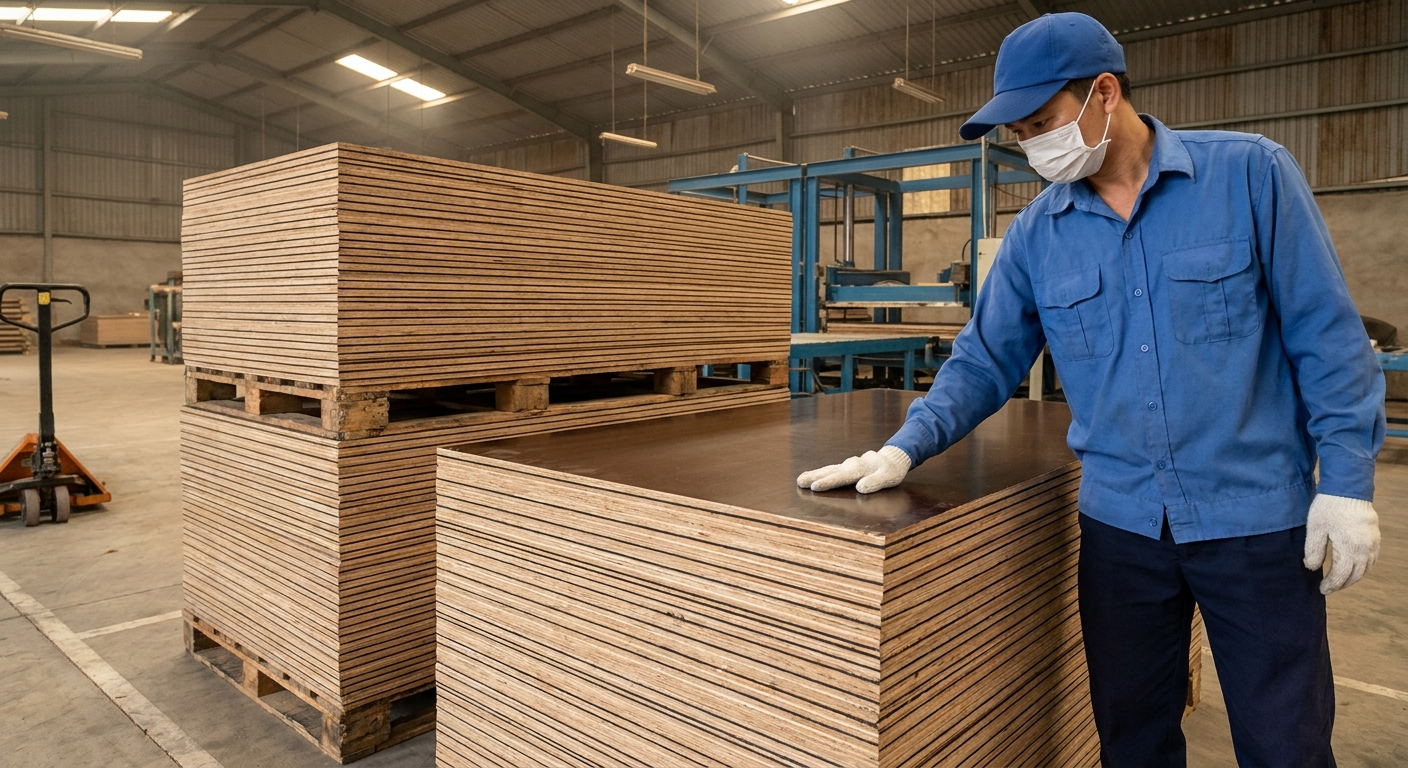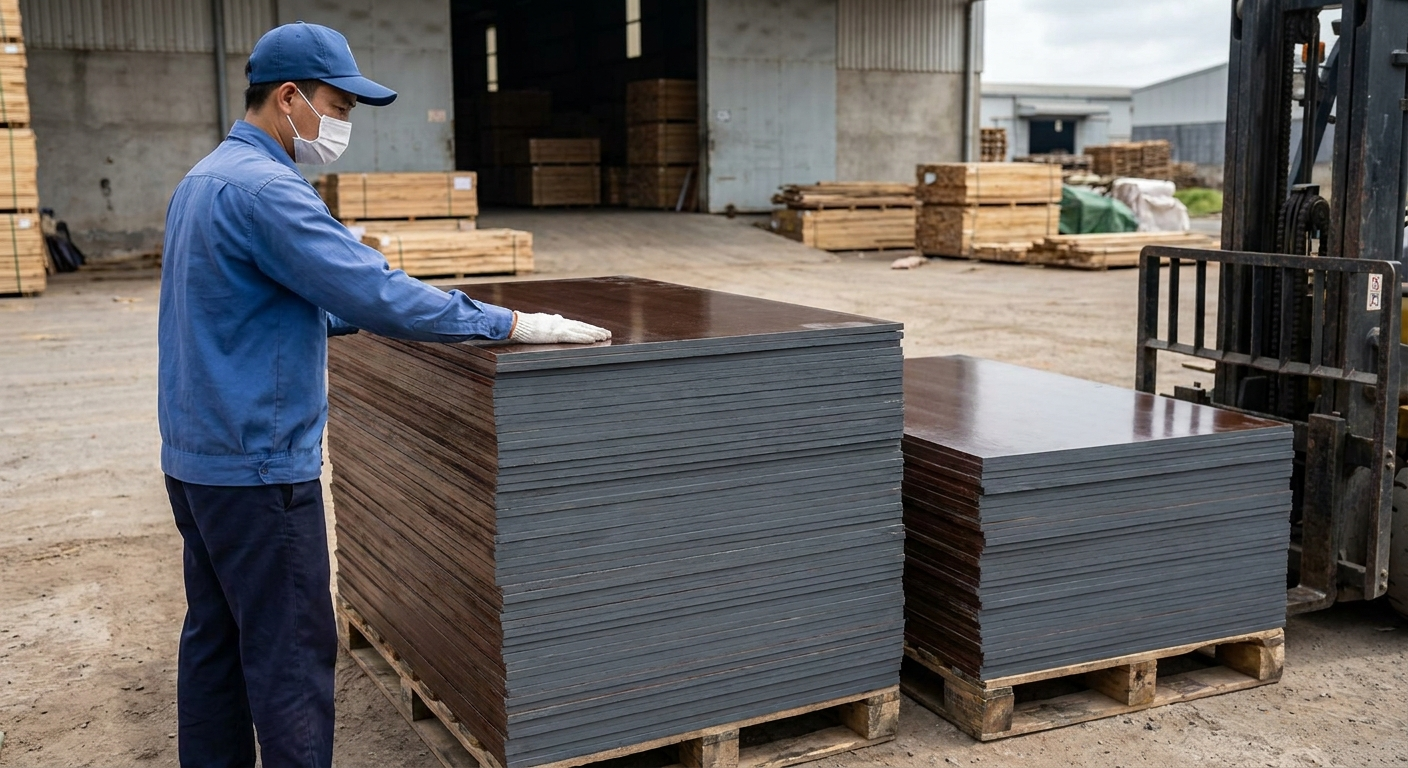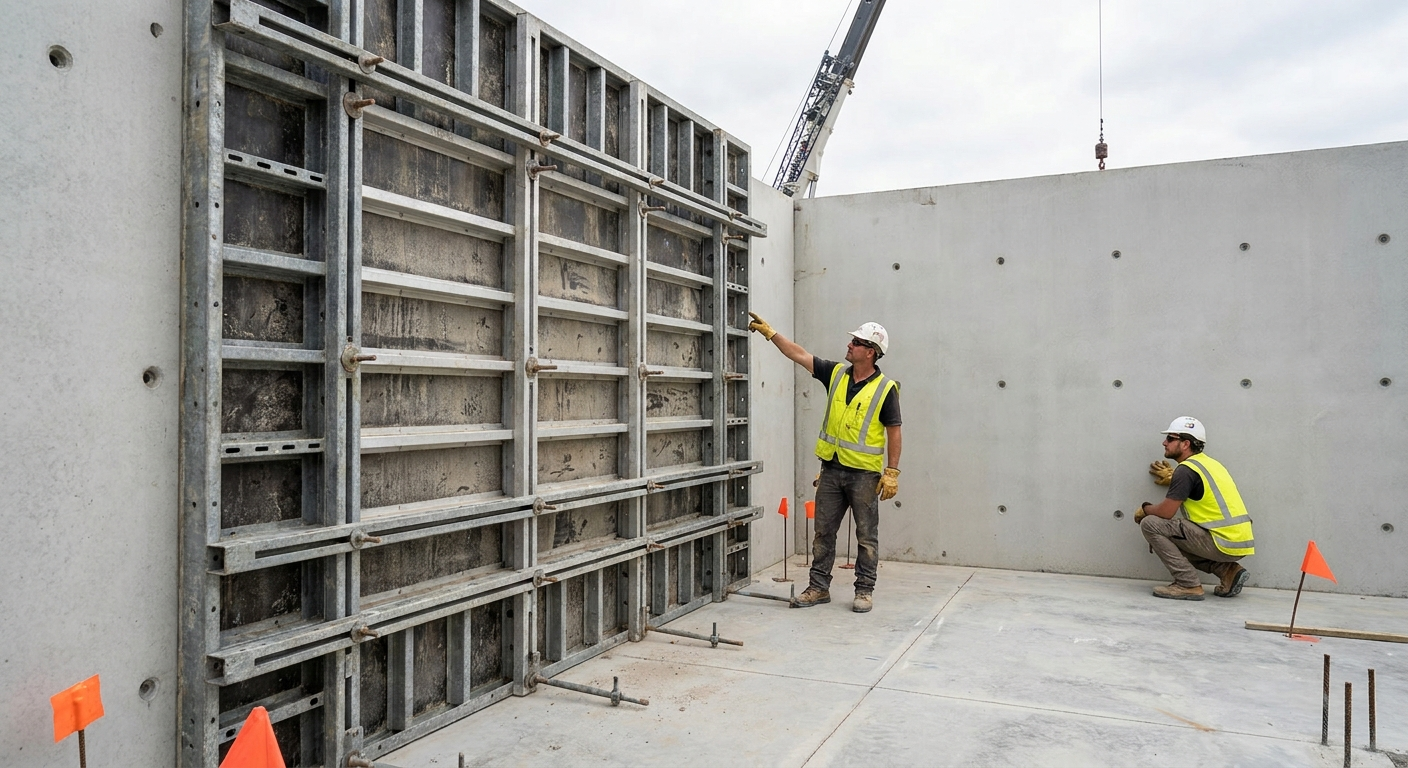
Is Shuttering Plywood Waterproof? What Contractors Need to Know
Shuttering plywood is water-resistant under a WBP bond class, not waterproof. This guide maps EN 636-2 MUF versus Class 3 phenolic grades, edge-seal habits, and Vinawood reuse maxima written as up to N.
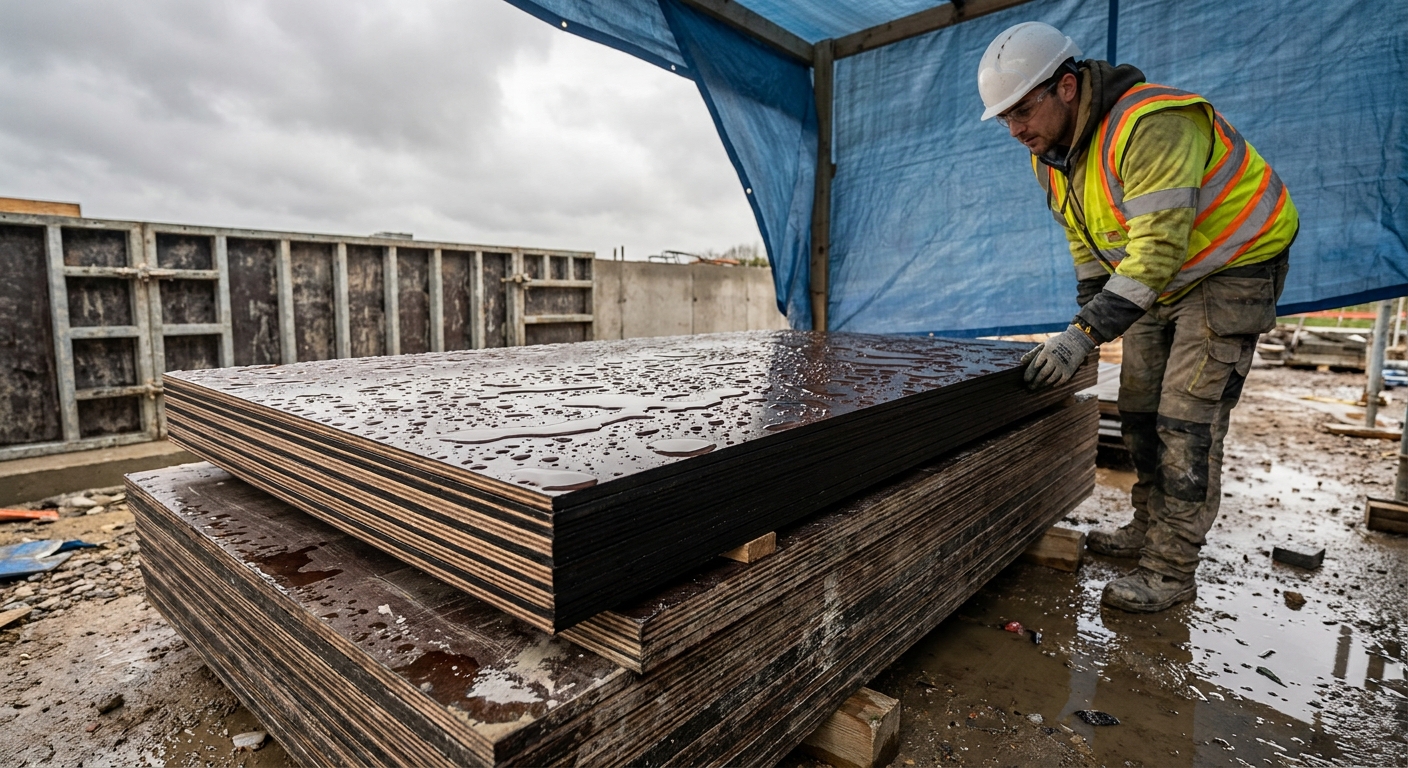
Shuttering plywood — the film-faced formwork sheet contractors pour against . is water-resistant under a WBP bond class. It is not waterproof. The phenolic or overlay face and the weather-and-boil-proof glue line are built for wet concrete, rain delays, and outdoor storage between pours. They are not a licence for permanent immersion or marine service.
That answer belongs on the RFQ before anyone argues about price. Buyers who write “waterproof shuttering” usually mean a Class 3 phenolic panel that will survive repeated wet cycles. Naming the bond class correctly saves a swap later. The rest of this page maps WBP language to Vinawood grades, shows what actually breaks moisture performance on site, and closes on how to request a quotation.
What water-resistant shuttering plywood actually does
Buyers searching whether shuttering plywood is waterproof are usually trying to avoid a delamination surprise on pour five. The right answer is bond class plus handling, not a marketing synonym for marine.
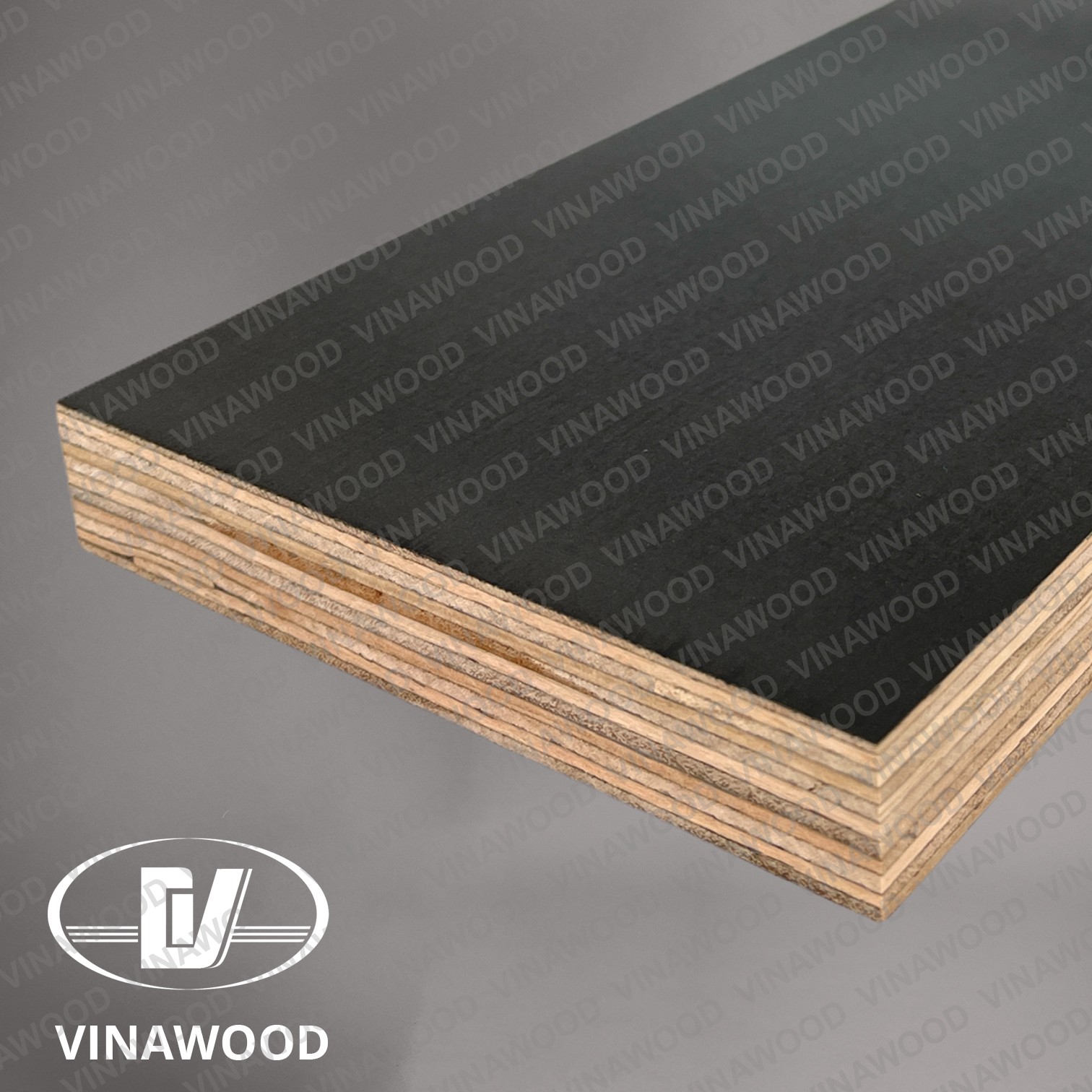
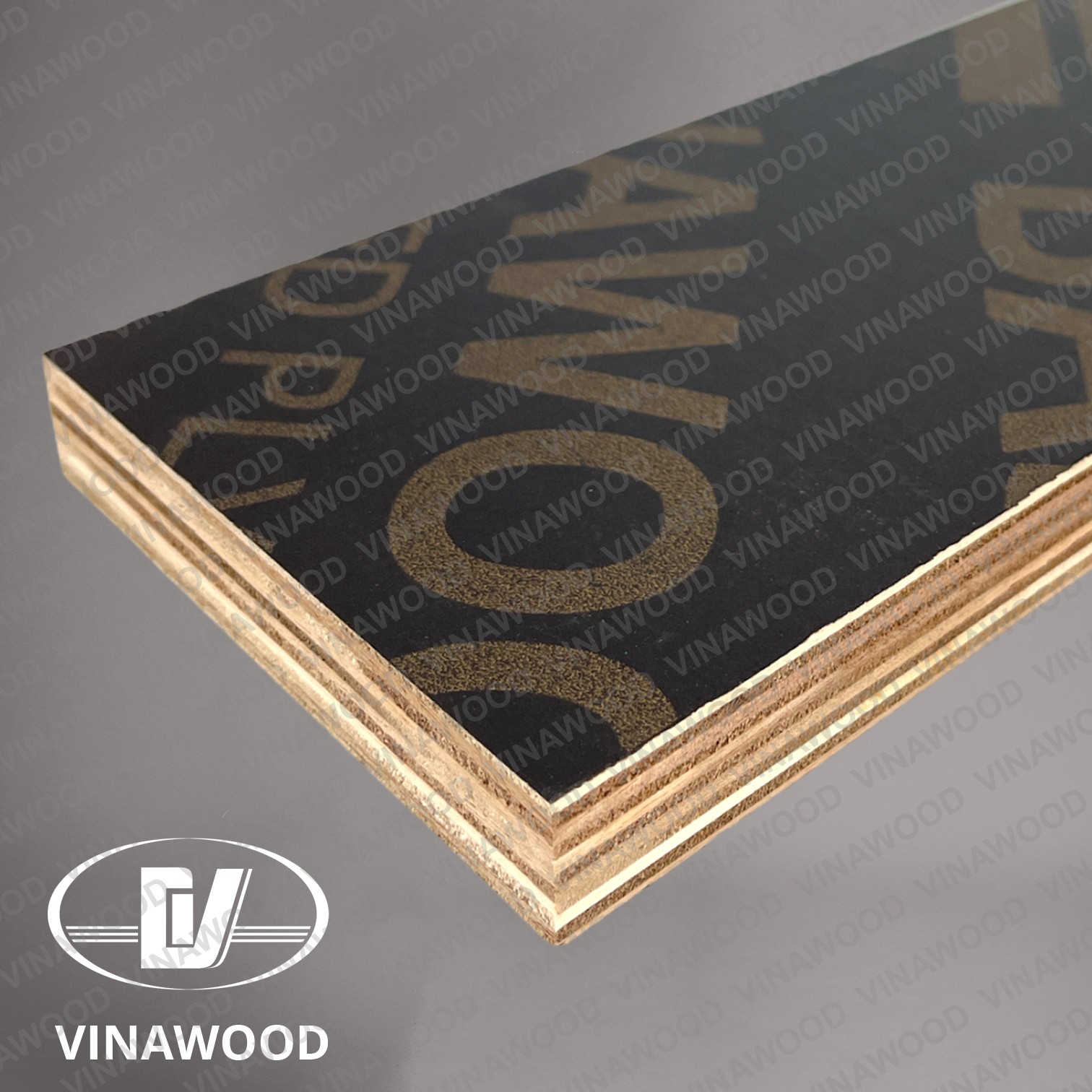
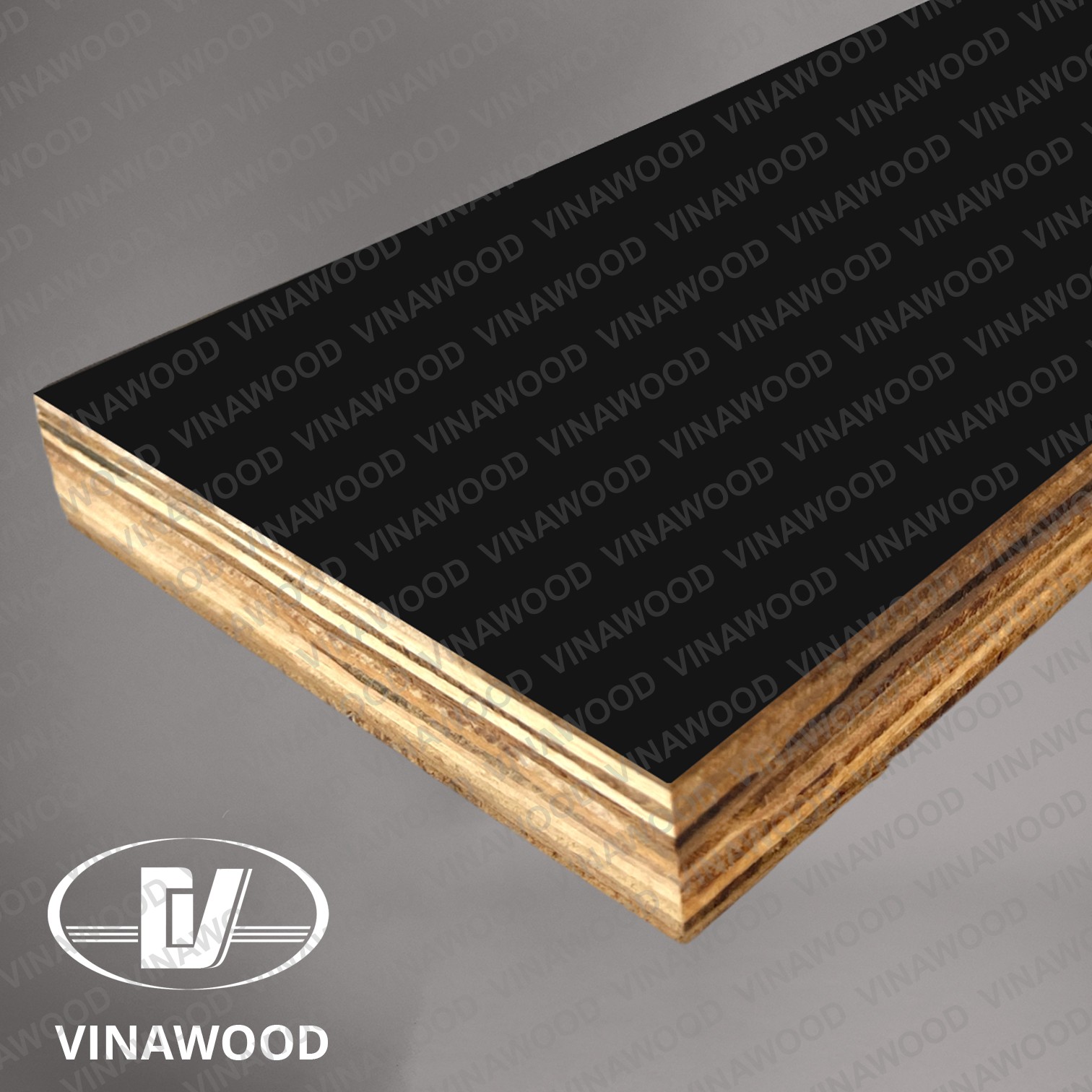
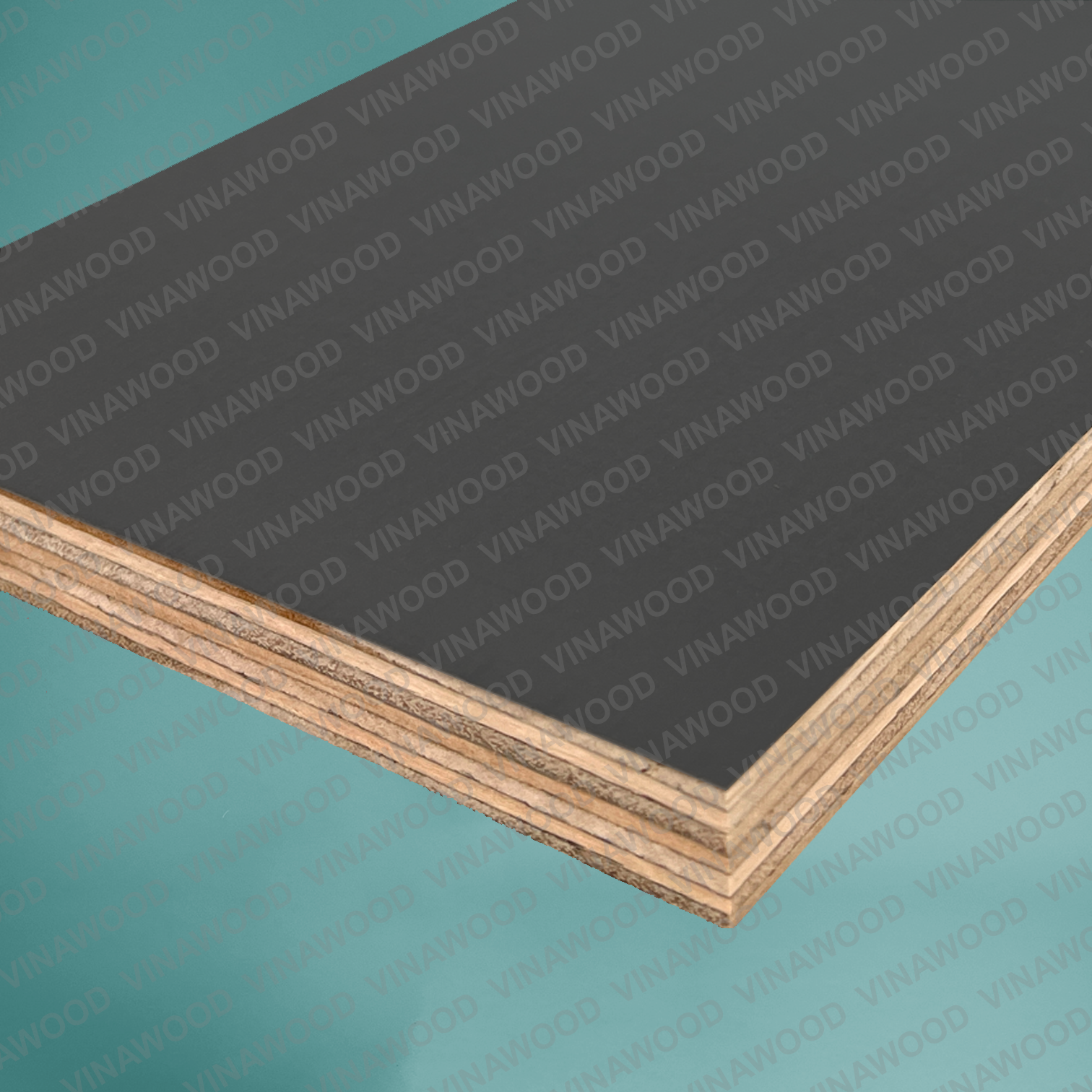
Shuttering plywood is temporary formwork facing. Cross-laminated veneers carry pour pressure. A thermoset film on the face keeps cement paste off the wood. A WBP glue line holds the stack through wet cycles. Edge seal slows water into the end grain. Together those layers resist moisture for the life of a forming programme.
WBP stands for weather and boil proof — a glue-bond classification tested under EN 314-style boil and moisture exposure, not a claim that the finished sheet is impervious forever. Extended submersion, open cut edges, and breached film still admit water. Contractors who treat the panel as “waterproof forever” learn that the hard way after a few unprotected monsoons on the stack.
For the broader shuttering and forming context, read alongside concrete forming plywood. This article stays on bond class and moisture behaviour.
WBP, EN 636, and the language buyers put on RFQs
EN 636 service classes describe where a plywood panel is expected to live. EN 636-2 covers humid and protected-exterior conditions — the band for most core-MUF formwork grades. EN 636-3 / Class 3 is the exterior phenolic band used when buyers want the highest moisture durability in the glue line.
Melamine on a formwork RFQ needs a precise meaning. Core resin MUF (melamine-urea-formaldehyde) is the glue inside Form Basic and Form Extra. It is not the face film, and it is not a decorative laminate. The face on Vinawood film-faced grades is phenolic paper. Form Extra’s longer reuse comes from Superior Glue MUF chemistry in the core, not from a heavier face film.
Phenolic Class 3 writing applies only to Pro Form, Pro Form Lite, and the HDO range. Form Extra is Superior Glue MUF, EN 636-2, and is not Class 3, even though it carries the same phenolic face family as Form Basic. Mixing those labels on a purchase order is how the wrong sheet arrives on site.
Vinawood’s water-resistant formwork ladder
Reuse figures are maxima written as up to N. Real cycles depend on release agent, stripping, storage, and edge care. Consply is commercial Bintangor and is not film-faced. P-Form is polypropylene-faced and is not Pro Form.
- Eco Form Plus — film-faced entry grade, reuse up to 8
- Form Basic — core MUF, EN 636-2, phenolic face, reuse up to 10
- Form Extra — Superior Glue MUF, EN 636-2, not Class 3, same phenolic face family as Form Basic, reuse up to 15
- Pro Form Lite — phenolic PF, Class 3 / EN 636-3, between Form Extra and Pro Form, reuse up to 15
- Pro Form — phenolic PF, Class 3, reuse up to 20
- HDO Basic — phenolic PF Class 3, reuse up to 10
- HDO Premium / Premium HD — phenolic PF Class 3, reuse up to 20
Browse the film-faced plywood collection and the HDO plywood collection when the RFQ already knows which overlay family it wants.
What “waterproof” would actually require
Film weight still matters inside the water-resistant band. Lighter films abrade sooner under repeated release and vibrate-and-strip cycles. Heavier films buy face life, but they do not convert a WBP sheet into a waterproof product. Gsm belongs on the RFQ next to bond class.
True waterproof performance in timber products usually points at marine or permanent-immersion constructions with different standards, seal strategies, and service expectations. Formwork shuttering is not that product class. Comparing shuttering plywood to marine plywood as if they were synonyms confuses a temporary mould face with a hull or exterior structural panel.
On a jobsite, the honest ask is: will this sheet hold its bond and face through the pours and weather windows I have planned? That is a WBP / Class 2 or Class 3 question, plus edge seal and handling. It is not a waterproof stamp.
How shuttering plywood behaves on a real site
During a pour, the face sees alkaline cement paste and hydrostatic pressure for hours. After strip, the sheet often sits in rain or dew before the next cycle. WBP glue and film face are designed for that rhythm. Flat stacks with stickers, covered tops, and sealed edges keep the moisture cycle inside the design envelope.
Release agent matters as much as glue class. A thin, even coat helps the face strip clean and protects the film from cement abrasion. Heavy puddles leave stains in the concrete and soft spots on the sheet. Practical release guidance sits in concrete form release agent.
I still open RFQs that say “waterproof 18 mm shuttering, cheapest.” Those force a clarification call. The mill that answers with bond class, face type, and up-to-N reuse usually ships the panel the crew can actually reuse.
What breaks the water resistance
Cut edges are the first failure point. Water travels along end grain faster than through a sound face film. Every saw cut needs edge seal before the next pour. Peeled film corners, nail holes left open, and panels stored in standing water do the same damage over a few cycles.
Over-aggressive cleaning with wire brushes or harsh solvents can scratch the film and open paths into the veneer. Dropping sheets on corners crushes the edge seal. None of those failures mean the WBP glue was fake. They mean the moisture path was opened after the mill pressed the sheet.
Panel care and reuse arithmetic live in how many times you can reuse formwork plywood. Strip windows and curing gates belong in formwork removal time. Do not invent pour counts above Vinawood maxima.
Reuse cycles and moisture
Pressure and thickness still interact with moisture life. A thin sheet on a tall pour can cup or telegraph even when the glue line is sound. Match thickness to the pressure guidance on concrete pressure on formwork, then pick bond class for the exposure calendar.
A Class 3 phenolic sheet does not automatically deliver twenty pours if edges stay open. A Form Extra sheet can approach its up-to-15 band when the crew seals cuts, stores flat, and strips with care. Moisture performance and reuse are operational as much as chemical.
When a programme will see long outdoor exposure between lifts — climbing shafts, bridge piers, slow civil cycles . phenolic Class 3 (Pro Form Lite, Pro Form, or HDO) is usually the safer RFQ line. Short covered cycles can land on Form Basic or Form Extra when finish and budget allow. Match the grade to the exposure calendar, not to the word waterproof.
If the crew is comparing shuttering grades for a mixed programme — some short covered walls, some long outdoor shafts . split the order. Putting every wall on Class 3 when half the pours are indoor is wasteful. Putting every wall on Form Basic when half the pours sit in open weather is how early swaps appear.
Edge seal, release, and flat storage
Three site habits decide whether a water-resistant sheet keeps its bond story. Seal every fresh cut before the next pour. Apply release agent thin and even so the film strips clean. Store panels flat, stickered, and covered so standing water never sits on the face or wicked into the edges overnight.
Skip any one of those and even a Class 3 phenolic panel can look “failed” after a handful of cycles. The glue line may still be sound while the face and edges are already compromised. That is why moisture complaints so often turn into handling reviews rather than mill disputes.
These habits do not replace bond class on the RFQ. They are how a WBP sheet earns the upper end of its up-to-N reuse band. Soft guidance on release and reuse is linked above so this page does not merge into a full panel-care manual.
Choosing a water-resistant formwork panel
Write the RFQ with bond class in plain text: EN 636-2 MUF or EN 636-3 / Class 3 phenolic. Name the grade. State film family (phenolic film versus HDO paper). Give thickness, size, quantity, discharge port, and expected reuse as up to N. Ask for mill documents before deposit.
Vinawood has manufactured construction plywood in Vietnam since 1992, exports to 55+ countries, and ships roughly 5,000 containers a year from plantation-grown hardwood. North American buyers can draw stock through warehouses in Toronto, Vancouver, Calgary, Montreal, Miami, Houston, and Baltimore. Wider mill context: plywood manufacturers Vietnam.
Request a specification through the quotation contact form. Bring the exposure plan and the finish requirement. The mill will map that to a water-resistant WBP grade — never to a waterproof claim the sheet cannot keep.
Category
guides
Related Markets
Related Countries
Related Products
▶Sources & References (4)
- EN 314-1:2004 — Plywood. Bonding quality. Test methods — European Committee for Standardization (CEN) (2004-01-01)
- EN 636:2012+A1:2015 — Plywood. Specifications — European Committee for Standardization (CEN) (2015-01-01)
- IS 303:1989 — Plywood for General Purposes (BWP Grade) — Bureau of Indian Standards (1989-01-01)
- Wood Handbook: Wood as an Engineering Material — Chapter 12 — USDA Forest Products Laboratory (2021-01-01)