What Is MDO Plywood? Properties, Uses, Grades & When to Choose It
What MDO plywood is, how 1-step and 2-step panels differ, which grades exist, and how MDO compares with HDO, phenolic film-faced plywood and MDF for paint and concrete forming.
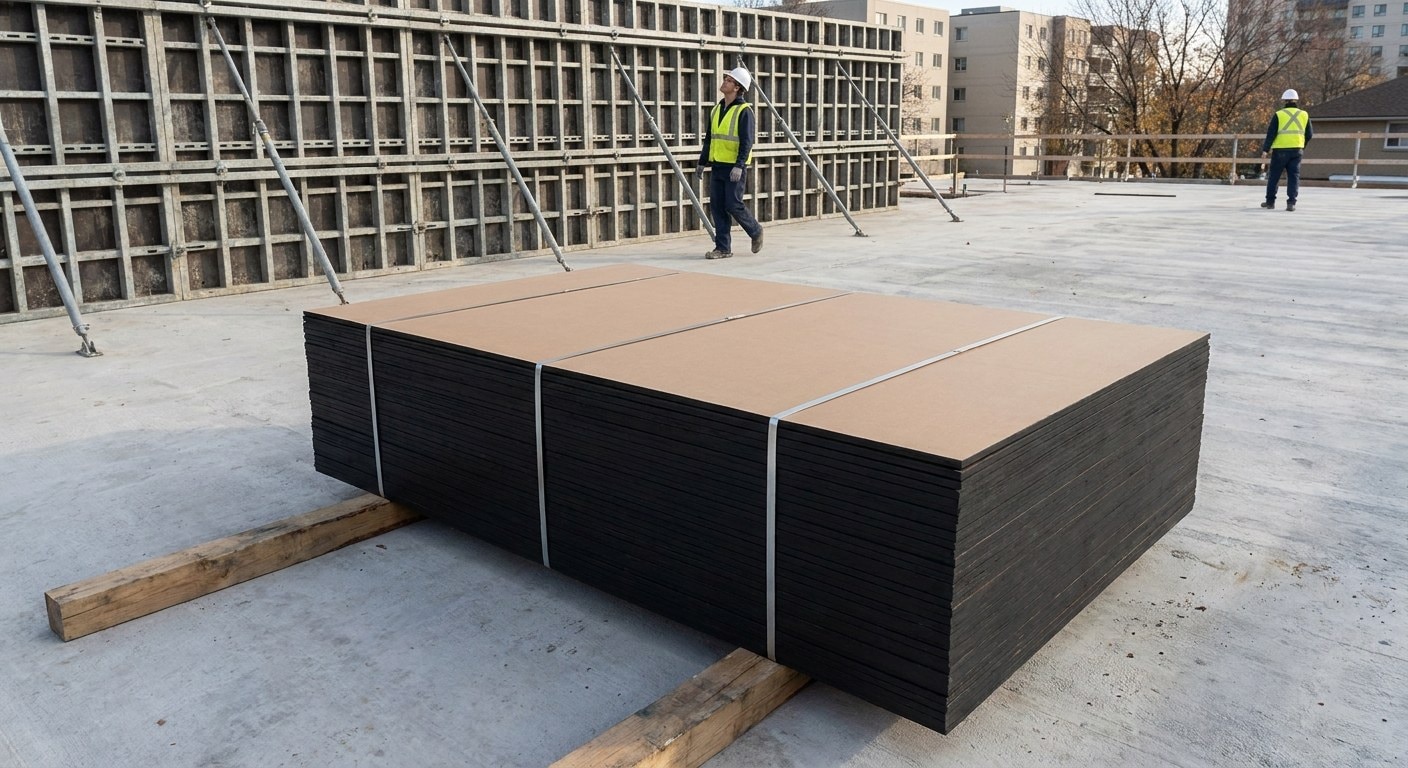
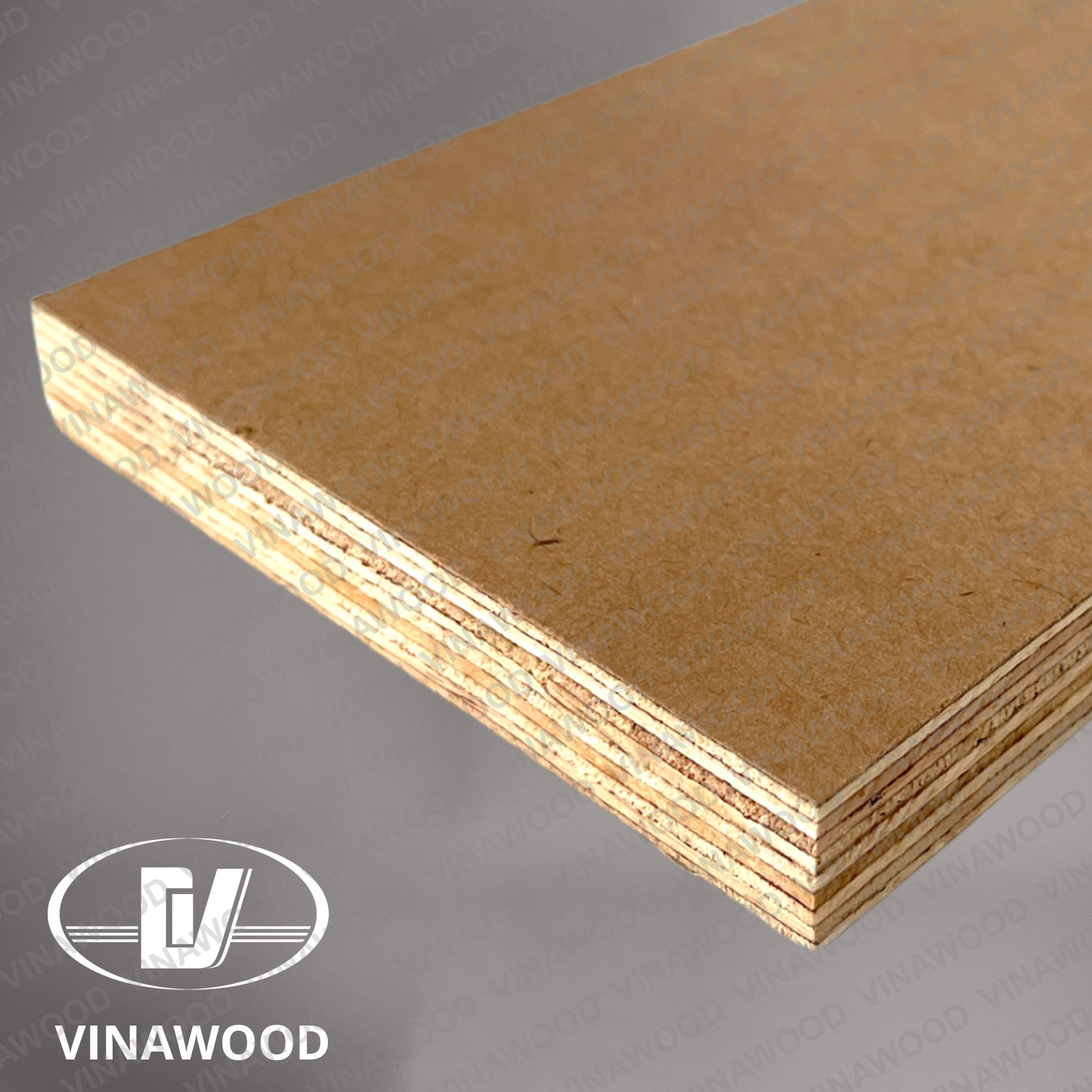
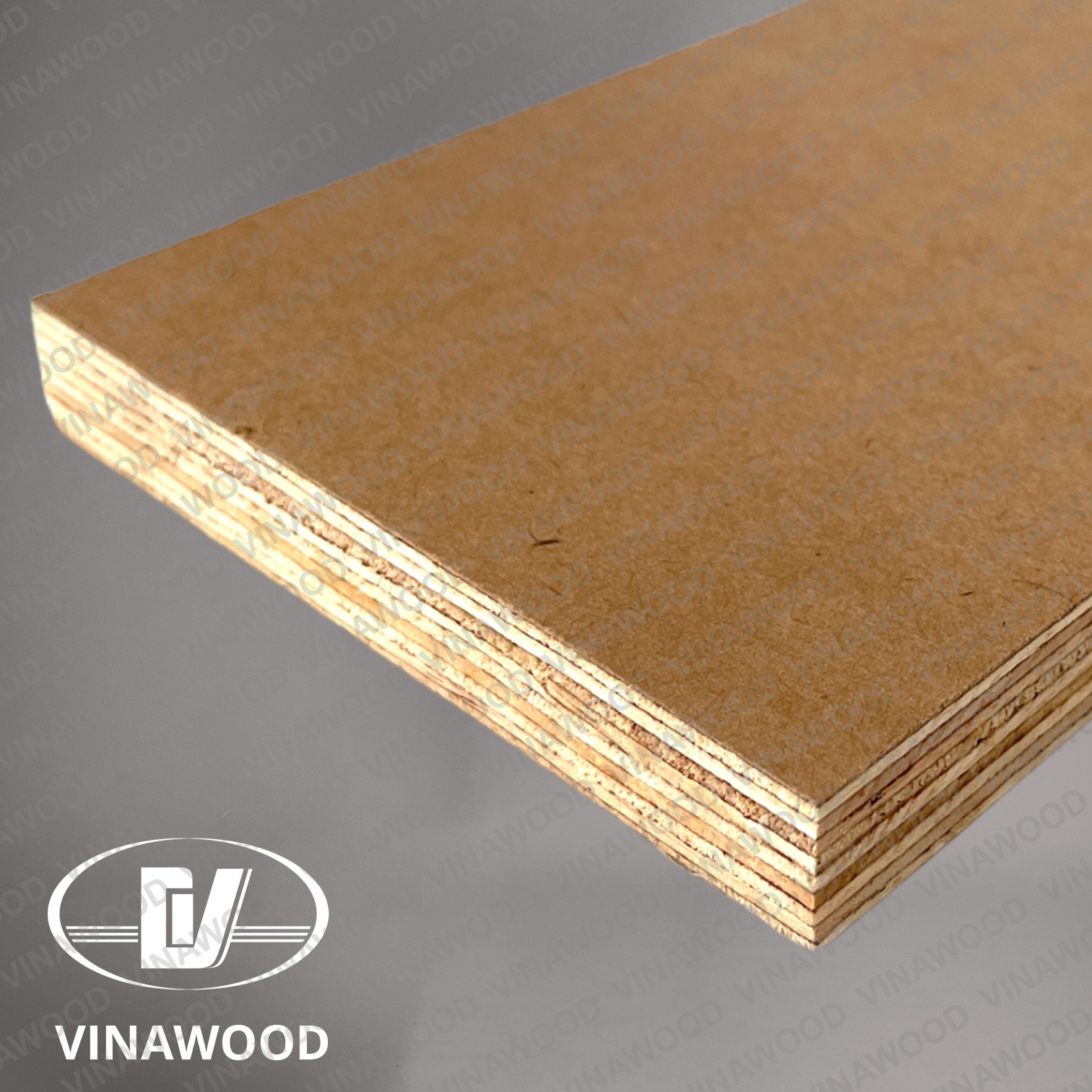
MDO plywood is exterior plywood with a resin-soaked kraft paper face pressed onto one or both sides, and the initials stand for medium-density overlay. The paper exists for one reason, which is paint: a bare veneer face checks and lets its grain show through enamel within a season or two outdoors, while the overlay keeps the surface flat and quiet, which is how MDO ended up on so many highway signs and painted fascias across North America. If you are choosing a panel, the routing is short. Paint, signs and trim call for MDO, repeated concrete pours call for HDO or phenolic film-faced plywood, and matte exposed concrete is the job for MatteFace, a matte phenolic film formwork panel that buyers often search for as MDO formwork plywood.
People mix these panels up all the time, and the mistake costs money in both directions. Order a sign-grade sheet for a wall form that has to cycle twenty times and the faces will be gone long before the programme ends; buy a forming panel for a painted soffit and the painter will fight the surface all day. The sections below explain how MDO is built, where it earns its place, and the point at which a harder face becomes the cheaper choice.
What MDO actually is
Picture a sandwich. The filling is a structural plywood core, in North America usually Douglas fir or southern yellow pine, graded for exterior exposure. The bread is a sheet of kraft paper saturated with a thermosetting resin (phenolic, or an MUF resin, short for melamine-urea-formaldehyde) that bonds to the face veneer in a hot press, and on two-sided panels to the back as well. After curing, the paper hides every bit of grain and leaves a flat face with a faint texture, a bit like heavy drawing paper.
That face is what you're paying for. Primer grabs it. Enamel lays down smooth, and the grain never telegraphs through the way it does on a sanded veneer after a few freeze-thaw cycles. None of it matters, though, if the plywood underneath can't stay outside. Every glue line in the core uses a fully exterior, boil-resistant adhesive (the trade often just says WBP), because a weak inner bond will delaminate long before the overlay shows any wear.
1-step vs 2-step manufacturing
There are two ways to make it, and the data sheet will normally tell you which you're getting. With 1-step MDO, the paper goes on in the same press cycle that glues up the plywood. Quicker, cheaper. The catch is that the press is set up for the plywood, not the face, so the odd core void or overlap can show faintly through the paper.
Two-step MDO is pressed and sanded as ordinary plywood first, checked, and then overlaid in a second press run dedicated to the paper. You get a flatter, more even face. You also pay for that extra pass, so 2-step panels mostly go into premium painted cladding and signs where the surface is the whole point. For ordinary paint-grade site work? 1-step does the job fine.
Key properties
Paintability comes first, since that's what the overlay was designed for, and sign shops still treat a primed MDO face as the easiest substrate they can buy. The cross-laminated core stays flat through humidity swings much better than solid boards would. And because the glue line is exterior-rated, a sealed and painted panel can live outdoors for years.
Be careful with the word water, though. MDO is water-resistant, which isn't the same as watertight: rain runs off the face, but a fresh saw cut drinks moisture, so edges need primer or sealer the same day they're cut. Abrasion resistance sits somewhere in the middle. Paper copes with light forming work, yet it scuffs well before a hard resin overlay does, and that's exactly why crews running a lot of pours end up on HDO or phenolic film-faced panels instead.
MDO grades and overlay options
You'll mostly be choosing between 1S and 2S. A 1S panel has paper on one face only, fine for a wall-mounted sign or a soffit where nobody ever sees the back. It's cheaper, since half the overlay is missing.
A 2S panel has paper on both faces. Double-sided signs need that, and so does anything where both sides get wet or either side might end up against fresh concrete. Most US-made MDO uses Group 1 species with B-grade face veneers under the paper; the APA trademark on the sheet gives the exact grade and exposure rating, so check it rather than trusting the yard ticket. Right at the top end sit the heavier signboard grades, with thicker overlay loading, for premium painted signs and architectural panels.
Common uses
Most MDO ends up painted. Signs are the textbook case, because a highway or storefront sign has to hold paint cleanly through years of sun and rain, and APA-trademarked MDO has been the default panel for that for a very long time. Soffits and fascias follow the same reasoning. So do painted outdoor cabinets in damp spots, where trouble nearly always starts at a cut edge or a joint rather than on the face.
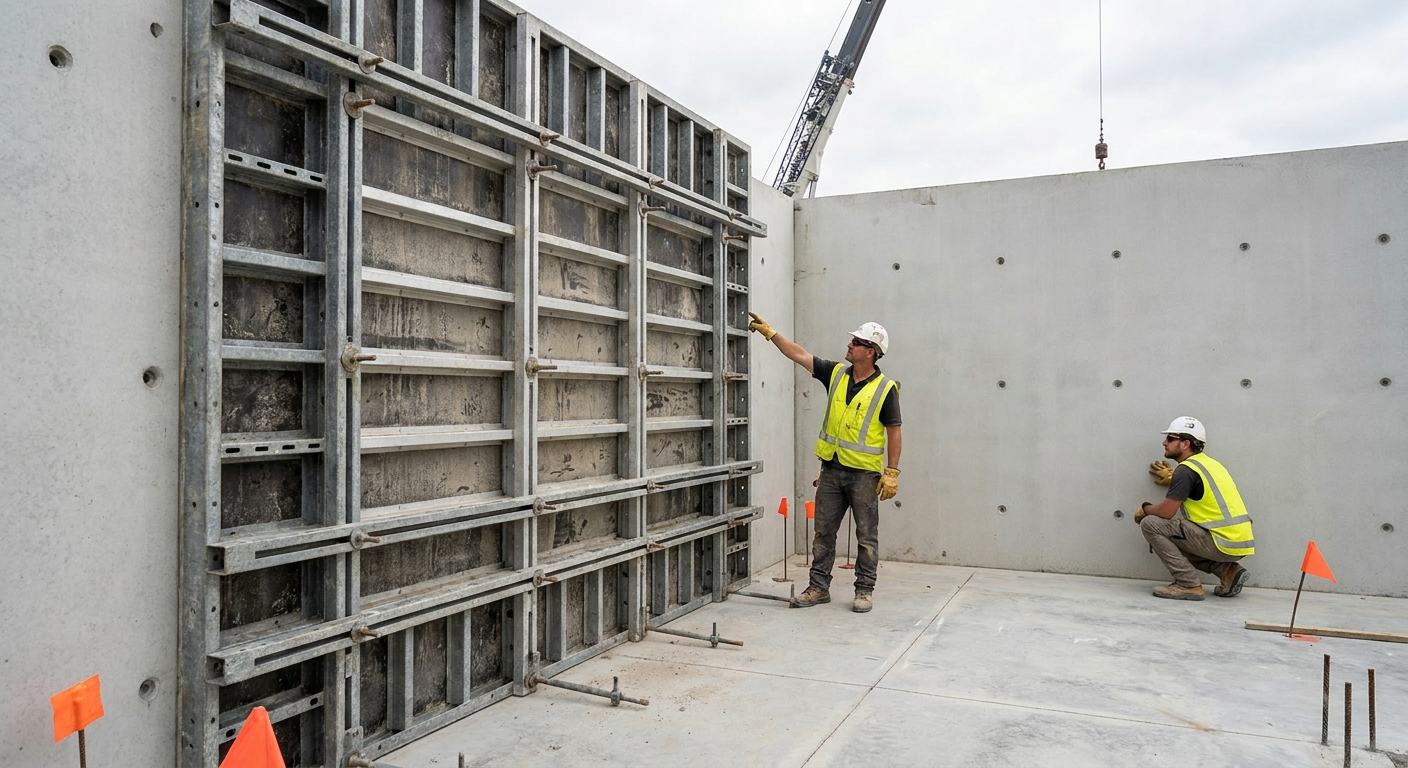
Concrete forming is the other use, and here buyers should slow down a little. Kraft-overlay MDO leaves a smooth matte concrete surface and does well on short-run forms, or on concrete that's going to be painted after stripping. Dozens of pours, no. A smaller niche covers trailer linings and truck bodies, where people want the weather-rated face more than the paintability.
MDO vs HDO vs phenolic film-faced vs MDF: quick comparison
| Panel | Face | Reuse in forming | Concrete finish | Typical use |
|---|---|---|---|---|
| MDO (kraft-paper overlay) | Resin-saturated kraft paper | Short runs; depends on sealing and release agent | Smooth matte, paintable | Signs, painted trim, short-run forms |
| MatteFace (matte phenolic surface film, formwork) | Matte phenolic surface film; Panel 1S, 2S, 1SF and HD 1SF bonded to EN 636-3 Class 3, Eco 1SF to Class 2 | Up to 15 (Panel 1S and 1SF), up to 17 (HD 1SF), up to 25 (Panel 2S), up to 6 (Eco 1SF) | Matte, for exposed concrete | Matte-finish concrete formwork |
| HDO Formply | Hard, dense resin-impregnated overlay; HDO Basic is a Class 2 bond, HDO Standard and HDO Premium are Class 3 | Up to 10 (HDO Basic), up to 20 (HDO Standard and HDO Premium) | Smooth, glossy | High-rotation formwork, exposed concrete |
| Phenolic film-faced (glossy) | Dark phenolic face film | Up to 10 (Form Basic) to up to 20 (Pro Form) | Smooth, glossy | General formwork worldwide |
| MDF | None (uniform fibre) | Not suitable | n/a | Indoor painted doors and mouldings |
The table boils down to one idea. MDO is a paint panel that can also form concrete for a short while, whereas HDO and phenolic film-faced plywood are forming panels first and foremost. MatteFace sits next to those two as the choice when the spec wants a matte face rather than a glossy one. If you're weighing the overlay question in more detail, our HDO vs MDO plywood guide goes deeper, and the film-faced vs MDO vs HDO comparison lines up all three forming options.
Sizes, thicknesses and where to buy
In North America the standard sheet is 4×8 feet (1220 × 2440 mm), anywhere from 1/4 inch to 1 inch thick. Three-quarter inch is by far the most common for signs, cladding and forms; thinner sheets get used as backing or for light signage. MatteFace from Vietnam comes in the European 1250 × 2500 mm size as well as 1220 × 2440 mm, in 12, 15, 18 and 21 mm.
Who you buy from depends on what you're building. APA-trademarked kraft-overlay MDO for signs and painted architecture sits in specialty plywood distributors and sign-supply yards, usually available within days, while the big-box stores are hit and miss. Matte-finish formwork bought by the container is a different conversation, and for distributors and large contractors it can make sense to import MatteFace straight from the mill. Our RFQ form gets you a quote matched to thickness and face option.
MDO for concrete forming: when to use it, and when HDO is the better call
Most people who search for MDO plywood for concrete forms are contractors weighing a cheaper paper-faced sheet against a harder overlay, and the honest answer depends on three things: how many pours the form will see, what finish the concrete needs, and whether anyone will paint the surface afterwards. For a one-off pour, a short run of columns, or architectural concrete that is going to be painted anyway, kraft MDO is a sensible pick. It leaves a smooth matte face, primer bonds to the result without fuss, and the panel costs less than a high-rotation forming sheet.
The picture changes as the pour count climbs. Paper scuffs under scrapers and soaks up release agent, so after a limited number of cycles the concrete face starts to show texture from the worn overlay while the cost per pour rises with every sheet that has to be replaced. That is the point where HDO and phenolic film-faced plywood take over, because their hard resin faces are made to be stripped, cleaned and set again. Our HDO Standard and HDO Premium are rated for up to 20 reuses with sealed edges, prompt cleaning and a proper release agent, while HDO Basic, a Class 2 panel, suits shorter programmes of up to 10.
MatteFace covers a third case that neither of the other two handles well. Some specifications ask for exposed concrete with a matte look, which a glossy film-faced sheet cannot give and a paper face cannot hold for long. Contractors who have been forming that work with kraft MDO usually gain the most by switching, since they keep the matte finish while moving to a phenolic film that releases cleanly pour after pour.
Vinawood's MatteFace range: the matte-finish forming panel
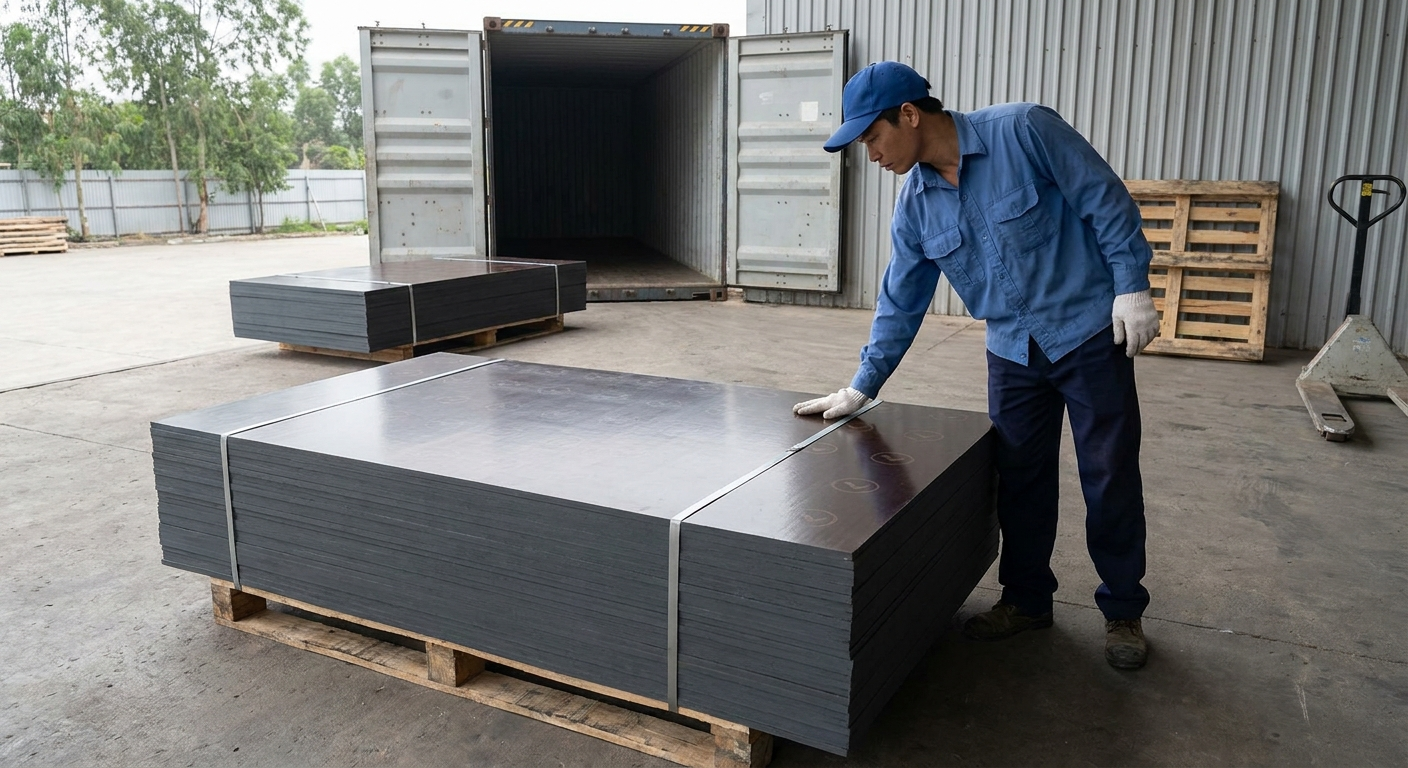
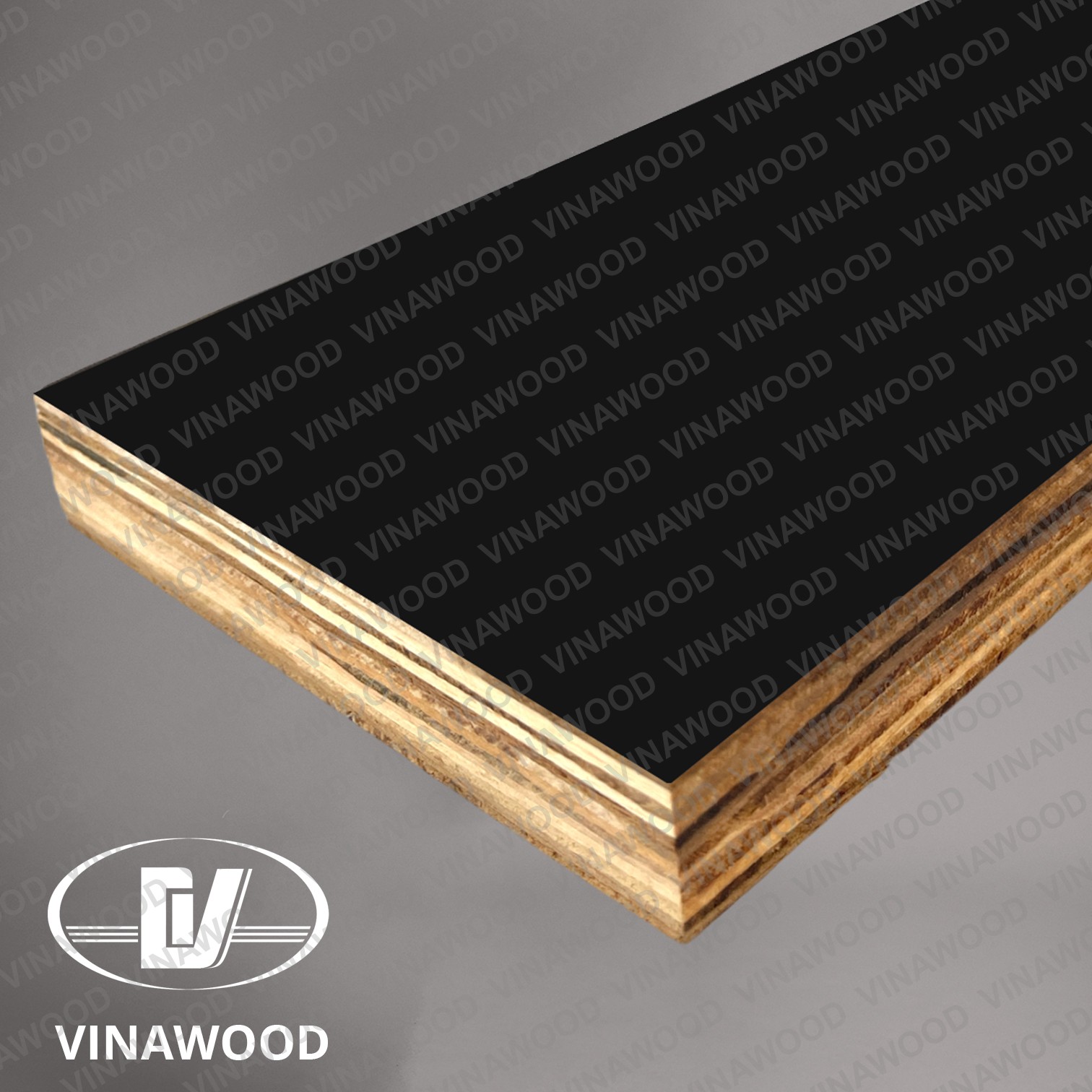
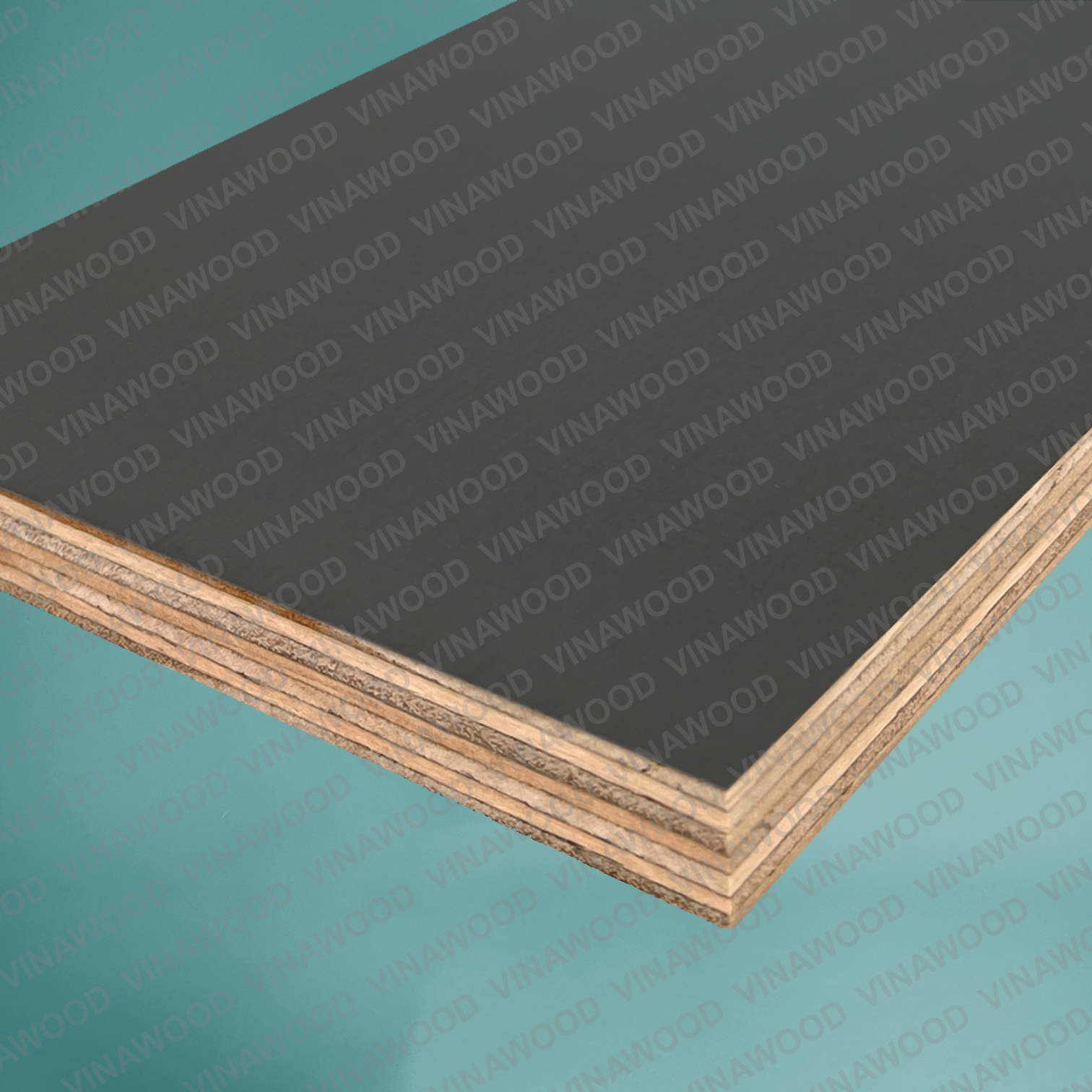
We make MatteFace Plywood (MTF), a formwork panel with a matte phenolic surface film that buyers often find by searching for MDO formwork plywood. It is built for concrete forming and nothing else; the face is not paper, it is not meant to be painted, and it is not a sign substrate. Where our glossy grades such as Pro Form leave a shiny concrete surface, the MatteFace film is tuned to leave a matte one, so the choice between them comes down to the finish the architect has drawn rather than to strength alone.
The range has five lines, and the bond class differs between them. MatteFace Panel 1S (MTF1000), Panel 2S (MTF2000), Panel 1SF (MTF3000) and HD 1SF (MTF3HDP) use WBP phenolic glue and meet EN 636-3 Class 3, while MatteFace Eco 1SF (MTF3ECO) uses M-Bond glue and is a Class 2 panel. Reuse follows the same split: Panel 1S and 1SF are rated for up to 15 pours, HD 1SF for up to 17, the two-sided Panel 2S for up to 25, and Eco 1SF for up to 6, in each case with sealed edges and faces that are cleaned and oiled between pours. The full MatteFace plywood collection covers 12, 15, 18 and 21 mm in both 1220 × 2440 mm and 1250 × 2500 mm, and standard faces are light tan while the HD 1SF carries a purple face.
Our honest routing advice goes like this. Painting signs, soffits or trim? Buy APA-trademarked kraft-overlay MDO from a North American source, because it's a different construction from anything we make. Forming matte exposed concrete? Price MatteFace. Glossy exposed concrete or very high rotation calls for our phenolic film-faced range or HDO Formply. Vinawood has been making plywood in Vietnam since 1992 and ships around 5,000 containers a year to more than 55 countries, so the documents that go with a container are everyday work for our export team.
Category
guides
Related Markets
Related Countries
▶Sources & References (2)
- Overlaid Plywood — APA – The Engineered Wood Association
- Medium-density overlay — Wikipedia