When to Remove Concrete Formwork: Stripping Times by Element
When to remove concrete formwork: strip a strength, not a calendar day. Vertical faces, soffits, and props follow different clocks - plus how early strip damages concrete and panel film.
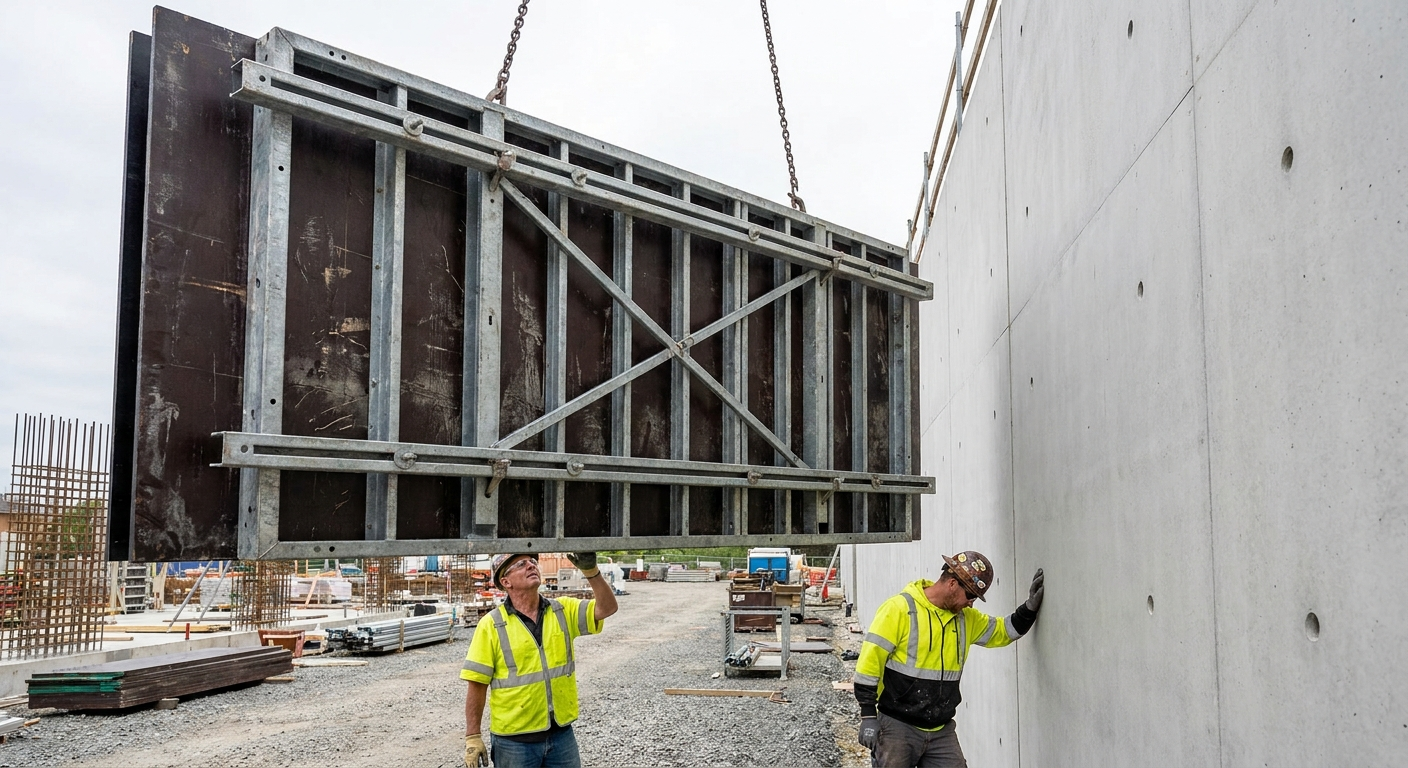
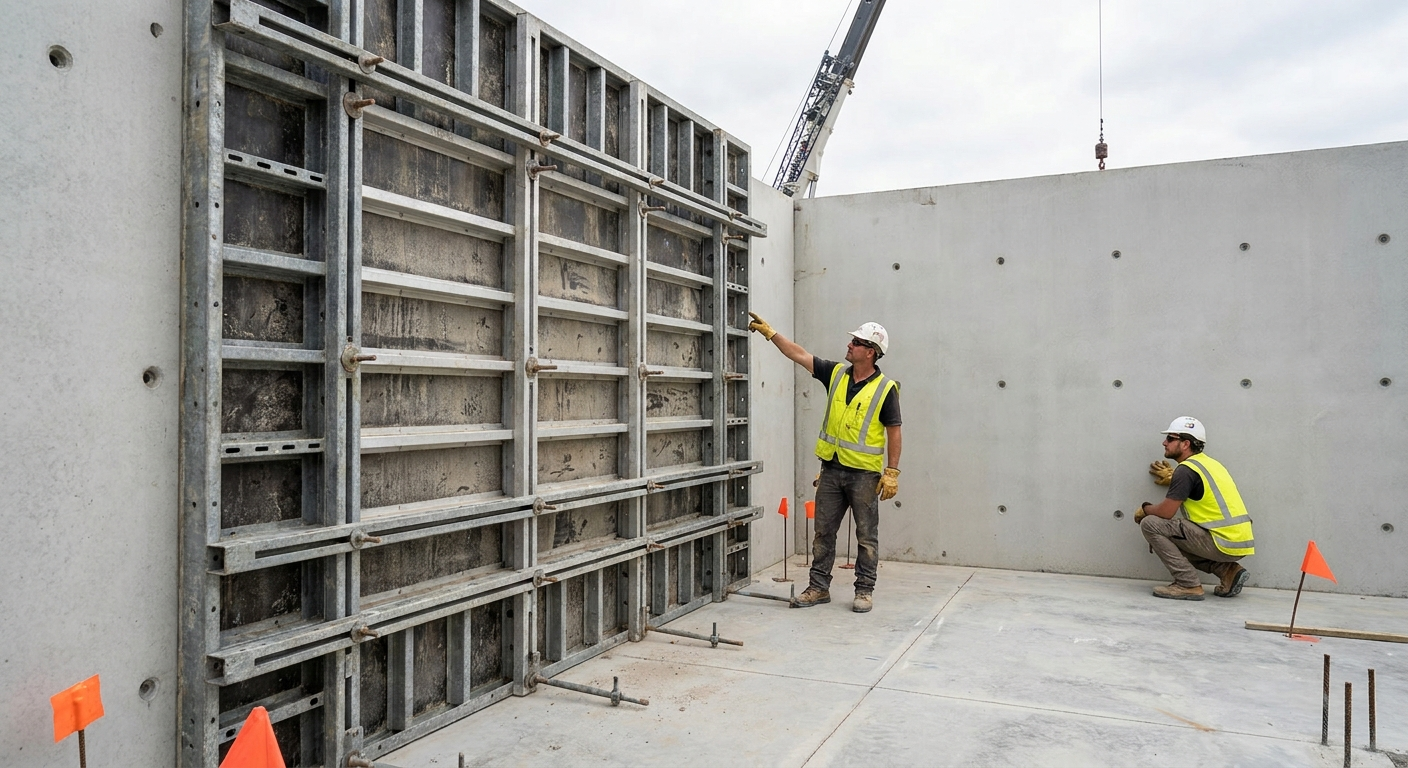
You strip a strength, not a calendar day. That rule decides when to remove concrete formwork on every serious site, because the concrete has to carry its own weight and early construction load before the face comes off. Time on a wall chart is only a rough proxy for compressive strength, so a wall poured in mild weather can be ready days sooner than the same wall poured in a cold snap. Before the first heading, keep the three questions in order: vertical faces that only hold shape, soffits that still lean on the form, and props that stay until the member can stand alone.
Guidance such as ACI 347 and EN 13670 frames removal around reaching a required strength rather than a fixed number of days, precisely because the same mix gains strength at different rates with temperature, cement type, and water-cement ratio. On site that strength is estimated by maturity methods or measured on field-cured cylinders kept beside the pour. The day counts in any table are planning aids. They are not the criterion.
What "when to remove formwork" really means
Removing formwork, also called striking or stripping, is taking the form face off the hardened concrete. The professional criterion is compressive strength at the moment of strip, expressed as a fraction of the concrete's design strength. When an element is load-bearing, the structural engineer of record sets the strike time, and the props stay in far longer than the plywood face. If you only remember one operational split, remember this: taking the face is not the same as taking the shoring.
A fair-faced or architectural surface also waits longer than a hidden structural face, because a tender surface struck early tears fines at the form face and marks the concrete. When strength and finish disagree, the more demanding requirement sets the day. That is why two crews can pour on the same date and still strip on different mornings. The phrase "when to remove concrete formwork" therefore points at a strength check and a finish check, not at a single magic number of hours.
Indicative windows by element
The windows below are planning guidance for a normal-cement mix at around 20 °C (68 °F). They are not a substitute for the structural design or a strength check. Where an element is load-bearing, props stay under the member after the face is freed for the next lift.
| Element | Indicative time to strike the face | Type |
|---|---|---|
| Slab edges and footings (non-load-bearing) | 24-48 hours | Vertical / edge form |
| Walls and columns (vertical forms) | 24-48 hours | Vertical form |
| Beam sides | 24-48 hours | Vertical form |
| Slab soffits (props stay in) | 3-7 days | Load-bearing face |
| Beam soffits (props stay in) | up to 7-14 days | Load-bearing face |
| Cantilevers and props | up to 14-28 days, per the design | Load-bearing / shoring |
Vertical forms that carry no structural load come off first because they only need the concrete to hold its shape and resist handling damage. Horizontal soffits and the props under them stay until the member can carry itself, which takes much longer. For numbered day ranges and climate notes without repeating this page, see the sibling guide on formwork removal time.
Vertical faces versus soffits and props
Vertical forms on walls, columns, and beam sides are non-load-bearing once the concrete holds its shape, so they come off early when strength and finish allow. Horizontal forms under slabs and beams are load-bearing: the young concrete leans on them until it can carry itself. Crews often strike the soffit plywood while leaving the props, or back-prop immediately after, so the slab keeps support while panels move to the next pour.
Pulling the props with the face on an immature member is how slabs deflect and crack. I still see programmes that treat "day two" as a universal green light for both face and props, that habit costs more in repairs than it ever saves in cycle time. If the pour schedule is aggressive, write the prop-removal hold point into the method statement before the first truck arrives. Multi-storey work adds another layer: reshore the floor below until the design allows the load path to move, even when the face plywood has already rotated upstairs.
What moves the strike day
Temperature is the dominant variable. Cold slows hydration sharply; near freezing, the wait can roughly double. Heat speeds early strength gain but raises the risk of surface drying if curing lapses after the face comes off. Cement type matters next: a rapid-hardening cement reaches stripping strength earlier than a slower slag or fly-ash blend. Water-cement ratio, section thickness, and exposure class also shift the curve, because thinner sections lose heat faster and over-watered mixes gain strength more slowly.
Before a form comes off, two checks decide the timing. Has the concrete reached the fraction of design strength the job requires, verified by maturity readings or field-cured cylinders rather than a guess? Does the surface finish specification allow an early strike, or does a fair-face requirement force a longer wait? When those answers conflict, follow the stricter one. Admixtures that retard set, night pours that cool faster than daytime pours, and wind that strips heat from thin walls all push the same decision back toward a measured strength check.
What happens if you strip too early
Early stripping damages concrete and panels at the same time. On the concrete side, striking before the arrises are firm spalls the edges; striking a load-bearing member before it can carry itself brings flexural cracking and lasting deflection. On the panel side, concrete that has bonded because the face sat on a green pour, or was lifted without proper release, tears the film or overlay as it comes away. A sheet that should have delivered its rated reuse is then scrapped after a handful of pours.
So the timing decision is not only about the structure. It is part of getting the rated reuse out of the forms. Both failure modes usually trace to site practice, the strike day and the release discipline, more often than to a material fault. Clean release practice sits beside the concrete form release agent guide, and panel handling between pours sits in the formwork panel care guide. A spalled arris or a torn film points first at an early strike or a dry face, not at an automatic mill defect.
After the face comes off
Stripping exposes a fresh surface that is still gaining strength, so curing continues after the forms are off, especially in heat or wind. Keep the newly exposed concrete moist and protected until it has matured. Do not let a face dry out the day it is struck. Panel care between pours, flat storage, sealed edges, and an intact film, is what turns a correct strike into a full reuse programme. Edge seal after cutting, a light coat of release agent before the next pour, and storage off the ground under cover are the three habits that keep a film-faced sheet inside its up-to-N envelope.
How panel choice supports high-rotation forming
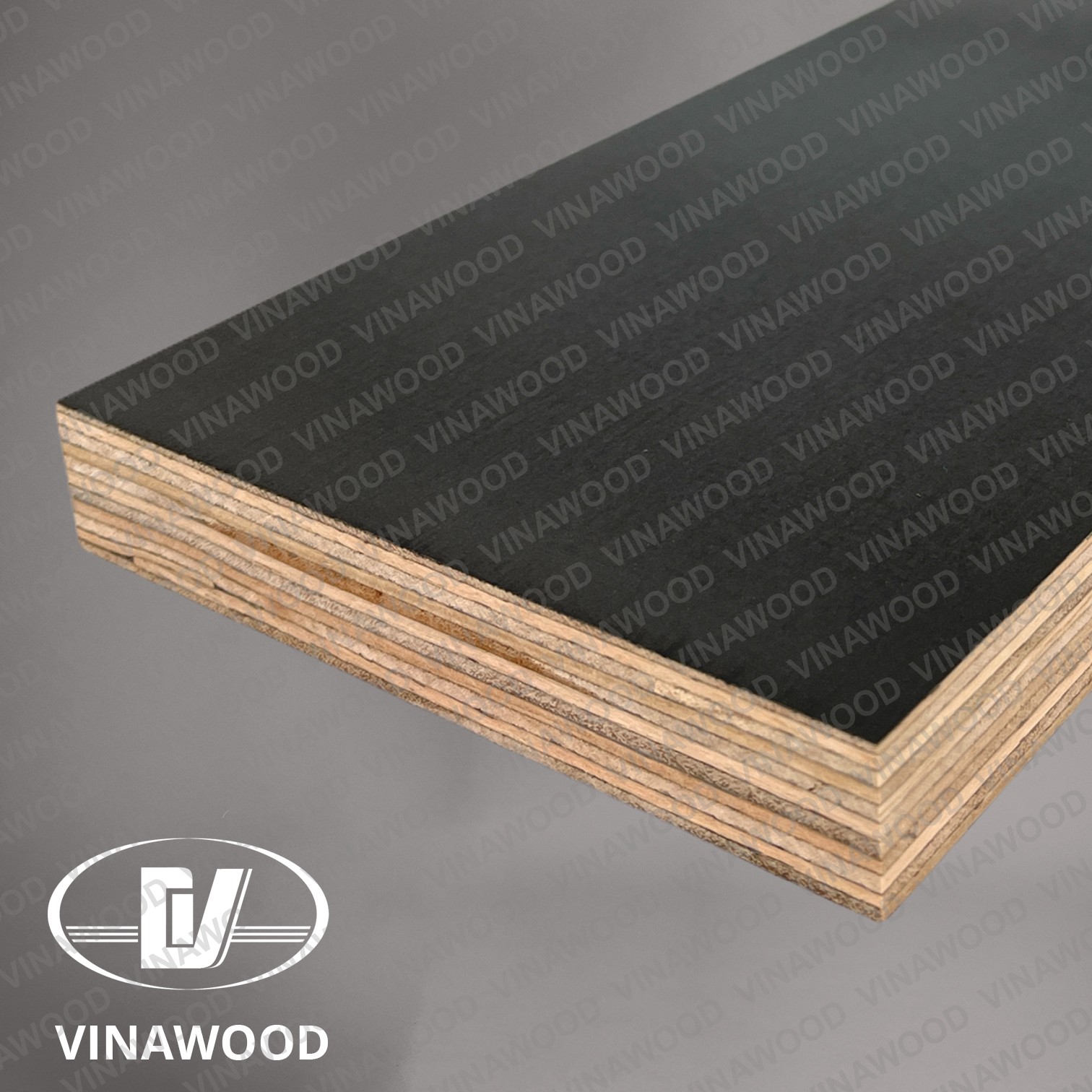
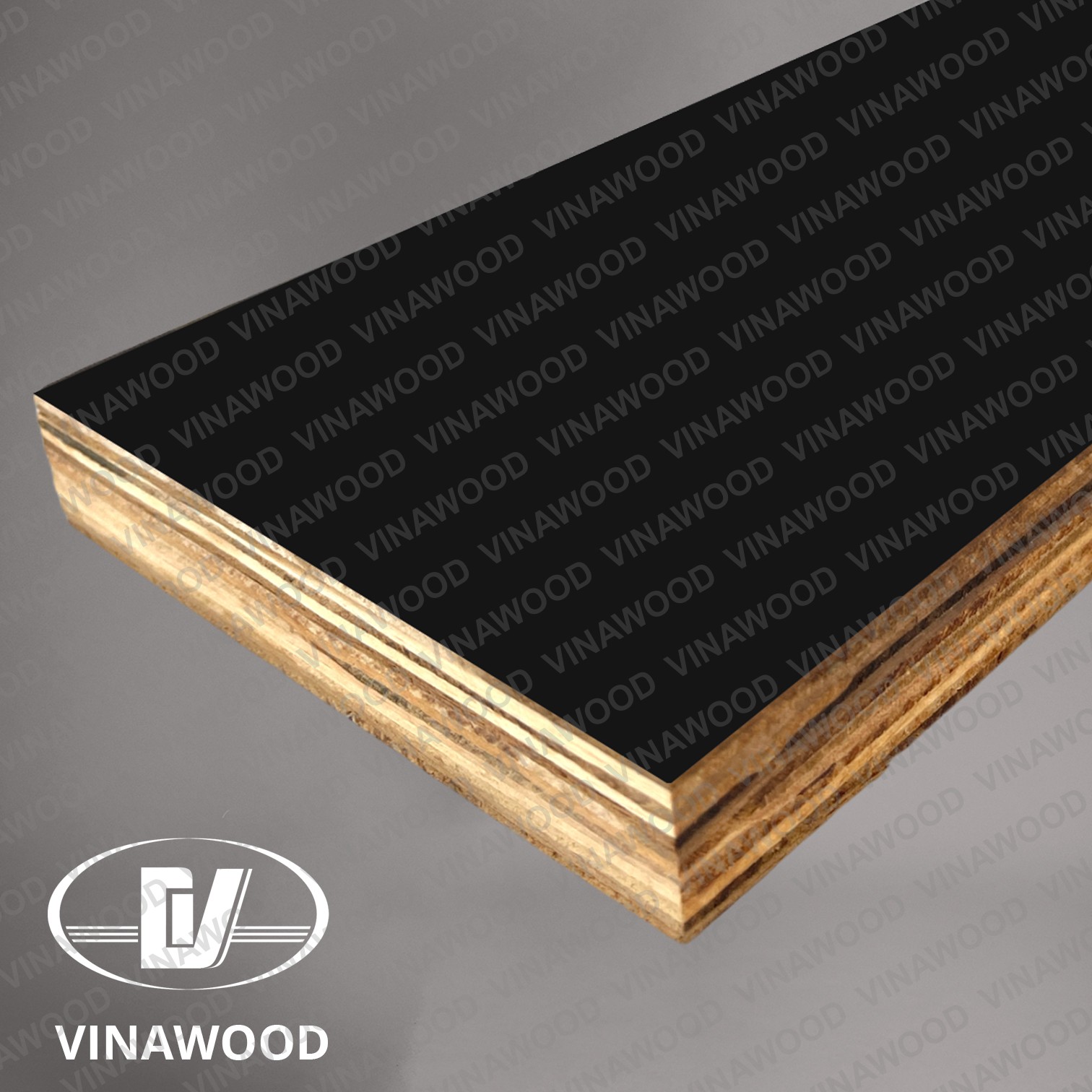
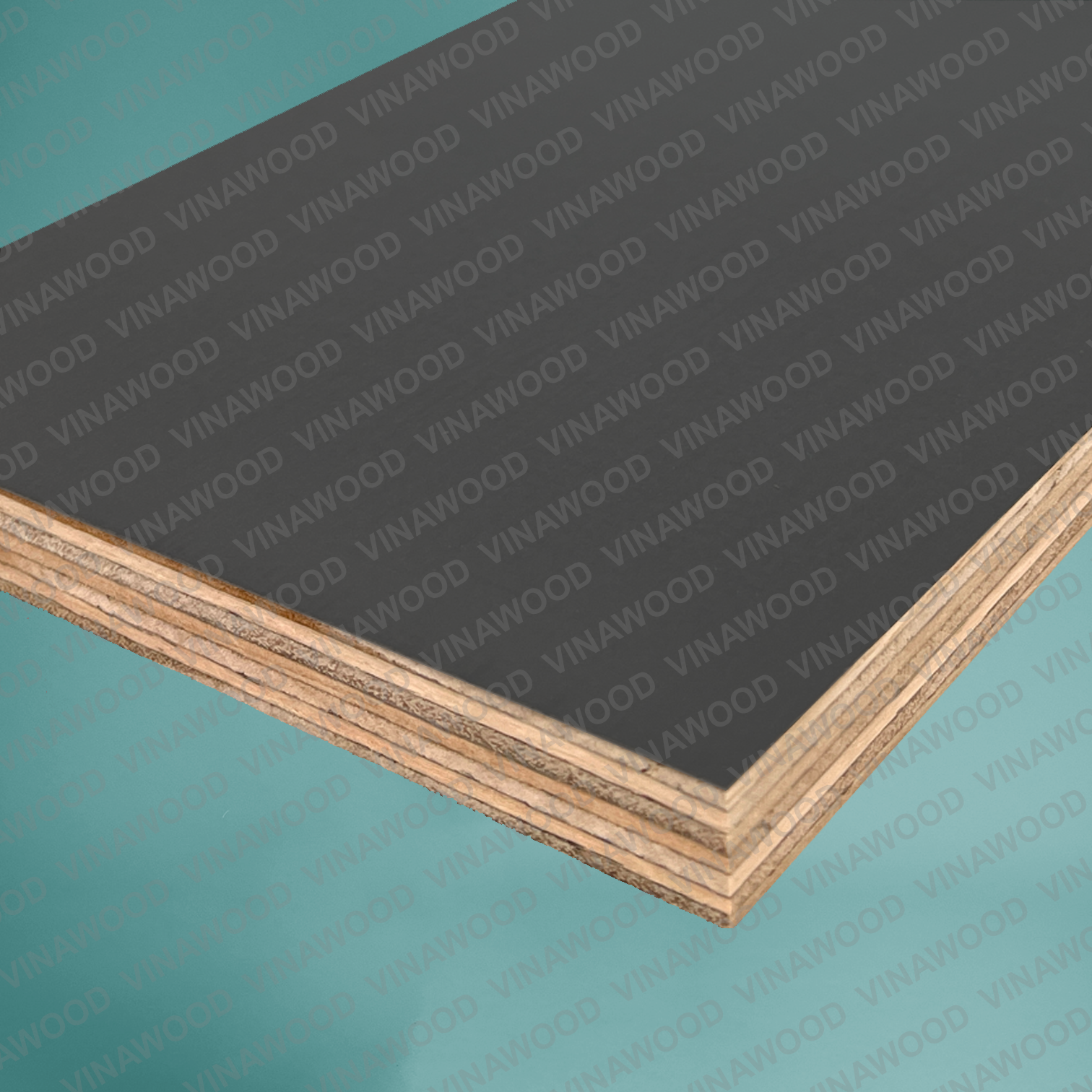
When forms turn around fast, glue class and overlay decide how many pours a sheet survives. Vinawood's plantation-grown film-faced and HDO ladder for formwork is built around water-resistant WBP glue lines, never marketed as waterproof, and reuse written as up to N:
- Eco Form Plus, up to 8 reuses
- Form Basic, up to 10 reuses (core MUF adhesive, EN 636-2)
- Form Extra, up to 15 reuses (Superior Glue MUF EN 636-2, not Class 3, same phenolic face film as Form Basic)
- Pro Form Lite, up to 15 reuses (phenolic PF Class 3 / EN 636-3), between Form Extra and Pro Form
- Pro Form, up to 20 reuses (phenolic PF Class 3)
- HDO Basic, up to 10; HDO Premium / Premium HD, up to 20
Only Pro Form, Pro Form Lite, and HDO are phenolic Class 3. Form Extra's longer reuse comes from core MUF glue chemistry, not from a heavier face film, and it is never a Class 3 panel. Do not confuse P-Form (polypropylene overlay) with Pro Form, and do not treat Consply (commercial Bintangor) as film-faced formwork. Name the three "melamine" meanings when they appear: core MUF adhesive, face film chemistry, or decorative laminate, bare "melamine" on an RFQ is ambiguous.
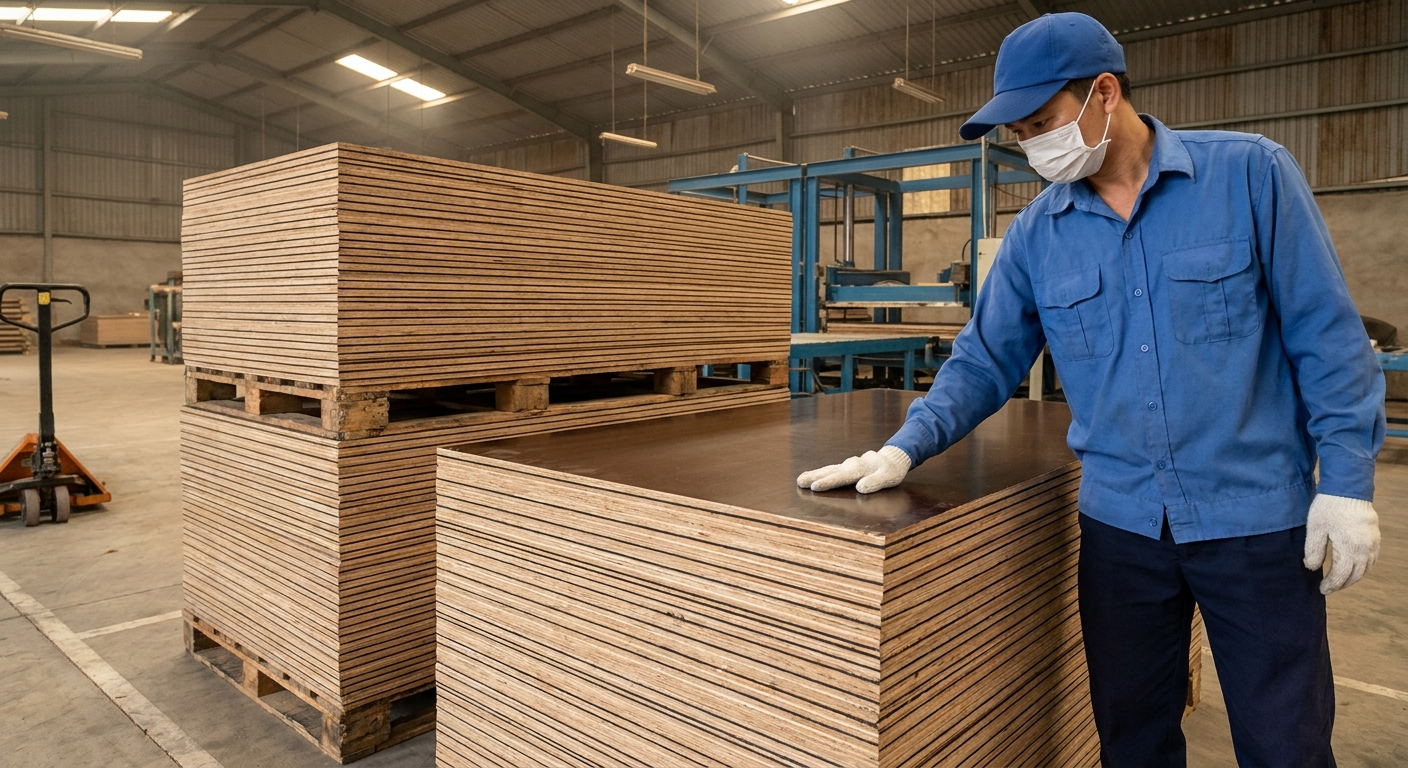
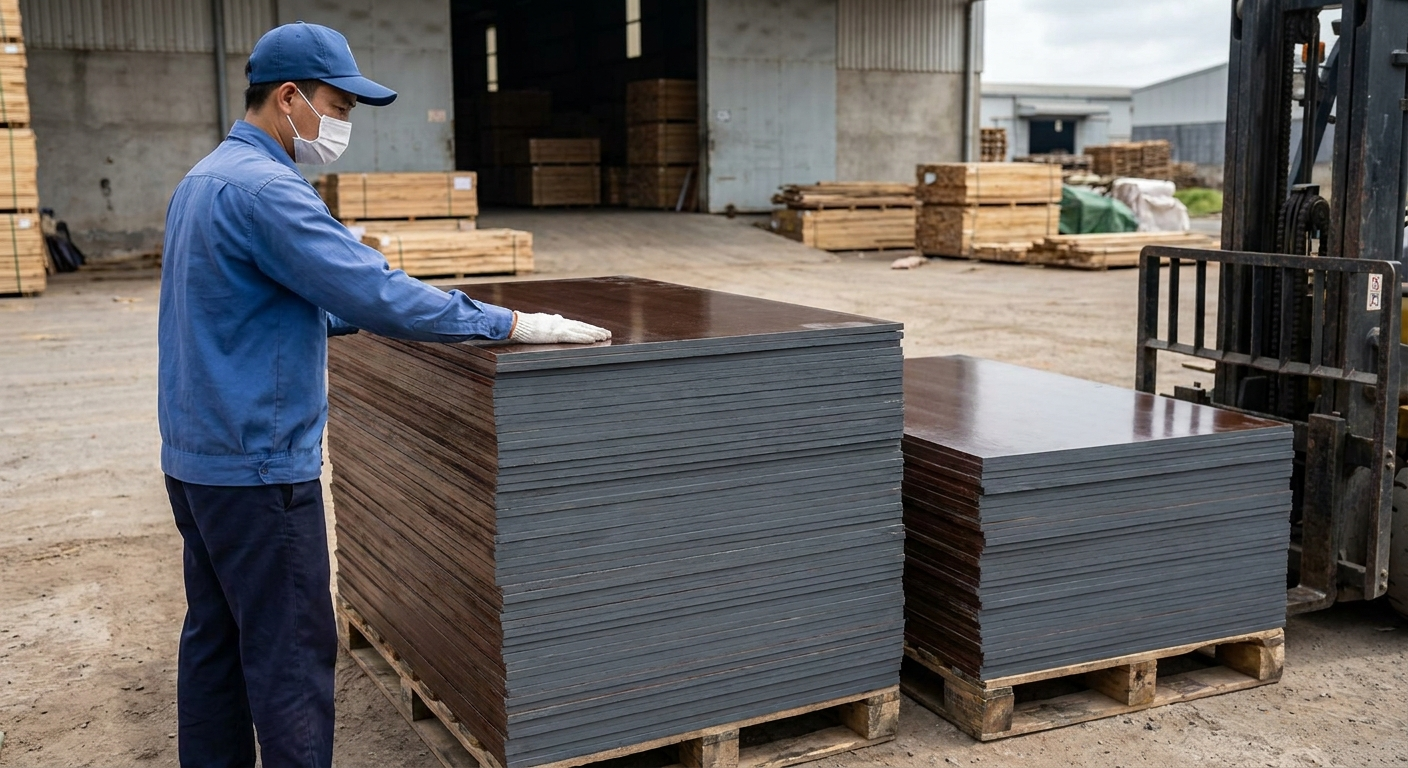
Browse the wider film-faced plywood range, the concrete form plywood overview, and slab formwork plywood when the programme is deck-heavy. Matching grade to pour count is how a clean strip stays clean for the next cycle. High-rotation gangs that strip on strength and protect the film are the ones that actually see the upper end of an up-to-20 envelope.
On multi-storey frames the strike sequence also protects the floor below. Reshore until the design allows the load path to move, even when the face plywood has already rotated upstairs. A clean strength-based strip paired with sealed edges and a light release coat is what keeps a film-faced sheet inside its published up-to-N envelope across a full rotation programme. That is the practical meaning of "when to remove concrete formwork" for buyers who care about both finish quality and panel life.
Request a quotation
Vinawood has manufactured construction plywood since 1992 and ships roughly 5,000 containers a year to 55+ countries. Tell us the element type (vertical, soffit, or propped), target reuse, EN 636 class or HDO need, thickness, and finish class. We will map Eco Form Plus through Pro Form and HDO without inventing cycle counts above the published maxima. Start at /contact?type=quotation.
Category
guides
Related Markets
Related Countries
Related Products
▶Sources & References (3)
- ACI 347 - Guide to Formwork for Concrete — American Concrete Institute (2014)
- EN 13670 - Execution of concrete structures — CEN (2011)
- Eurocode 2 (EN 1992-1-1) - Design of concrete structures — CEN (2004)