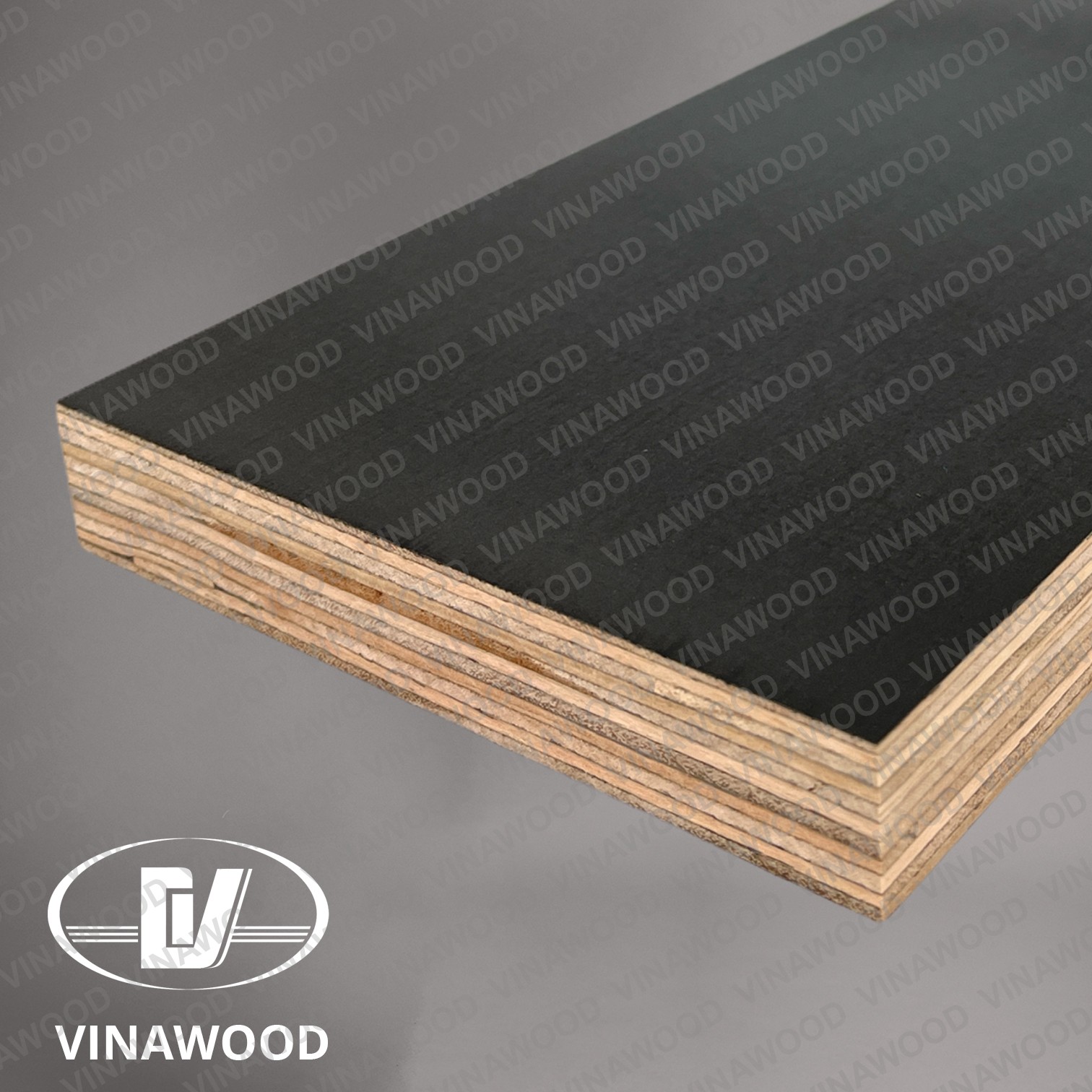
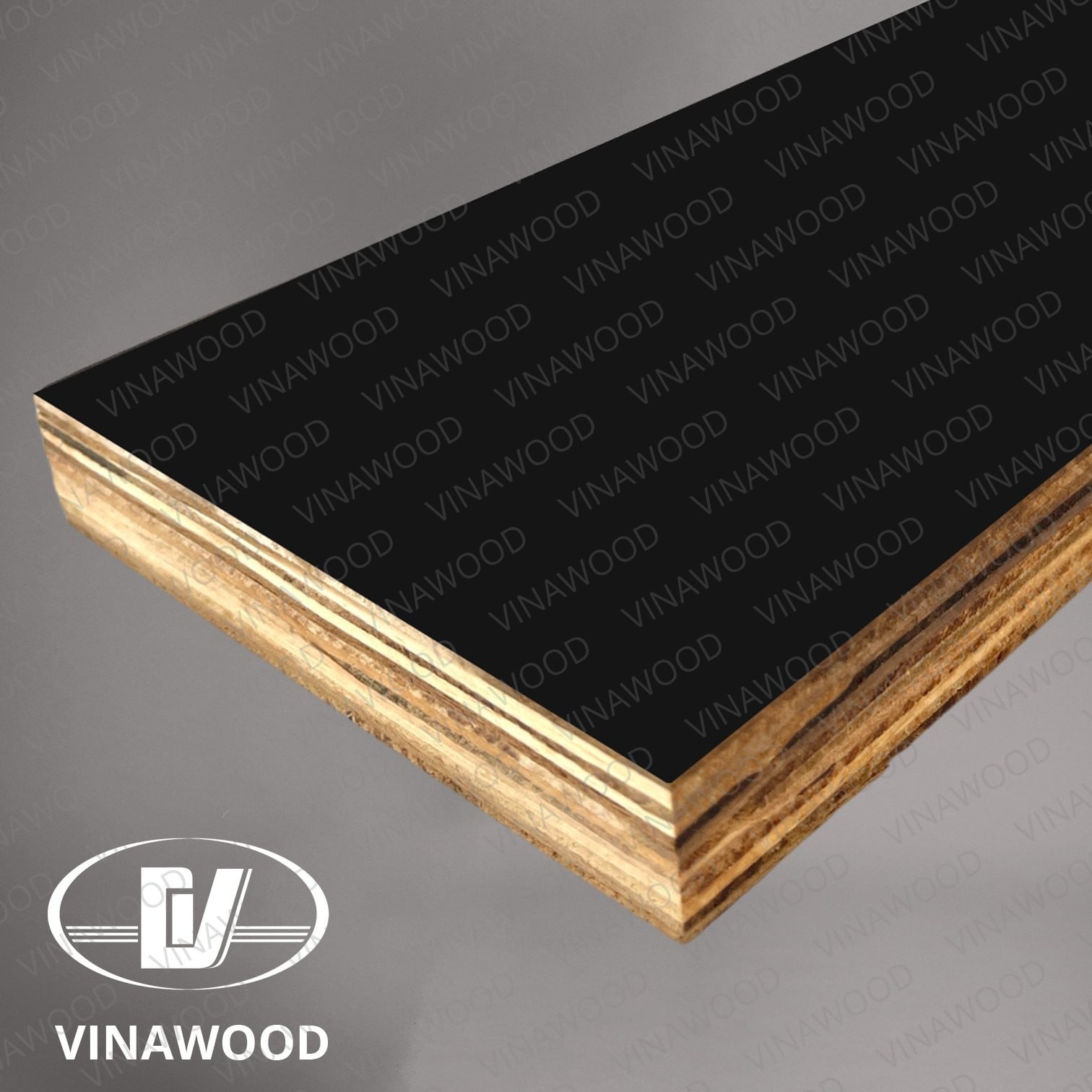
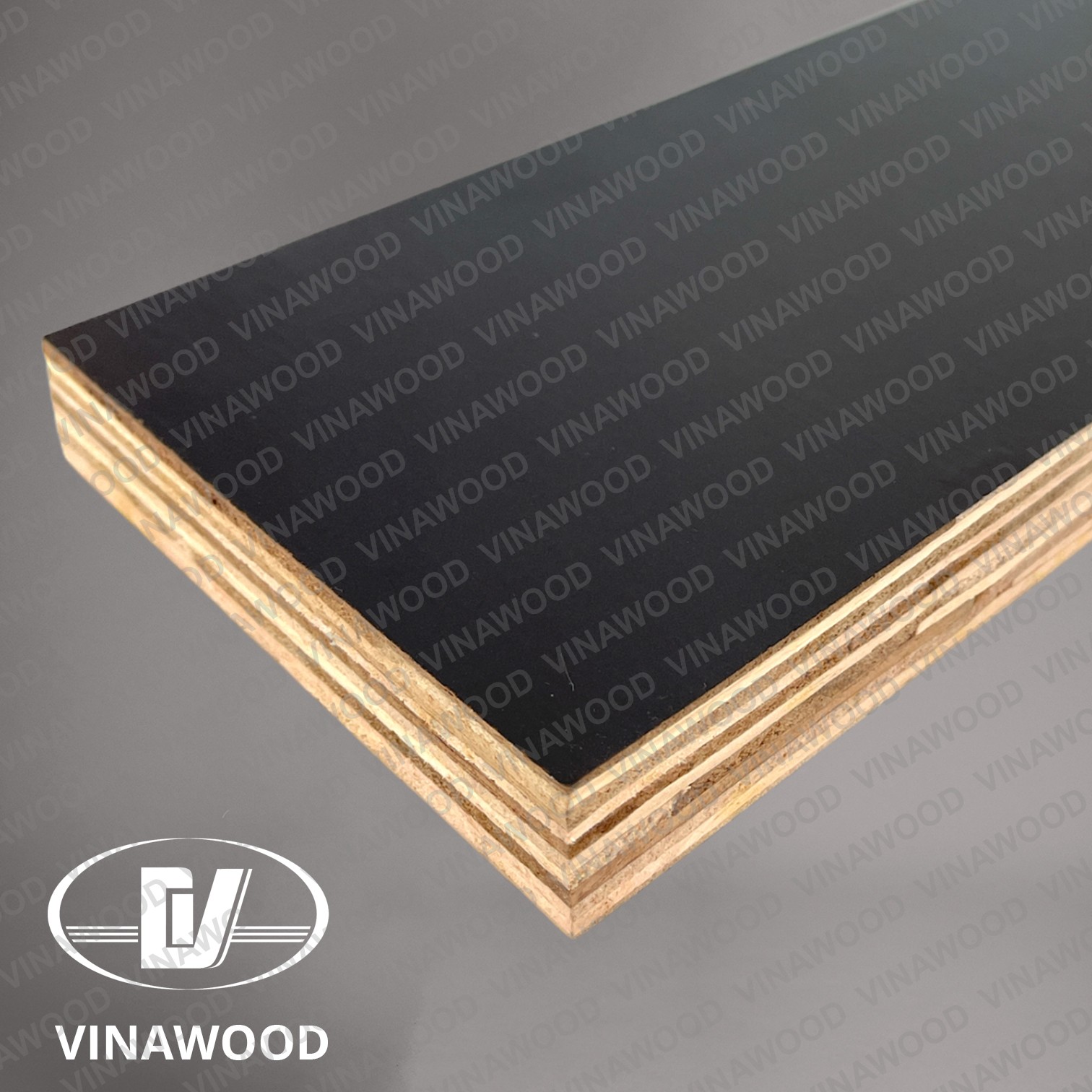
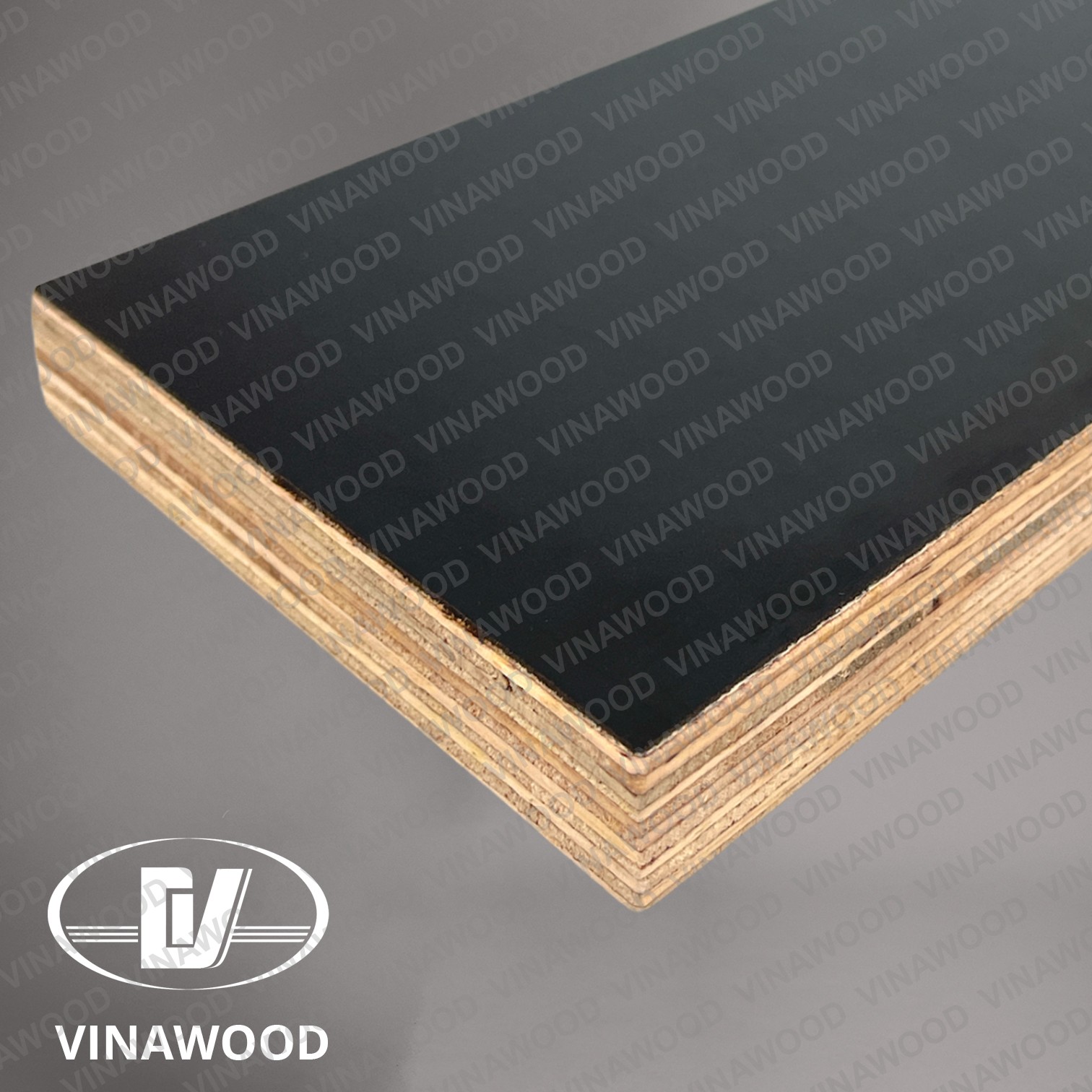
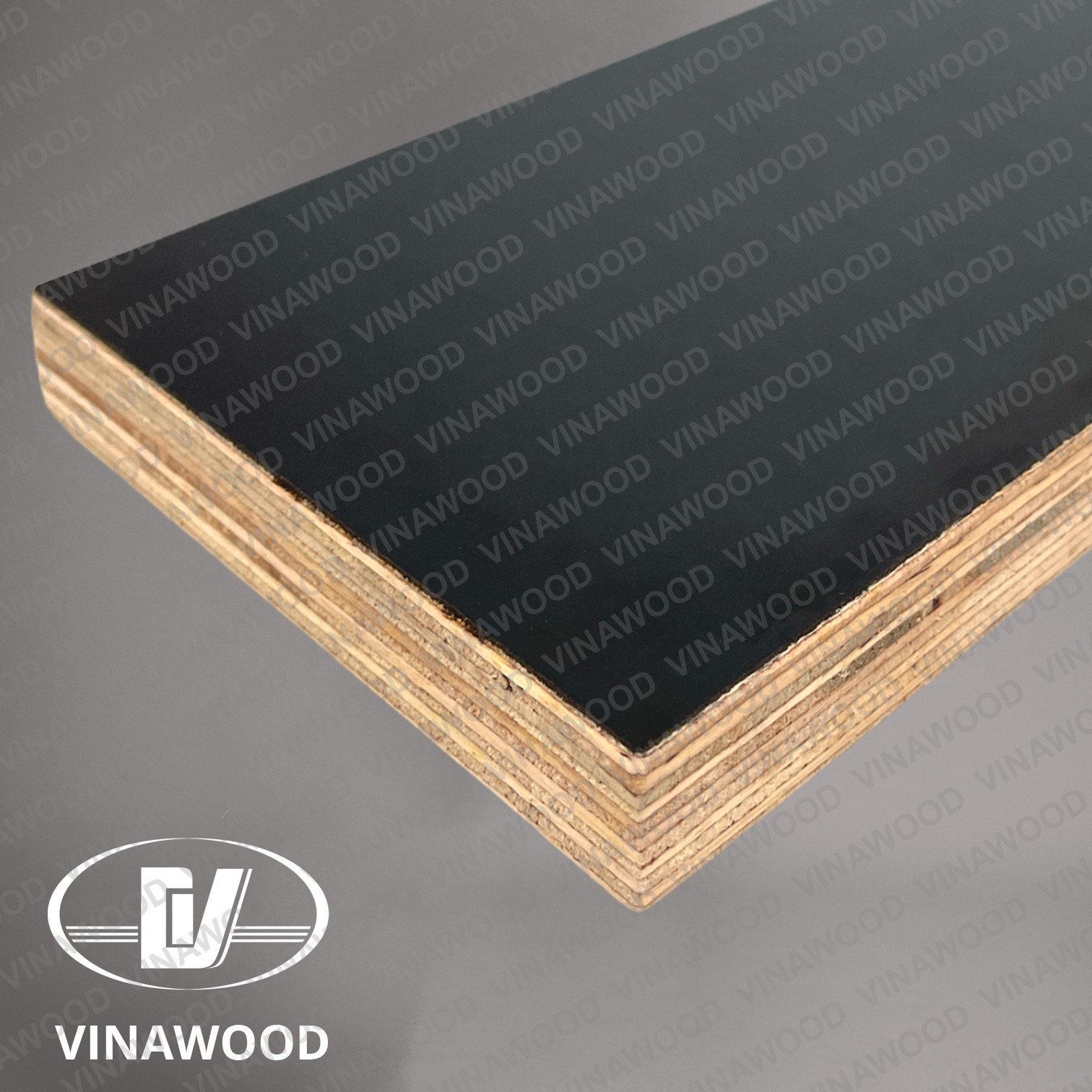
What is film faced plywood?
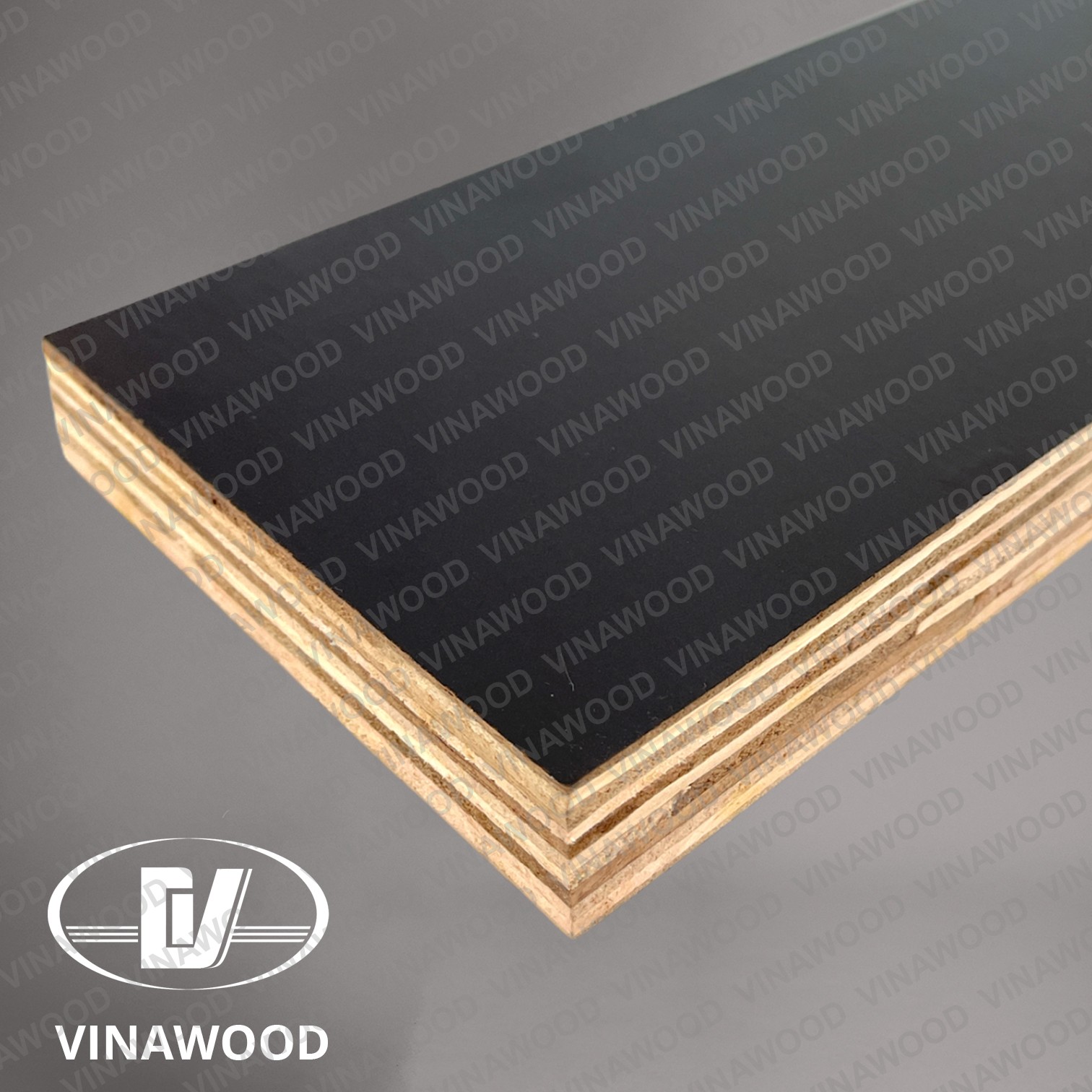
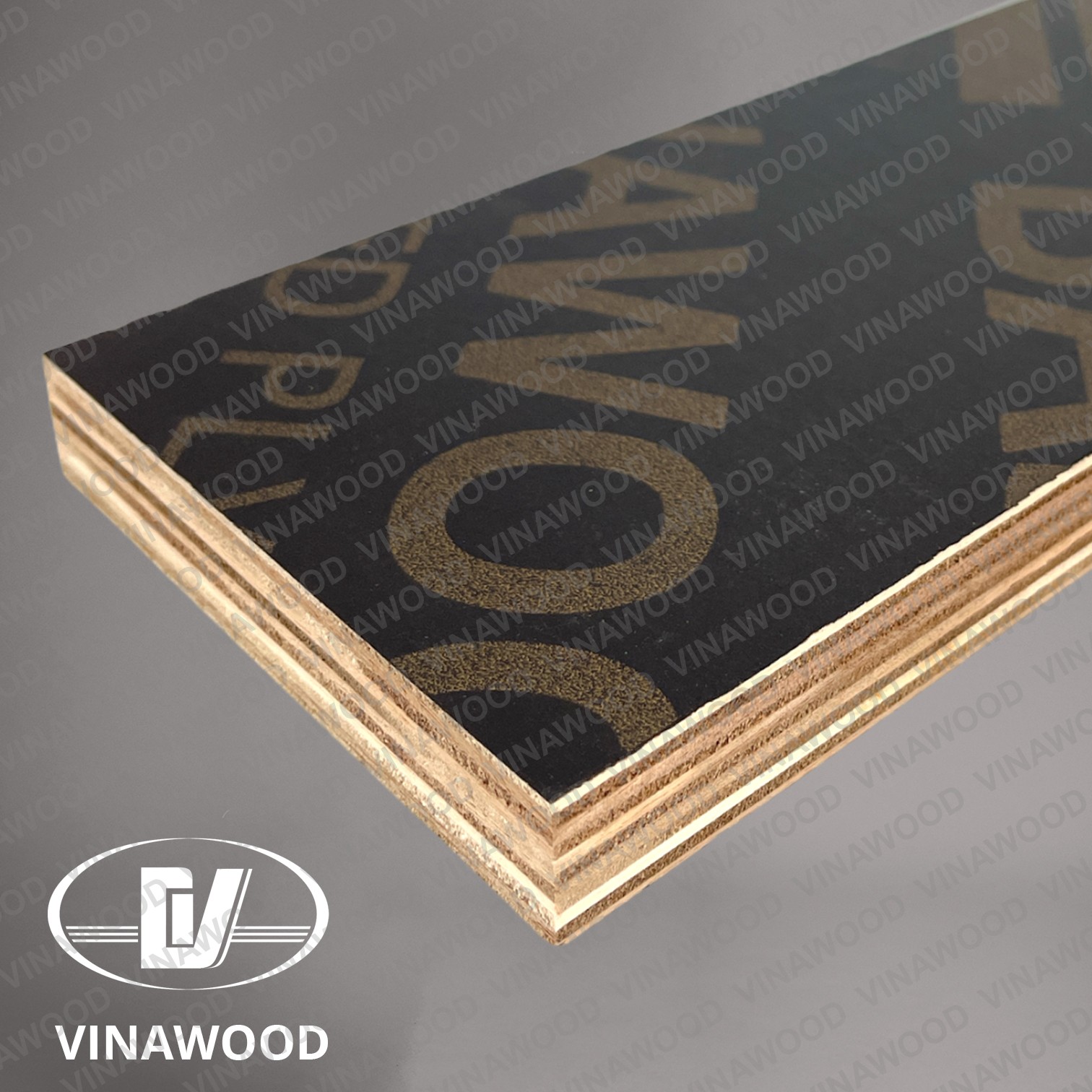
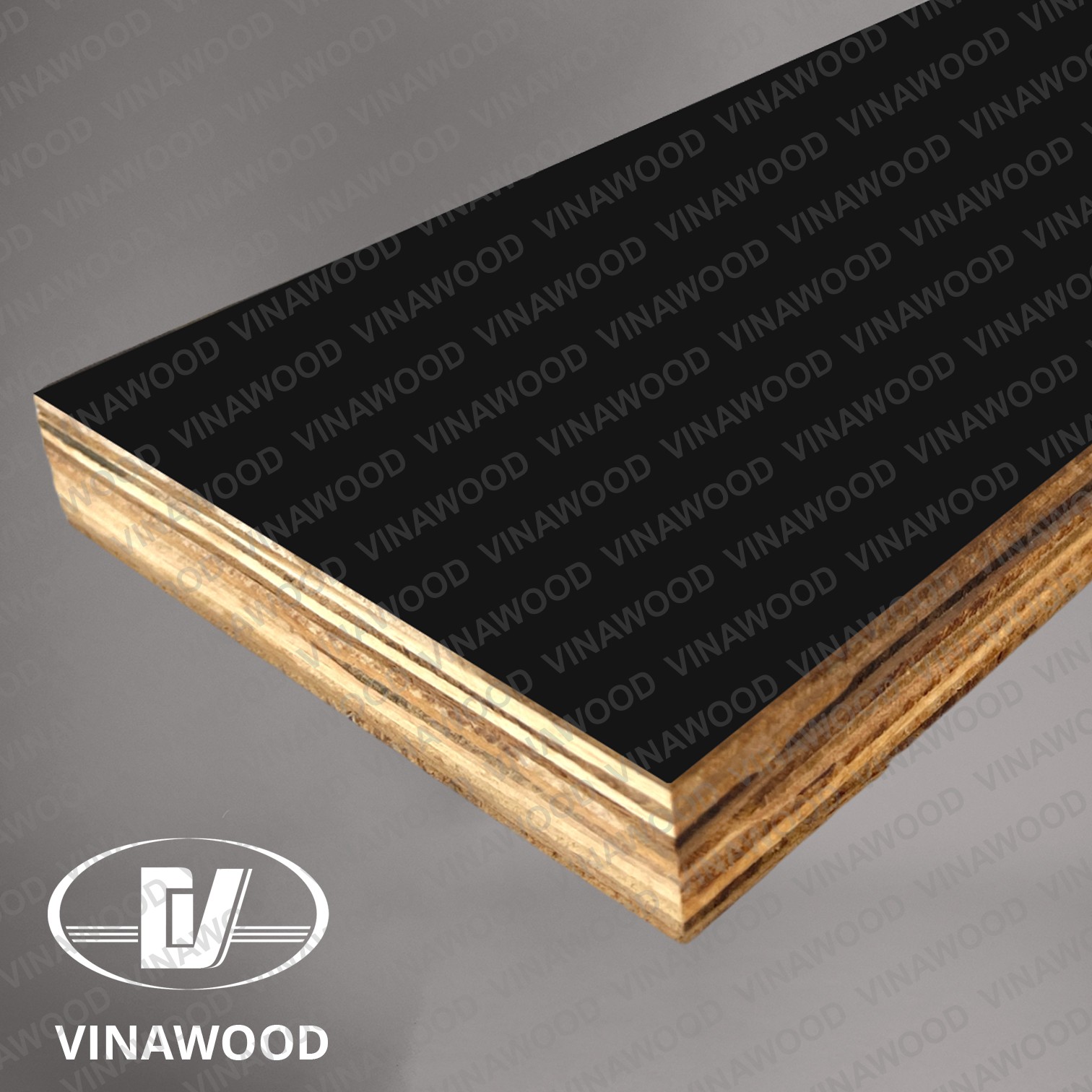
Film faced plywood is a hardwood plywood panel with a resin-impregnated film pressed onto both faces so it can serve as the face of a concrete form. The film leaves a smooth cast finish and strips cleanly after each pour. On Vinawood film faced grades the face is a phenolic surface film, and on
Form Basic and
Pro Form it sits over a plantation-grown acacia and eucalyptus core.
What features matter on a film faced plywood data sheet?
Four lines decide whether a sheet will hold a pour programme: face film weight in g/m², core glue class (EU Class 2 melamine versus Class 3 phenolic), sheet size and thickness, and the catalogue reuse written as up to N cycles. Form Basic and Form Extra carry a 165 gsm phenolic surface film over a WBP melamine core (EU glue Class 2), while Pro Form carries a 125 gsm phenolic surface film over a WBP phenolic core (EU glue Class 3). Film weight shapes the cast finish and abrasion life, and the core bond decides how the panel survives repeated wetting and stripping. A useful mill sheet lists those as separate fields, not a single marketing grade name.
Where is film faced plywood used in concrete construction?
Crews use film faced plywood as the concrete-contact face on walls, columns, beams, foundations and slab soffits whenever the finish and reuse cycle matter more than a one-shot board. Shorter programmes and humid Class 2 work usually run Form Basic (up to 10 reuses). Mid-length cycles often move to Form Extra (up to 15 reuses), and high-rotation or weather-exposed fair-face work steps up to Pro Form (up to 20 reuses). System formwork and gang forms that need cut panels call out exact sizes on the RFQ rather than assuming a stock 4 × 8 sheet will fit.
Is film faced plywood the same as phenolic plywood?
Not exactly. "Film faced" names the phenolic surface film pressed onto the faces; "phenolic plywood" on a quote often means the core is bonded with phenolic (PF) glue to EU Class 3 / EN 636-3. Form Basic and Form Extra carry a phenolic face film over a Class 2 WBP melamine core, while Pro Form pairs a phenolic face film with a Class 3 WBP phenolic core. Ask for both the face film and the glue class in writing so the two words do not get treated as synonyms.
Which film faced plywood grade fits my pour count?
Pick the grade from the number of pours you plan and how exposed the job is. Eco Form and Form Basic cover shorter Class 2 cycles at up to 6 and up to 10 reuses, while Form Extra (WBP Melamine Top, EU glue Class 2) is rated for up to 15. Pro Form is bonded with WBP phenolic glue (EU glue Class 3) and is rated for up to 20 reuses for high-rotation or weather-exposed forming. Field results usually come in lower when stripping and storage care slip, so plan against site discipline rather than the catalogue maximum.
What sizes and thicknesses does Vinawood make film faced plywood in?
Standard sheets are 2440 × 1220 mm, the 4 × 8 ft format most North American crews use, and 2500 × 1250 mm, which many European formwork systems call for. Common thicknesses are 12, 15, 18 and 21 mm. Pro Form is also made in smaller cut sizes such as 1220 × 625 mm for panel systems, so name the exact size you need on the RFQ.