Importing Vietnam Plywood to the USA: Duties, Standards, and Logistics
How US buyers import plywood from Vietnam in 2026: what the new AD/CVD orders on hardwood and decorative plywood cover, the scope exclusions, the TSCA Title VI file, and freight planning.
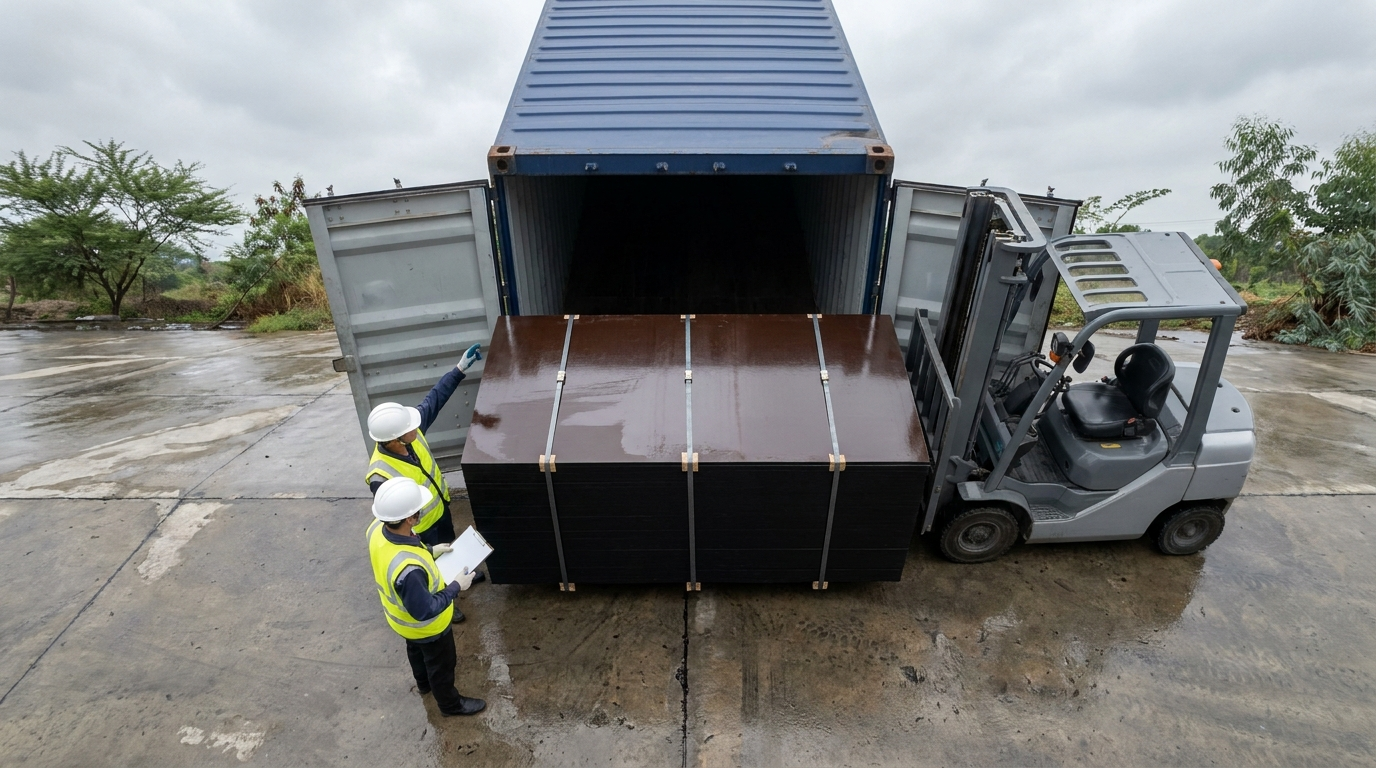
Yes, US buyers import plywood from Vietnam every week, and the mechanics have not changed: a licensed customs broker, a continuous or single-entry customs bond, a clean emissions file and a Lacey declaration. What changed in 2026 is the duty picture. Since the Commerce final determinations in July and the ITC vote in August, hardwood and decorative plywood from Vietnam falls under US antidumping and countervailing duty orders, while certain structural plywood and phenolic film-faced plyform sit outside that scope. So the first job on any Vietnam order is no longer price. It is classifying the panel correctly before it ships.
We have shipped plywood since 1992 and now load about 5,000 containers a year for buyers in 55+ countries, so we see how these files move through US ports. This guide walks through what the 2026 orders cover, the emissions paperwork your broker and customer will ask for, the documents that support a scope position, and how to plan freight and landed cost without guessing.
What changed for Vietnam plywood in 2026
For several years, Vietnam was the place US importers looked when the China hardwood plywood orders made that supply expensive. That window has narrowed. On 16 July 2026 the US Department of Commerce announced final affirmative determinations in its antidumping (AD) and countervailing duty (CVD) investigations of hardwood and decorative plywood from China, Indonesia and Vietnam. For Vietnam, the published dumping margin is 90.12 percent, with a cash deposit rate of 84.95 percent after subsidy offsets, and the final CVD determination sets an all-others subsidy rate of 47.68 percent.
The second step came on 19 August 2026, when the US International Trade Commission voted in the affirmative on hardwood and decorative plywood, excluding all softwood structural plywood. The same vote found imports of softwood structural plywood negligible and terminated those investigations. The Commission's determinations were published in the Federal Register on 9 September 2026, and Commerce issues the orders on the back of that vote. In practice, a Vietnam-origin panel that falls inside the scope now carries combined deposits that wipe out any price advantage, which is why scope has become the whole conversation.
If you are coming to this from the China side of the story, our guide to anti-dumping duties and Vietnam as an alternative to China covers that history. The short version for 2026 is that "Vietnam origin" no longer settles the duty question on its own.
Which Vietnam plywood the 2026 orders cover
The scope text is long, and it is written broadly on purpose. It covers hardwood and decorative plywood whatever the dimension, and it lists the surface coatings an in-scope panel can carry, from paints and paper to high pressure laminate and phenolic film. That last point surprises buyers: a phenolic film on its own does not take a panel out of scope. What takes a panel out is meeting one of the listed exclusions, word for word.
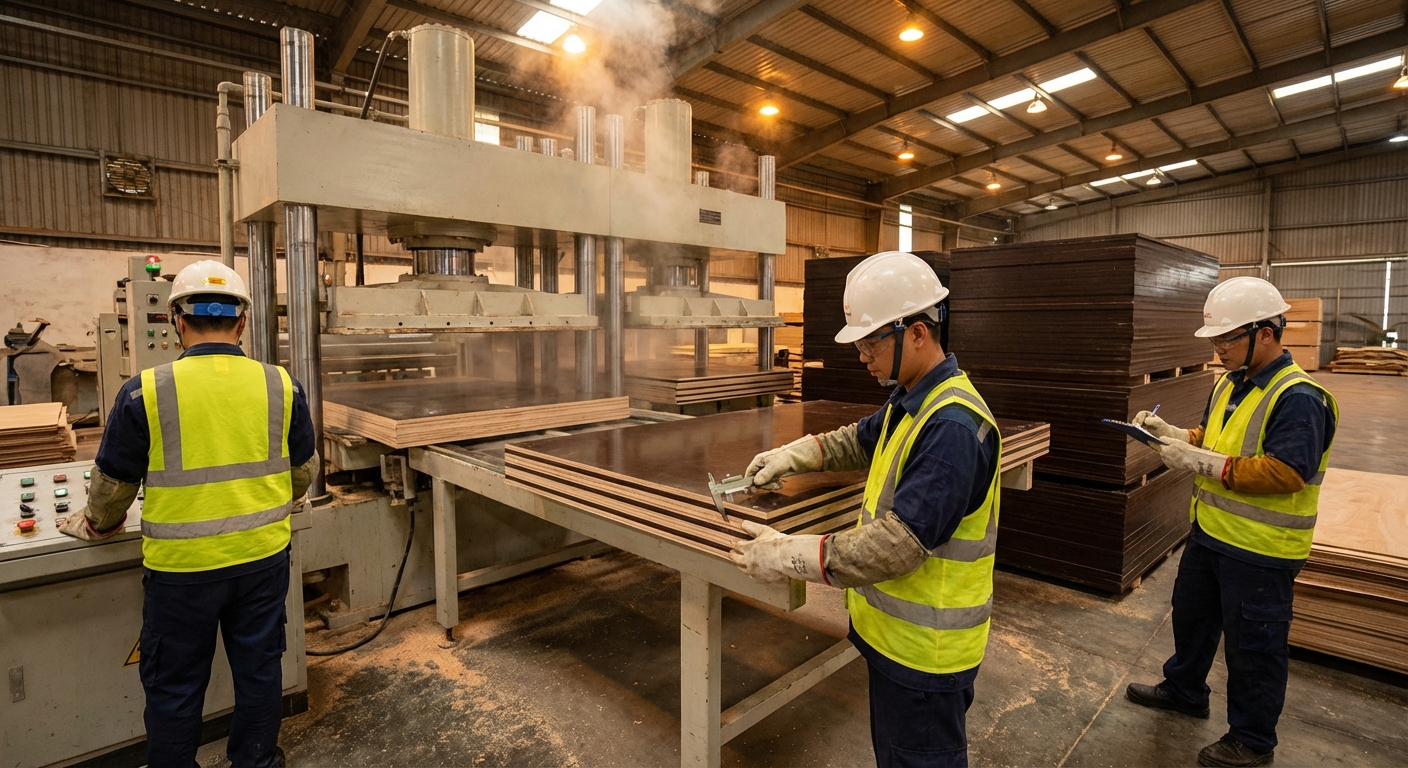
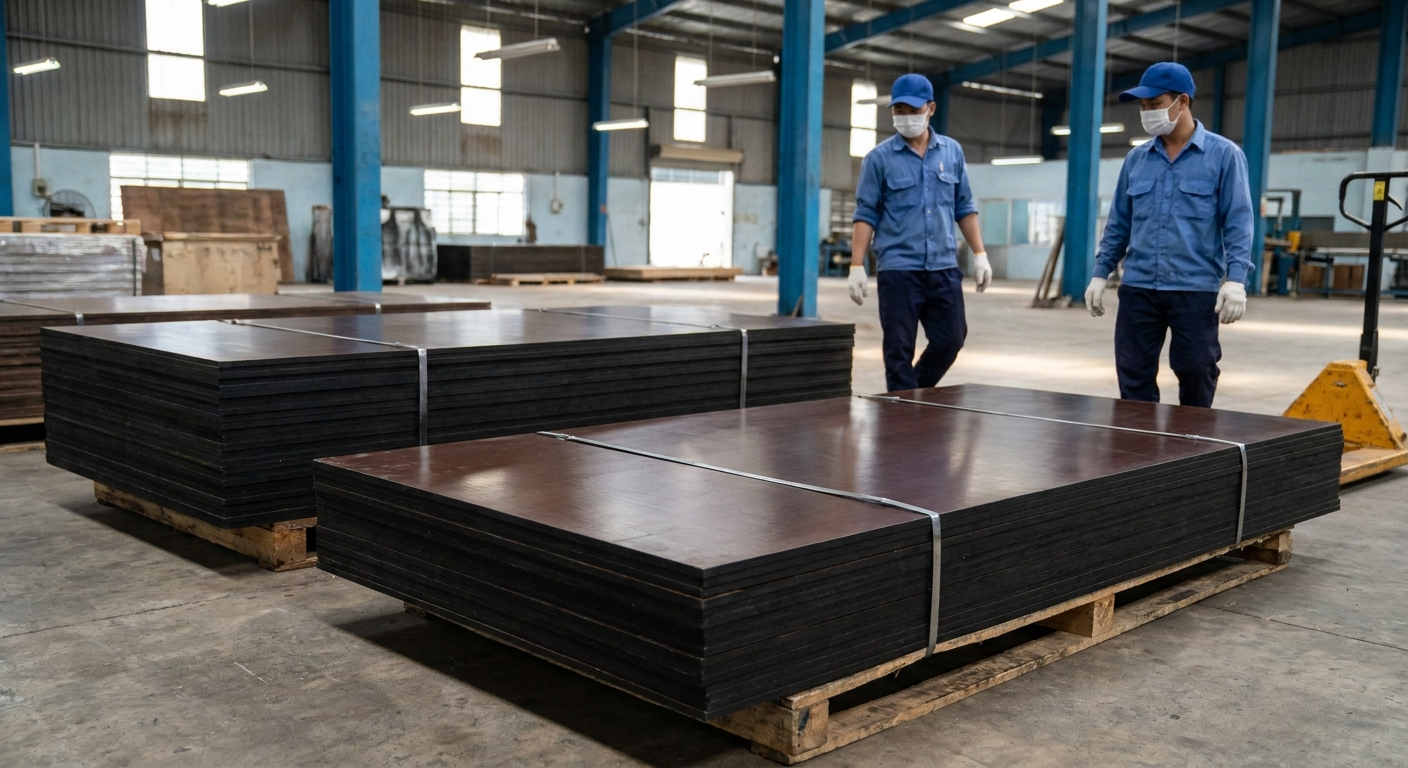
Two exclusions matter most for construction buyers. The first is structural plywood that "is certified, manufactured, and stamped to meet U.S. Products Standard PS 1-09, PS 2-09, PS-1-22, PS 2-10, or PS 2-18 for Structural Plywood", and, where the standard sets core species requirements, has a core made entirely of the softwood species listed in the scope. The second is "Phenolic Film Faced Plyform (PFF), also known as Phenolic Surface Film Plywood (PSF)", defined as a panel with an "Exterior" or "Exposure 1" bond classification as defined by The Engineered Wood Association, with an opaque phenolic film of the stated minimum weight permanently bonded on both the face and back veneers, and an opaque, moisture resistant coating applied to the edges.
| Panel type | Where it sits under the 2026 orders |
|---|---|
| Hardwood and decorative plywood (veneer faced, overlaid, painted or coated) | In scope |
| Softwood structural plywood | Investigations terminated by the ITC as negligible |
| Structural plywood certified and stamped to PS 1 or PS 2, meeting the core species condition | Listed exclusion |
| Phenolic film-faced plyform meeting every element of the PFF definition | Listed exclusion |
| Anything else, including panels that meet only part of a definition | Check line by line with your broker |
Please treat this table as orientation, not advice: confirm every classification with your licensed customs broker before the goods ship. The wording turns on details such as the stamp, the bond classification and the film on both faces, and a panel that meets three of four elements is still inside the scope.
The TSCA Title VI file CBP and your customer will ask for
Duty is the expensive question, but emissions compliance is the one that stops containers. Hardwood plywood sold in the United States has to meet the formaldehyde limits of EPA TSCA Title VI, which mirror the California CARB Phase 2 limits. The rule works through third-party certifiers (TPCs) recognised by EPA, so the first document to request is the TPC certificate covering the mill and the product type, and the second is a check that the certifier still appears on EPA's published list.
Behind the certificate sit the test results. Quarterly primary tests use large chamber methods such as ASTM E1333, and ongoing quality control tests often use ASTM D6007, so a recent chamber report tied to the production period is a reasonable ask. Each panel or bundle also needs a compliant label showing the producer, the lot or batch and the TSCA Title VI statement, because a missing label is one of the fastest ways to turn an ordinary entry into a hold. Structural plywood made to PS 1 or PS 2 is treated differently under the emissions rule, which is another reason the panel type should be settled early.
We hold EPA TSCA Title VI certification, and our TSCA Title VI page and wider certifications overview set out what we can document. Those pages are a starting map for your broker. The lot file that travels with your container is what CBP and your customer actually read, and it should sit in the same folder as your scope paperwork so nobody has to rebuild it at the port.
Documents that support a panel's position outside the scope
Customs decisions are made on evidence, and the evidence for a scope position starts at the mill. The most useful single document is a plain construction description for each line on the order: face and back film type and weight, glue line, edge coating, core species and thickness build. When that description matches the wording of the exclusion, the broker has something concrete to work with. When it reads like a brochure, the broker has nothing.
For structural panels, the PS certification, the grade stamp and the agency behind it carry the weight. For film-faced plyform, the bond classification is the line that most often needs work, together with test reports that show the glue line performance and the film on both faces. Test reports from our in-house lab and outside partners can sit alongside those descriptions, and the same file should include the Lacey Act declaration listing genus, species, country of harvest and value. Our plantation-grown acacia and eucalyptus are declared as harvested in Vietnam, and our Lacey Act declaration guide explains how to fill that form correctly.
Invoice wording matters more than most buyers expect. A commercial invoice that describes construction, not a marketing name, lets the entry line, the packing list and the mill file tell the same story. We do not promise rulings, because only CBP and Commerce make them. Our role is to document the panel clearly, and your broker files the entry on that record.
Freight, transit and landed cost planning
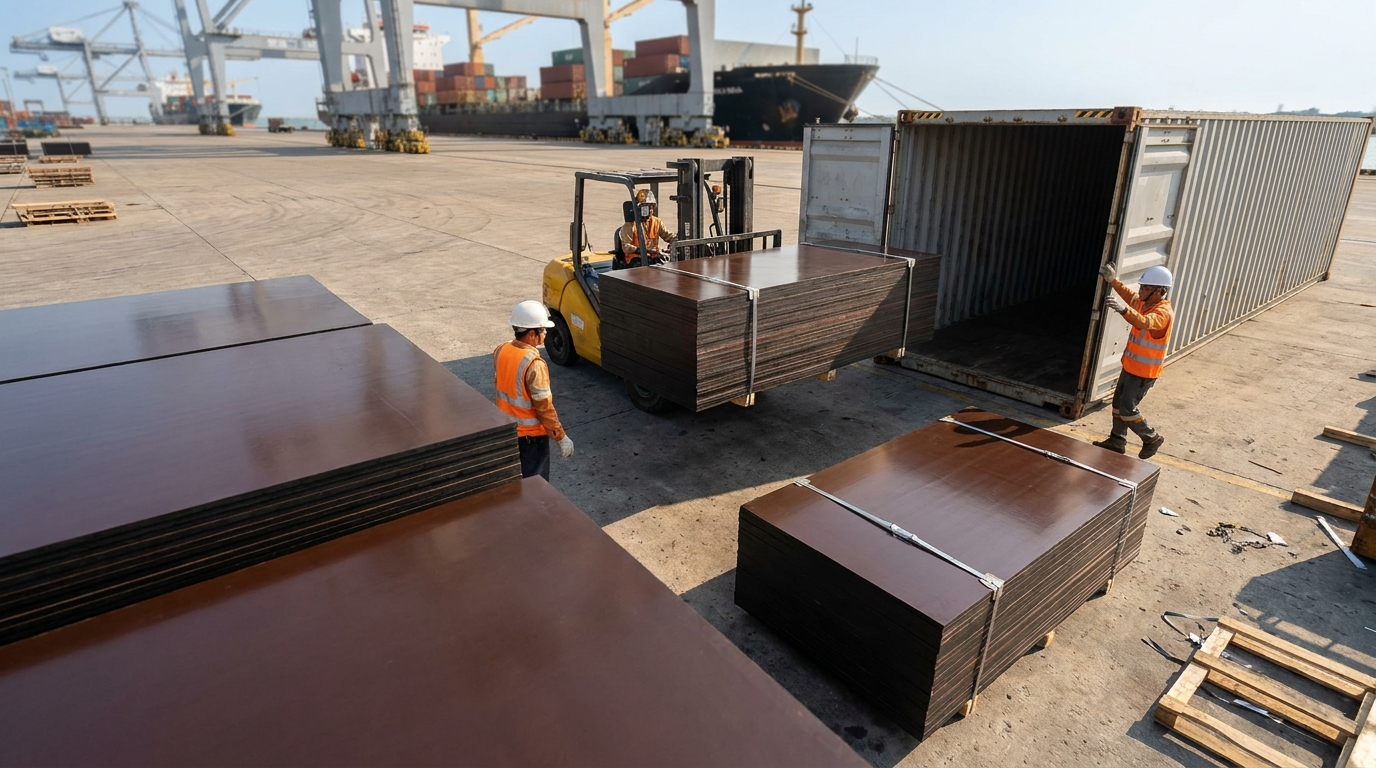
Our export shipments leave from Hai Phong, and the crossing to the US West Coast typically takes around three to four weeks port to port, with East Coast and Gulf routings running longer. Those are planning ranges rather than promises, because blank sailings and transshipment schedules move them every season, and the fourth quarter is usually the tightest booking period. Building two or three weeks of buffer into a project schedule is cheaper than paying for an idle crew.
Container planning comes before price. Our loading calculator shows how many sheets of a given size and thickness fit a 20 ft or 40 ft container, which matters when a job needs a specific mix of thicknesses. Once you have a quoted FOB price and a freight rate, the landed cost calculator lets you add duty, fees and inland costs. Put the AD and CVD rows in only after your broker has confirmed the classification, because a wrong duty assumption will move the result more than any other line.
Buying from Vinawood for US programmes
We are a plywood manufacturer in Vietnam, founded in 1992, and our quality control runs on a 12-step production process with 100% individual sheet inspection before loading. For North America we also hold distribution warehouses in Toronto, Vancouver, Calgary, Montreal, Miami, Houston and Baltimore, which supply ready stock to local distributors who need shorter lead times than a full container from Hai Phong.
For concrete formwork, our film-faced plywood range carries phenolic film on both faces with sealed edges, and we prepare the construction description and test file for each order so your broker can assess it against the published scope. If you are comparing routes into Europe as well, the EU import guide covers that side. When you are ready to price a programme, send the panel spec, quantities and destination port through our request for quotation form, or contact our sales team and we will start with the classification file before we talk about price.
Category
market-insights
▶Sources & References (4)
- Final Affirmative Determination in the AD and CVD Investigations of Hardwood and Decorative Plywood from China, Indonesia, and Vietnam — International Trade Administration (2026-07-16)
- Hardwood and Decorative Plywood From Vietnam: Final Affirmative Countervailing Duty Determination — Federal Register (2026-07-21)
- USITC Votes on Hardwood and Decorative Plywood from China, Indonesia, and Vietnam — US International Trade Commission (2026-08-19)
- Hardwood and Decorative Plywood From China, Indonesia, and Vietnam; Determinations — Federal Register (2026-09-09)