Plywood Manufacturer: How to Choose the Right One
A buyer's framework for choosing a plywood manufacturer — factory type, certifications, market-access compliance, core species, film specs, QC documentation, and container economics. The verifiable checks to run before a volume order.
Choosing a plywood manufacturer is a supply-chain decision before it is a price decision. Two production runs can look identical on a sample board, then diverge the moment a container lands short on bond strength, fails a pre-shipment inspection, or shuts down a jobsite with warped panels. The factory you buy from decides whether that risk is controlled or left to chance.
This guide sets out the checks experienced procurement managers run before placing a volume order — factory type, certifications, market-access compliance, core species, film specs, capacity, documentation, and container economics. The first eight sections apply to any manufacturer. The last shows how Vinawood, a Vietnamese plywood manufacturer running since 1992, answers each one.
1. Manufacturer, Trade Manufacturer, or Trading Company?
Not every company calling itself a plywood manufacturer actually presses panels. The label covers four very different business types, and telling them apart is the first filter:
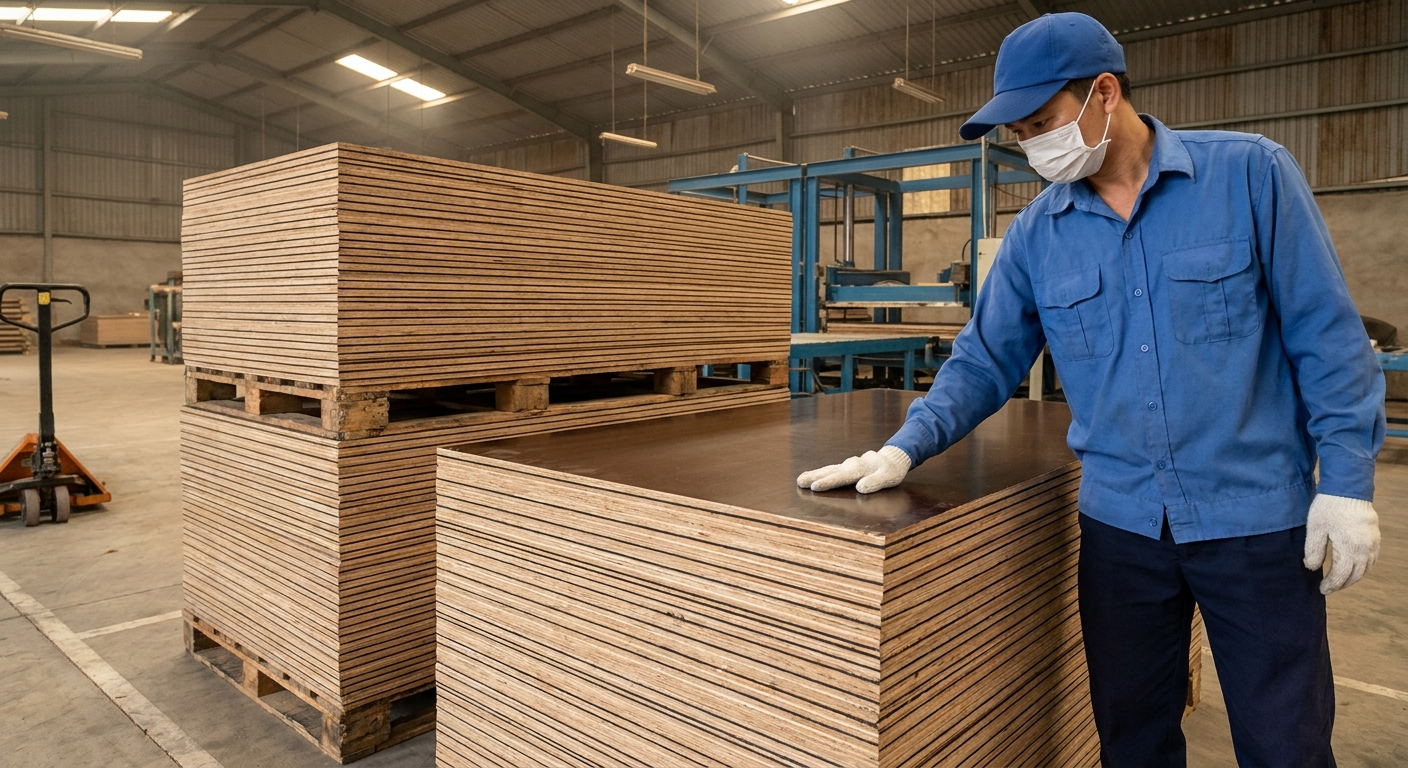
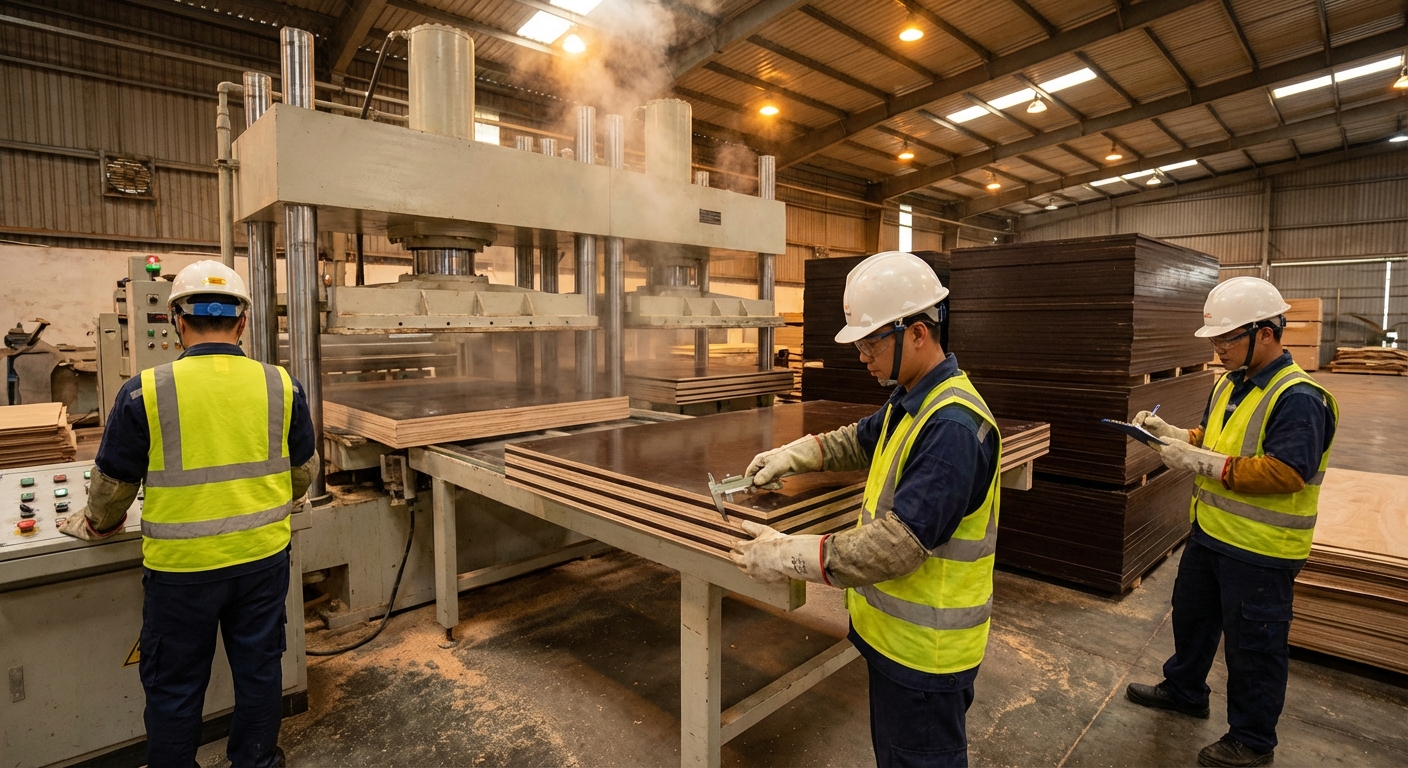
- Integrated mill. Owns the full chain — timber intake, veneer peeling, drying, gluing, pressing, film lamination, finishing. Full accountability for every production variable from log to loaded container. This is what "manufacturer" should mean.
- Trade manufacturer. Buys core veneer and face material from outside suppliers but does its own gluing, pressing, and finishing. Quality holds up when the pressing line is well run, though core consistency rides on their supplier relationships.
- Trading company posing as a manufacturer. Resells panels from several small mills under one brand. This is the most common source of quality failures out of Vietnam and China. They rarely permit a factory visit, cannot document production, and cannot hold specification steady across repeat orders.
- Distributor or agent. Sells other makers' stock, often domestically. Useful for small quantities and fast local delivery, but you inherit their margin and lose the documentation trail back to the press.
The fastest way to place a supplier: ask for a live video tour of the pressing line and a factory visit. A working mill sets it up. A trader deflects, delays, or arranges a walk-through of a facility it does not control.
2. Certifications — What Actually Matters
Certifications are the most reliable proxy for a documented quality system. They demand external audits, lab testing, and ongoing compliance — costs an informal supplier or trader cannot carry. Match the certificate to the market you sell into:
| Certification | Relevant Market | What It Confirms |
|---|---|---|
| FSC Chain of Custody / PEFC | EU, UK, US, Australia | Legal, plantation-sourced timber — required for government work and LEED/BREEAM specs |
| EPA TSCA Title VI / CARB Phase 2 | USA, Canada | Formaldehyde emission limits — a de facto US import requirement for hardwood plywood |
| CE marking / EN 13986 (EN 636) | EU | Construction-panel performance under the Construction Products Regulation |
| UKCA | United Kingdom | Post-Brexit conformity for construction products sold in Great Britain |
| ISO 9001 | All markets | Quality management system — documented corrective action and production consistency |
| KS mark (KS F 3101) | South Korea | Korean Industrial Standards for construction plywood |
| BIS (IS 303 / IS 710) | India | Bureau of Indian Standards — required for government procurement |
One caveat that separates careful buyers from burned ones: certificates can be borrowed. Ask for the mill audit report issued in the manufacturer's own name, not just a certificate image on a website. A CARB P2 lab result tied to a specific batch date is worth far more than a generic scan. Verify FSC certificates directly at info.fsc.org before you rely on them.
3. Market Access by Region — The Compliance Map
A manufacturer that ships to one market rarely holds the full paperwork for another. Before you commit, confirm the maker already produces to the standard your destination enforces — retrofitting certification onto an order mid-production is where lead times slip. The practical map most B2B buyers work from:
| Destination | Must-have documents | Common gap |
|---|---|---|
| United States / Canada | EPA TSCA Title VI / CARB P2 cert, mill test report, certificate of origin | Traders supplying a generic CARB scan with no batch traceability |
| European Union | CE mark under EN 13986, EN 314 bond-class result, FSC/PEFC CoC, EUDR due-diligence data | Missing EUDR geolocation data for the timber source |
| United Kingdom | UKCA mark, BS EN 13986 reference, CoC | Sellers still shipping CE-only paperwork post-transition |
| South Korea | KS F 3101 mark, formaldehyde emission cert | Non-KS panels rejected at customs |
| India | BIS mark, IS 303 (general) or IS 710 (marine) test report | Uncertified stock blocked from government tenders |
| Middle East / GCC | Certificate of origin, mill test report, moisture-spec compliance for climate | Panels specified for temperate humidity, not desert heat |
We've watched this catch first-time importers more than any spec argument: the panel is fine, but the document set is built for the wrong market, and the container sits at the port while paperwork gets reissued. Ask which markets the mill already exports to with full documentation — that history tells you whether your market is routine or a first attempt.
4. Core Species and Construction Quality
Core species is the single most important line item most buyers forget to ask about. The core sets panel strength, screw-holding, dimensional stability, and weight per sheet.
- Eucalyptus and Acacia plantation hardwood cores are the benchmark for export plywood from Vietnam. Dense and straight-grained, they hold form ties firmly and resist deflection under concrete load. Density runs Hevea, then Eucalyptus, then Acacia — Acacia is a mainstream plantation hardwood, not a lesser substitute.
- Poplar cores are lighter and cheaper, fine for light-duty work but not for high-pressure formwork. Some suppliers ship poplar core while marketing the panel as hardwood, so request cross-section photos of real production samples, never stock images.
- Softwood cores (pine, spruce) suit North American domestic plyform and are correct for that use, but are unusual in export film-faced product.
Balanced construction is what stops a panel warping. That means equal ply thickness, an odd number of plies, and cross-banding that holds consistent through the stack. Ask for the specification sheet confirming ply count and veneer thickness rather than accepting a one-line grade summary. For the full picture of how the panel comes together, our guide on how plywood is made walks the factory sequence step by step.
5. Face Film and Overlay Specifications
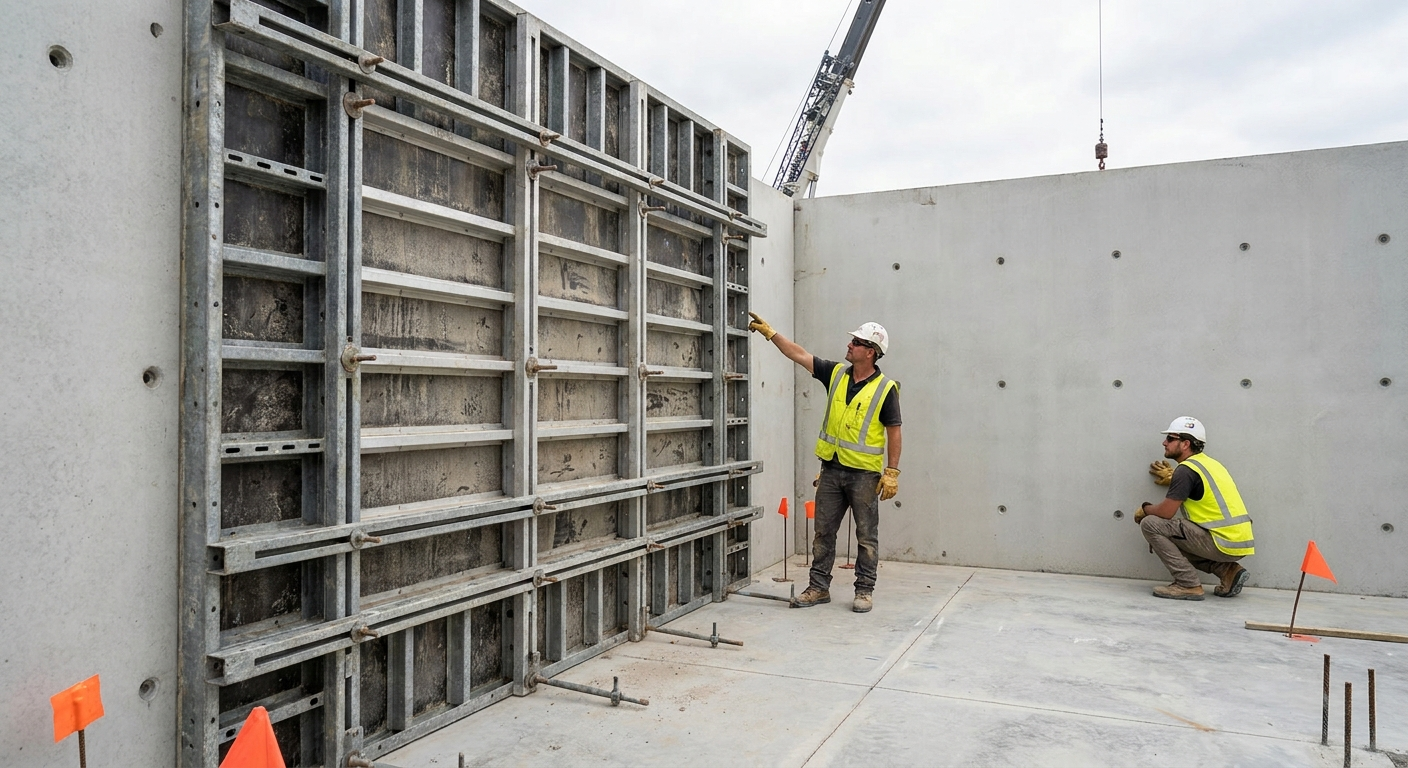
For film-faced phenolic plywood, the film weight and bond method decide how many concrete pours a panel survives:
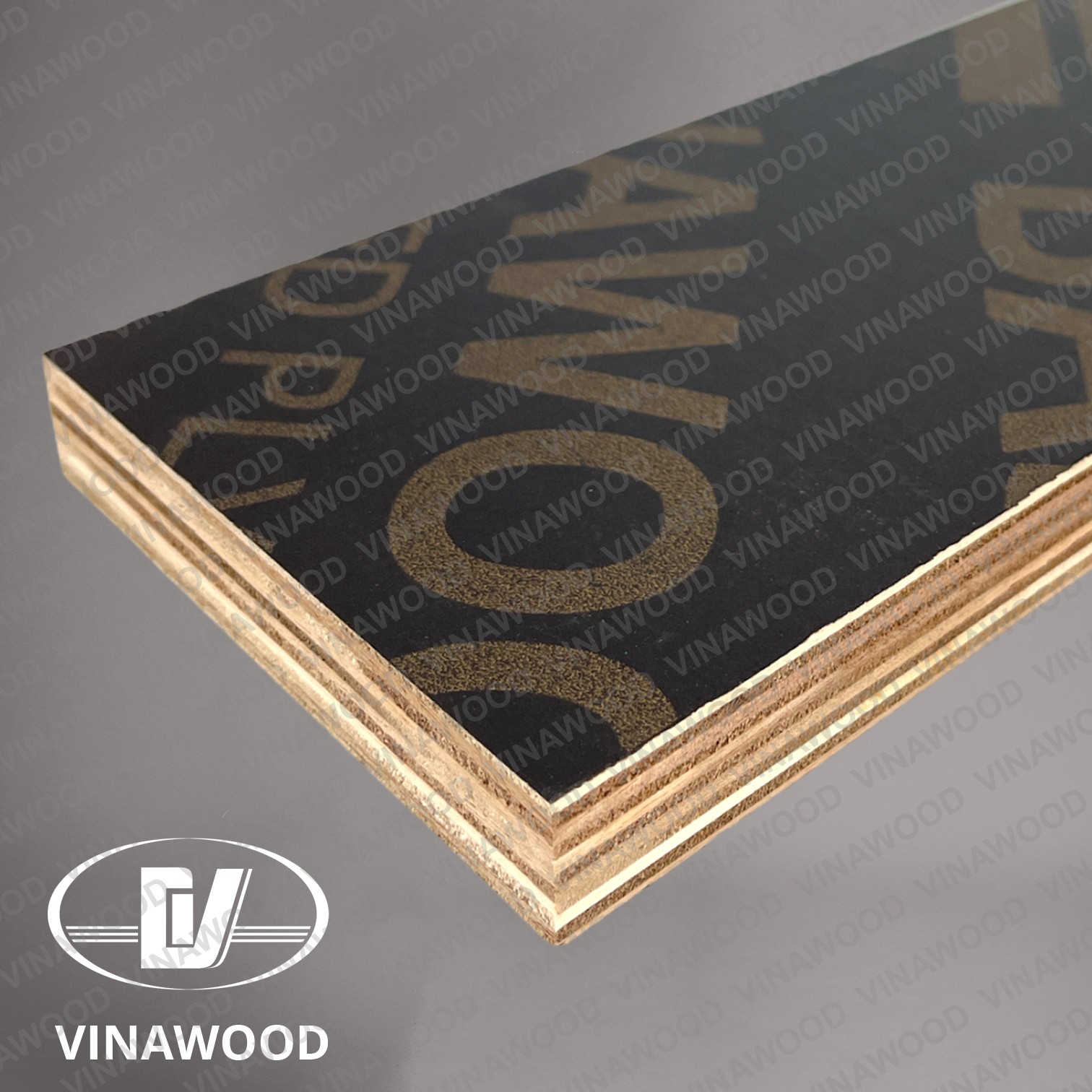
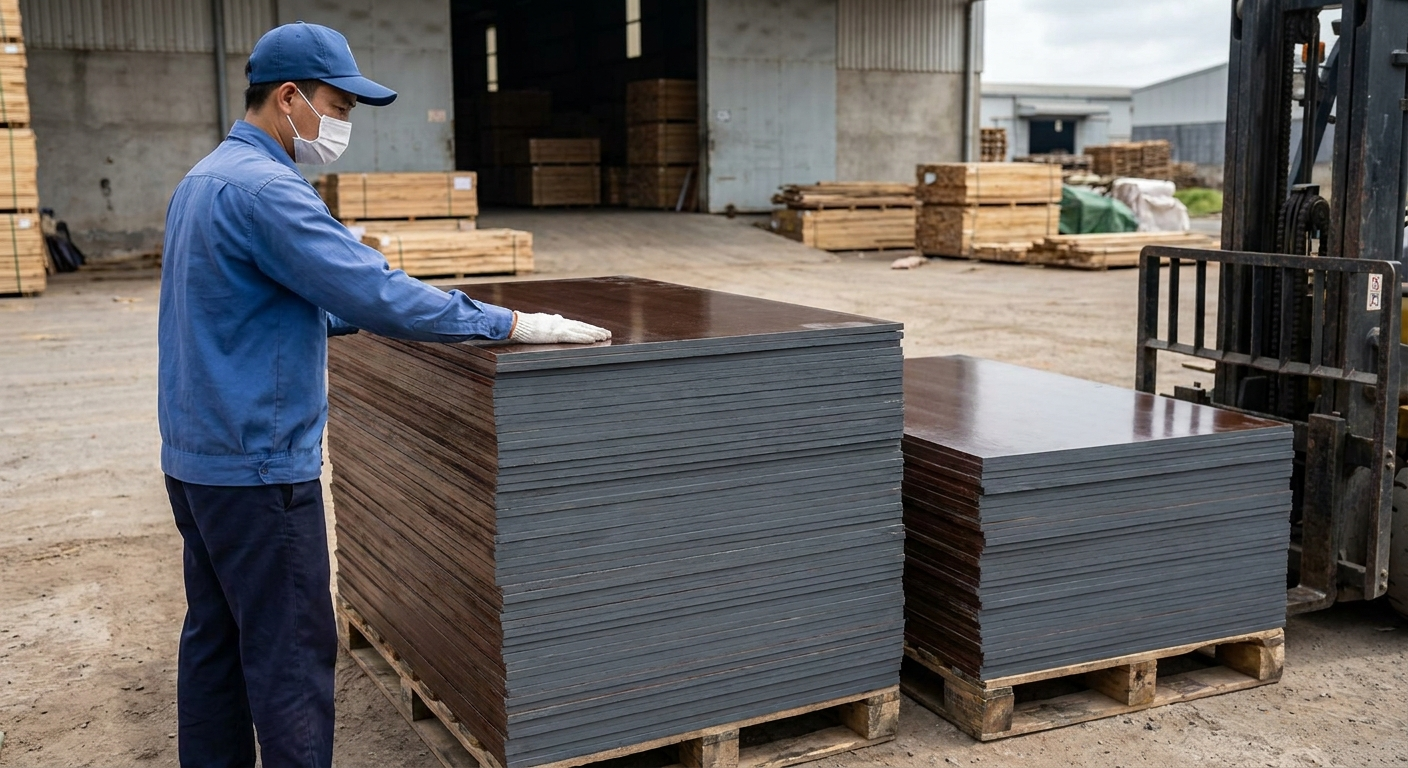
- 120 g/m² film (standard brown): 20–30 reuse cycles under proper care. Fine for commercial construction and standard residential forming.
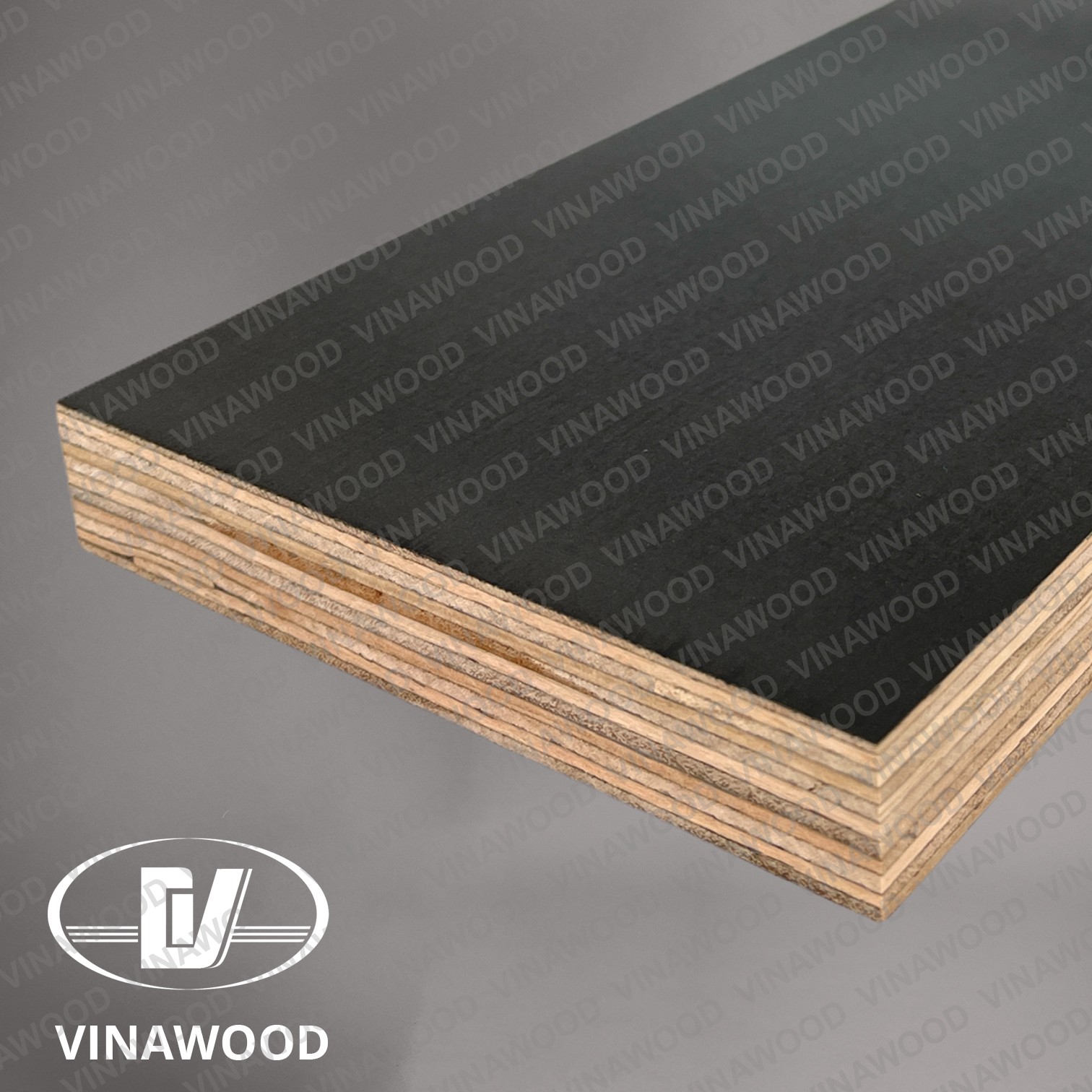
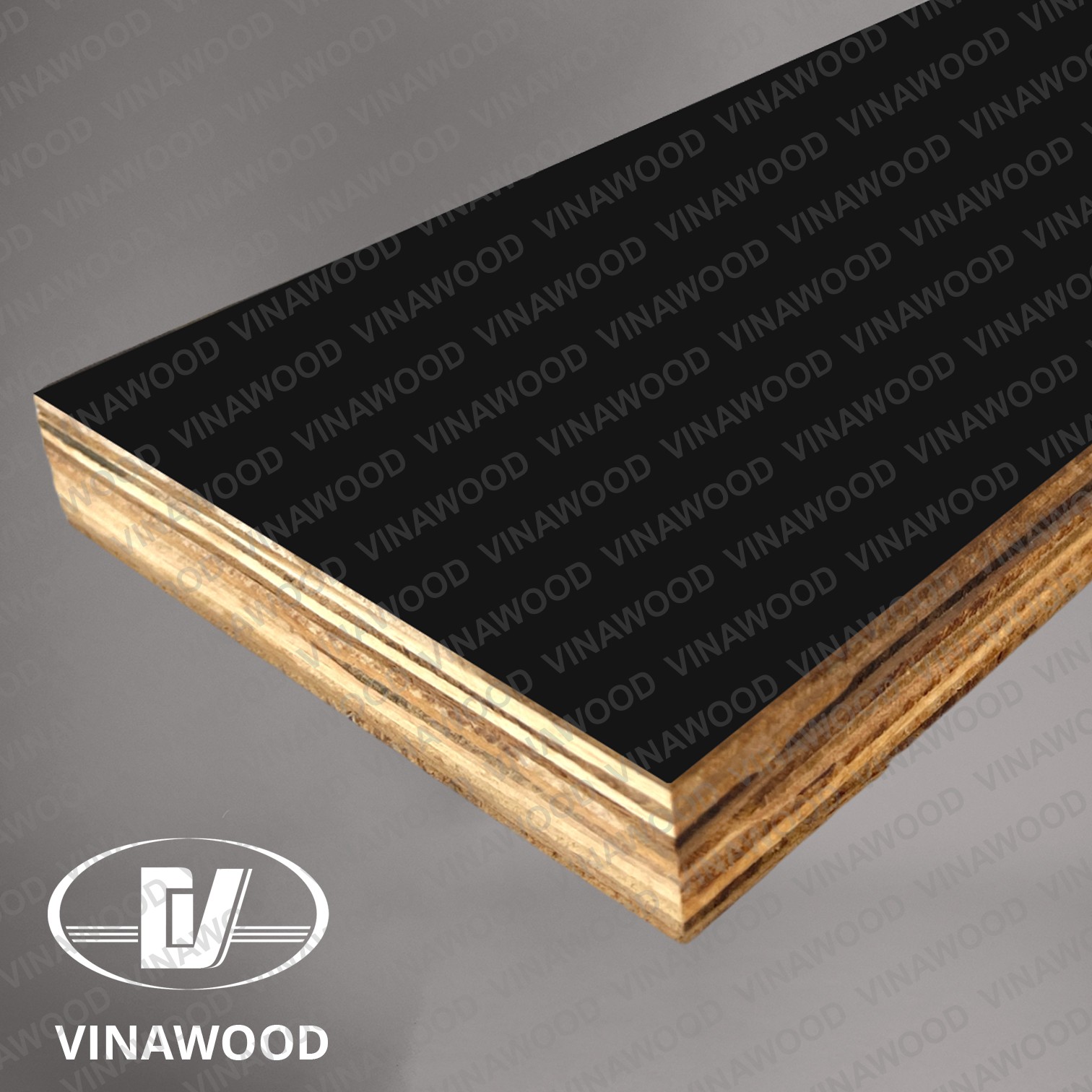
- 220 g/m² film (premium black/dark brown): up to 50 reuse cycles. The choice for high-volume repetitive forming where cost-per-pour is the number that matters.
Film weight is easy to misrepresent. Ask for the technical data sheet showing the film spec, and ask how the film bonds — phenolic film should be hot-pressed into the panel face under heat and pressure, not glued on after pressing. A hot-pressed film is integral to the surface; a surface-applied film can lift under extended concrete exposure.
One point of accuracy that trips up buyers and some suppliers alike: the film on the face and the glue in the core are two separate things. A panel can wear a phenolic face film over an MUF (melamine core resin) glue line or over a phenolic (PF) glue line. The core glue sets the bond class. Match it to the job:
| Grade | Core glue | Bond class | Face | Max reuse |
|---|---|---|---|---|
| Form Basic | WBP MUF (melamine core resin) | EN 636-2 / Class 2 | phenolic film | up to 10 |
| Form Extra | WBP MUF (higher-melamine-content glue) | EN 636-2 / Class 2 | phenolic film | up to 15 |
| Pro Form | WBP PF (phenolic) | EN 636-3 / Class 3 | phenolic film | up to 20 |
Form Extra reaches 15 cycles on a more durable, higher-melamine-content MUF glue — the same face film as Form Basic, not a heavier one. When a job specifies Class 3 exterior bond, that points to a phenolic-bonded panel such as Pro Form or the HDO range, not a melamine-core grade. Edge sealing is the other detail that separates a quality mill from a budget one: factory-sealed edges on all four sides block moisture wicking into the core between pours, the main cause of premature failure when edges are cut bare on site. Ask whether edge sealing is standard or an add-on.
6. Production Capacity and Lead Times
A mill that cannot meet your re-order schedule is a supply risk no matter how good the panel is. Before committing, pin down:
- Monthly capacity for your specific grade and thickness — available capacity for your spec, not total factory output.
- Standard lead time from order confirmation to container loading, given the current order book.
- Peak-season impact. Vietnamese mills slow around Tet (Vietnamese New Year, roughly late January to February). Add 4–6 weeks of buffer for orders placed November through January.
- Re-order capability — can the factory re-run your spec inside 60 days when the next project phase lands? A mill already at capacity cannot promise that.
Standard production lead times from confirmed order to container loading for Vietnamese export plywood run 15 to 25 days. With ocean transit added, total order-to-delivery lands at 5 to 9 weeks depending on destination.
7. Quality Control and Documentation
Ask exactly what QC documentation travels with a container. A complete package from a credible manufacturer includes:
- Mill test report: bond-strength result (EN 314 boil test), thickness tolerance, moisture content
- Face-grade inspection photos from the finished-panel staging area
- Packing list confirming panel count, dimensions, and weight per bundle
- Certification documents: CARB P2 / TSCA Title VI, FSC or PEFC CoC, CE Declaration of Performance
Pre-shipment inspection by a buyer-nominated third party (SGS, Bureau Veritas, or equivalent) is the standard for first orders. A manufacturer that refuses third-party access or discourages inspection before release is telling you something — treat it as disqualifying. Credible mills stage panels for inspection, hand over the documentation, and give the inspector full production-area access. Video walkthroughs of the press line, QC area, and staging yard have become routine for buyers who cannot travel, and a mill's willingness to run one live says more about operational confidence than any brochure.
8. Minimum Order Quantities and Container Economics
Direct import from a plywood manufacturer usually starts at one 40HC (high-cube) container. Rough capacity by spec:
- 18 mm film-faced or HDO: about 380–420 sheets per 40HC
- 12 mm: about 650–750 sheets per 40HC
- 21 mm: about 300–340 sheets per 40HC
Ocean freight from Vietnam to US ports runs roughly $3,000–$5,000 per 40HC depending on lane and season. Spread across 400 sheets of 18 mm panel, that adds about $7–12 per sheet. On volume orders, the factory-direct price advantage on film-faced or HDO plywood generally clears that freight premium with room to spare. Buyers who cannot fill a container with one spec can mix thicknesses or grades in a single container to meet MOQ without forcing a uniform order.
9. How Vinawood Measures Against This Checklist
Vinawood was founded in 1992 and runs an integrated plywood factory in Vietnam, exporting more than 5,000 containers a year to buyers in 55+ countries across North America, Europe, the Middle East, South Asia, and Oceania. Each criterion above maps to how the mill operates:
- Factory ownership: Vinawood owns its production lines — veneer peeling, drying, gluing, hot pressing, film lamination, and finishing under one roof, through a 12-step controlled process. No outsourcing to third-party mills.
- Inspection: 100% individual sheet inspection, with in-house labs for bond strength, MOR/MOE, moisture, and formaldehyde. Mill test reports and EN 314 boil-test results ship with every order.
- Certifications: ISO 9001, FSC-COC and PEFC chain of custody, CE marking under EN 13986 (EN 636-2 and EN 636-3), EPA TSCA Title VI / CARB P2, KS mark for Korea, BIS for India, UKCA for the UK, and EPD for green-building credits — current and third-party audited.
- Core species: Eucalyptus and Acacia plantation hardwood core across the film-faced and formwork grades, 100% EUTR-compliant sourcing. No softwood or poplar substitution.
- Export track record: steady shipments to US, UK, EU, Korean, Indian, and GCC ports, with the HS-code, ISPM 15, and per-market documentation already worked out.
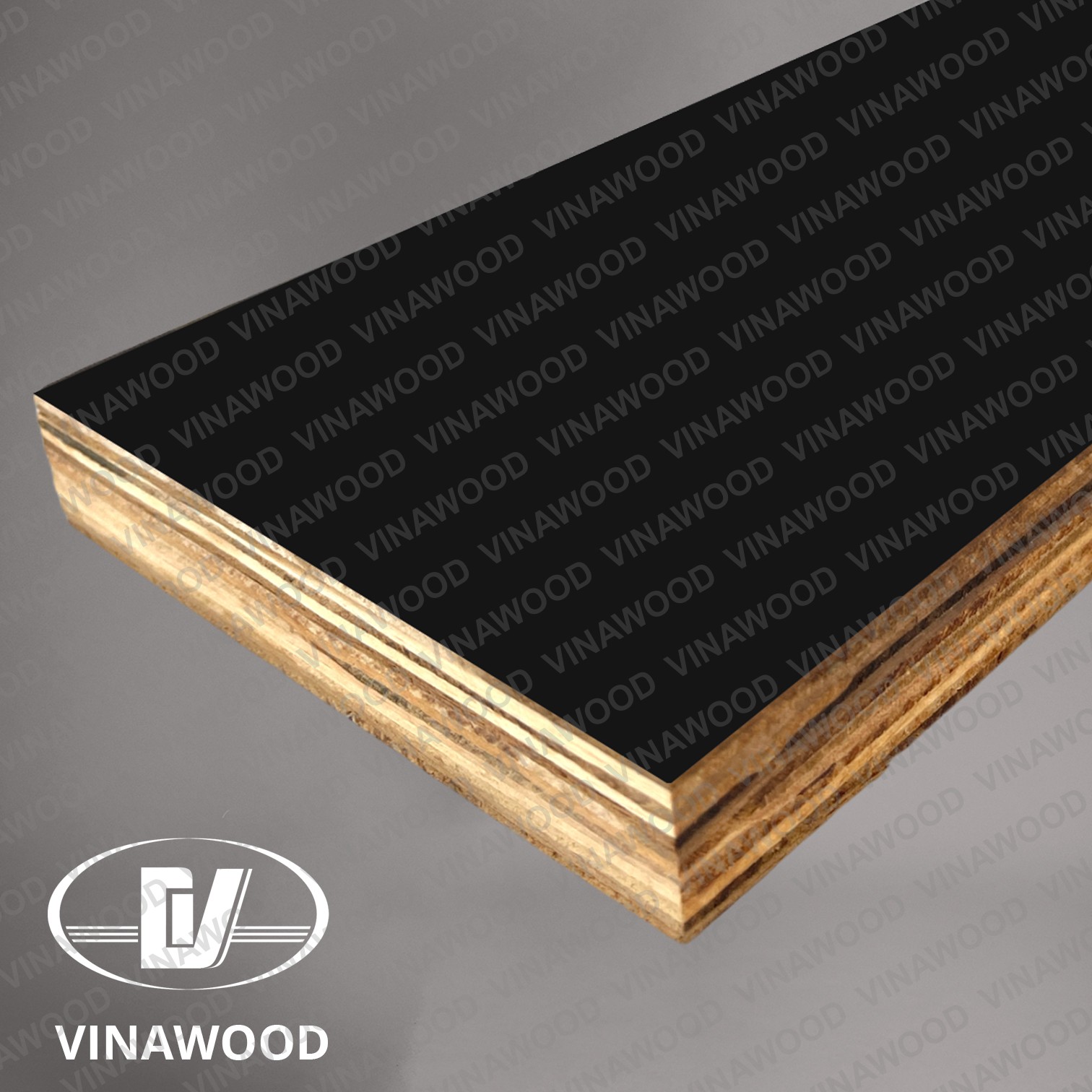
The film-faced plywood collection covers grades for different budget and performance points: Eco Form Plus (EN 636-2, up to 8 reuses), Form Basic (EN 636-2, up to 10 reuses), and Form Extra (EN 636-2, up to 15 reuses). For projects needing an EN 636-3 Class 3 exterior bond, Pro Form runs up to 20 reuses. North American buyers requiring overlay panels can specify the HDO range for high-rotation forming. Vietnam-origin panels also carry a market-access advantage over China-origin plywood in the US and EU, though only specific product categories are exempt from anti-dumping and countervailing duties — so treat any blanket "duty-free from Vietnam" claim with caution and confirm the HTS position for your exact spec.
First-time buyers can request 2–4 sample panels with full documentation before committing to a container: certificate of origin, current third-party certifications, and a mill test report for the production batch. To request samples or a container quotation, contact the Vinawood export team through vinawoodltd.com.
Category
guides