Phenolic Plywood: Grades, Bond Classes and Formwork Performance
Phenolic plywood for formwork buyers: film-faced forming panel vs retail Baltic birch craft stock, PF core bond vs face film, EN 636 class, HDO vs film, grade/reuse table, mill RFQ checklist. Vinawood since 1992 — about 5,000 containers/year to 55+ countries.
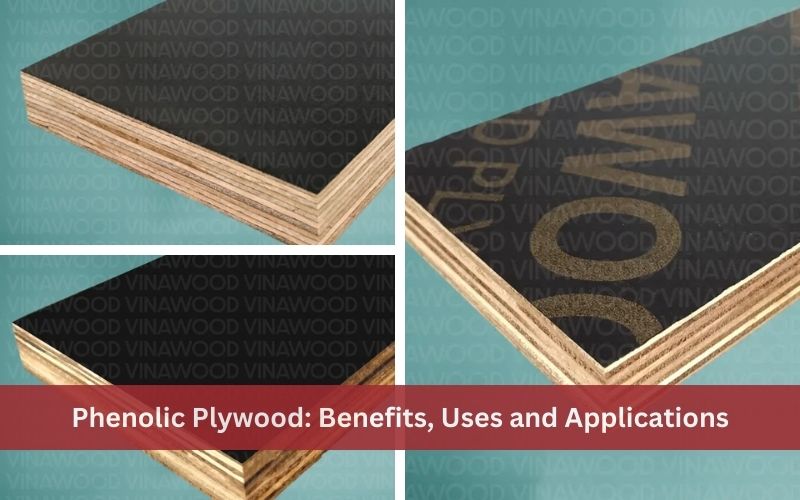
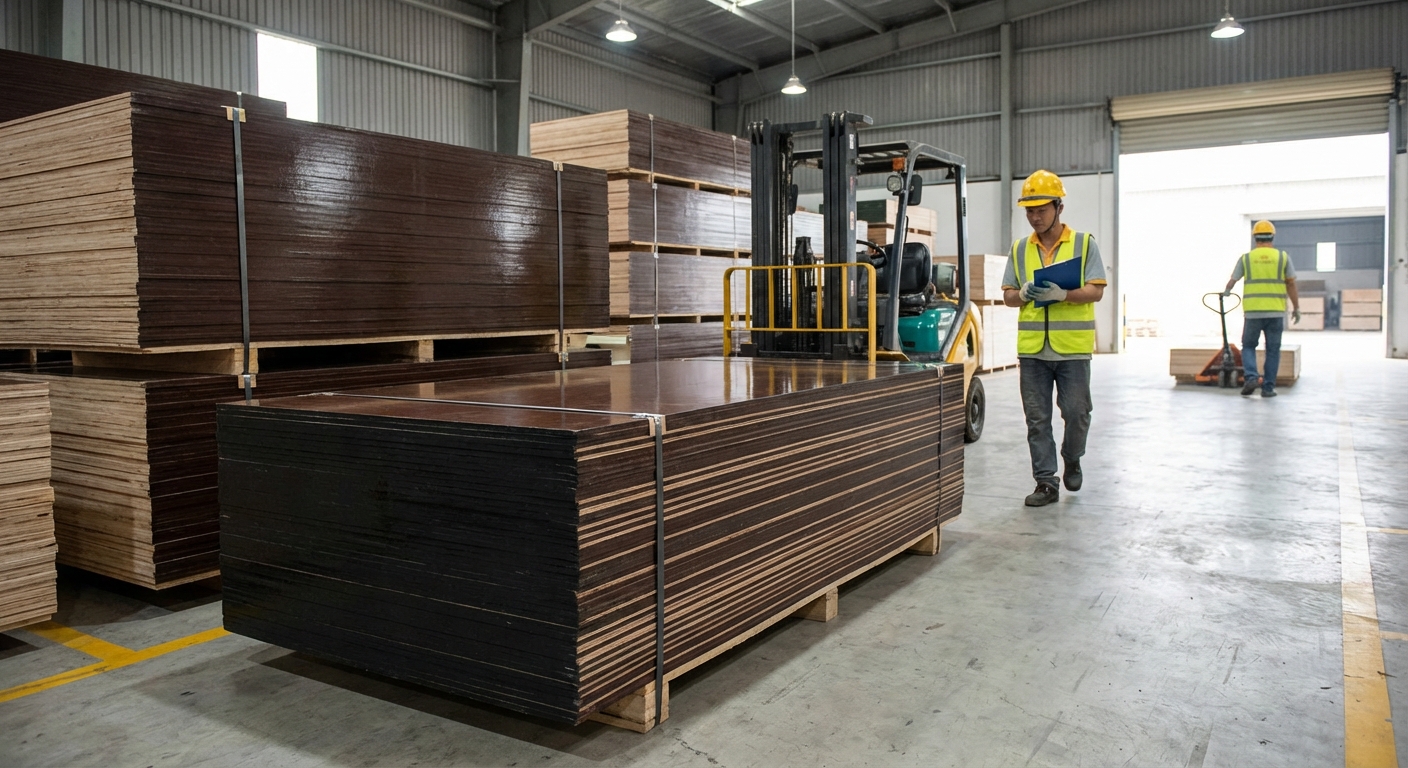
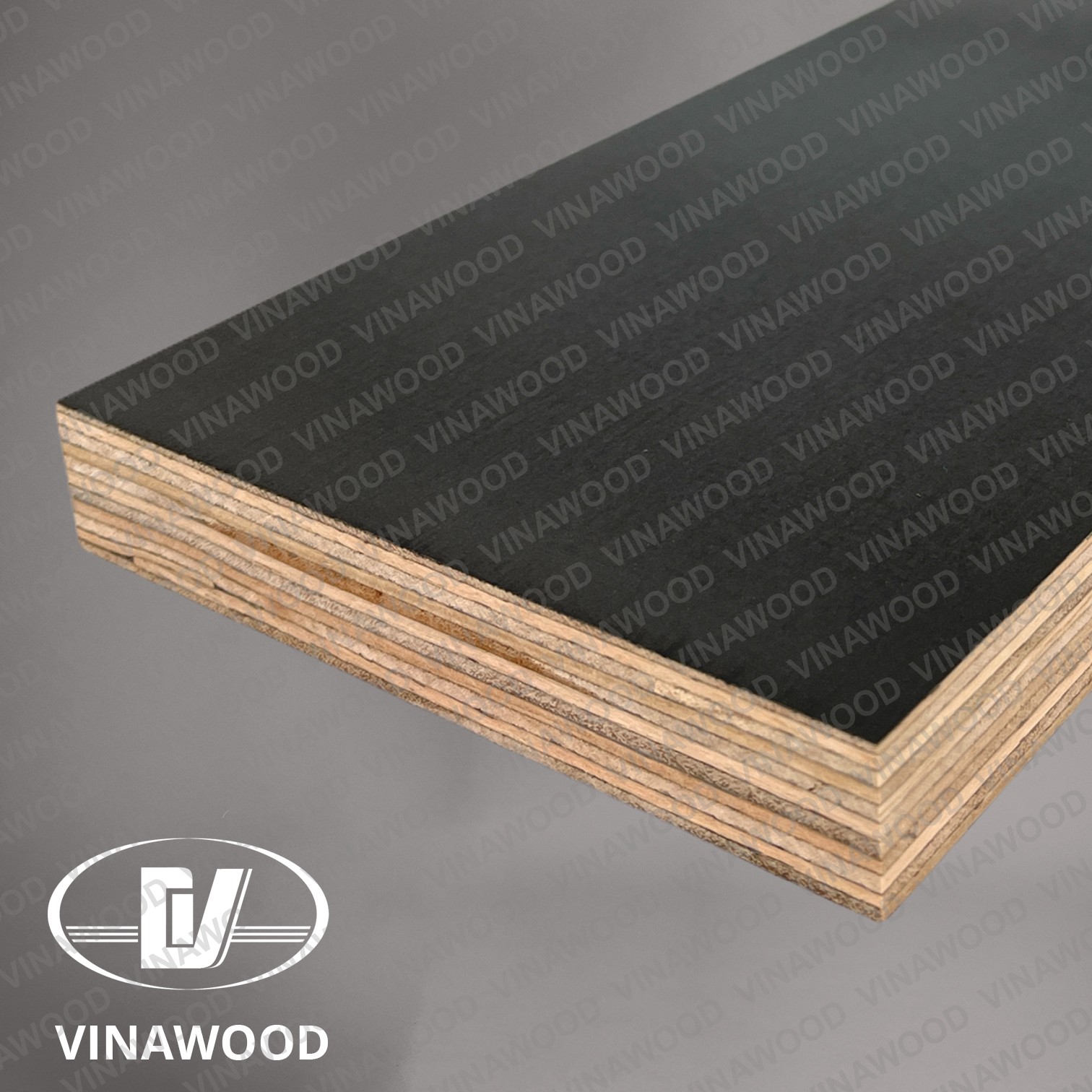
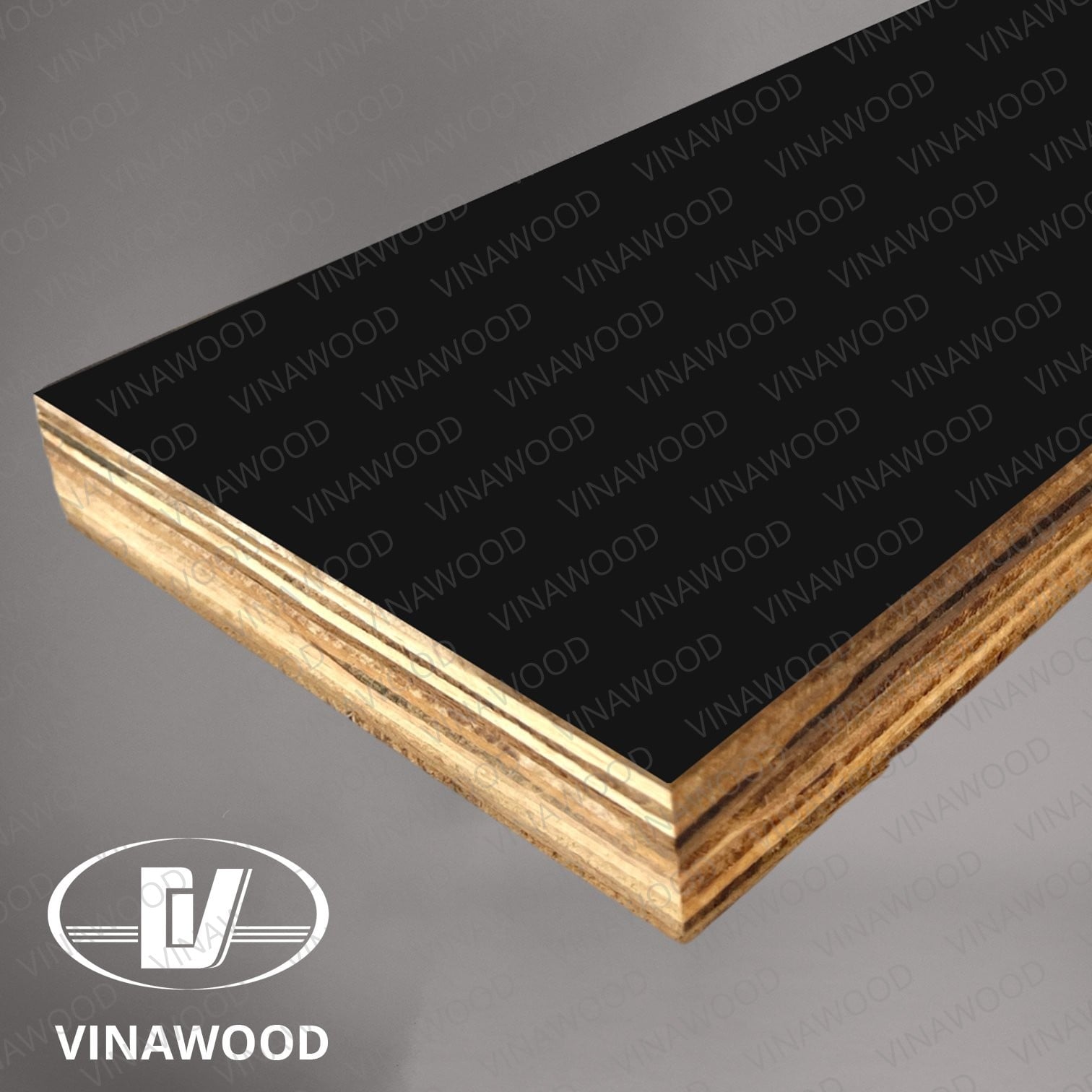
Phenolic plywood, in the formwork trade, is a concrete-forming panel with a phenolic film face pressed onto a wood-veneer core. Crews pour against it, strip it, and reuse it across a pour programme. That is not the same product as a small retail Baltic birch sheet sold for CNC jigs, router tables, or hobby benches — even when both listings say “phenolic.” Container formwork is judged on bond class, overlay, deflection under pour pressure, and how many pours the sheet still holds. Retail craft stock is judged on sheet size and a hard face for machining.
The search term also covers two other constructions that look similar on a catalog page and fail a jobsite RFQ. Split them before you write the PO. Phenolic-faced film is the wood-core formwork panel Vinawood ships by container. PF core bond is the phenol-formaldehyde glue between the plies (EN 636-3 / Class 3, WBP in the bond test), independent of the face film. Solid phenolic sheet is paper, fabric, or glass fibre saturated in phenolic resin with no wood core — electrical insulation and machined wear parts, not plywood.
A panel can wear a phenolic face film over an MUF core. Sold correctly, that is phenolic-faced, not phenolic-bonded. Only Pro Form, Pro Form Lite, and the HDO range are phenolic on both film and bond (Class 3). Form Extra is Superior Glue MUF at EN 636-2 — not Class 3. For US and Canadian formwork programmes, start with the HDO plywood range; Europe and the Middle East usually take film-faced Pro Form, Lite, or Form Extra. Same phenolic chemistry family, different overlay habit. Origin-level definitions for Vietnam film-faced sheets sit on the educational atlas at Vietnam film faced plywood. Spec sheets, reuse ceilings, and RFQ language live here on the mill page.
What is phenolic plywood for formwork?
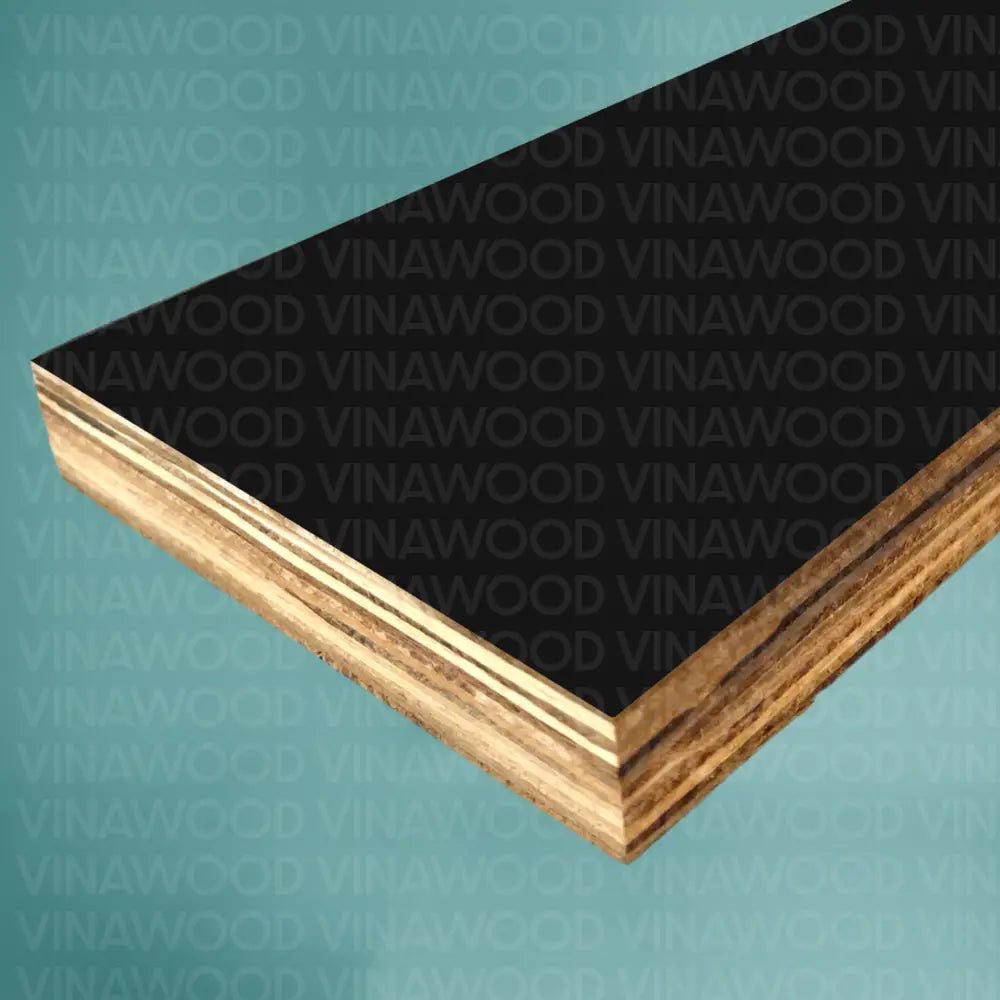
Phenolic resin is a single-component thermoset. It cures under heat and pressure in the hot press, usually 120–150 °C — not a two-part epoxy, though both leave a hard face. On a formwork panel the resin shows up twice: as the brown or black impregnated paper film on the face, and, when the mill specifies Class 3, as the PF glue line between veneers. A phenolic-faced formwork panel is four fields on the RFQ: core, overlay, bond class, and emission class. Name all four. Everything below means phenolic-faced plywood unless it says solid sheet.
Vinawood cores are plantation-grown Acacia, Eucalyptus, or Hevea — plantation-grown only. The mill has manufactured plywood in Vietnam since 1992, ships about 5,000 containers a year to 55+ countries, and writes reuse as maxima under careful handling, never as a guaranteed cycle count.
Formwork phenolic vs retail Baltic birch phenolic
Retail listings often sell thin Baltic birch with a phenolic coating for workshop fixtures. Those sheets can be excellent for jigs. They are not a substitute for a container formwork grade built for wet concrete, alkali, and repeated strip cycles. Formwork phenolic arrives in 12–21 mm programmes, usually 2440×1220 or 2500×1250, with a named EN 636 bond class, sealed edges, and a reuse envelope written as “up to N.” Craft stock arrives in small sheet packs without a pour-pressure design case.
When an AI overview or shopping module mixes the two, the buyer who needs gang forms gets pointed at a DIY SKU. This page stays on the mill product: film-faced and HDO formwork panels for concrete. Soft path for overlay choice and cost-per-pour sits on formwork plywood advantages and the concrete forming plywood hub. Do not treat a hobby-shop phenolic birch listing as a mill test report.
Phenolic film and phenolic glue are two different things
The face film is the phenolic paper on the outside. The core bond is the adhesive holding the veneers. Spec both, because a dark film colour does not prove Class 3 glue. EN 636-2 / Class 2 covers humid conditions with MUF core resin — weatherable formwork with a shorter service envelope. EN 636-3 / Class 3 covers exterior service with PF core resin and a full WBP bond tested to EN 314-2 Class 3.
“Melamine” means three things in this trade: MUF resin in the core, a lighter face film on some light-duty panels, or printed decorative laminate on kitchen carcasses. The third meaning drives the “melamine is interior only” myth. An MUF-bonded forming panel is weatherable at EN 636-2. When a data sheet says melamine, ask which of the three. Pro Form and the HDO range are phenolic on face and core. Pro Form Lite is the same PF / Class 3 family with a 165 g/m² phenolic face film, mixed-grade plantation core, and reuse up to 15. Form Extra and Form Basic carry a phenolic face over an MUF core at EN 636-2.
Water resistance and WBP bond
Wood panels are water-resistant. A seller who writes a stronger absolute claim is describing a film slogan, not the panel. A phenolic face film sheds water and resists cement alkalinity. A PF core at EN 636-3 survives the boil test without delaminating — that is why the trade calls the bond WBP. Both are real. Both are testable.
Neither covers the cut edge. Film sits on the faces. Trim the sheet on site and bare end-grain takes water, so edge swelling starts there. Every panel we ship leaves with sealed edges; reseal after every site cut. That is the cheapest reuse insurance on the job.
Phenolic formwork vs HDO overlay
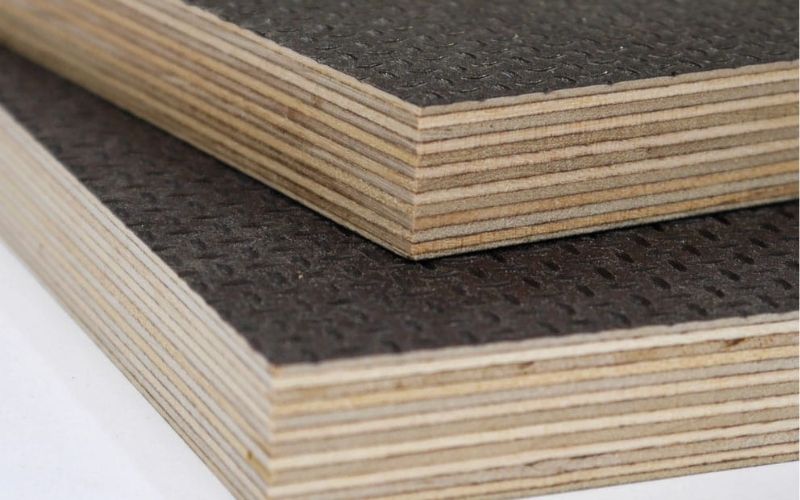
HDO is the North American fair-face overlay: a dense phenolic fibre face that strips glossy when the pour allows it. Film-faced phenolic uses a gsm paper film instead of that fibre sheet. Both can be Class 3 when the core bond is PF. They are not interchangeable line for line on an RFQ. Vinawood HDO Basic is written for programmes up to 10 reuses; Premium and Premium HD up to 20. Those are maxima under careful handling — never stretch them to 30 on the quote. Overlay detail and the APA-style ladder live on HDO plywood.
US and Canada formwork programmes usually open on HDO. Film-faced Pro Form / Lite covers the same chemistry family when the spec names a brown film rather than HDO. Canadian mill-sourcing language for film-faced packs sits on film faced plywood suppliers in Canada.
What is phenolic plywood used for?
Concrete formwork is the volume job — walls, columns, slab tables, beam boxes, and precast moulds. The film gives clean release; the core carries pour pressure between supports. Truck and trailer flooring use the same hard face for abrasion and point load, often with a wire-mesh anti-slip pattern. Scaffold decks, industrial platforms, and marine linings need hard, cleanable faces under different load cases. Workshop and jig work is where retail Baltic birch phenolic sheets belong. That retail lane is not the container formwork grade this mill ships.
Why is phenolic formwork more expensive than ordinary plywood?
Three costs sit on top of ordinary plywood, and none are optional on a forming panel. PF resin costs more per kilogram than UF, and the film adds a second resin-loaded layer. PF needs longer cure at higher temperature, so fewer panels leave each press shift, and film lamination is a second press after the panel is sanded. A panel built for twenty pours is not packing-grade veneer: tighter selection, more putty, full calibration sanding, and lower yield. Cost per pour beats cost per sheet, so spec by bond class and overlay, not thickness and a headline price alone.
Phenolic plywood vs ordinary plywood
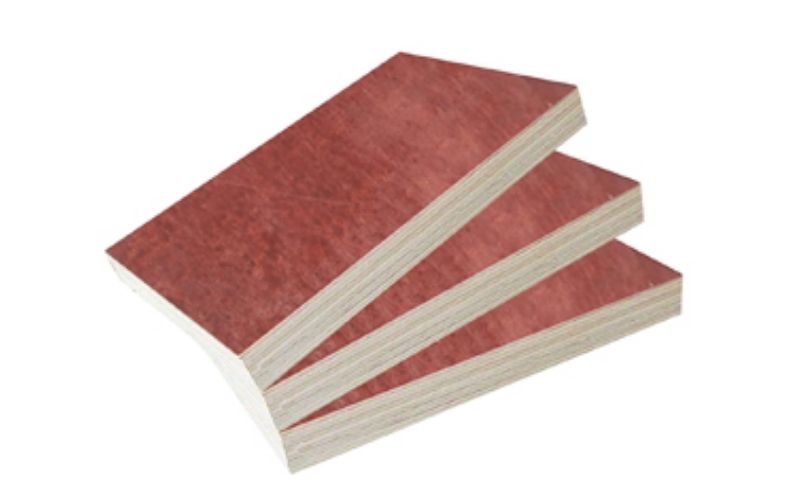
| Phenolic-faced plywood | Ordinary plywood | |
|---|---|---|
| Face | Phenolic-impregnated paper film, one or both sides | Bare wood veneer, sanded or unsanded |
| Core bond | PF (Class 3) or MUF (Class 2) | Usually UF, interior only |
| Standard | EN 636-2 or EN 636-3, bond tested to EN 314-2 | EN 636-1 typically |
| Moisture behaviour | Faces shed water; unsealed edges remain the weak point | Absorbs readily, swells and delaminates |
| Reuse in formwork | up to 10–20 pours depending on grade and site handling | Single use, sometimes two |
| Concrete face produced | Smooth, uniform, ready for fair-face where specified | Grain print-through, staining, patchy release |
| Typical use | Formwork, truck flooring, scaffold decking | Interior sheathing, furniture, packaging |
Grade, reuse and glue comparison
| Grade | Reuse (up to) | Glue / bond | Notes |
|---|---|---|---|
| Pro Form | up to 20 | PF · EN 636-3 / Class 3 | Phenolic film + phenolic bond. CE, CARB Phase 2, REACH. Thickness tolerance per EN 315. |
| Pro Form Lite | up to 15 | PF · EN 636-3 / Class 3 | 165 g/m² phenolic face film, mixed-grade plantation core. Between Form Extra and Pro Form. Not Form Extra. |
| HDO range | Basic up to 10; Premium / Premium HD up to 20 | PF · EN 636-3 / Class 3 | High density overlay rather than film. US and Canada formwork. Never quote 30. See HDO plywood. |
| Form Extra | up to 15 | Superior Glue MUF · EN 636-2 / Class 2 | Phenolic face film over an MUF core. Not Class 3. |
| Form Basic | up to 10 | MUF · EN 636-2 / Class 2 | Same face film as Form Extra, standard MUF formulation |
Form Extra lasts longer than Form Basic because of Superior Glue MUF (higher melamine content), not a heavier face film — same film on both. Class 3 means Pro Form, Pro Form Lite, or HDO; no MUF panel substitutes for it. Lite shares Form Extra’s 15-cycle ceiling. It does not share the glue. P-Form is polypropylene, not Pro Form. Consply is commercial Bintangor, not film-faced formwork.
Reuse cycles and service life
Reuse figures are maxima under good site practice, not guarantees. Pro Form: up to 20. Pro Form Lite and Form Extra: up to 15 — Lite is PF / Class 3, Form Extra is MUF / EN 636-2. Form Basic and HDO Basic: up to 10. HDO Premium and Premium HD: up to 20. Site practice spends that life first.
What shortens life, in the order we see it come back: unsealed cut edges that let water open the plies; wrong release agent (diesel and waste oil attack the film and stain the concrete); steel bars at stripping that tear corners; vibrator contact that abrades the film; uncovered outdoor stacks that warp the top sheet. From our returns bay the early sheets are rarely bond failures — edge-swelling and film abrasion are site outcomes. Core voids are normal in a hardwood-core panel and are not a defect; they matter when they hit an edge, which is what edge sealing covers.
I still get mill RFQs that price “phenolic plywood” against a retail birch craft sheet and then ask why the pour face does not match. Write the pour programme and the bond class first. The sheet size second.
How Vinawood manufactures phenolic-faced plywood
Vinawood has made plywood in Vietnam since 1992. About 5,000 containers a year go to 55+ countries on a twelve-step line: peel, dry, glue, press, sand, film, seal, pack. Cores are plantation-grown. Two steps matter for phenolic specifically. Film goes on after calibration and sanding, because film on an uncalibrated face telegraphs every dip into the concrete. Bond is verified for MOR, MOE, bond strength, and formaldehyde against EN and JIS methods, plus 100% sheet inspection.
Certification follows the markets: ISO 9001, CE under EN 13986, UKCA, EPA TSCA Title VI and CARB Phase 2, FSC-COC and PEFC. Thickness tolerance follows EN 315. For how a Vietnam mill differs from a trading yard on paperwork, see plywood manufacturers in Vietnam.
Mill vs yard: who pressed the sheet?
A mill owns the press and the film line. A yard stocks someone else’s container. Both can quote “phenolic plywood.” Only one can change bond class, overlay gsm, and the legal name on the mill test report.
| Signal | Mill programme | Yard / trader stock |
|---|---|---|
| Invoice legal name | Matches the plant on the mill test report and packing list | Often a trading company; plant name sits elsewhere or is missing |
| What they can change | Bond class, overlay gsm, core species, edge seal, size | Price, Incoterm, and which grade is on the rack this week |
| Docs with the lot | DoP / mill test report, emission evidence, CoC if required | May pass through a mill pack, or may not |
| Lead path | Container programme from Vietnam | Local ready stock when the programme cannot wait on the ocean |
Vinawood supplies factory-direct from Vietnam. For local distributors who need ready stock, Vinawood also maintains distribution warehouses in Toronto, Vancouver, Calgary, Montreal, Miami, Houston, and Baltimore. Same brand. Different lead path. Put the bond class on the RFQ either way.
RFQ checklist for phenolic / film-faced formwork
A price without a spec is a price on an unnamed panel. Put bond class (EN 636-2 vs EN 636-3, and whether the glue is MUF or PF — not only “phenolic” from the film colour), overlay and gsm (film-faced 120 / 165 / 220 g/m², or HDO overlay grade), species (plantation-grown Acacia, Eucalyptus or Hevea), size and thickness (2440×1220 or 2500×1250, plus mm), emission class (CARB P2 / TSCA Title VI, or EN 13986 on the CE DoP), chain of custody when the project requires FSC-COC, and docs with the lot so the DoP / mill test report holder name matches the invoice legal name.
United States and Canada. The HDO plywood range, built to North American formply practice. Overlay differences sit on HDO vs MDO plywood. Canada film-faced sourcing: film faced plywood suppliers in Canada.
Europe, UK and the Middle East. The film faced plywood range, in 2440×1220 mm and 2500×1250 mm, 12–21 mm. Pro Form for Class 3 and fair-face work that needs up to 20. Pro Form Lite when the spec is PF / Class 3 but the programme sits under 15 pours. Form Extra or Form Basic for shorter EN 636-2 programmes. UK shuttering language lives on the shuttering plywood guide.
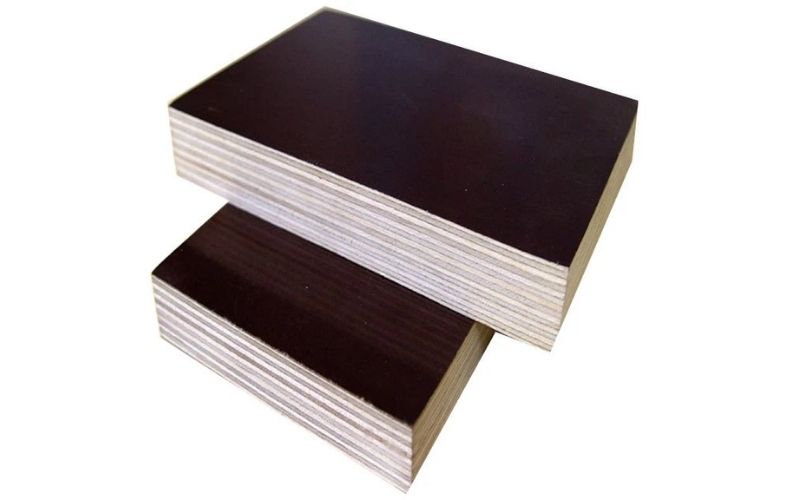
Vinawood has made plywood in Vietnam since 1992. About 5,000 containers a year go to 55+ countries. Twelve-step process. Sheet-by-sheet inspection. ISO 9001. Send the pour programme from the RFQ form or contact page — no published list prices, no invented lead times. The lot closes on the DoP.
Category
guides
Related Markets
Related Countries
Related Products
▶Sources & References (4)
- EN 636 Plywood — specifications — CEN (2015)
- EN 314-2 Plywood — Bonding quality — CEN (1993)
- EN 13986 Wood-based panels for use in construction — CEN (2004)
- Vietnam film faced plywood: origin, phenolic face, formwork — Vietnam Plywood Atlas (2026-09-09)