ISO Plywood Standards: A Specifier's Reference (1096, 12465, 2426, 12466)
A working reference for project engineers, QA staff, and procurement teams reconciling ISO plywood standards (1096, 12465, 2426, 12466) with EN, ANSI, and APA equivalents — with the verification step that matters when the panel imprint and the test report don't match.
ISO 12466-2 covers the bonding-quality test. ISO 2426 covers veneer appearance grades A through E. ISO 1096 covers panel classification (decorative, ordinary, marine). ISO 12465 covers the umbrella properties spec. None of these cross-walk one-to-one with EN 636 or ANSI/HPVA HP-1, but the test cycles do map: ISO 12466-2 cycle 5 corresponds roughly to EN 636-3, cycle 4 to EN 636-2, cycle 1 to EN 636-1.
Our QC team has handled tenders in the Gulf where the line item called ISO 12466-2 Class 3 and the bid panels carried EN 636-3. The two were equivalent for that project, but only after we pulled the bond test report and confirmed the cycle. Without the report behind the imprint, the printed declaration on a corner of the panel is just shorthand.
This guide gives the cross-walk between ISO and the regional standards specifiers already use, plus the verification step that matters when the imprint and the test report don't match.
Quick reference table
| Standard | Title / scope | Closest EN equivalent | Closest US equivalent |
|---|---|---|---|
| ISO 1096:2014 | Plywood — Classification | EN 313 (classification) | (no direct equivalent) |
| ISO 12465:2007 | Plywood — Specifications | EN 636 (service-class specs) | PS 1 / PS 2 (performance-based) |
| ISO 2426-1 / -2 | Plywood — Classification by surface appearance | EN 635-2 (hardwood face quality) | HPVA HP-1 (face grades) |
| ISO 12466-1 / -2 | Bonding quality — test method (Pt 1) and requirements (Pt 2) | EN 314-1 / EN 314-2 | (no direct equivalent; APA bond test for performance categories) |
| ISO 1954, ISO 1955 | Tolerances on dimensions / squareness | EN 315 | PS 1 dimensional tolerances |
ISO/TC 89 — the committee behind these standards
ISO Technical Committee 89 is the wood-based panels committee. It owns the international standards on plywood, particleboard, fibreboard, and OSB. The committee publishes through ISO and feeds into national mirror committees. BSI in the UK. DIN in Germany. AFNOR in France. SAC in China. Standards are reviewed every five years. The current versions of each plywood reference are cited in the table above.
ISO 1096 — Plywood classification
The current edition is ISO 1096:2014. It establishes a classification system for plywood panels by general appearance and principal characteristics, covering bond type, surface type, and intended end use. Treat it as the entry point for any cross-standard comparison. It tells you which family of plywood you are looking at before anyone goes deeper on specs.
For European buyers, the closest equivalent is EN 313, which classifies plywood by similar criteria. The two are not identical. But a panel correctly classified under ISO 1096 will usually map cleanly onto an EN 313 category. North American standards (PS 1, PS 2) are performance-based rather than classification-based, so there is no clean ISO 1096 equivalent on the US side.
ISO 12465 — Plywood specifications
ISO 12465:2007 sets specification requirements for plywood for general and structural use. It defines property thresholds across three service environments: dry conditions, humid conditions, and high-humidity / exterior conditions. The mapping to EN 636 service classes is close, though not one-to-one:
- ISO 12465 Class 1 → EN 636-1 (dry, interior)
- ISO 12465 Class 2 → EN 636-2 (humid, protected exterior)
- ISO 12465 Class 3 → EN 636-3 (full exterior, repeated wetting)
For formwork applications, Class 3 is the working specification. A panel claimed to be ISO 12465 Class 3 should also satisfy ISO 12466-2 Pre-treatment 5 or 6 in the bond test. See the bonding section below.
ISO 2426 — Surface appearance classification
ISO 2426 is published in two parts. Part 1 sets general rules for grading plywood face appearance. Part 2 gives the criteria for hardwood plywood specifically. Face and back grades A through E based on knot count, splits, repairs, and other surface features.
European specifiers will recognise the framework from EN 635-2 (hardwood) and EN 635-3 (softwood). The grade letters are the closest cross-walk: ISO 2426-2 Grade A is equivalent to EN 635-2 Grade B in most practical respects, with minor differences on permitted repair sizes. North American buyers running on HPVA HP-1 face grades will find the descriptive criteria similar even when the letter codes differ.
ISO 12466 — Bonding quality and bending strength
This is the standard that matters most for formwork buyers. The bond class drives reuse cycle expectations. ISO 12466 is published in two parts.
Part 1 (test method) defines the laboratory procedure: sample dimensions, conditioning, the pre-treatment cycle, and the shear-load test on the bond line. There are six pre-treatment options:
- Pre-treatment 1: 24 hours immersion in water at 20 ± 3 °C (dry conditions reference)
- Pre-treatment 4: 24 h water at 20 °C, 24 h drying (humid conditions)
- Pre-treatment 5: 6 h boiling water, 2 h dry at 60 °C, 2 h boiling water (exterior conditions)
- Pre-treatment 6: 72 h boiling water (most severe exterior)
Part 2 (requirements) defines the bond strength thresholds the panel must meet after pre-treatment. A Class 3 panel must meet the threshold after Pre-treatment 5 (or 6 for the highest claim).
The cross-walk to EN 314 is direct. EN 314-2 Class 3 corresponds to ISO 12466-2 with Pre-treatment 5 or 6. A test report citing one will usually satisfy the other, though a strict tender may require both citations side by side.
Adjacent standards specifiers may encounter
- ISO 1098:2006 — Plywood for general use, terminology
- ISO 1954 — Plywood, tolerances on dimensions
- ISO 1955 — Plywood, tolerances on squareness and edge straightness
- ISO 16983 / 16984 — Wood-based panels, moisture content and density determination
These cover the smaller details: dimensional tolerances, terminology, physical-property test methods. They rarely appear as headline citations in a tender. They show up in the fine print of QA documentation.
ISO vs EN vs ANSI/APA — when each governs
Three regional regimes. Three different ways of asking "is this panel fit for purpose?"
Europe runs primarily on EN 636 / EN 13986 for CE marking. EN 13986 is the harmonised standard that lets a wood-based panel carry the CE mark for use in construction works. EN 636 sits underneath as the specification standard. ISO is rarely the headline citation for a CE-marked panel inside the EU.
International tenders in the Middle East, North Africa, and parts of South and Southeast Asia often cite ISO directly. ISO is the neutral third-party reference that doesn't favour EU or US suppliers. A Saudi Aramco specification, a UAE municipality tender, or an ASEAN infrastructure project will commonly list ISO 12466-2 alongside or in place of an EN reference.
North America runs on PS 1 (structural plywood), PS 2 (performance-based), and APA performance categories. ISO is not commonly cited in US construction documents. A Vietnamese or European panel sold into the US market is usually re-tested against PS 1 or APA performance criteria. The ISO test report alone is not sufficient for HUD or DOT projects.
The article does not claim equivalence between any two standards. It shows closest comparable scope. A tender writer who needs a strict equivalence statement should consult the issuing standards body or a certification authority. BM TRADA, TÜV SÜD, FCBA, and similar all publish formal equivalence opinions on request.
What an "ISO certified" or "ISO conformant" claim does and does not mean
ISO standards are voluntary. A panel can be tested to ISO 12466-2 without holding any third-party certification mark. The phrase "ISO certified" on a producer's website is informal language, not a regulated claim. There is no ISO certification scheme for plywood in the way there is for ISO 9001 quality management.
What a buyer should ask for instead is the actual test report. A real report names the lab (with its accreditation number, ideally to ISO/IEC 17025), the test date, the sample size, the pre-treatment cycle used, and the result. Our QC team has watched importers approve container shipments on the basis of a generic "ISO conformant" line in a producer's brochure, only to find on receipt that the actual bond test was Pre-treatment 1, not Pre-treatment 5. A panel suitable for dry interior use sold as if it were exterior-grade.
The verification rule is simple. Ask for the test report. Read the pre-treatment number. The number tells you whether the panel matches the specification.
Vinawood's testing
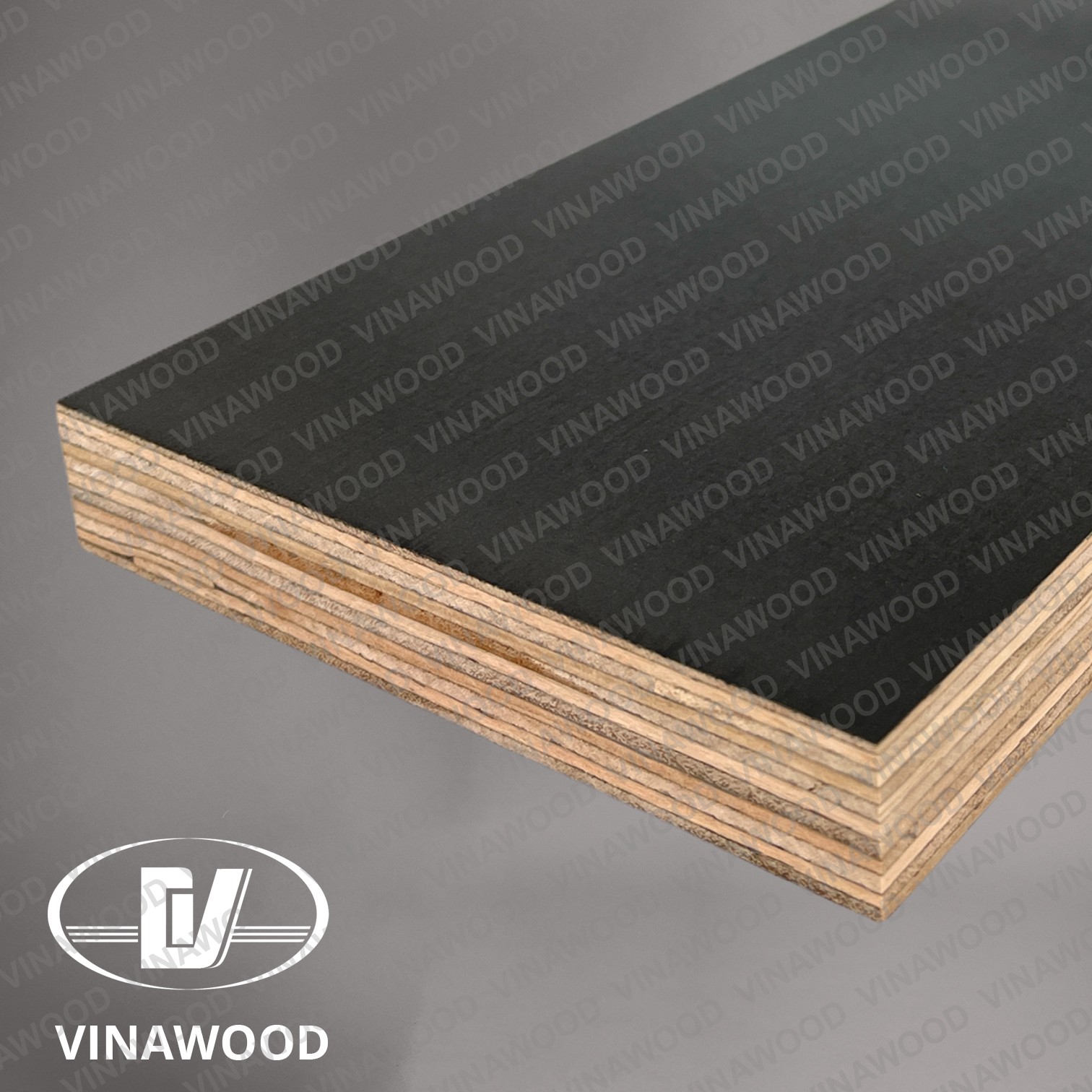
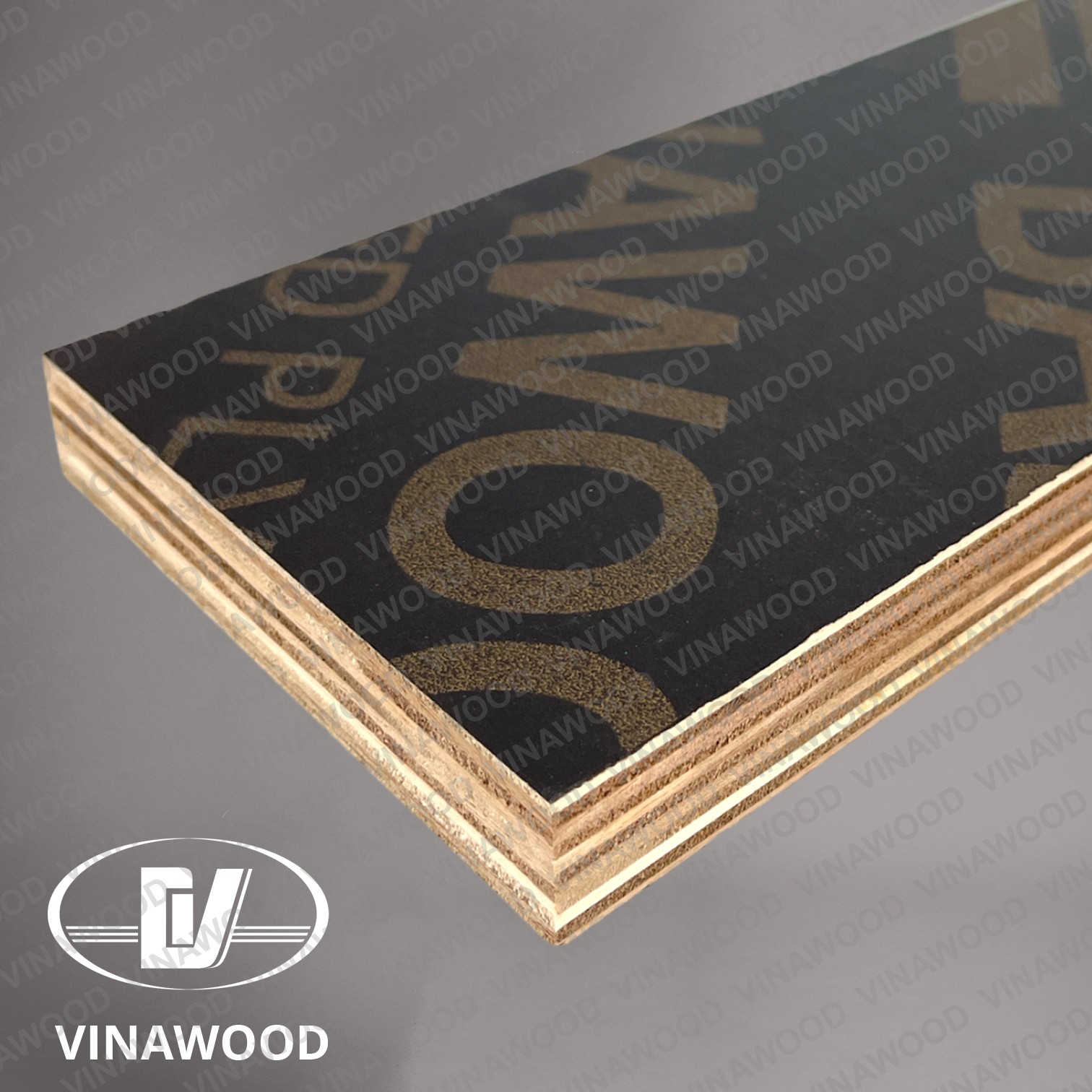
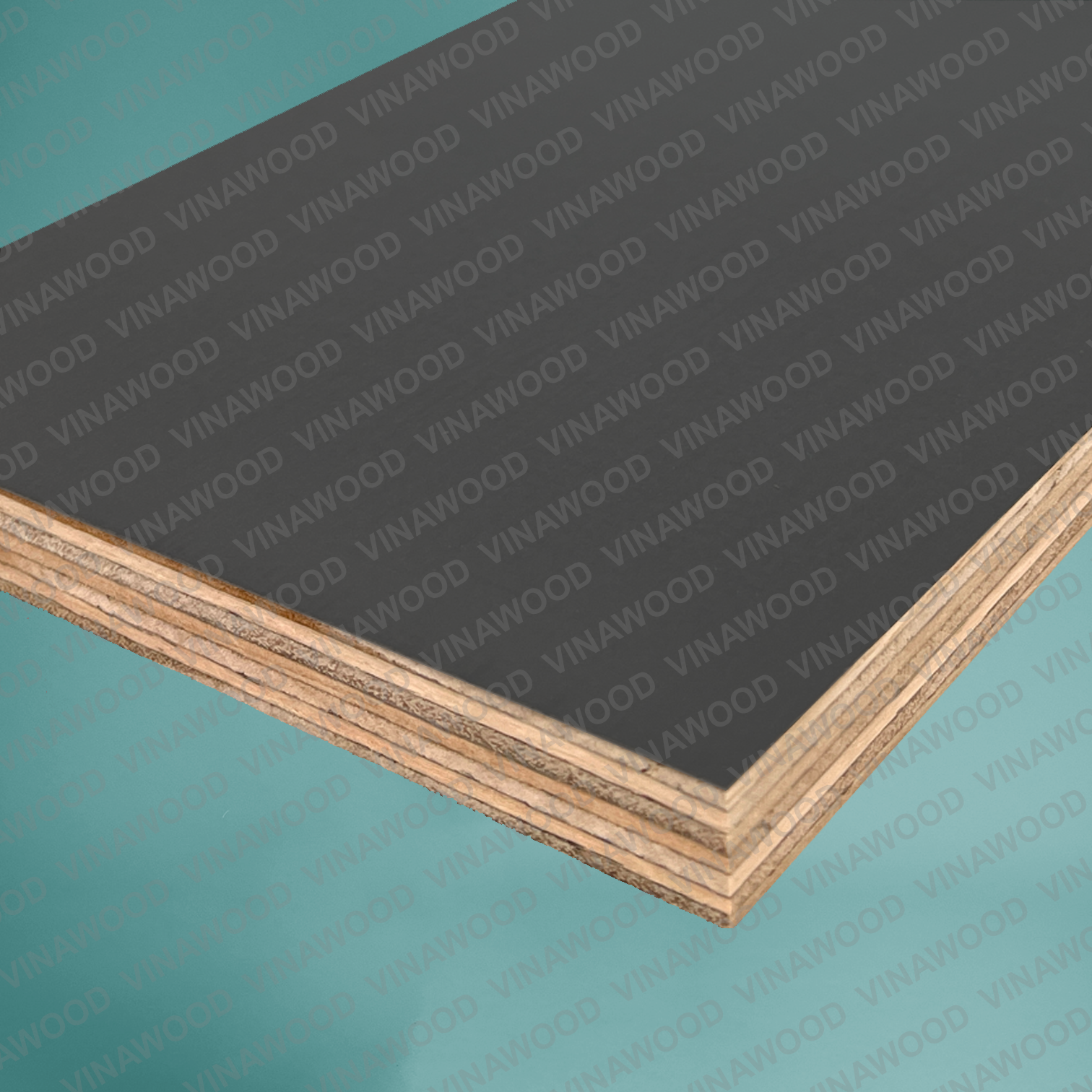
Vinawood's panels are tested to ISO 12466-2 (bonding) and EN 314 / EN 636 in our internal QC lab and via independent third-party labs for export to EU markets. Pre-treatment 5 is our standard test for the phenolic-bonded Pro Form line (EN 636-3, ISO 12465 Class 3). Pre-treatment 4 is the standard for the melamine-bonded Form Basic line (EN 636-2, ISO 12465 Class 2). The HDO range is tested against APA performance criteria as well as ISO 12466-2 for buyers who require both citations. See the HDO plywood collection for the US-specification range.
From a Vietnamese mill perspective, the cleanest documentation pack for a cross-border tender includes the ISO 12466-2 test report, the EN 314-2 / EN 636 declaration of performance (DoP), and the FSC chain-of-custody certificate. We issue this trio per shipment when the buyer requests it. Don't rely on the imprint alone. The documentation pack is what holds up in a dispute.
Quick reference card
| If a tender cites... | What you check | Vinawood product line |
|---|---|---|
| ISO 12466-2 Class 3 / Pre-treatment 5 | Phenolic bond test report | Pro Form, HDO range |
| ISO 12465 Class 3 (exterior) | Service-class specification + bond test | Pro Form (EN 636-3) |
| ISO 12465 Class 2 (humid) | Melamine bond test (Pre-treatment 4) | Form Basic, Form Extra (EN 636-2) |
| ISO 1096 (classification reference) | Bond type + intended end use declaration | All product lines |
| ISO 2426-2 Grade A face | Surface appearance test report | Pro Form, Form Extra |
Category
guides
Related Markets
Related Countries
Related Products
▶Sources & References (5)
- ISO 12466-2:2007 Plywood — Bonding quality — Part 2: Requirements — International Organization for Standardization (2007)
- ISO 1096:2014 Plywood — Classification — International Organization for Standardization (2014)
- ISO 12465:2007 Plywood — Specifications — International Organization for Standardization (2007)
- ISO 2426-2:2000 Plywood — Classification by surface appearance — Part 2: Hardwood — International Organization for Standardization (2000)
- EN 636:2012+A1:2015 Plywood — Specifications — European Committee for Standardization (CEN) (2015)