11 Amazing Shuttering Plywood Suppliers in Middle East
Shuttering plywood for the Middle East is a formwork face buy, not an 11 Amazing directory. Lock mill vs trader vs stock, EN 636 class, face type, and reuse as up to N before deposit. Soft-link the formwork sibling for deep vetting. Vinawood (est. 1992) ships ~5,000 containers/year to 55+ countries…

A buyer searching for 11 amazing shuttering plywood suppliers in the Middle East is usually trying to lock a formwork face for the next GCC pour, not another ranked mill directory. The title still carries that search habit. The diligence job is different: treat shuttering as the temporary mould face that holds wet concrete, separate a mill that presses the overlay from a trader who only forwards packs into Dubai, Jeddah, or Doha, and write thickness, bond class, and reuse as "up to N" before the deposit leaves the account.
Shuttering plywood is the formwork face Gulf crews pour against. The sheet takes the pressure of wet concrete, holds the surface the architect will see, and strips so the gang can move to the next lift. Overlay, core bond, size, and edge seal decide both finish and pour count — so they belong on the RFQ before price. A dark brown face on a Class 2 core is not the same product as a heavier film on Class 3 phenolic, even when both look ready on the truck at a Jebel Ali yard.
Vinawood is a Vietnam manufacturer established in 1992. We ship about 5,000 containers a year to 55+ countries and press plantation-grown cores for shuttering and film-faced formwork programmes across UAE, KSA, Qatar, and the wider Gulf. Factory city names stay off this page. What follows is how a Middle East importer, formwork contractor, or distributor should vet shuttering supply without an "11 Amazing" endorsement list.
Shuttering means formwork face, not a supplier roster
In Gulf trade language, "shuttering plywood" almost always means a film-faced or overlaid panel used as concrete formwork. It is not scaffolding lumber and it is not sanded commercial joinery. The buyer is buying a temporary mould face that must survive handling in heat, release cleanly, and hold flat under pour pressure.
That is why ranked mill lists fail this search. A directory can name factories. It cannot tell you whether the bond class on the mill report matches the thickness on the packing list, or whether reuse was written as a sober "up to N" instead of a marketing plus. Spec the pour first. Then choose who owns the press.
Deep formwork vetting for Gulf programmes already lives on the clean sibling formwork plywood suppliers in the Middle East. Use that page when you need a full pour diligence walk-through. Keep this URL on the shuttering RFQ checklist — mill versus trader, face and class, documents before deposit. Commercial sanded packs (Consply / Bintangor face) belong on 10 best commercial plywood suppliers in Middle East, not on a shuttering PO.
Mill vs trader vs local stock on the GCC shuttering lane
Three roles answer almost every UAE, KSA, and Qatar enquiry that lands on a Vietnam mill. Mixing them is how a certificate and a packing list disagree at the port.
- Mill. Peels veneer, lays glue, presses the panel, applies the formwork face, and issues the mill test for that thickness. This is the party who can re-run the grade you ordered.
- Trader. Buys FOB or CIF and resells into the Gulf. Useful for mixed SKUs and short call-offs. Weak when you need a mill letterhead tied to one factory.
- Local stockist. Holds 1220×2440 mm sheets in a Dubai, Riyadh, or Doha warehouse for next-week pickup. Speed, not press control.
Write the RFQ as if the mill will answer it. Ask who owns the press. Ask whether the bond class on the certificate matches the thickness and overlay on the PO. A stockist in the Gulf can move packs. They cannot rewrite a glue class they did not press.
When a directory page ranks eleven factories by brand fame, treat it as marketing. Fame does not set film weight. Fame does not set EN 636 class. Fame does not tell you whether the shuttering face will survive the reuse envelope you wrote as "up to N" on a Dubai mid-rise wall pour.
What a GCC shuttering RFQ should lock
Start with the pour: vertical walls, slab cycles, infrastructure, coastal yard storage near Jebel Ali or Dammam, or a high-reuse programme. Then fill the panel fields before price.
- Thickness (18 mm or 21 mm are common Gulf shuttering starts; state the module your gang already runs)
- Format: 1220×2440 mm is the usual GCC default — do not assume the mill will pick for you
- Face type: phenolic film gsm and colour, or MatteFace / MDO bridge when the specifier already named a kraft face
- Core adhesive and EN 636 class: core MUF / EN 636-2 versus PF / EN 636-3
- Reuse target written as "up to N," not a plus after the number
- Edge seal method, quantity, destination port, and preferred Incoterm
WBP language still shows up on Gulf shuttering quotes. Treat it as a water-resistant glue-line claim, not a claim that the panel stays dry forever. Wood still takes on moisture in humid coastal yards. Ask for the class number on the mill report instead of accepting "WBP" as a finished answer. Historical "Weather and Boil Proof" is a boil test on the bond. The core still needs sealed edges between pours.
I still open GCC RFQs that list "amazing shuttering plywood suppliers" in the subject and skip bond class in the body. Face colour is not a class. The EN 636 line is.
Read overlay and class, not the directory rank
EN 636 is the European plywood service class. EN 636-2 is humid / protected. EN 636-3 is exterior exposure. The matching glue-line test is EN 314. Class 2 is the usual home of core MUF adhesive (melamine-urea-formaldehyde in the core, not a decorative laminate). Class 3 is phenol-formaldehyde (PF).
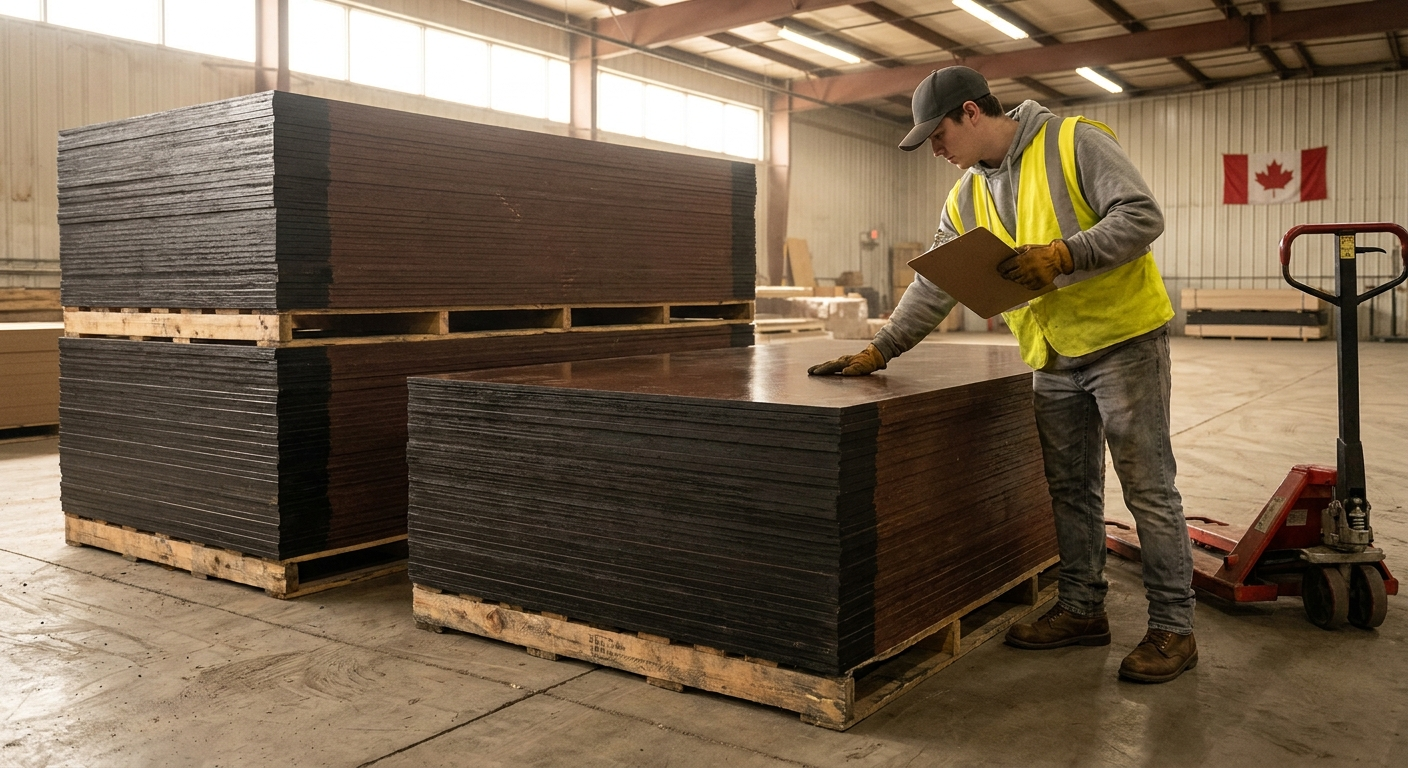
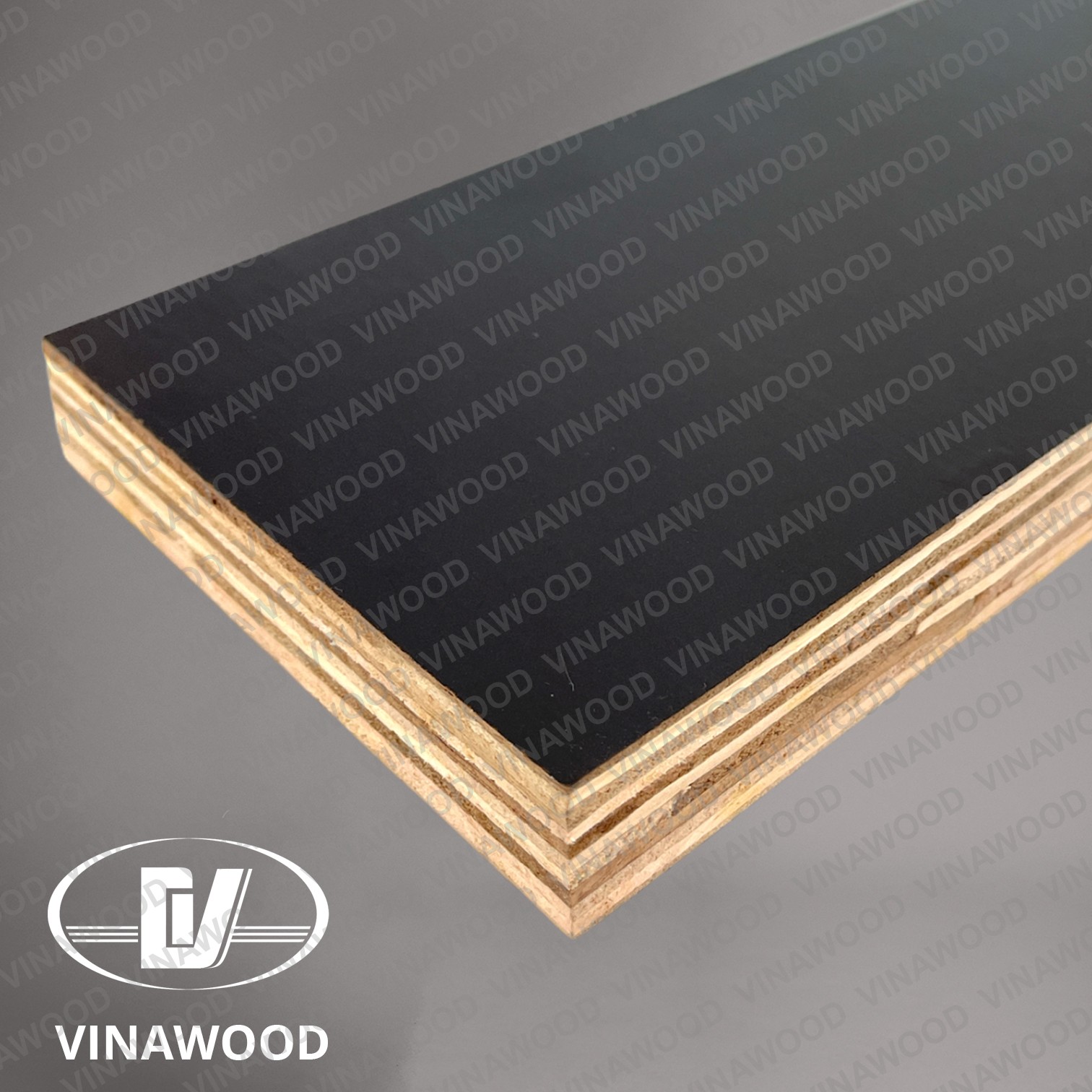
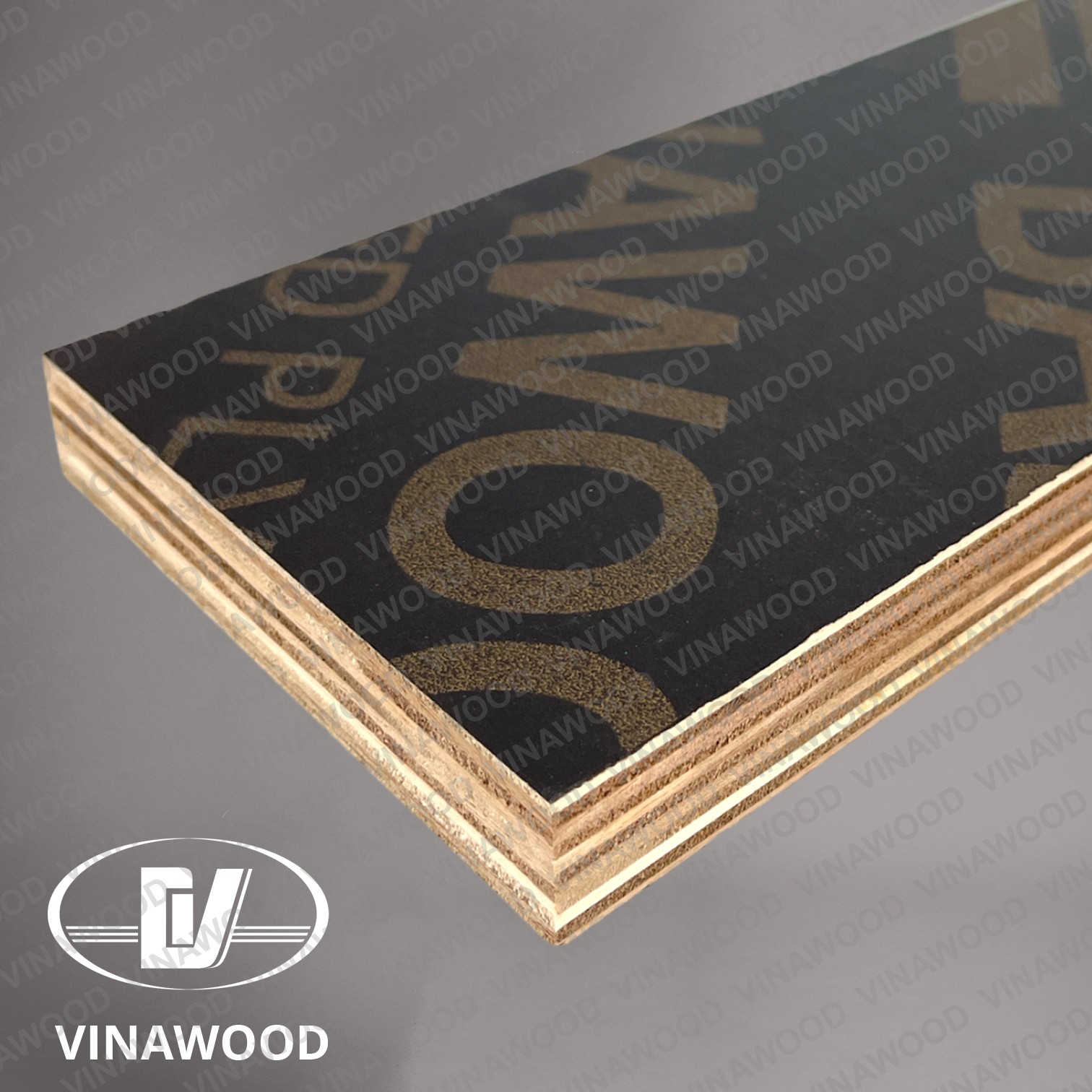
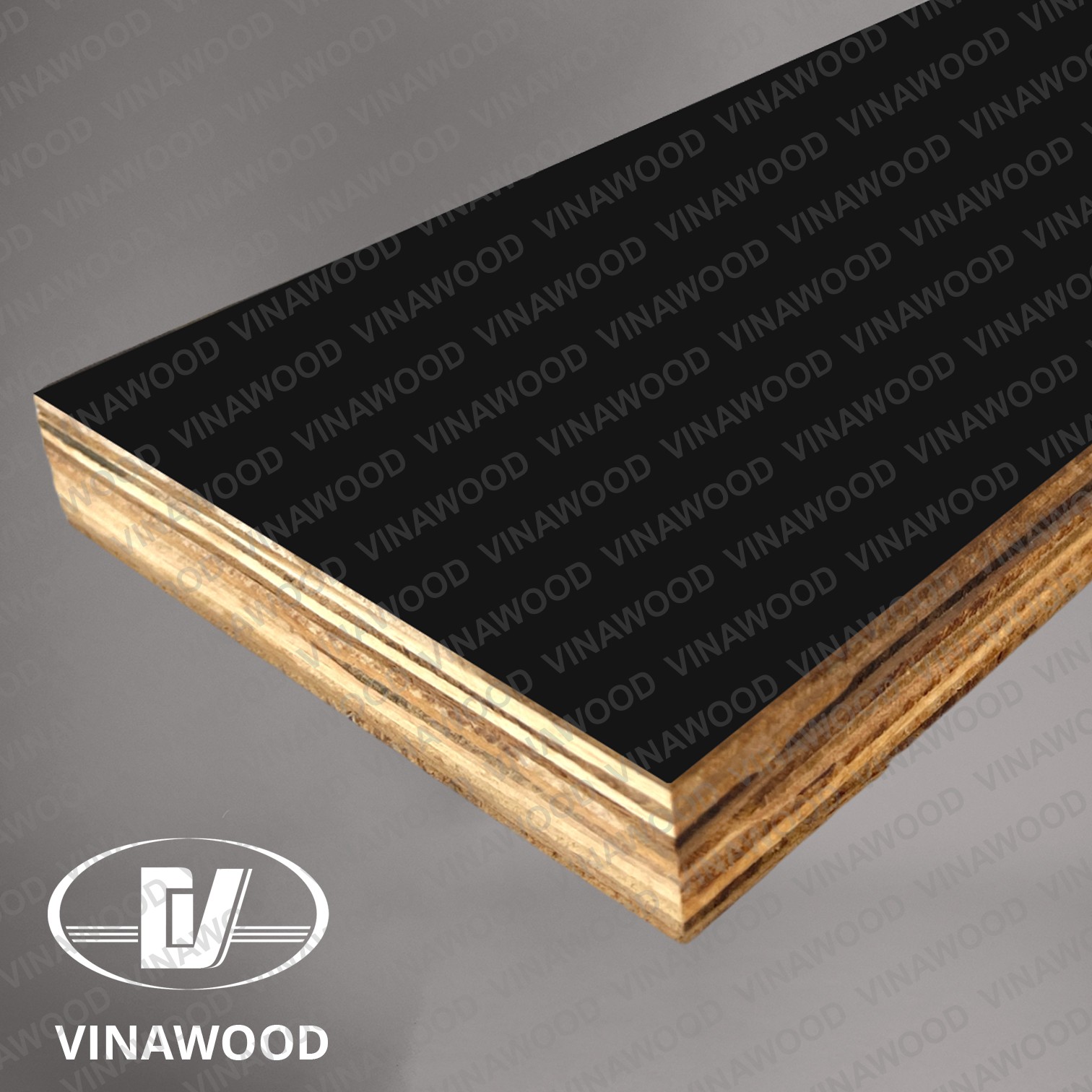
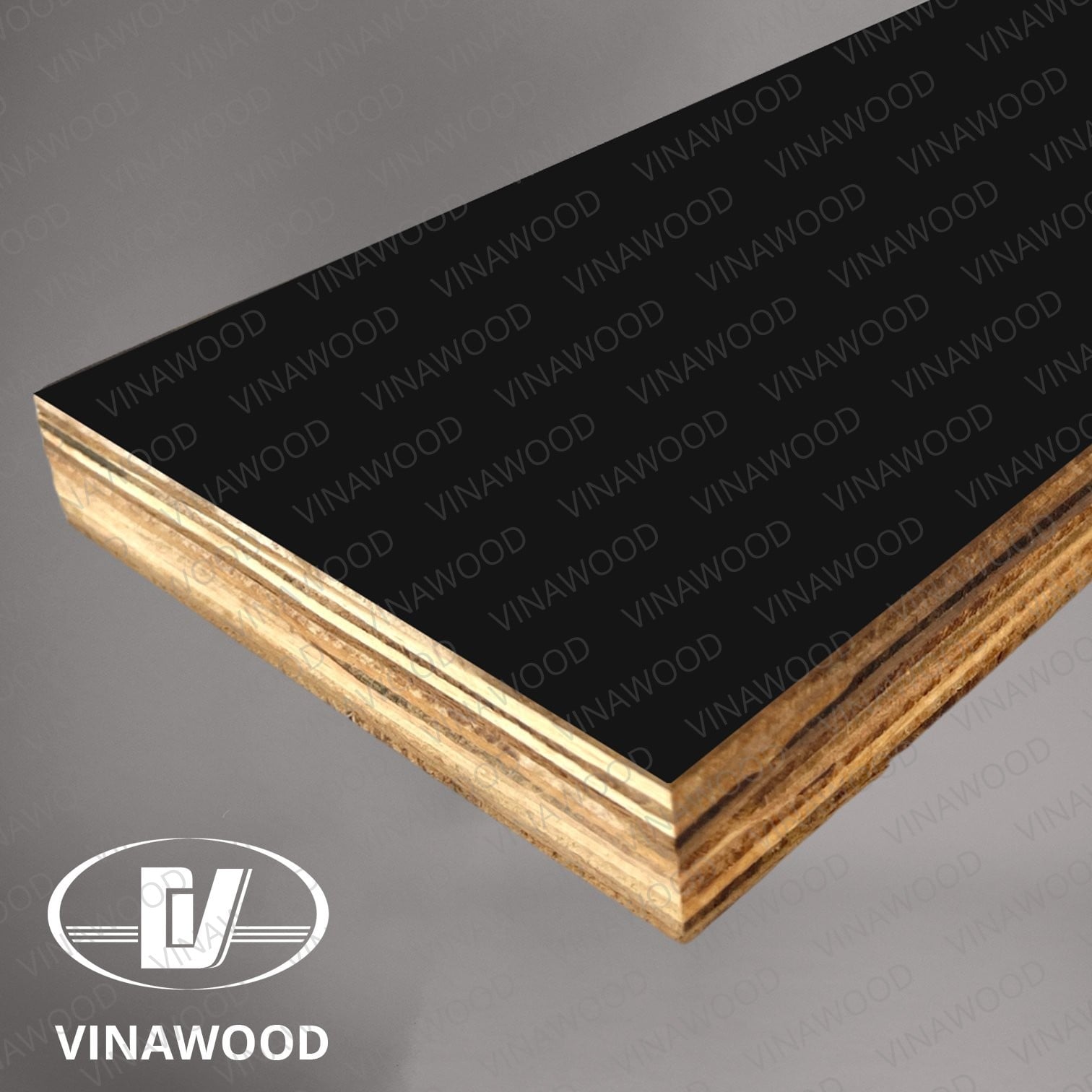
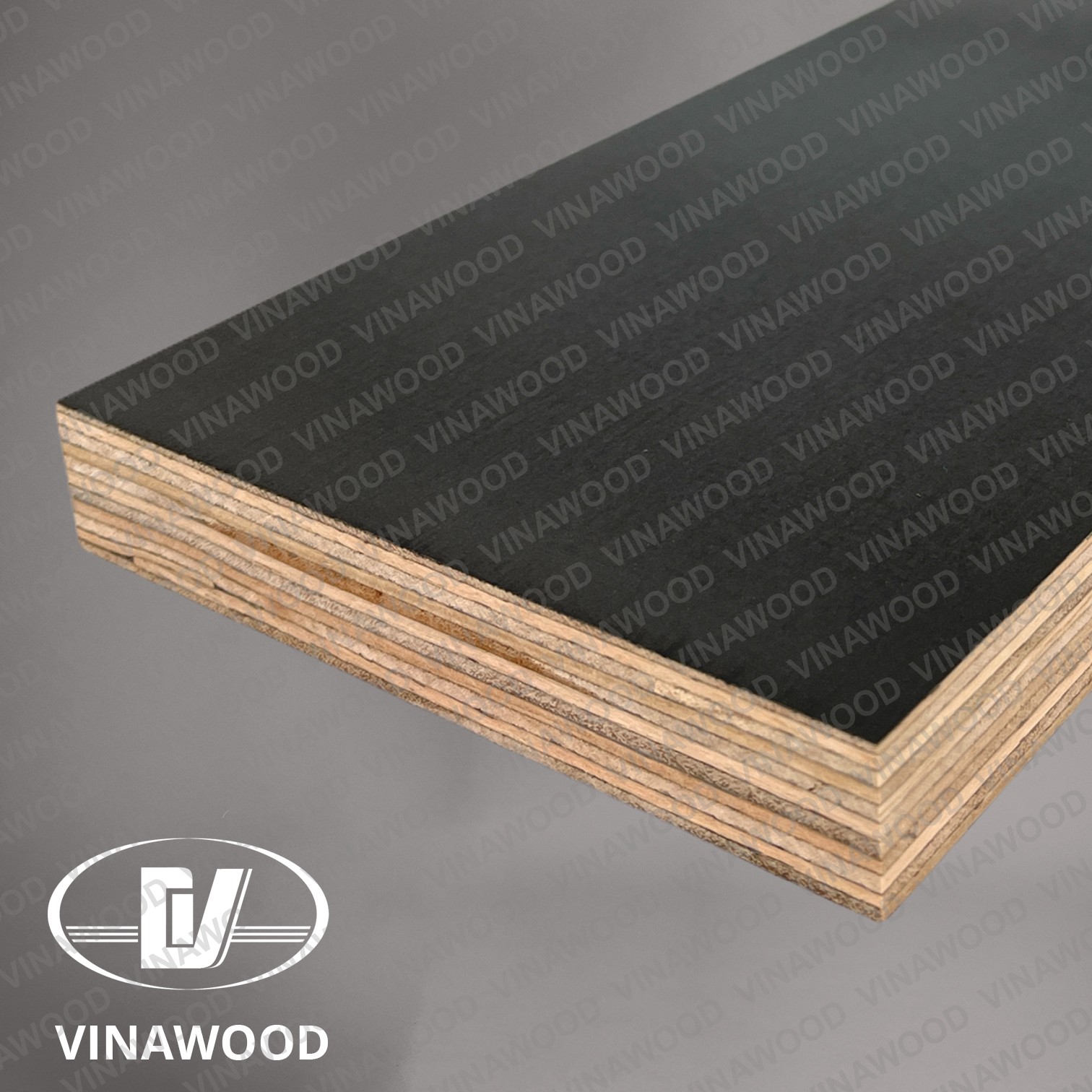
The brown film on a shuttering face is a phenolic overlay. It is not the core glue. A mill can put the same phenolic face on Form Basic and Form Extra. The reuse gap between those two SKUs comes from glue chemistry, not a heavier film alone. Call that out on the PO or you will pay for Class 3 and receive Class 2 with a dark face.
Say core MUF adhesive when you mean the glue in the veneers. Say phenolic face film when you mean the overlay. Decorative laminate is a third product and does not belong on a shuttering RFQ. Commercial sanded faces belong on a different buy. Keep this page on formwork pour programmes for the Middle East.
Buyers sometimes search for MatteFace Plywood (MTF) as MDO formwork plywood when they want a kraft shuttering face instead of a glossy brown film. The product name is MatteFace. MDO is the search term. Keep MatteFace on formwork jobs. Do not drag anti-dumping or countervailing language next to it.
HDO is the North American fair-face overlay: HDO Basic up to 10 reuses, HDO Premium up to 20. Those are maximums under careful handling — never stretch them past the listed ceiling on the quote. Gulf shuttering programmes more often start on film-faced grades; bring HDO only when the specifier already named it.
Vinawood shuttering ladder for Middle East programmes
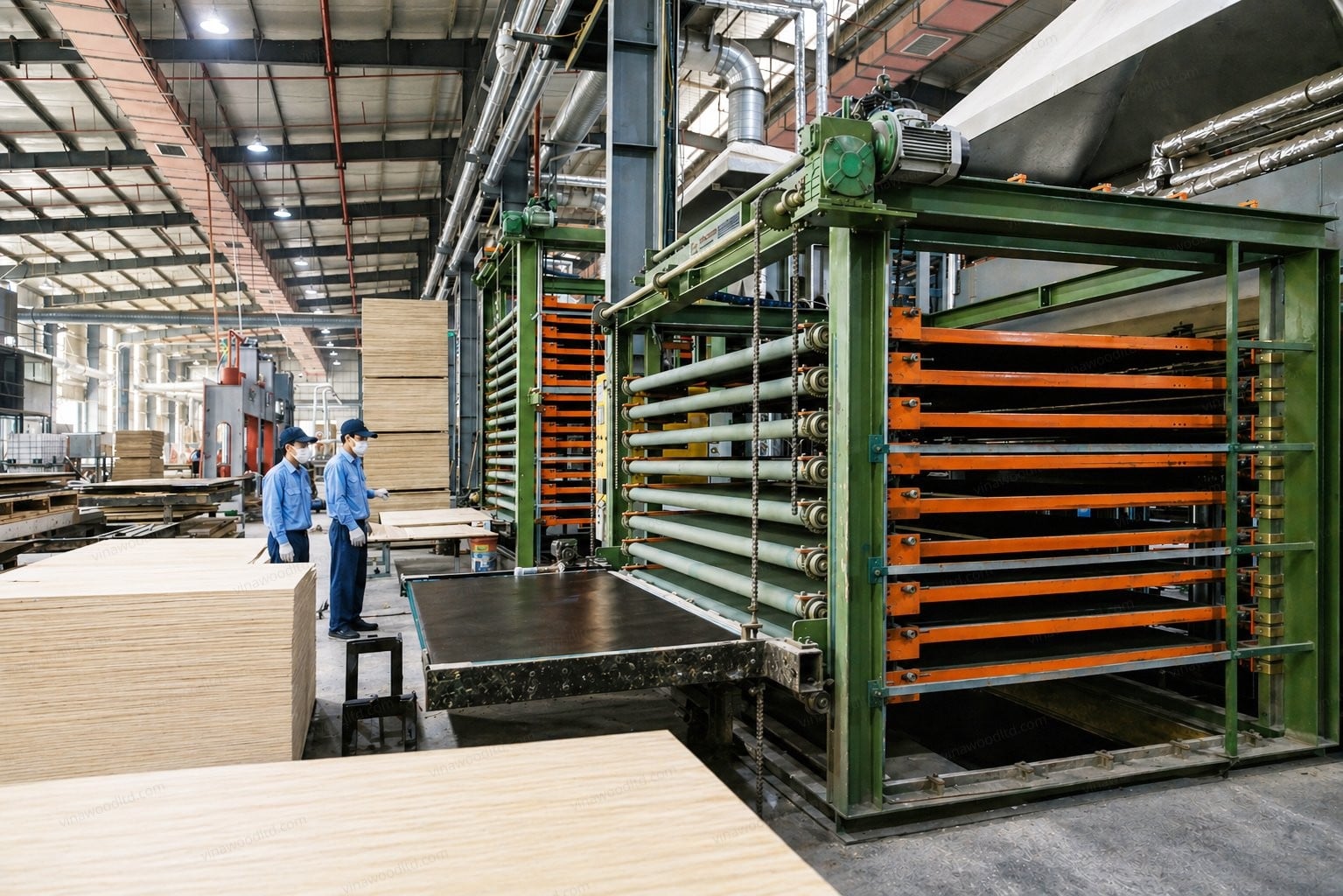
Vinawood presses plantation-grown acacia and eucalyptus cores through a 12-step process with 100% individual sheet inspection. Asia Pacific & Middle East programmes commonly run Eco Form and Form Basic film-faced shuttering grades, with higher reuse climbing the phenolic Class 3 rungs when outdoor exposure demands it.
| Product | Core glue | EN class | Reuse (max) |
|---|---|---|---|
| Eco Form Plus | Core MUF | EN 636-2 | Up to 8 |
| Form Basic | Core MUF | EN 636-2 | Up to 10 |
| Form Extra | Superior Glue MUF | EN 636-2, not Class 3 | Up to 15 |
| Pro Form Lite | PF | EN 636-3 / Class 3 | Up to 15 |
| Pro Form | PF | EN 636-3 / Class 3 | Up to 20 |
Only Pro Form, Pro Form Lite, and HDO are phenolic Class 3 on the Vinawood ladder. Form Extra is not Class 3. Same phenolic face as Form Basic. Longer reuse is the Superior Glue MUF, not a thicker overlay. Reuse is a maximum under proper handling. Do not add a plus after the number.
Vinawood panels are used with major formwork systems, including Doka, Peri, and Alsina. Those names sit as system partnerships, not as rival mills. For North America stocking that sits beside Gulf container programmes, Vinawood keeps distribution warehouses in Toronto, Vancouver, Calgary, Montreal, Miami, Houston, and Baltimore to supply ready stock to local distributors. That network is logistics for distributors. It is not an exclusive stockist claim, and it does not replace the mill certificate that travels with a GCC container.
Deep Gulf formwork diligence lives on formwork plywood suppliers in the Middle East. Commercial Gulf RFQs live on 10 best commercial plywood suppliers in Middle East. Canada formwork stocking patterns live on film-faced plywood suppliers in Canada. Worldwide diligence without a ranked mill roster lives on top plywood suppliers and manufacturers in the world. Vietnam mill due diligence lives on plywood manufacturers in Vietnam. Use those pages as checklists. Do not treat them as duplicate Middle East endorsement directories.
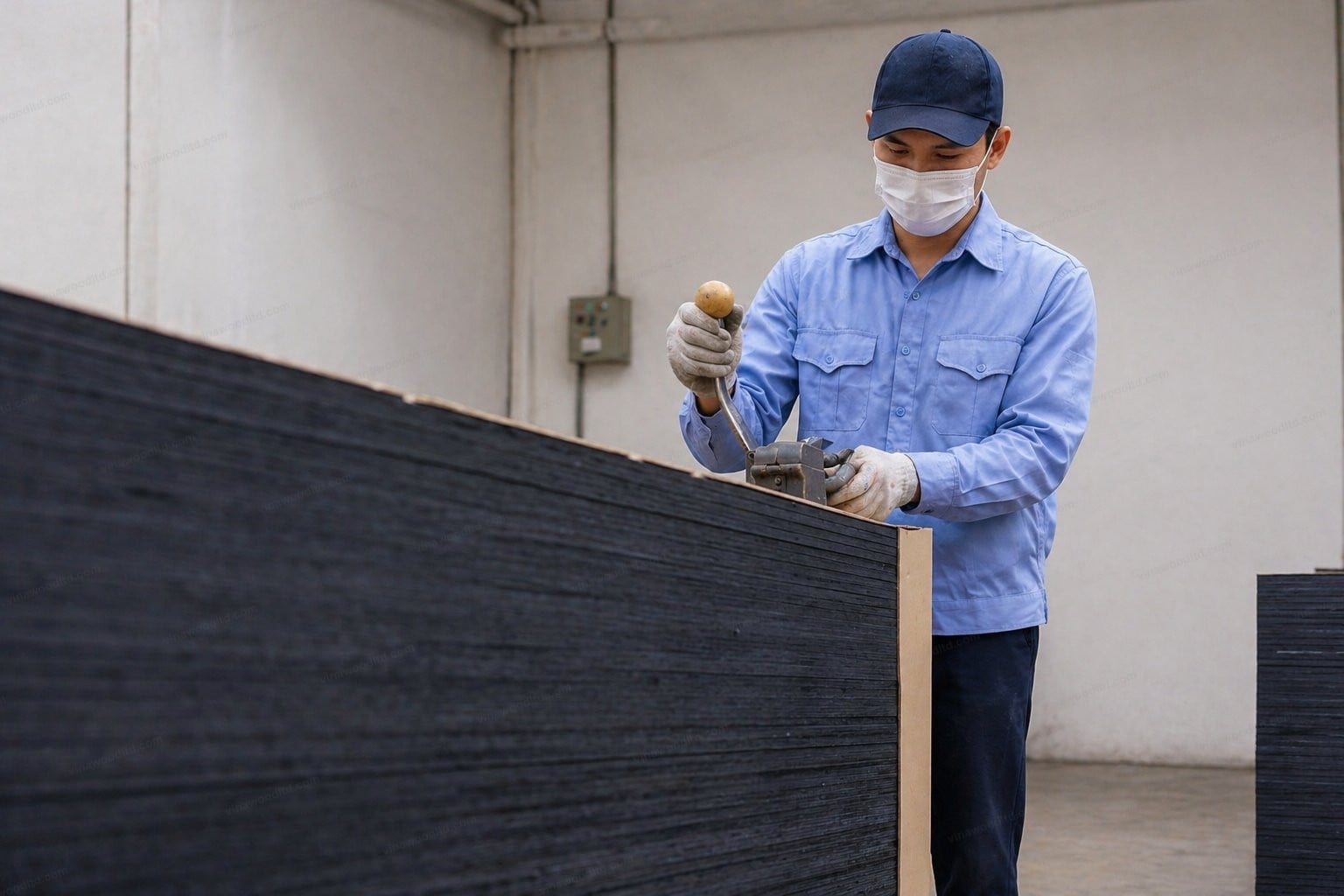
Documents to ask for before the deposit
Certificates without batch linkage are decoration. Ask the mill for a pack that matches the PO thickness and shuttering face:
- Mill test report for bond class, thickness, and face type
- Origin / packing list that names plantation-grown species
- Fumigation or ISPM 15 on the pallets
- FSC or PEFC chain-of-custody when the project file asks for it
- DoP / CE papers when the buyer needs EN 13986 on file
No duty rate belongs on this page. Rates move. Confirm HS and origin with the customs broker in UAE, KSA, or Qatar. A trader can photocopy a certificate. A mill can re-run the thickness you actually ordered. Check the certificate thickness against the sheet stamp before the crane lifts the first bundle at the Gulf yard.
If the mill cannot show how a certificate maps to a pack mark, pause the deposit. Generic PDFs that never saw your thickness are a common trader tell on Middle East lanes. Ask for the mill letterhead and the batch window.
What to put on the RFQ
Middle East search traffic still clusters on "amazing shuttering plywood suppliers" headlines. Replace that habit with a short filter: who owns the press, what face and EN 636 class sit on the report, and whether reuse is written as "up to N." Everything else is secondary.
Send application, face type, bond class, thickness, format, quantity, destination port, and document pack in one note. Include preferred Incoterm. Attach a failed-panel photo if you are replacing a grade that delaminated or cupped early in coastal heat. If the job is commercial sanded joinery rather than a pour programme, say so and use the commercial sibling instead of this shuttering checklist.
Vinawood will quote shuttering and film-faced formwork against that checklist from Vietnam for GCC programmes. Request a quotation at /contact?type=quotation or open an RFQ. Bring the class and overlay you need. We will not sell you a ranked Top-11 story in place of a mill that can press it.
▶Sources & References (2)
- EN 636 Plywood — Specifications — CEN (2015)
- EN 314-2 Plywood Bonding Quality Requirements — CEN (2001)