7 Trusted Plywood Suppliers in the Philippines You Should Know
How Philippine importers and contractors vet a Vietnam mill for film-faced formwork, marine plywood, and commercial panels — mill vs trader vs local stock, RFQ fields, Vinawood ladder, and documents before the deposit.
Philippine importers and contractors who search plywood suppliers in the Philippines are rarely hunting a Top-7 retail directory. They need a mill that can ship film faced formwork, marine plywood for wet-service builds, or commercial panels for fit-out — with bond class, overlay, and documents written before the deposit. Vinawood is a Vietnam mill, established in 1992. We ship about 5,000 containers a year to 55+ countries. We do not publish a ranked Philippine brand list. If you need a container RFQ this month, start with the product definition below, then the diligence checklist.
A Manila or Cebu take-off that says “buy plywood” without thickness, format, glue, and face type is not ready to price. Local yards and big-box aisles solve one-off residential sheets. Repeating formwork programmes and project imports need mill identity.
What Philippine jobs actually order
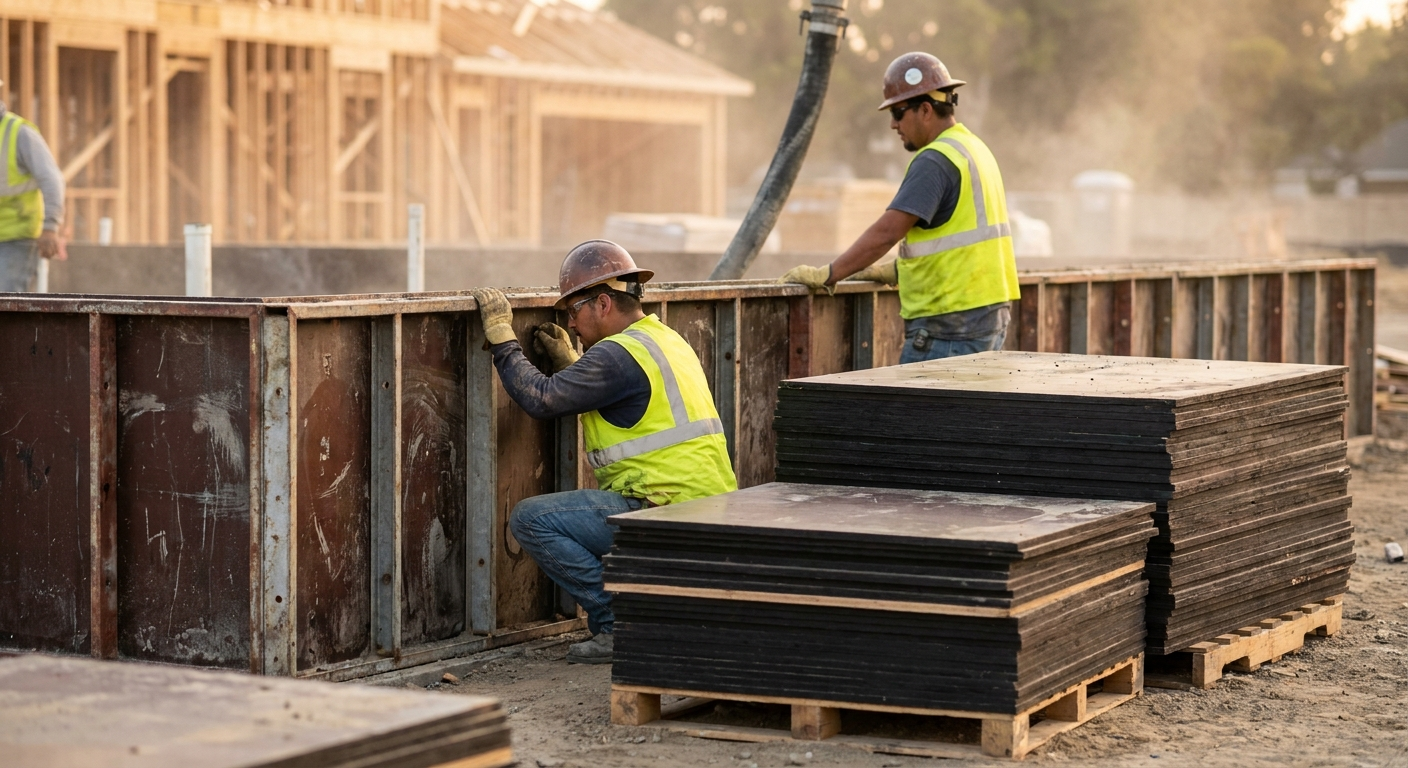
Film-faced formwork plywood is a phenolic face film pressed onto a plantation-grown hardwood core for concrete forms. It is the pour face that strips clean after a slab or wall pour. Marine plywood is a wet-service panel language buyers use for coastal work and high-moisture interiors; the RFQ still has to name bond class and core build, not a marketing label alone. Commercial plywood covers interior and furniture-grade programmes where face veneer and glue class matter more than reuse. Do not mix those three on one vague line item.
Typical formwork packs for Philippine contractors sit around 15 mm or 18 mm at 1220 × 2440 (4 × 8), with 2500 × 1250 showing up when the form system asks for metric. Architectural faces want a heavier film gsm and a Class 3 phenolic bond. Everyday commercial pours often run a Class 2 MUF core with the same phenolic face-film family. Call every panel water-resistant / WBP, not waterproof. Edges still need seal. Permanent submersion is not the job.
Overlay choice and bond language sit together on the concrete forming plywood hub and the phenolic plywood guide. Cost-per-pour math lives on advantages of film faced plywood. Origin diligence without a competitor directory sits on plywood manufacturers in Vietnam. The Canada mill-sourcing sister page is film faced plywood suppliers in Canada. A worldwide diligence checklist sits on the world Top-15 suppliers page.
Mill vs trader vs local stock
Philippine buyers reach imported plywood three ways. The paperwork is different in each lane.
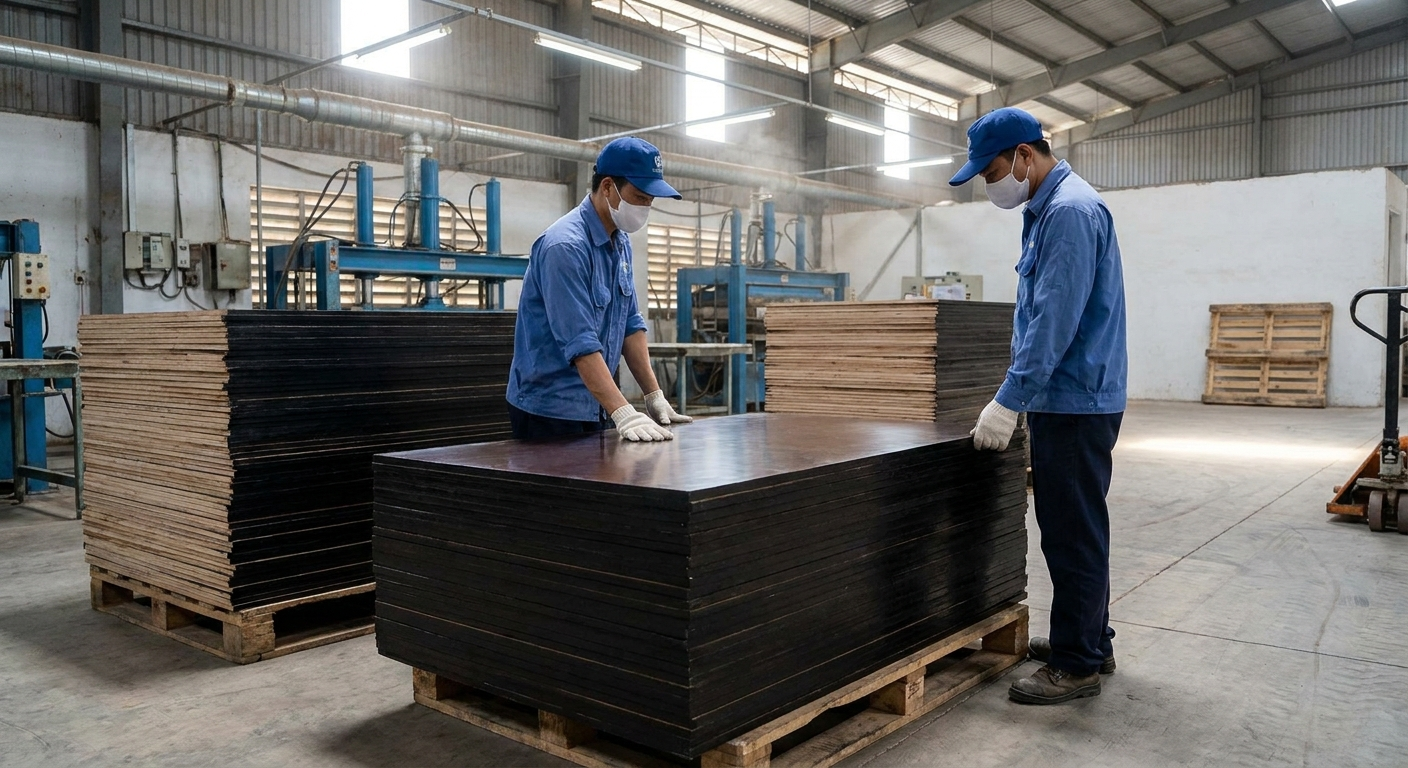
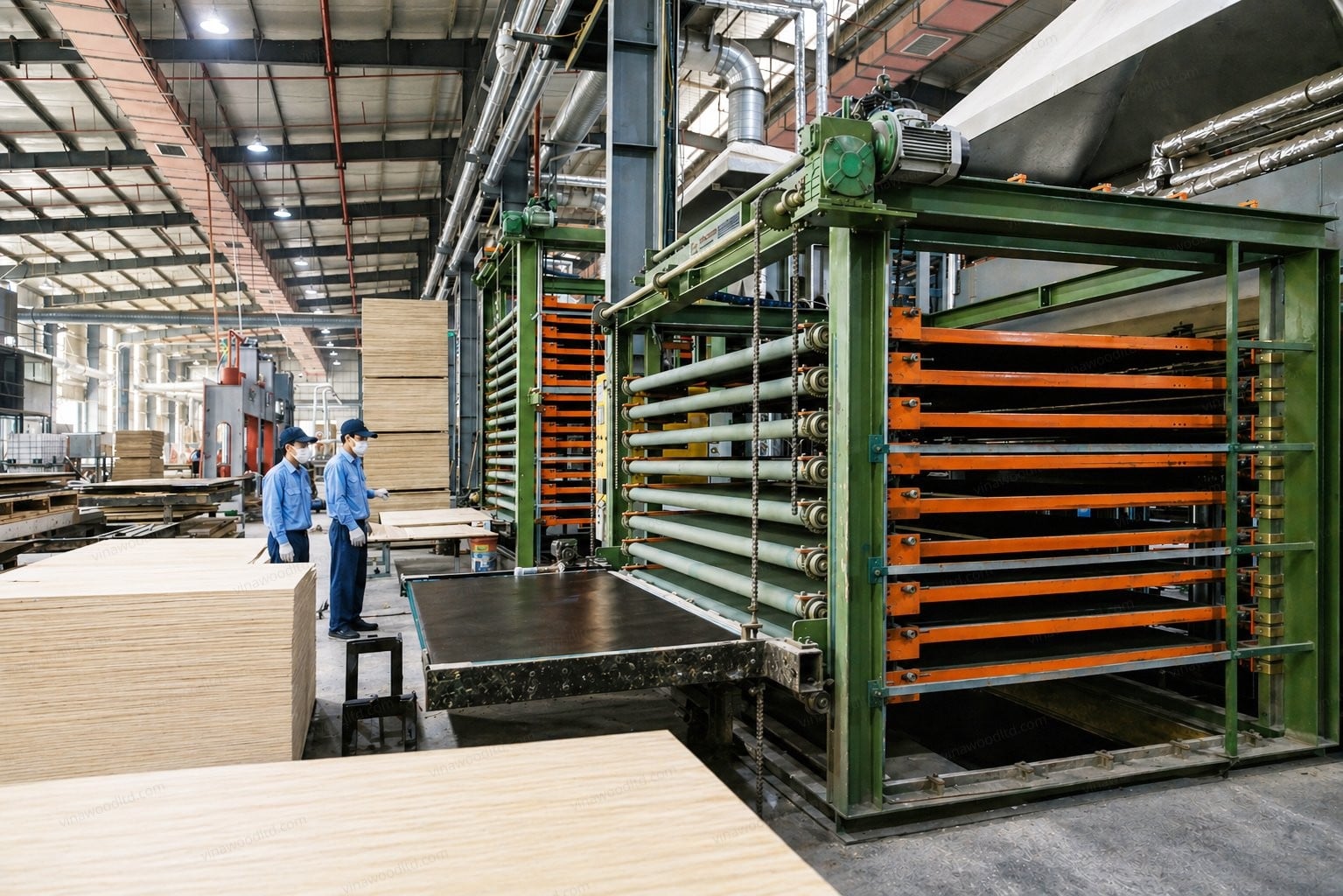
A mill peels veneer, lays glue, presses the panel, and films the face. A trader buys finished packs and resells. A local stockist or retail depot holds sheets for metro delivery. All three can appear under “plywood suppliers in the Philippines.” Only the mill controls bond class and overlay on the day the press runs.
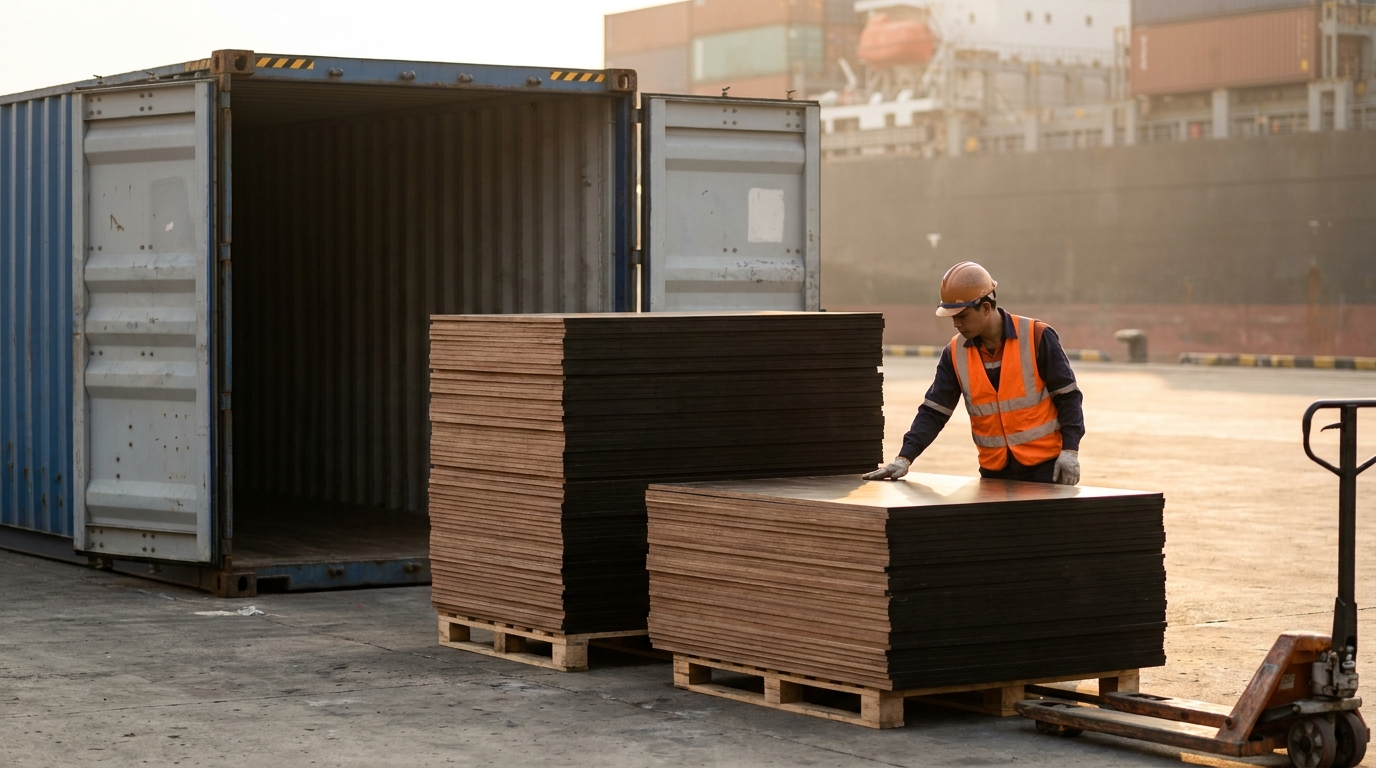
Factory-direct container. You RFQ the mill. You name thickness, size, film weight, glue class, edge seal, and reuse as up to N. A 40-foot load is the usual unit. Lead time includes production and ocean transit into Philippine ports. This lane fits repeating programmes and distributors who can take a full container.
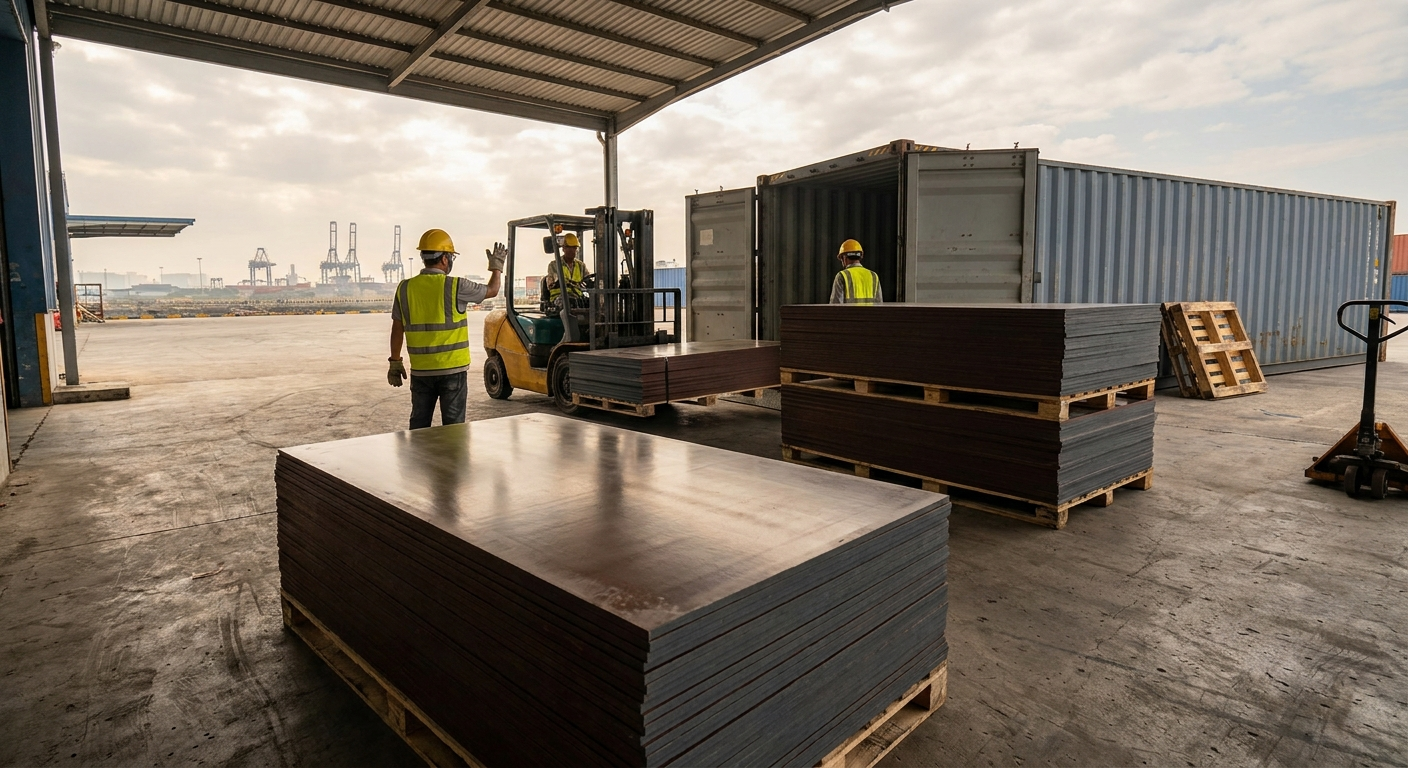
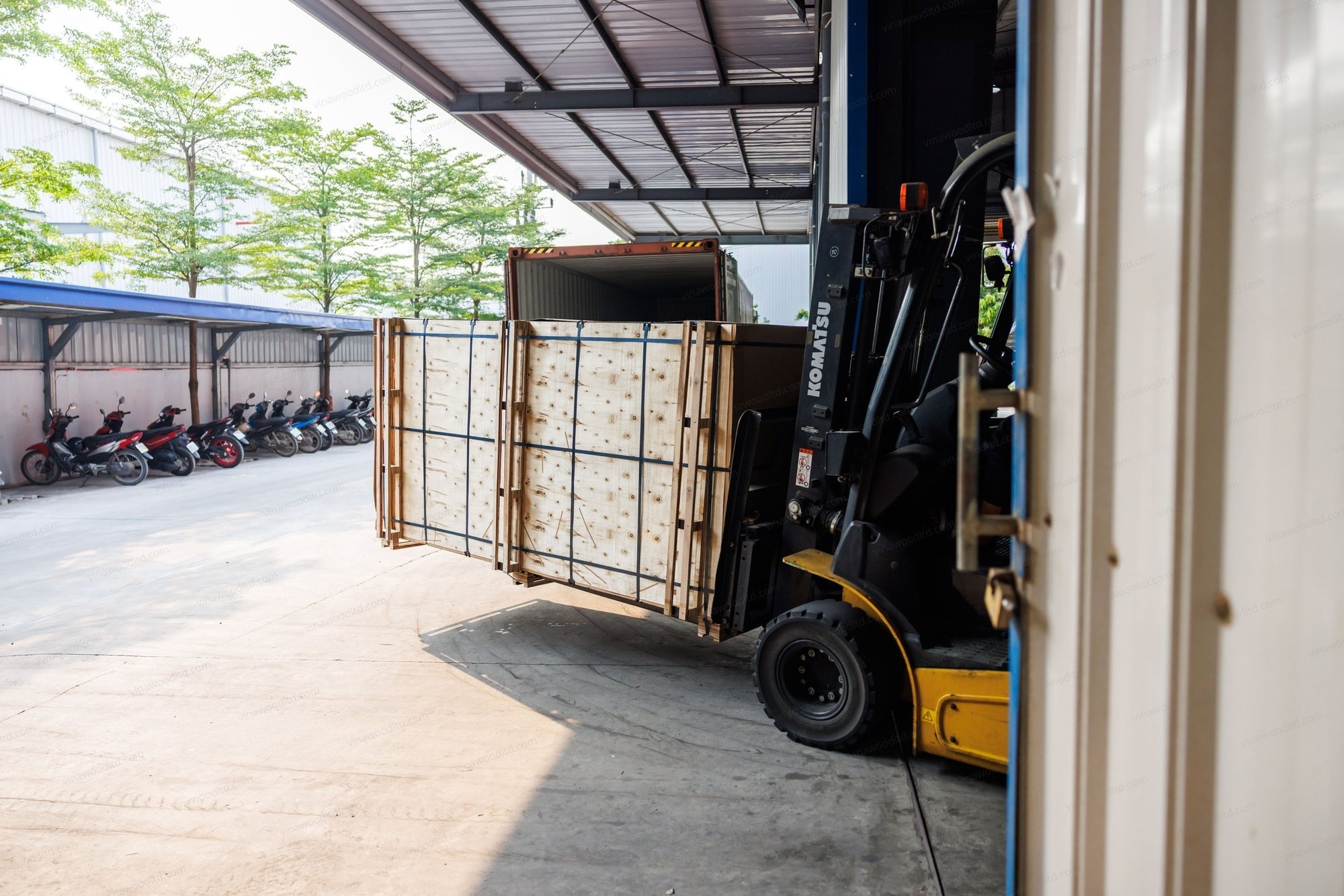
Ready stock through a local distributor. Useful when a project needs a few packs this week. Ask for a Vinawood pack label and a current mill test report. Vinawood keeps distribution warehouses in Toronto, Vancouver, Calgary, Montreal, Miami, Houston, and Baltimore to supply ready stock to local distributors in those networks. That is not an exclusive stockist claim for the Philippines, and it is not a shop-here list for one brand of yard.
Retail counter sheet. Fine for a one-off cabinet or footing. Wrong for a high-rise reuse programme. You rarely get mill test reports, film gsm, or a named EN 636 class at the counter.
Traders who cannot name the mill, the glue class, and the film type are not a substitute for a factory-direct RFQ. We have watched Philippine RFQs land with “best plywood brands” in the subject line and a film-faced reuse programme in the body. Those two requests do not match. Answer the spec, not the subject.
Vinawood panels also run in Doka and Peri frames. Alsina programmes use the same mill packs when the overlay matches the system. Those are partnerships, not a supplier ranking.
ISI / CML as local retail context only
Philippine retail and some domestic programmes still ask buyers to check ISI marks and CML numbers on locally marketed sheets. Treat that as retail authenticity context for yard stock. It does not replace an import mill RFQ. Container programmes need mill test reports, glue class on the data sheet, packing lists, and an origin statement that the panels were made in Vietnam. A logo on a website is not proof. Do not invent certificate numbers.
How to vet a Vietnam mill for film-faced, marine, and commercial
Write the sheet, not a brand story. A usable Philippine RFQ names these fields before anyone prices a load.
Documents. Mill test report (thickness, density, glue class, film type), glue class on the data sheet, chain of custody when the job requires it, packing list, and Vietnam origin statement. FSC or PEFC CoC when the owner asks. For marine plywood and wet-service language, ask which EN 314 / EN 636 class the mill is actually shipping — “marine” alone is not a bond class.
Bond class. EN 636-2 / Class 2 for MUF (Eco Form Plus, Form Basic, Form Extra). EN 636-3 / Class 3 for PF (Pro Form Lite, Pro Form, HDO). If the engineer named Class 3, do not substitute Form Extra. Form Extra is Superior Glue MUF, EN 636-2, not Class 3. It uses the same phenolic face film as Form Basic. The extra reuse comes from glue chemistry, not a thicker overlay.
Overlay and film gsm. Phenolic face film gsm, HDO grade, or MatteFace (MTF). Pro Form Lite carries 165 gsm. Film colour is not bond class. A dark brown face on a Class 2 MUF core is still Class 2. HDO Basic is up to 10 reuses. HDO Premium is up to 20. Never stretch Premium to 30 on the quote.
Thickness and format. State 15 mm or 18 mm, and 1220 × 2440 versus 2500 × 1250. Do not assume a mill will pack your preferred size unless you asked.
Lead time and container. Factory-direct equals production plus ocean. Say which Philippine discharge port or CFS you want on the RFQ so quotes stay comparable. State pieces per bundle and whether you want logo film or a plain brown face. OEM marks help a yard sort packs. They do not change glue class.
Edge seal and reuse. Painted or sealed edges before the first pour. Cut edges and tie holes are the usual moisture paths. Write reuse as “up to N.” Eco Form Plus up to 8. Form Basic up to 10. Form Extra up to 15. Pro Form Lite up to 15. Pro Form up to 20. HDO Basic up to 10. HDO Premium up to 20. Site handling decides whether those numbers hold.
I still see take-offs that say “best film faced plywood Philippines” and skip glue class. We send those back. Film colour is not a spec.
Vinawood product ladder
Pick glue class to match the pour or wet-service job, then pick overlay. Vinawood runs a 12-step process with 100% individual sheet inspection on plantation-grown cores. Reuse figures below are maxima written as up to N. Cores are Acacia or Eucalyptus. Hevea shows up on some lots.
Core MUF / Class 2 side:
- Eco Form Plus — WBP MUF core glue, EN 636-2, phenolic face film, up to 8 reuses
- Form Basic — WBP MUF, EN 636-2, phenolic face film, up to 10 reuses
- Form Extra — Superior Glue MUF, EN 636-2, not Class 3, same phenolic face film as Form Basic, up to 15 reuses
Phenolic Class 3 side:
- Pro Form Lite — WBP phenolic (PF), EN 636-3 / Class 3, 165 gsm film, up to 15 reuses. Sits between Form Extra and Pro Form
- Pro Form — WBP phenolic, EN 636-3 / Class 3, up to 20 reuses
- HDO — Basic up to 10. Premium up to 20. Phenolic Class 3
North American overlay add-on when the drawing names it: MatteFace Plywood for a matte cast face. Soft bridge: buyers often search MatteFace as MDO formwork plywood. Only Pro Form, Pro Form Lite, and HDO are phenolic Class 3. Form Extra is not.
We do not put Consply on this formwork page as a pour face. Consply is commercial Bintangor. P-Form is a polypropylene overlay, not Pro Form. If a buyer writes “P-Form,” ask which product they mean before anyone prices a container.
Plantation-grown hardwood. No mill city on this page. Factory location fields on our public factory records are treated as empty for copy, so we do not invent a province.
Documents before the deposit
Ask for documents that travel with the load. Do not accept a logo on a website as proof.
- FSC chain of custody when the job or owner asks for certified fibre
- CE / EN 636 class on the data sheet when the spec uses European bond language
- Mill test report: thickness, density, glue class, film type
- Packing list and origin statement that the panels were made in Vietnam
We do not invent certificate numbers here. If a document is missing, the RFQ is not ready. For the broader mill checklist, stay on plywood manufacturers in Vietnam.
If a prior pack delaminated early on a Philippine site, send the failed-panel photo with the new RFQ. Say whether the pour was covered or open, and whether the bond class on the old invoice matched Class 3 or Class 2. That context saves a week of email.
Request a quote
Ready to RFQ plywood suppliers in the Philippines as a mill conversation? Send application first: film-faced wall or slab formwork, marine plywood wet-service language, or commercial fit-out. Then overlay and bond class. Add film gsm where the catalog lists it, thickness, format, pieces per bundle, and whether you need a factory-direct 40' container. Write reuse as up to N.
Vinawood has made plywood in Vietnam since 1992, ships about 5,000 containers a year to 55+ countries, runs a 12-step process with 100% inspection, and sources plantation-grown veneers. Start the mill RFQ at /contact?type=quotation or /rfq.