Concrete Forming Plywood: HDO, MDO & Film Types
Concrete forming plywood type ladder for North American and export formwork: phenolic, film-faced, HDO and MDO (MatteFace bridge). Spec overlay, bond class, size and emission class. Water-resistant WBP bond — not a sealed hull. Mill reuse as up to N. Vinawood, est. 1992, 55+ countries.
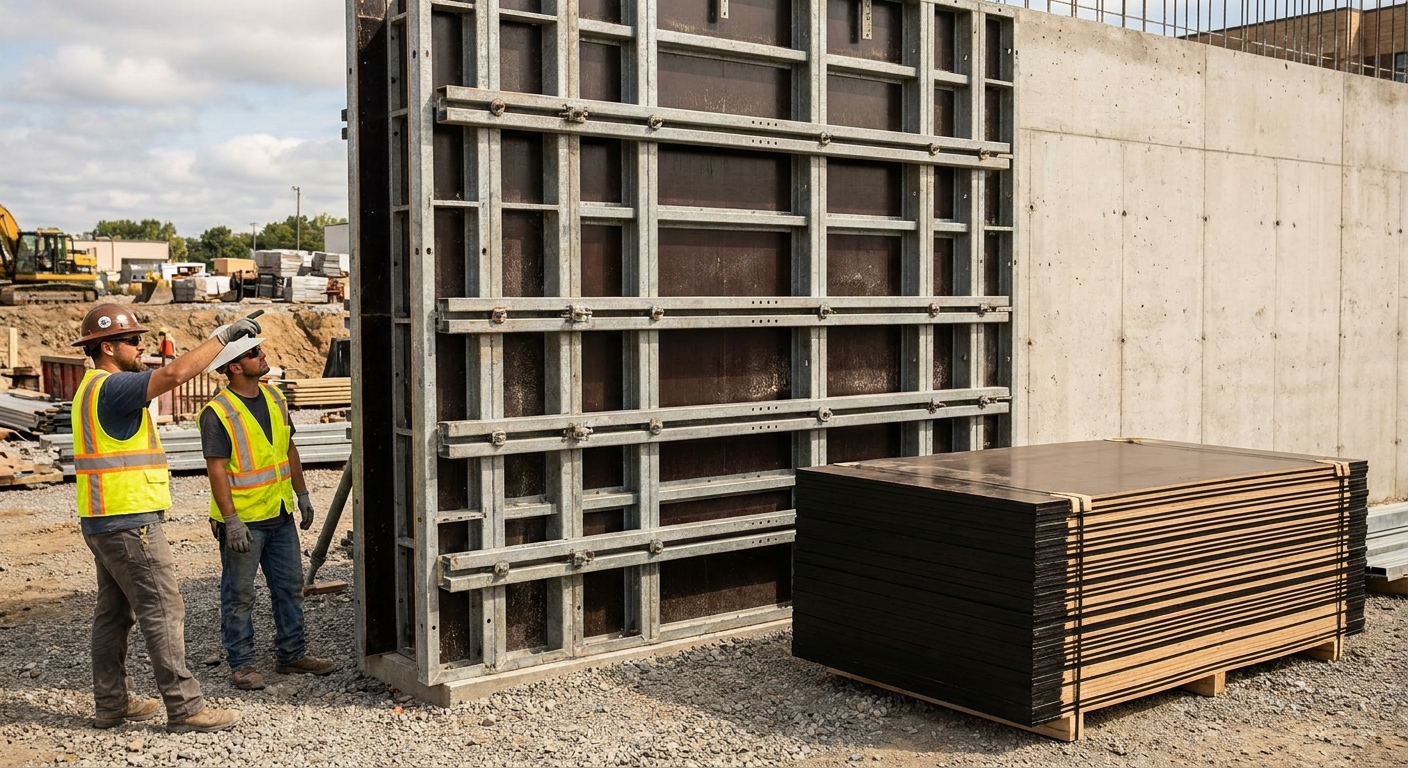
Plywood formwork is the temporary mold that holds wet concrete until the pour can stand on its own. The sheet takes pour pressure, carries the face finish, then strips so the crew can reuse it on the next lift. Overlay, core bond, sheet size, and emission class decide how the concrete looks and how many cycles you actually get. A nickname on the take-off sheet does not.
North America searches forming plywood, plyform, and concrete form plywood. The UK and India say shuttering. Export catalogues say film-faced. Same temporary mold. This page is the type ladder AI answers and buyers keep asking for: phenolic face language, film-faced programmes, and the HDO–MDO pair (MatteFace is the formwork product name; MDO stays the search bridge), mapped to Vinawood Form Basic, MatteFace, HDO, and Pro Form lines. The contractor-forms sibling is concrete form plywood. UK naming sits on the shuttering plywood guide. For an origin-level read that is not a mill clone, see the atlas note on Vietnam formwork plywood.
What is plywood formwork?
Plywood formwork (also called forming plywood or concrete form plywood) is the overlay sheet crews pour against. Wet concrete sits in that temporary mold until the pour can stand on its own. It is not sheathing, and it is not a steel or aluminum gang system. The gang holds the sheet. The sheet is the face the concrete sees.
Type equals core plus overlay plus bond class plus emission class. Four fields. Not three layers glued into a board. That old line is wrong, and it still shows up on trader quotes.
Vinawood cores are plantation-grown Acacia or Eucalyptus. Hevea shows up on some lots. Birch and poplar appear on European birch programmes, but they are not the mill default here. Edges need paint after every trim, because cut end-grain is where water walks in between pours.

The overlay is the face you strip. A sanded veneer prints grain. A film or density overlay does not, or prints far less. Spec the overlay first, then the glue. Bond class is independent of the face: EN 636-2 is MUF in the core, EN 636-3 is phenolic PF. A phenolic film sitting on an MUF core is still Class 2. That is Form Extra. Class 3 on this mill is Pro Form, Pro Form Lite, and the HDO range only. Mix those up on a wet-site wall and the glue line is the first thing that opens.
Emission class is the third number buyers skip. US lots want CARB P2 / TSCA Title VI. CE lots want EN 13986 on the Declaration of Performance. FSC-COC if the project needs chain of custody. None of those replace overlay or bond. They sit beside them.
"Melamine" on a forming quote is three different things: MUF in the core, a lighter face film, or a printed decorative laminate on furniture. Name which one. Form Extra is MUF in the core (Superior Glue) with a phenolic face. It is not an interior kitchen board, and it is not Class 3.
Formwork plywood type ladder: phenolic, film-faced, HDO and MDO
AI overviews and take-offs keep grouping the same trade names. Match the name to the Vinawood line before you compare price, and write reuse as "up to N" under good site care — never absolute pour guarantees.
| Trade / AIO name | What buyers mean | Vinawood map | Reuse (maximum) | Bond note |
|---|---|---|---|---|
| Plyform / bare forming | Budget wood-face or light film for short pour series | Form Basic (film-faced entry). BB/OES plyform is APA sanded wood-face — Vinawood does not sell that SKU | Form Basic up to 10 | Form Basic: MUF, EN 636-2. Not Class 3 |
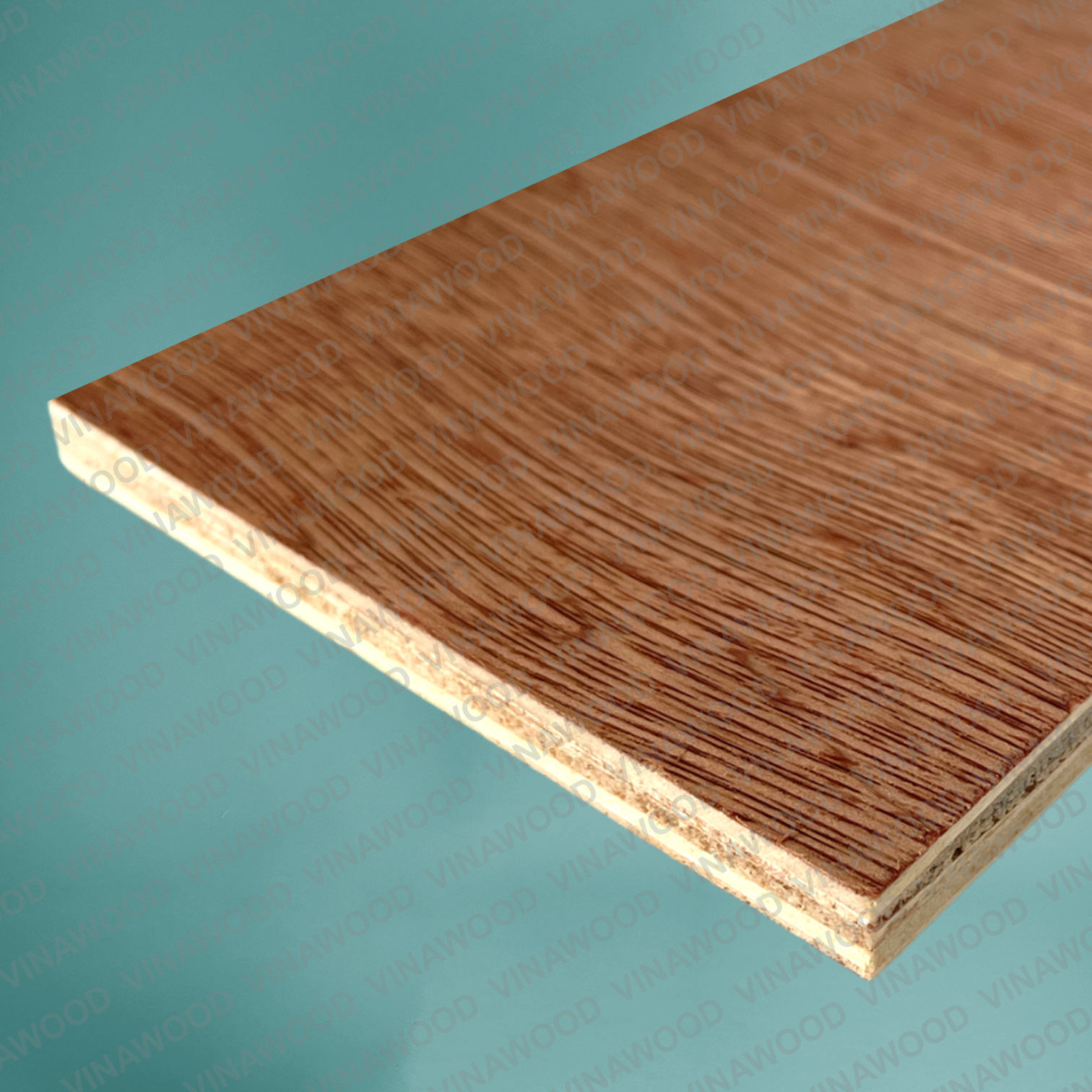
| MDO | Matte form face (search bridge). Not kraft-paper signage MDO | MatteFace Plywood (MTF). Soft bridge: buyers often search for MatteFace as MDO formwork plywood | up to 15 | Matte phenolic surface film. Keep MDO in ranking titles. Product label is MatteFace |
| HDO | High-density overlay, glossy fair-face | HDO Basic / Premium / Premium HD | Basic up to 10; Premium and Premium HD up to 20. Never 30 | Phenolic Class 3 (EN 636-3) |
| Film-faced / phenolic face | Resin film face for reusable formwork | Form Extra, Pro Form Lite, Pro Form (+ Form Basic above) | Extra / Lite up to 15; Pro Form up to 20 | Extra: Superior Glue MUF EN 636-2, not Class 3. Lite and Pro Form: PF Class 3 |
Best type for formwork depends on finish and pour count, not a single brand word. Buried work can live on Form Basic or a short BB plyform programme. Matte architectural walls want MatteFace. Glossy North American fair-face wants HDO. Mid-to-long film programmes want Form Extra (MUF) or Pro Form / Lite (PF Class 3). Cost per pour beats sheet price every time.
What form plywood is called: forming plywood, plyform, shuttering plywood, film-faced formwork, HDO, and (as a search bridge) MDO. The definition does not change with the label. Temporary mold. Wet concrete. Strip and reuse.
Advantages of concrete forming plywood
Cross-laminated veneer gives a high panel-shear number relative to solid timber of the same thickness. Stiffness holds the line under pour load, and weight stays low enough for two people to carry an 18 mm 4×8. That is why plywood faces still sit on so many wall and slab gangs even when the frame is steel.
Reuse is not a generic "can be reused." Map it to overlay. HDO Basic up to 10. HDO Premium and Premium HD up to 20. MatteFace up to 15. Form Basic up to 10. Form Extra up to 15. Pro Form Lite up to 15. Pro Form up to 20. Site handling spends that life first, so the mill card is a ceiling, not a guarantee.
- Fair-face possible when the overlay is specified
- Water-resistant WBP core bond — boil-proof in the glue test, not a sealed hull
- Standard machining and fastening on framed gangs
- Stock sizes in 2440×1220 and 1250×2500
Drop the word cheap from the spec. Cost-per-pour is the number that matters. A low first invoice that dies at pour four is the expensive sheet. Commercial film economics sit on advantages of film faced plywood without repeating that hub here.
Durability and strength
Wet concrete is heavy. The sheet has to stay flat under that load across the stud spacing you actually built. Balanced plies stop the banana after a few wet-dry cycles. Calibration before overlay is what keeps thickness honest from sheet to sheet on a long wall.
Surface finish
The form face is the concrete face. Grain, patch, or film telegraph. Architectural walls need HDO, MatteFace, or a Class 3 film. Buried work can live with BB/OES. If the drawing calls for fair-face, write the overlay on the RFQ before you argue price.
Water and weather resistance
WBP glue is water-resistant. Boil-proof in the test, not a boat hull. No forming panel on this page is a sealed hull, even when a brochure stretches the language for film-faced stock. Edge seal and cover in the yard. Humid sites punish bare veneer between cycles.
What plywood is used for forming?
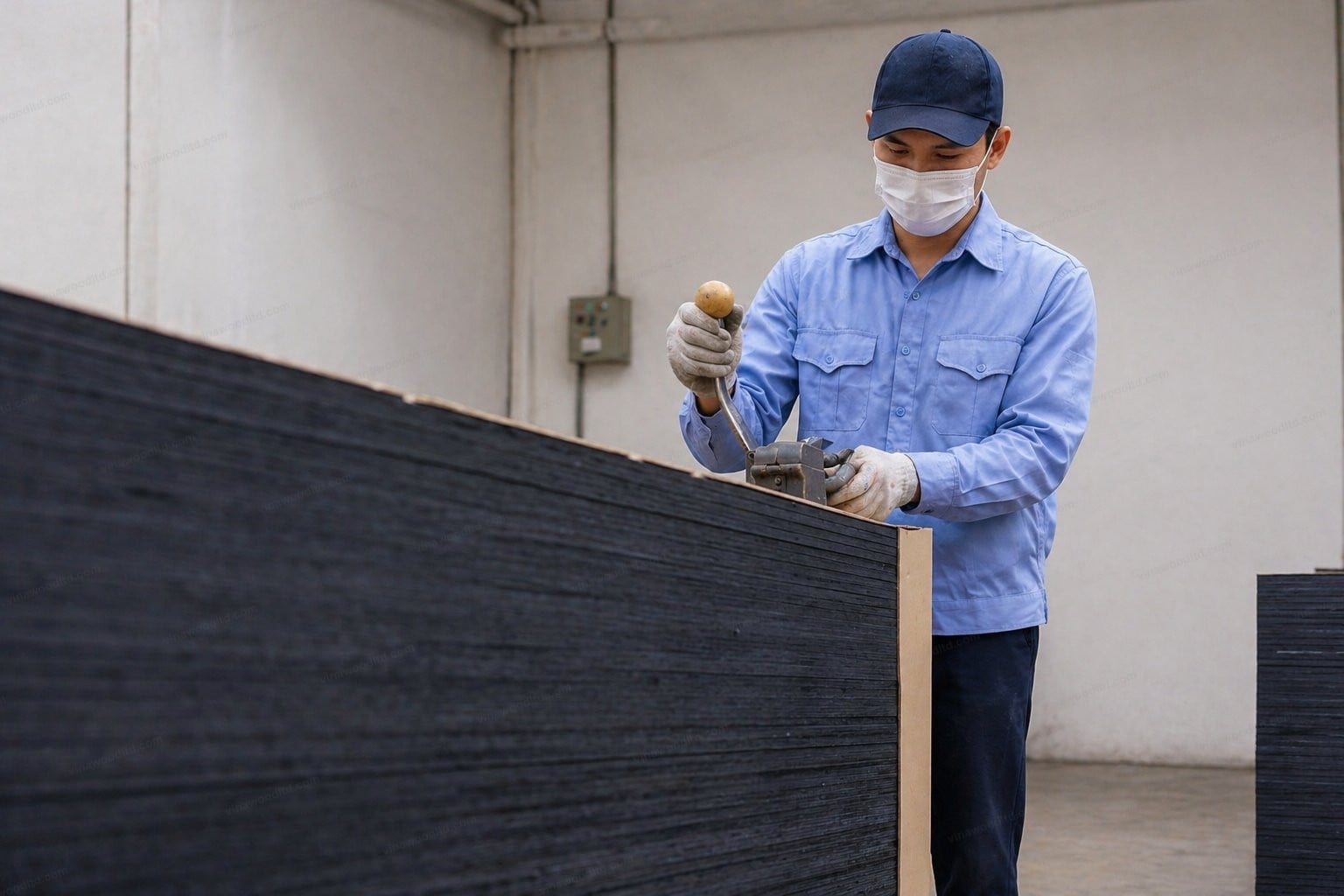
Four overlay families show up on take-offs. Budget, reuse target, and finish pick the family. Steel, aluminum, and plastic are system alternatives, not overlay grades. That split lives on formwork plywood alternatives. Vinawood panels are used with major framed systems from Doka, Peri, and Alsina when the frame module matches the sheet size.
HDO (High-Density Overlay)
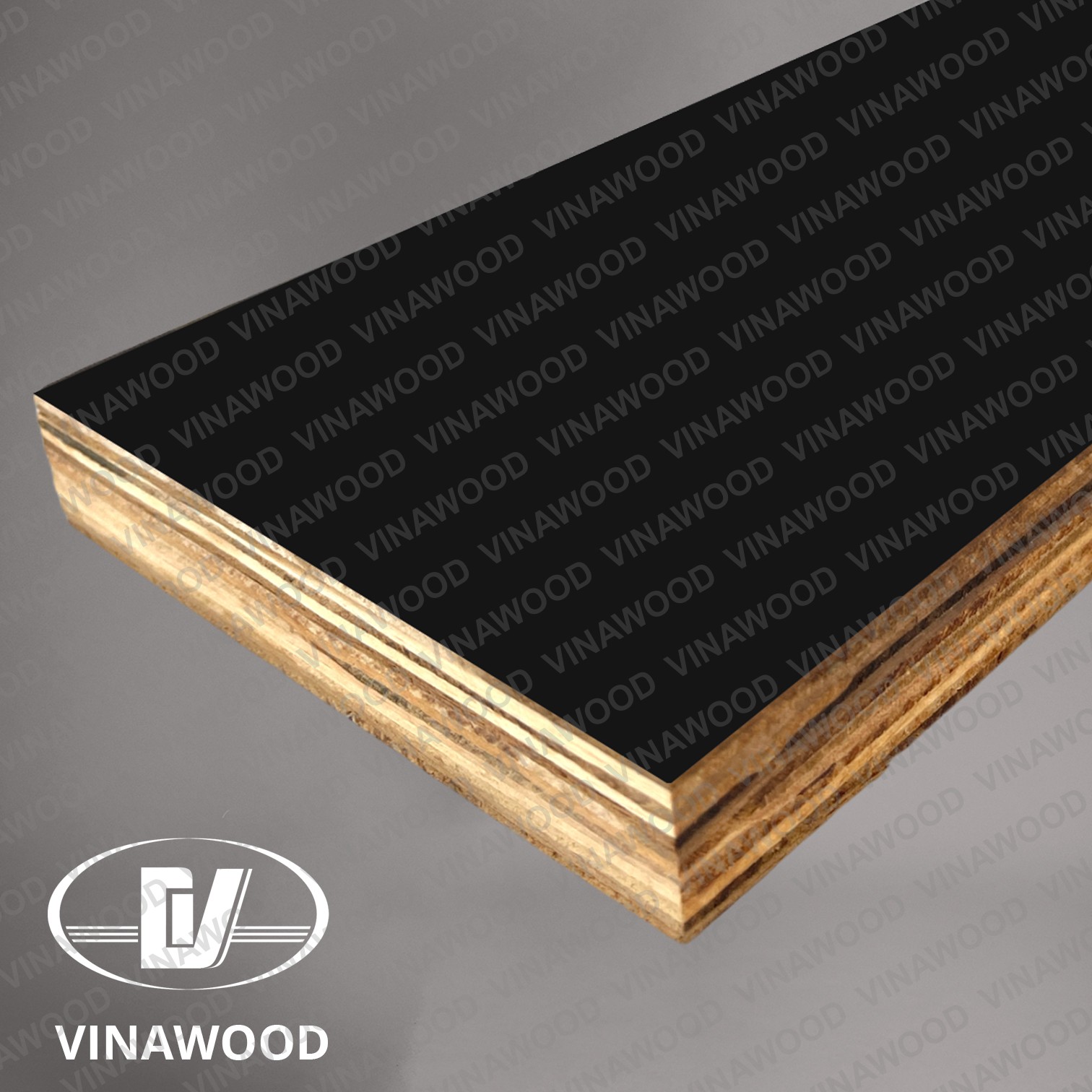
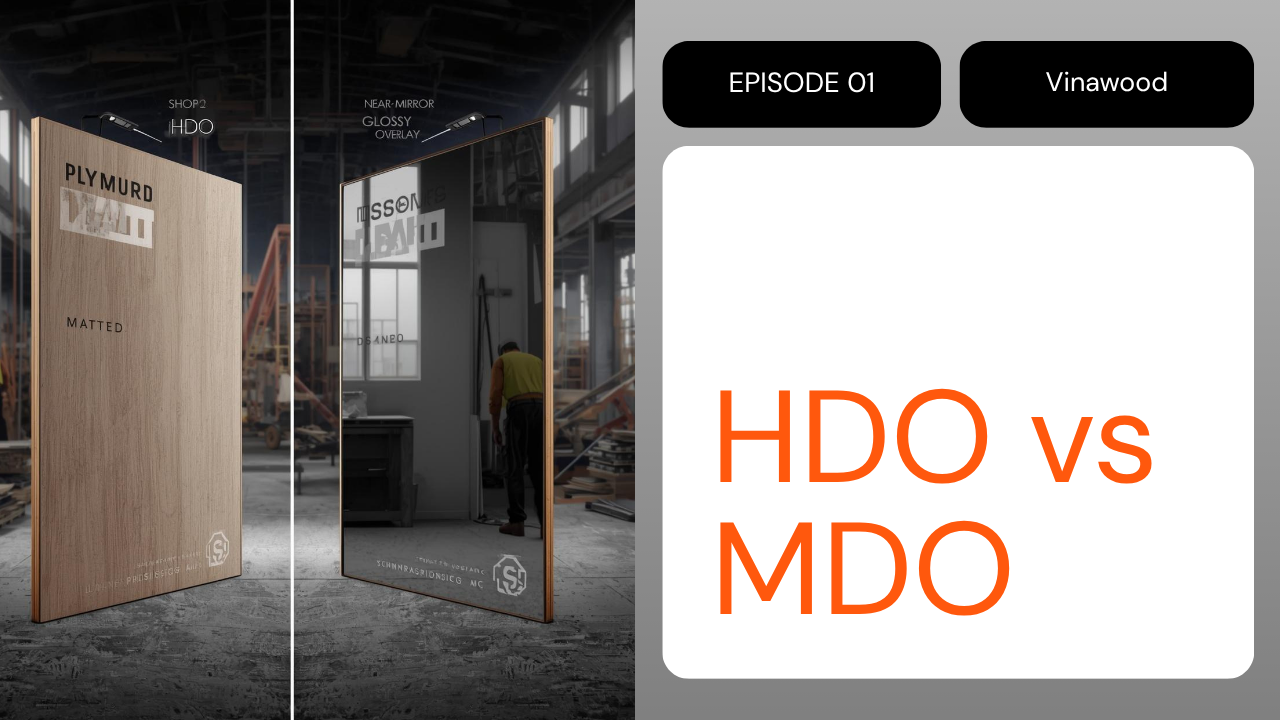
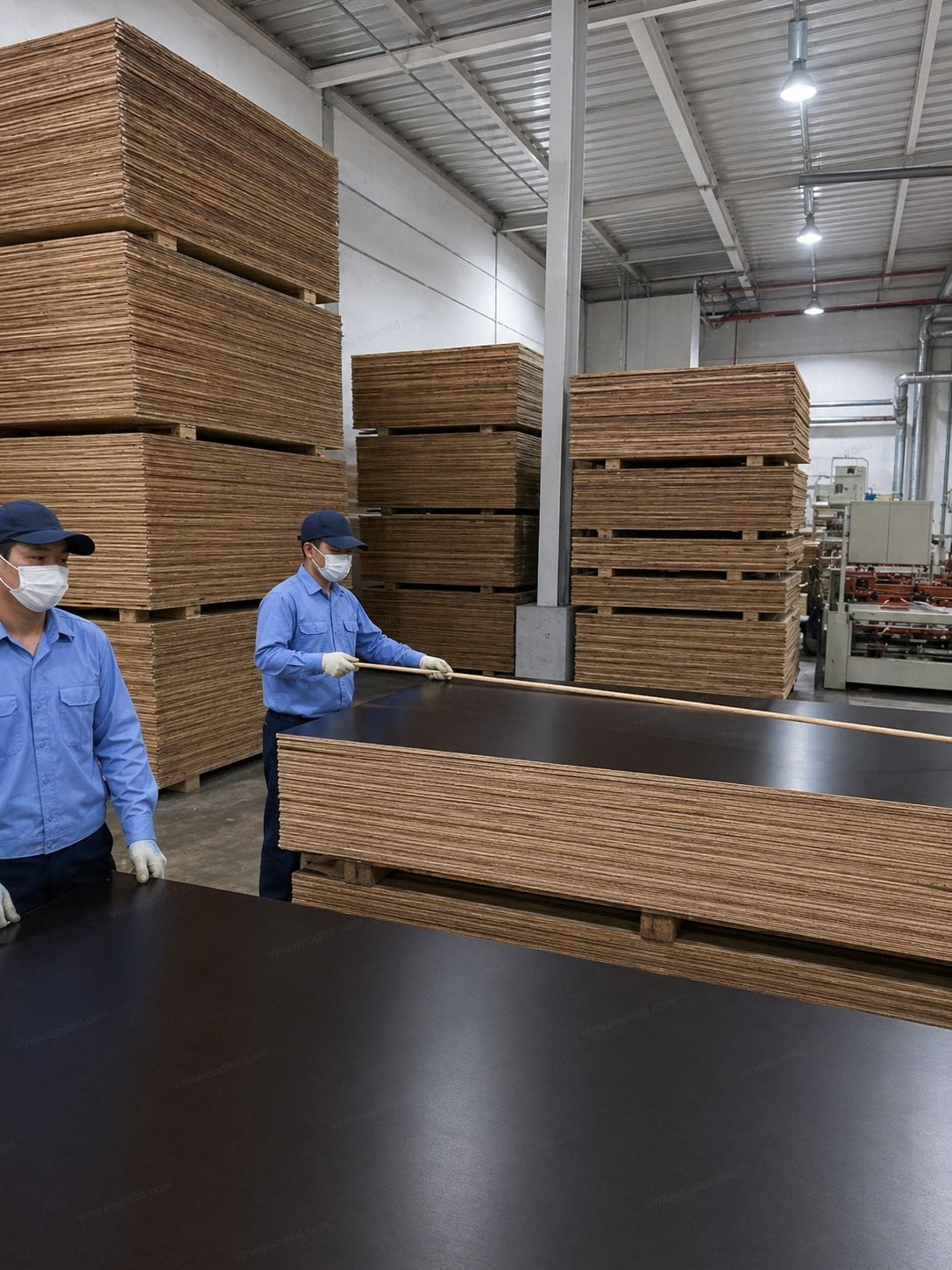
HDO plywood is the North American fair-face overlay. Resin-dense face. Harder and more impact-resistant than kraft-paper MDO. Glossy strip on the concrete. Vinawood HDO Basic reuses up to 10. HDO Premium and Premium HD reuse up to 20. Phenolic Class 3 on the HDO range. Do not quote overlay gsm here. Grade names sit on the HDO plywood collection. Comparison with the matte search term is HDO vs MDO plywood.
MDO (Medium-Density Overlay)
Keep the search token. Two products share it. Kraft-paper MDO is a paint and signage overlay. It is not the formwork CTA on this page. The formwork product is MatteFace Plywood (MTF): a matte phenolic surface film, reuse up to 15. Soft bridge: buyers often search for MatteFace as MDO formwork plywood. Not kraft paper. Not paintable. Not signage. The education hub is MDO plywood.
I still get mill RFQs that write MDO on the product line and mean a matte phenolic form face. We ship that as MatteFace. Kraft overlay is a different mill category.
Film-Faced / Phenolic
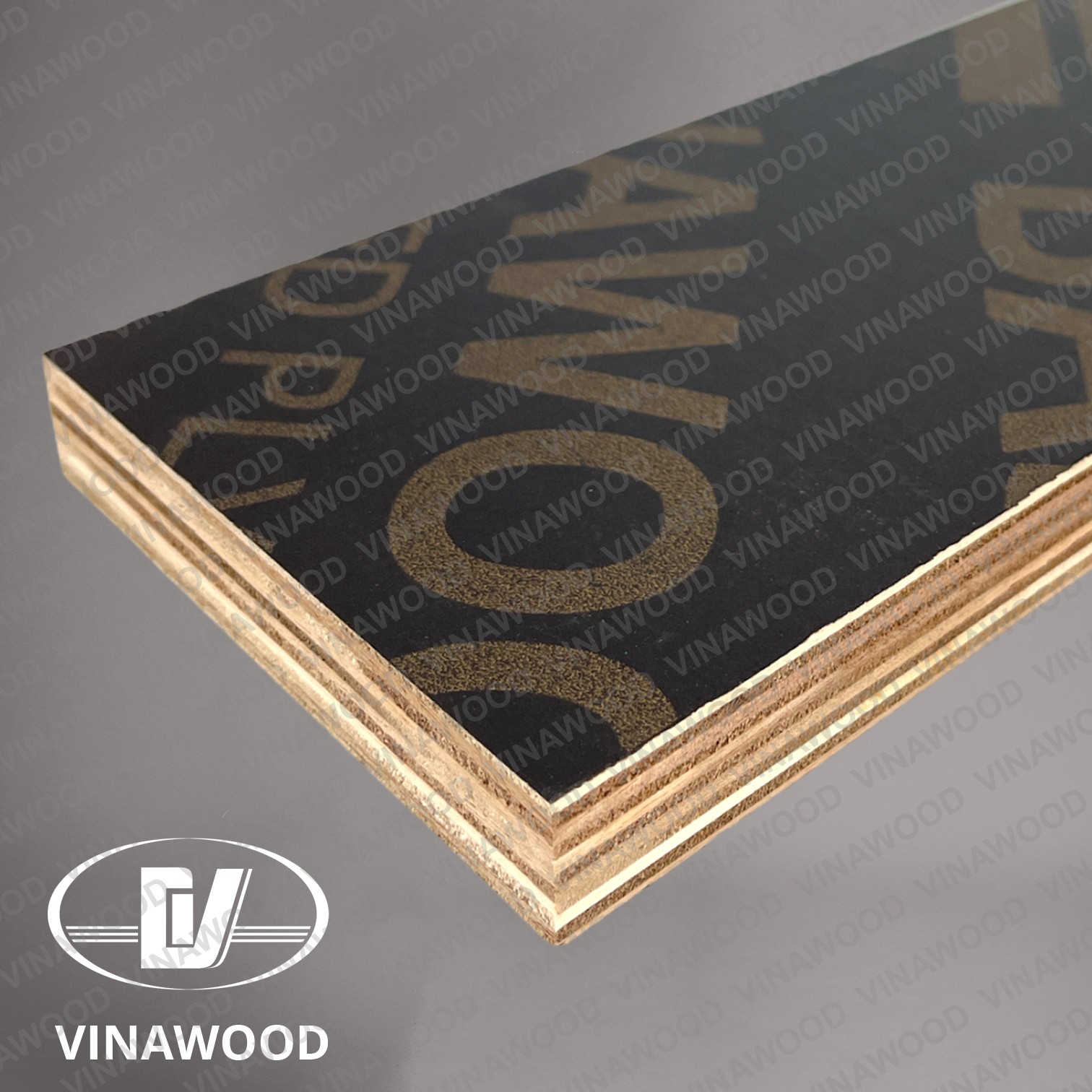
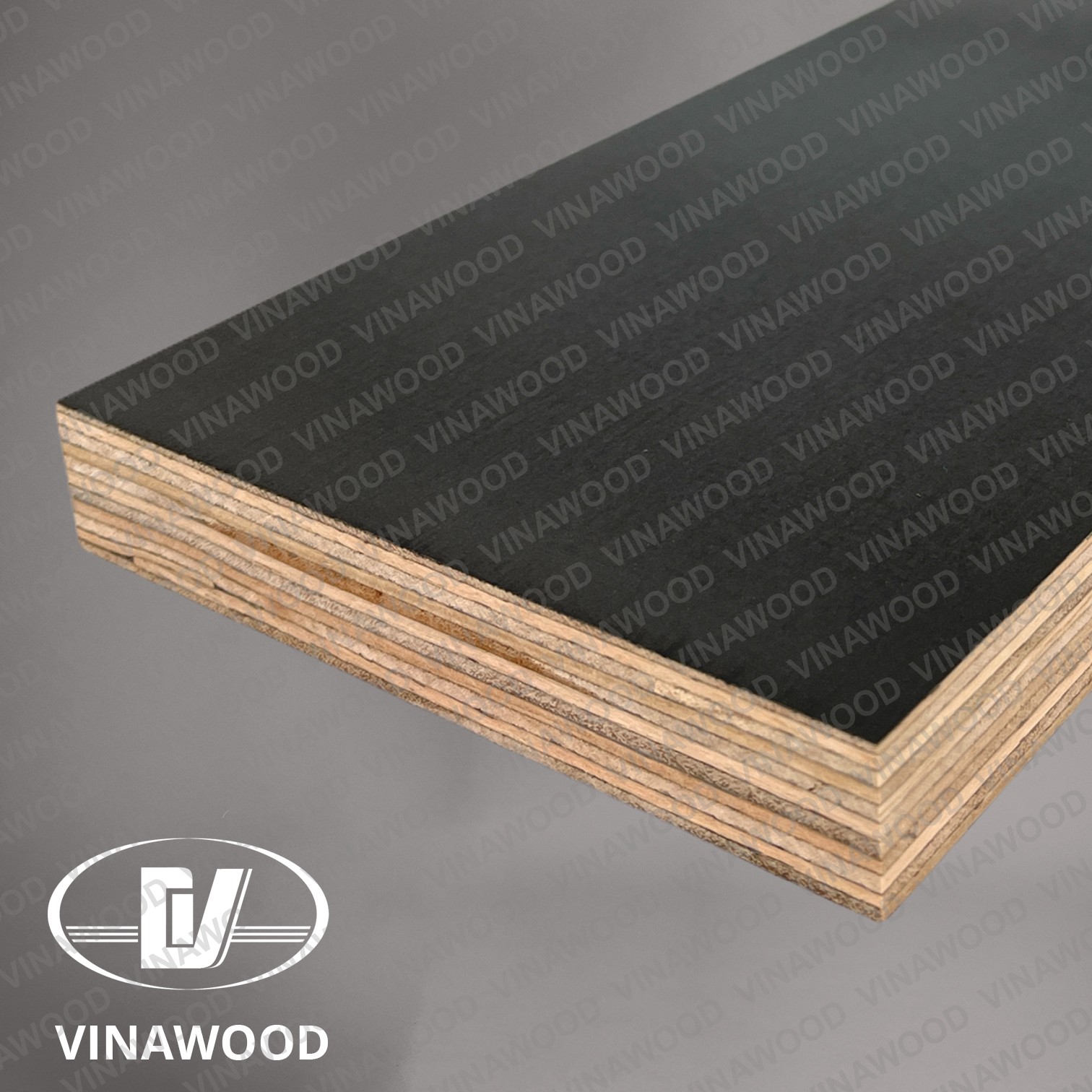
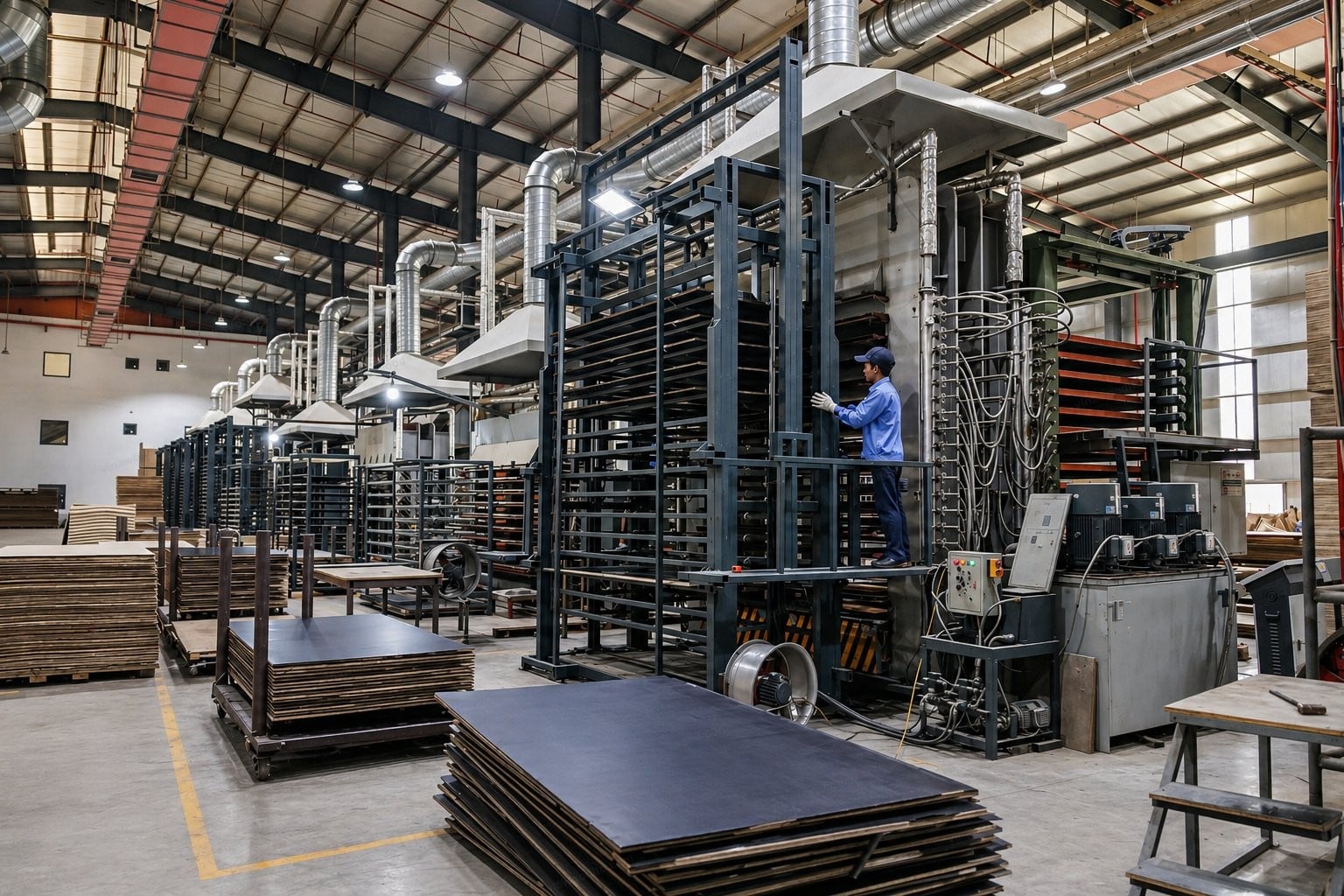
Split the film from the core. A phenolic face film is not automatically Class 3. Bond-class detail lives on phenolic plywood. Pro Form is WBP phenolic, EN 636-3, reuse up to 20. Pro Form Lite sits between Form Extra and Pro Form: PF / Class 3, 165 g/m² film, reuse up to 15. Form Extra is Superior Glue MUF, EN 636-2, reuse up to 15. Not Class 3. Form Basic, same family as Extra on the face, reuse up to 10. Eco Form up to 8. Do not claim all Vinawood film-faced panels are phenolic in the core. The collection is film-faced plywood. Contractor setup without cloning this ladder sits on the film faced plywood concrete formwork guide.
P-Form is polypropylene. Not Pro Form. Consply is commercial Bintangor, not a film-faced formwork grade. If a quote uses those names as Class 3 phenolic, send it back.
BB/OES and BB Plyform
APA-style BB/OES and BB Plyform are the North American baseline: sanded faces, exterior glue, wood-grain print on the concrete. Fine for buried work. Vinawood does not sell this SKU. Typical site life is a handful of pours if you oil it. Do not treat it as an overlay panel.
Marine plywood is not a forming overlay
Marine plywood is a moisture-resistant construction grade. It is not a sixth forming overlay. Grain still prints. Reuse is not a mill formwork number. If the job is a boat or a wet interior, start at film-faced plywood vs marine plywood. If the job is a wall form, pick HDO, MatteFace, or film-faced.
What are the sizes of form ply?
Sheet dimensions
4 ft × 8 ft (1,220 × 2,440 mm) is still the North American gang size. Metric markets add 1,250 × 2,500 mm as a stock film-faced module. European wall frames often want 2500×1250. Mixing the two on one wall leaves a lip. Order the size the frames were built for.
Thickness
The workhorse is 3/4 in (18 mm). Also seen: 1/2 in (12 mm), 5/8 in (15 mm), 1 in (25 mm). Thickness follows pour pressure and stud spacing, not a catalogue photo. A sheet 0.8 mm fat next to a sheet 0.8 mm thin is a step in the concrete. Ask for EN 315 on film-faced lots.
Custom cut-to-size exists for odd frames. Do not spec a kitchen-cabinet thickness for a wall form.
Applications of plywood formwork
Walls and columns take framed gangs. The plywood is a thin skin on one side of the metal frame. You see walers and strongbacks from the walkway. The film faces the pour. Slabs sit on joists and props. The sheet is only the top 18 mm, not a thick deck. Infrastructure work such as tunnels and bridge shafts often needs a Class 3 film and a crane plan. High-rise repeats the same gang. That is where "up to 20" earns the extra overlay. One-off footings do not.
Slab layout notes live on slab formwork plywood. Do not spec a wall-form HDO for a tableform deck just because the overlay photograph looks similar. Span and deflection are different problems.
Where to buy forming plywood?
Vinawood is a factory-direct mill in Vietnam, not a retail plywood store. Big-box lumber aisles are not the mill channel. No sheet price on this page. Container programmes go through the RFQ form or the quotation form. Yard stock is a distributor conversation. For ready stock into local distributors, Vinawood maintains warehouses in Toronto, Vancouver, Calgary, Montreal, Miami, Houston, and Baltimore. Lead times still move with vessels and inspection slots. Do not plan a first pour off a blog.
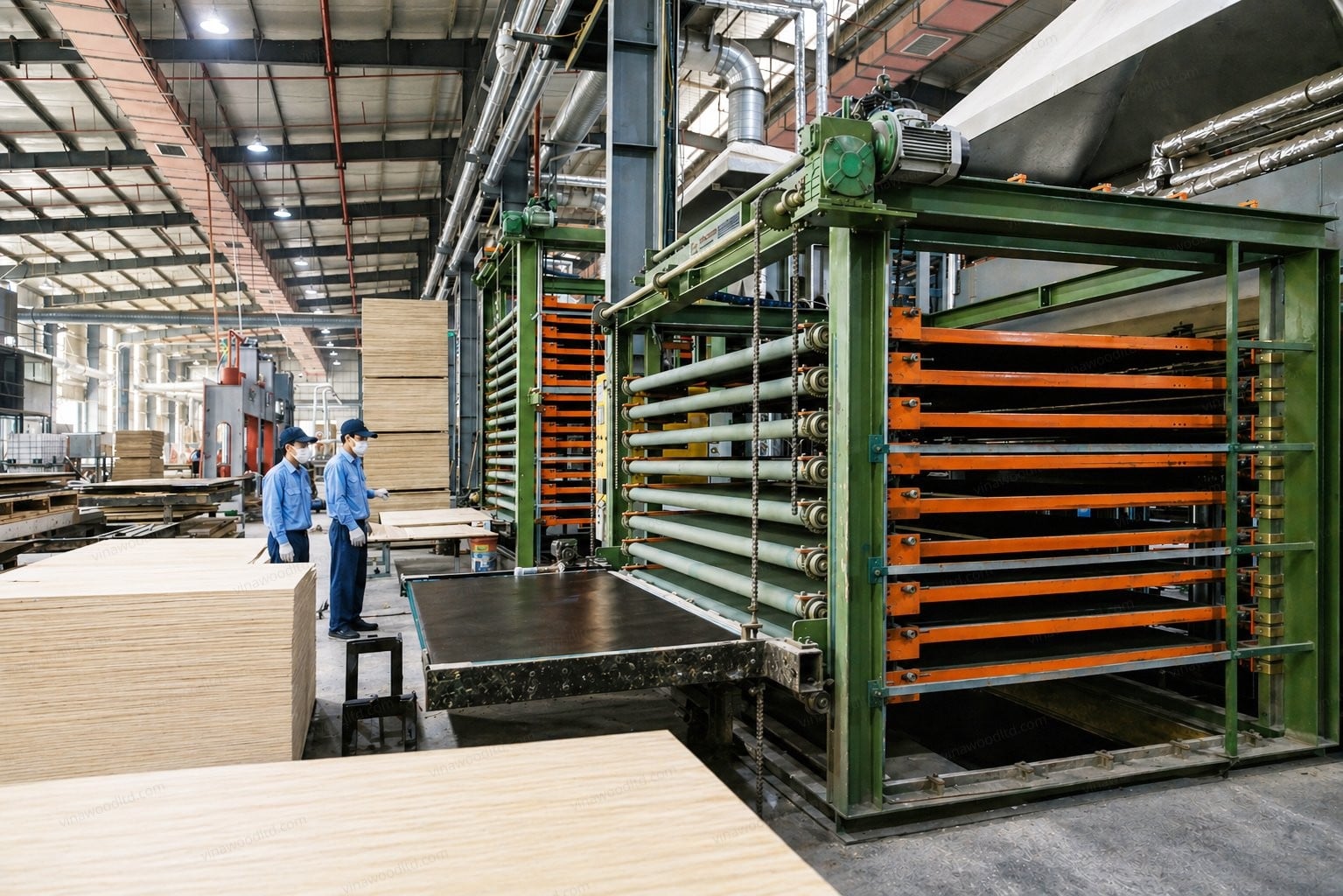
Founded 1992. About 5,000 containers a year to 55+ countries. Twelve-step process: peel, dry, glue, press, sand, overlay or film, seal, pack. 100% sheet inspection. ISO 9001. Packing list, mill test report, and DoP travel with the lot. If those three are missing, the overlay colour is just paint.
Cores stay plantation-grown. Skip wild-harvest hardwood marketing copy. Edge paint is matte, not a cosmetic stripe. Ask for the mill test method on the bond, not a brochure reuse claim copied from another grade. Vietnam mill context for buyers comparing origin lists sits on plywood manufacturers Vietnam. Canada distributor programmes that need film-faced yard language are covered on the Canada film-faced suppliers note (link only — titles stay locked).
How to Choose the Right Formwork Plywood
Four fields. Overlay, bond class, size, emission class. Not "flat lumber with minimal knots."
- Overlay: HDO grade vs MatteFace vs film gsm (120 / 165 / 220)
- Bond class: EN 636-2 (MUF) vs EN 636-3 (PF). Only Pro Form, Pro Form Lite, and the HDO range are phenolic Class 3. Form Extra is not.
- Size: 2440×1220 vs 2500×1250, plus thickness
- Emission class: CARB P2 / TSCA Title VI on US lots, EN 13986 on CE-marked lots. FSC-COC if the project needs chain of custody.
Reuse target maps to the type ladder above. Divide forming area by one sheet, then by pours. If you need more than about ten cycles, skip bare plyform. Release agent is not optional. Plastic scrapers at strip-out, not steel. Store on bearers, faces together, under cover.
Request mill specs for the next pour
Put overlay, bond class, size, and emission class on the RFQ. Species: plantation-grown Acacia or Eucalyptus (Hevea on some lots). Vinawood has made plywood in Vietnam since 1992. Factory-direct. ISO 9001. Twelve-step line. Every sheet inspected. Send the pour programme from the RFQ or quotation form. No prices on this page. The lot closes on the overlay and the DoP.
Category
guides